
Deep Tissue Massage: Your Ally Against Muscle Knots
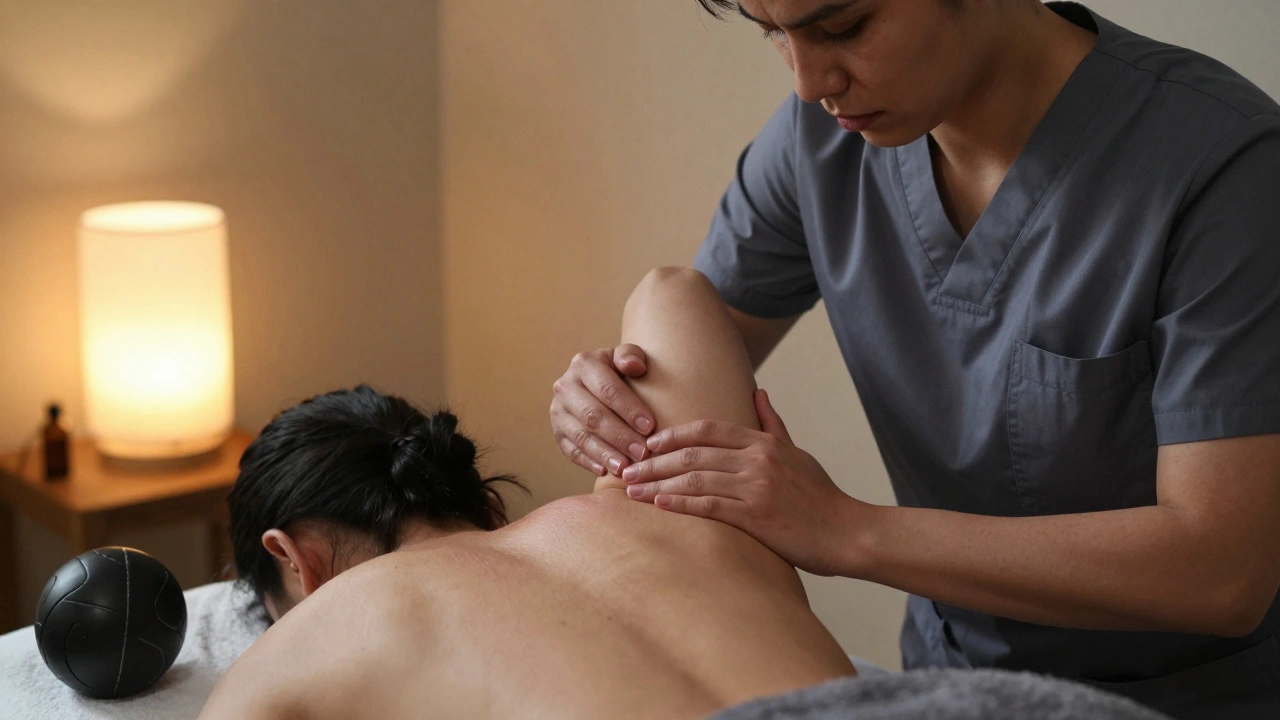
Ever feel like there’s a rock buried in your shoulder, or your lower back is locked up like a rusty hinge? You’ve tried stretching, foam rolling, even heat packs-but nothing budges. That’s not just soreness. That’s a muscle knot, and it’s not going away on its own. Deep tissue massage isn’t a luxury-it’s a reset button for your muscles when they’ve forgotten how to relax.
What Exactly Are Muscle Knots?
Muscle knots, or myofascial trigger points, aren’t literal knots like you’d tie in a shoelace. They’re tight, ropey bands of muscle fiber that have gotten stuck in contraction. Think of it like a cramp that never lets go. These spots are hyperirritable, often painful when pressed, and can send aching signals to other parts of your body. A knot in your upper trapezius might make your head hurt. One in your glutes can mimic sciatica. They form from overuse, poor posture, stress, or injury. And once they’re there, your body keeps guarding them, tightening even more around the area to protect it-creating a cycle that’s hard to break.
How Deep Tissue Massage Works
Unlike Swedish massage, which glides over the surface to promote relaxation, deep tissue massage targets the deeper layers of muscle and connective tissue. Therapists use slow, deliberate strokes with firm pressure-fingers, knuckles, elbows, even forearms-to reach those stubborn knots. It’s not about brute force. It’s about precision. The goal is to break up adhesions, release chronic tension, and restore normal muscle function. Think of it like untangling a knotted headphone cord. You don’t yank it. You work slowly, patiently, section by section.
Studies show that deep tissue massage increases blood flow to the affected area, helping flush out metabolic waste like lactic acid and bringing in fresh oxygen and nutrients. One 2021 trial published in the Journal of Bodywork and Movement Therapies found participants with chronic lower back pain saw a 47% reduction in pain intensity after six weekly deep tissue sessions. That’s not placebo. That’s physiology.
What to Expect During a Session
Don’t walk in expecting a gentle rubdown. Deep tissue massage can be uncomfortable-sometimes even briefly painful-but it shouldn’t be unbearable. You should feel a strong, deep pressure, but if you’re gasping or tensing up, speak up. Good therapists adjust pressure based on your feedback. The session usually starts with lighter strokes to warm up the tissue, then moves into focused work on problem areas. You might be asked to breathe deeply during pressure points-it helps the muscle release.
Typical session length is 60 to 90 minutes. You’ll likely be draped in a towel, with only the area being worked exposed. Communication is key. Tell your therapist where you feel tightness, where it hurts, and what kind of pressure feels right. No two bodies are the same. What works for your coworker might be too much-or too little-for you.
Who Benefits Most?
Deep tissue massage isn’t for everyone, but it’s a game-changer for specific groups:
- People with chronic pain from sitting all day-office workers, drivers, coders
- Athletes recovering from overtraining or dealing with repetitive strain
- Those with posture-related issues like forward head or rounded shoulders
- People who’ve had old injuries that never fully healed
- Anyone who’s tried everything else and still feels tight
If you have osteoporosis, recent surgery, blood clots, or severe inflammation, talk to your doctor first. Deep tissue isn’t safe for everyone. But for most people, it’s one of the most effective non-drug tools for releasing long-term muscle tension.

What Happens After?
You might feel sore the next day-like you did a tough workout. That’s normal. Your muscles are adjusting. Drink plenty of water. It helps flush out the toxins released during the massage. Avoid heavy lifting or intense exercise for 24 hours. Light walking or gentle stretching helps keep the tissue mobile.
Some people feel immediate relief. Others need three to five sessions before they notice real change. Don’t quit after one. Think of it like brushing your teeth. One session won’t fix years of buildup. Consistency matters.
How Often Should You Get It?
For acute knots or recent pain, once a week for 3-4 weeks gives your body time to reset. After that, maintenance every 3-6 weeks keeps things from creeping back. If you’re an athlete or have a physically demanding job, monthly sessions are a smart investment. For someone with mild tension, every other month might be enough.
There’s no magic number. Listen to your body. If you start feeling tight again before your next appointment, it’s time to go back. Don’t wait until you’re in agony.
Deep Tissue vs. Other Massages
It’s easy to confuse deep tissue with other types. Here’s how it stacks up:
| Massage Type | Pressure Level | Best For | Not Ideal For |
|---|---|---|---|
| Deep Tissue | Strong, focused | Chronic knots, deep tension, injury recovery | Acute injuries, sensitive skin, inflammation |
| Swedish | Light to medium | Relaxation, circulation, mild stress | Deep muscle tightness, trigger points |
| Sports Massage | Variable, often firm | Pre/post workout, athletic performance | Non-athletes with chronic pain |
| Hot Stone | Medium, warming | Relaxation, stiffness from cold or stress | Deep knots, inflammation |
Swedish massage feels amazing but won’t touch deep knots. Sports massage is great if you’re training hard, but it’s not always targeted enough for long-term tension. Hot stone soothes but doesn’t break up adhesions. Only deep tissue is designed to go where the pain lives.

DIY Tips Between Sessions
You don’t have to wait for your next appointment to make progress. Here’s what helps:
- Use a lacrosse ball or foam roller on tight spots-2 minutes per area, slow rolls, not rapid bouncing
- Stretch after warming up, not cold. A warm shower first helps
- Hydrate. Dehydration makes muscles stiffer
- Improve posture. Slouching keeps your back and shoulders locked
- Manage stress. Tension in your mind shows up in your muscles
One client, a graphic designer who spent 10 hours a day hunched over a keyboard, started rolling her upper back with a tennis ball every night. After three weeks, her shoulder pain dropped by 60%. She still gets monthly deep tissue sessions-but now she’s not completely dependent on them.
When to See a Professional
If you’ve tried massage, stretching, and rest for more than 6 weeks with no improvement, it’s time to dig deeper. Sometimes what feels like a knot is actually a nerve issue, a disc problem, or a joint dysfunction. A physical therapist or chiropractor can help rule those out. Don’t keep massaging a problem that needs a different kind of fix.
Also, if you feel numbness, tingling, or shooting pain-not just soreness-stop self-treating and get checked. Deep tissue massage won’t fix a pinched nerve. But it can help once the root cause is addressed.
Final Thoughts
Muscle knots aren’t just annoying-they’re signals. Your body is telling you it’s been under too much strain for too long. Deep tissue massage doesn’t erase the cause, but it gives you back control. It’s not a quick fix. It’s a tool for reclaiming your body’s natural movement. If you’re tired of living with tightness that won’t go away, it’s not weakness to ask for help. It’s smart.
Start with one session. See how your body responds. Then decide if you want to keep going. Most people who try it once come back. Not because they love the pain. But because they finally feel free again.
Does deep tissue massage hurt?
It can feel intense, especially on tight spots, but it shouldn’t be sharp or unbearable. You should feel deep pressure, not pain that makes you tense up. Good therapists adjust based on your feedback. If it’s too much, say so. The goal is release, not punishment.
How long does it take to see results?
Some people feel better right away. For chronic knots, it usually takes 3-5 sessions over a few weeks. Think of it like undoing years of tension-it doesn’t happen overnight. Consistency matters more than one powerful session.
Can I do deep tissue massage on myself?
You can use tools like foam rollers or lacrosse balls to target areas, but you can’t replicate the precision of a trained therapist. Your own muscles won’t fully release because your brain is still controlling them. Professional massage allows your body to truly let go.
Is deep tissue massage safe if I have arthritis?
It can be, but only if done carefully. Avoid direct pressure on inflamed joints. Tell your therapist about your condition-they’ll adjust technique. Many people with osteoarthritis find relief from surrounding muscle tension, which often worsens joint pain.
Why do I feel sore after a deep tissue massage?
The pressure breaks up adhesions and releases built-up metabolic waste. That’s similar to what happens after a hard workout. Drink water, move gently, and give your body 24-48 hours to recover. The soreness usually fades faster than the pain relief lasts.
Can deep tissue massage help with stress?
Yes. Chronic muscle tension is both a cause and a result of stress. When your body is stuck in fight-or-flight mode, your muscles stay tight. Deep tissue massage signals your nervous system to relax, lowering cortisol and helping you feel calmer-even if you didn’t realize how tense you were.
Next time you feel that familiar knot in your neck or lower back, don’t just grit your teeth and push through. Your body’s asking for help. Deep tissue massage is one of the most direct ways to answer it.



Shane Wilson
January 27, 2026 AT 21:42Deep tissue massage, as a therapeutic modality, represents a significant advancement in musculoskeletal rehabilitation. The physiological mechanisms underlying its efficacy-namely, the disruption of myofascial adhesions and the subsequent augmentation of local perfusion-are well-documented in peer-reviewed literature. It is imperative, however, that practitioners adhere to evidence-based protocols to avoid iatrogenic injury, particularly in populations with contraindications such as osteoporosis or coagulopathies. The data cited from the 2021 Journal of Bodywork and Movement Therapies is both robust and compelling, reinforcing the necessity of structured, repeated interventions for chronic conditions.
Darren Thornton
January 28, 2026 AT 13:27Actually, you misspelled 'myofascial' in the second paragraph. It's 'myofascial,' not 'myofascial.' And 'adhesions' is plural, so you need an 's' at the end. Also, 'lactic acid' isn't a 'toxin'-it's a natural metabolic byproduct. You're propagating pseudoscience. And 'metabolic waste'? That's not even a medical term. Fix your language before you write about physiology.
Deborah Moss Marris
January 29, 2026 AT 22:13Listen. I’ve been a physical therapist for 22 years. I’ve seen people cry during deep tissue sessions because they finally felt something release after years of suffering. This isn’t just ‘massage’-it’s neurophysiological recalibration. That guy who said ‘lactic acid isn’t a toxin’? He’s right, but he’s missing the point. The inflammation and cytokines that build up around trigger points? Those are the real culprits. And yes, you need to drink water afterward-not because of ‘toxins,’ but because hydration supports fascial glide. Stop arguing about semantics and start helping people. If you’ve never had a knot that made you cry, you don’t get to judge this.
Kimberly Bolletino
January 30, 2026 AT 03:52I don't care what you say. Deep tissue is just a scam. People get sore and think it worked. I got one once and I was in pain for three days. My cousin’s friend’s neighbor tried it and ended up with a herniated disc. You think you're helping? You're just hurting people. And don't tell me to 'drink water'-I drink soda. My body works fine. Why do you all act like you're healers? It's just rubbing.
Elina Willett
January 31, 2026 AT 17:25Okay but what if deep tissue massage is just capitalism selling you pain as healing? Like, who decided that hurting yourself with elbows is therapeutic? What if the real problem is that we sit too much and no one wants to fix the office chair? What if we’re all just supposed to stand more? Why are we outsourcing our body’s autonomy to some stranger with knuckles? Also, I tried it once and cried. Was that the release? Or was that my soul screaming? I think we need to talk about the emotional violence of touch.
Joanne Chisan
February 2, 2026 AT 01:42Back in my day, people didn’t need fancy massages. We worked hard, we didn’t whine, we didn’t pay strangers to poke our backs. This is why America’s falling apart-you’ve turned your body into a spa toy. If you can’t handle a little stiffness, maybe you should stop eating gluten and get off your phone. We used to fix ourselves with ice, heat, and willpower. Now? We need a $120 session and a TikTok influencer to tell us it’s ‘self-care.’ Pathetic.
Peter Szarvas
February 3, 2026 AT 21:37Just wanted to say-this post was so helpful. I’ve been sitting at a desk for 12 years and my shoulders felt like concrete. Got my first deep tissue last week and honestly? I cried. Not from pain-from relief. Like, I forgot what it felt like to breathe without tightening up. I didn’t know my neck was that tight until someone else touched it. And yeah, I was sore the next day, but I walked like a new person. If you’ve been holding tension like a secret, this is your sign to let go. No shame in needing help. You’re not weak-you’re human.
Faron Wood
February 4, 2026 AT 00:28Okay so I got a deep tissue massage and it was like a horror movie. The therapist was this giant guy with tattoos and he just leaned his whole body on my spine like he was trying to flatten me into a pancake. I screamed. He said ‘good, you’re releasing.’ I thought I was going to die. Then I woke up the next day and my lower back felt like it had been unplugged from the wall. Like… I could move again. I didn’t believe it until it happened. Now I go every month. It’s not magic. It’s not science. It’s like your body remembers how to breathe and suddenly you’re like… wait, I’m not always in pain? What even is this?
kamala amor,luz y expansion
February 4, 2026 AT 08:19You Americans think you invented pain relief? In India, we’ve had Ayurvedic marma point therapy for 5,000 years. We don’t need your elbows and foam rollers. Your muscles are weak because you eat processed food and sit on chairs that don’t even have back support. We sit on the floor, we squat, we move. Your knots are a symptom of cultural decay. You think massage fixes posture? No. It’s your diet. It’s your laziness. It’s your addiction to screens. Fix your life first. Then maybe we’ll talk about pressure points.