
Exploring the Different Modalities Offered by Massage Therapists
Not all massages are the same. If you’ve ever sat in a massage therapist’s room wondering why one session feels like a deep release and another like a gentle float, it’s because therapists use different modalities-each with its own purpose, pressure, and effect on the body. Whether you’re dealing with chronic back pain, stress from a long workweek, or just want to feel more grounded, the right type of massage can make all the difference. But with so many options out there, how do you know which one’s right for you?
Swedish Massage: The Foundation of Relaxation
Swedish massage is often the first thing people think of when they hear "massage." It uses long, flowing strokes, kneading, and circular movements to relax muscles and improve circulation. This is the go-to for beginners or anyone looking to unwind. It’s not about digging into knots-it’s about letting go. A typical session lasts 60 to 90 minutes and uses light to medium pressure with oil or lotion. It’s ideal if you’re new to massage, recovering from illness, or just need to reset your nervous system after a busy month.
Deep Tissue Massage: Targeting Chronic Tension
If you’ve ever felt like your shoulders are made of concrete, deep tissue massage might be your answer. Unlike Swedish, this modality works deeper into the muscle layers and connective tissue. Therapists use slower strokes, direct pressure, and sometimes elbows or forearms to break up adhesions-those stubborn areas where muscle fibers stick together from injury, overuse, or stress. It’s not a luxury spa treatment; it’s therapeutic work. You might feel sore afterward, but that’s normal. People with long-term muscle tightness, sports injuries, or posture-related pain often see real improvement after a few sessions.
Hot Stone Massage: Heat as a Healing Tool
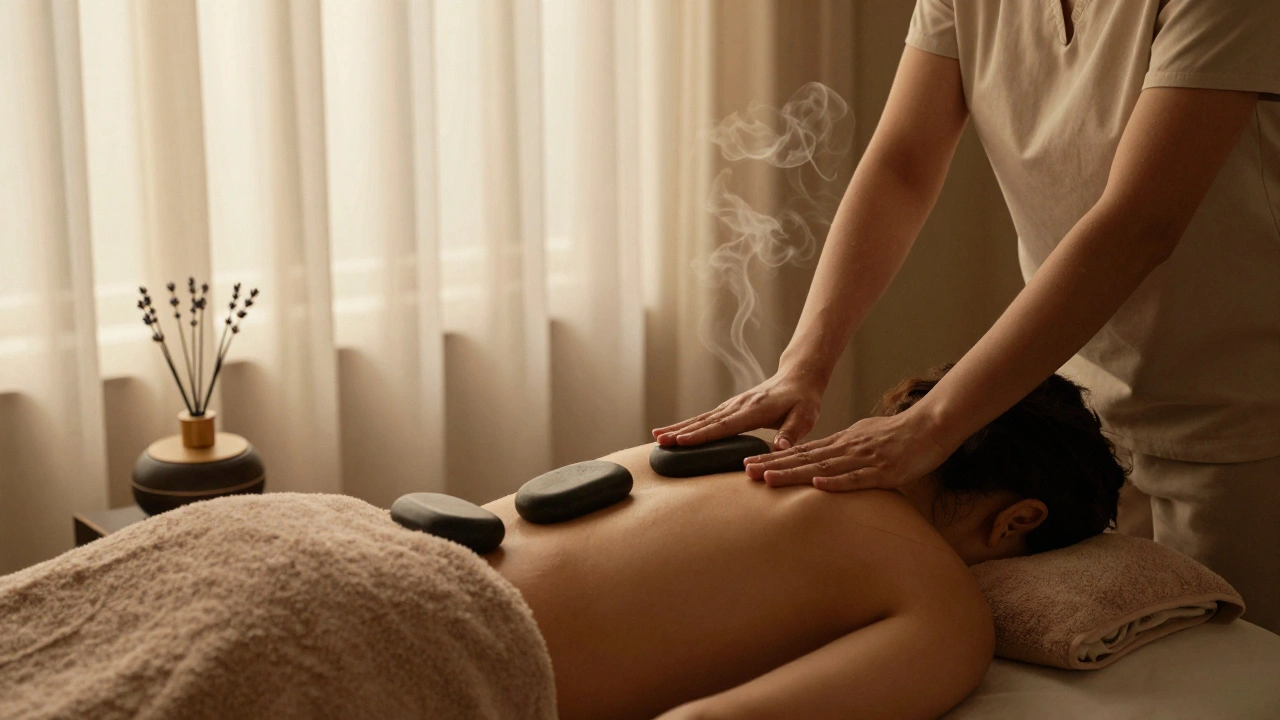
Imagine smooth, heated stones placed along your spine, between your toes, or resting on your palms. That’s hot stone massage. The stones, usually basalt, are warmed to around 50-55°C and used either as tools to glide over the skin or left in place to radiate warmth. The heat helps muscles relax faster, allowing the therapist to work deeper without as much pressure. It’s especially effective for people with cold extremities, arthritis, or high stress levels. Many find the warmth deeply calming-some even fall asleep during the session. It’s not for everyone, though. If you have sensitive skin, diabetes, or circulatory issues, talk to your therapist first.
Thai Massage: Movement Meets Pressure
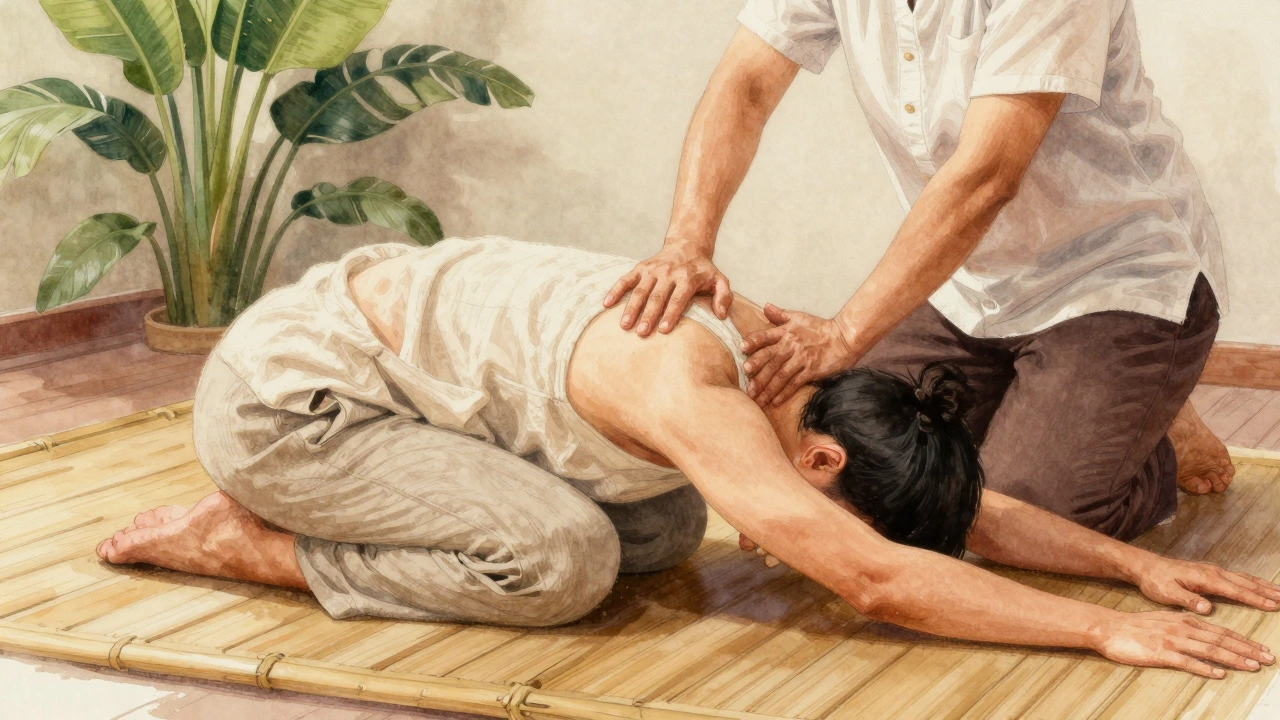
Thai massage is unlike anything you’ll experience on a massage table. You stay fully clothed, usually in loose pants and a t-shirt, and the therapist guides you through a series of stretches while applying pressure along energy lines called sen lines. Think of it as yoga with a human guide. It combines acupressure, assisted yoga poses, and joint mobilization. This modality is great for improving flexibility, relieving stiffness, and boosting energy. It’s not relaxing in the traditional sense-it’s active, sometimes intense, and leaves you feeling both stretched and energized. If you’ve ever felt stiff after sitting all day or want to improve your range of motion, this could be a game-changer.
Aromatherapy Massage: Scent as Therapy
Aromatherapy massage blends Swedish or deep tissue techniques with essential oils like lavender, eucalyptus, or peppermint. The oils aren’t just for smell-they’re chosen for their therapeutic properties. Lavender reduces anxiety, eucalyptus clears sinuses, and citrus oils lift mood. The therapist may add a few drops to the carrier oil or diffuse them in the room. This modality is perfect if you’re dealing with stress, insomnia, or low energy. Studies show that inhaling certain scents can lower cortisol levels and improve sleep quality. It’s not just a nice smell-it’s a tool that works on your nervous system.
Sports Massage: Performance and Recovery
Sports massage isn’t just for athletes. Anyone who moves a lot-dancers, gardeners, parents chasing toddlers-can benefit. This modality targets specific muscle groups used in repetitive motion. Pre-event sessions help warm up muscles and improve circulation. Post-event sessions flush out lactic acid and reduce soreness. Maintenance sessions keep muscles flexible and prevent injury. Therapists use techniques like friction, compression, and stretching tailored to your activity. If you’re constantly tight in your hamstrings, shoulders, or calves, this is the modality to ask for.
Myofascial Release: Unlocking the Body’s Web
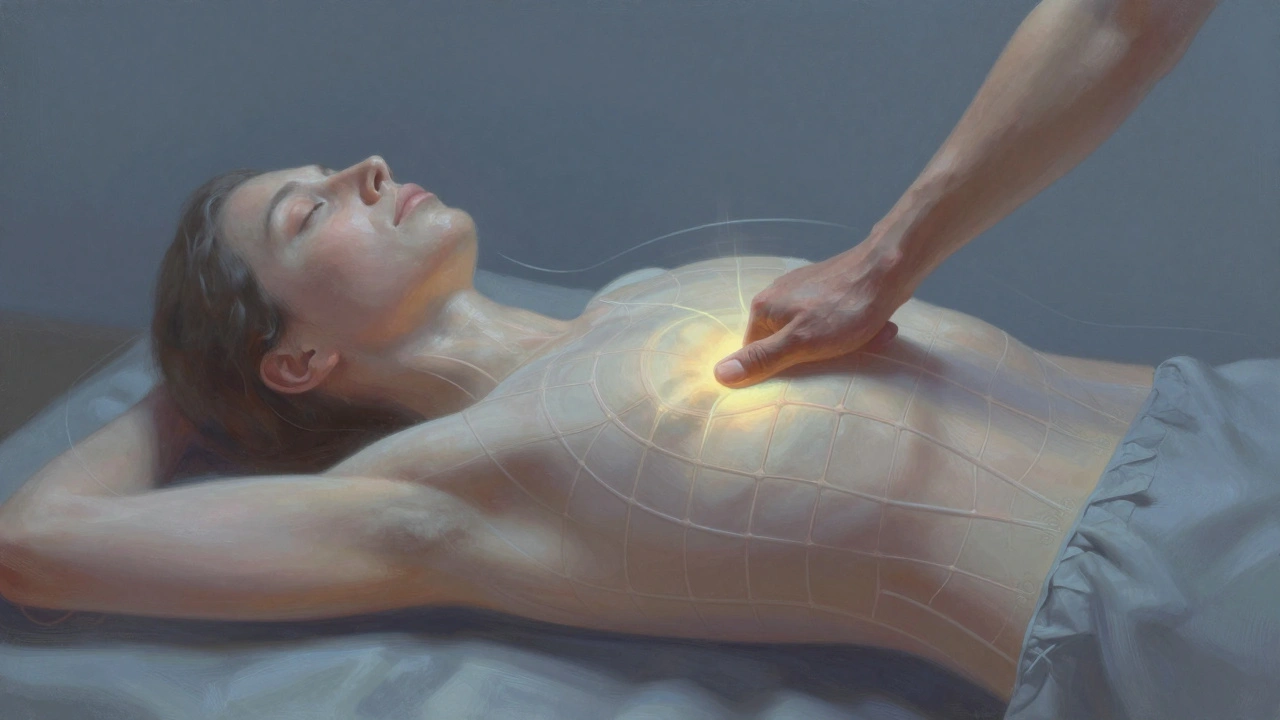
Your fascia is the connective tissue that wraps around every muscle, bone, and organ. When it gets tight from injury, poor posture, or stress, it can pull on surrounding structures and cause pain far from the source. Myofascial release uses slow, sustained pressure to release restrictions in this tissue. The therapist might hold pressure on a tight spot for 90 seconds or more until they feel the tissue soften. It’s not a quick fix-it takes time and patience. But people with chronic pain, fibromyalgia, or headaches that don’t respond to other treatments often find relief here. It’s subtle work, but the effects can be profound.
Lymphatic Drainage Massage: Gentle Flow, Big Impact
This is one of the lightest forms of massage. Using feather-light, rhythmic strokes, the therapist encourages the movement of lymph fluid-your body’s waste removal system. It’s not about muscle relaxation; it’s about detoxification. People with swollen ankles after long flights, post-surgical swelling, or chronic fatigue often turn to this. It’s also popular after cosmetic procedures or for those with autoimmune conditions. You won’t feel much pressure, but you might feel unusually tired afterward. That’s your body flushing out toxins. Drink plenty of water after.
Trigger Point Therapy: The Pinpoint Approach
Trigger points are hyperirritable spots in muscle that refer pain to other areas. Think of a knot in your shoulder that makes your head ache. Trigger point therapy targets these spots directly. The therapist applies sustained pressure-sometimes using fingers, thumbs, or tools-to release the tension. It can be uncomfortable, even briefly painful, but the relief is often immediate. This is commonly used for tension headaches, jaw pain (TMJ), and sciatica. It’s not a full-body session; it’s focused work on specific areas.
Choosing the Right Modality for You
There’s no one-size-fits-all. Your choice depends on your goals:
- Want to relax? Try Swedish or hot stone.
- Dealing with chronic pain? Deep tissue or myofascial release.
- Stiff from sitting all day? Thai massage or sports massage.
- Feeling stressed or anxious? Aromatherapy or lymphatic drainage.
- Have a specific painful spot? Trigger point therapy.
Don’t be afraid to ask your therapist what they recommend. A good one will ask about your health, lifestyle, and goals before starting. If you’re unsure, start with a 60-minute Swedish massage. You can always go deeper next time.
What to Expect in Your First Session
Most therapists will ask you to fill out a health form. Be honest-mention injuries, surgeries, pregnancy, or skin conditions. You’ll be asked to undress to your comfort level. You’ll be covered with a towel the whole time, and only the area being worked on will be exposed. The room will be warm, quiet, and dim. Music, if any, will be soft. You can talk, or you can stay silent-your call. Afterward, drink water. Avoid heavy meals or intense exercise. Give yourself time to adjust.
Common Myths About Massage Modalities
Myth: "More pressure means better results." Not true. Too much pressure can cause bruising or inflammation. Effective massage works with your body’s response, not against it.
Myth: "Massage cures everything." It helps with pain, stress, and mobility-but it’s not a replacement for medical care. If you have unexplained pain, see a doctor first.
Myth: "You need to go weekly." For maintenance, once a month is fine. For acute issues, twice a week for a few weeks might help. Listen to your body, not a schedule.
When to Avoid Certain Modalities
Some conditions make certain massages unsafe:
- Open wounds, burns, or rashes-avoid direct contact.
- Deep vein thrombosis-no deep pressure.
- Recent surgery or fractures-wait until cleared by your doctor.
- Pregnancy-avoid deep tissue and trigger point work in the first trimester.
- High fever or infection-postpone until you’re well.
Always tell your therapist about any health condition, no matter how minor it seems. They’re trained to adapt, not to guess.
Can one massage modality help with both pain and stress?
Yes. Swedish massage, aromatherapy massage, and lymphatic drainage all reduce stress while easing muscle tension. For example, lavender-scented Swedish massage lowers cortisol levels and relaxes tight shoulders at the same time. It’s a dual benefit: your body feels looser, and your mind feels calmer.
Is deep tissue massage painful?
It can be uncomfortable, but it shouldn’t be unbearable. A good therapist will check in with you-"Is this pressure okay?"-and adjust. Sharp pain means stop. The sensation should be a "good hurt," like stretching a tight muscle. If you’re clenching your fists or holding your breath, it’s too much.
How often should I get a massage for best results?
For general wellness, once a month works well. If you’re managing chronic pain or recovering from injury, once or twice a week for 4-6 weeks may be needed, then taper off. Athletes often get weekly sessions during training season. The key is consistency, not frequency. Even one session a month can prevent buildup of tension.
Do I need to undress completely for a massage?
No. You should undress to your comfort level. Most people keep their underwear on. The therapist will drape you with towels, uncovering only the area they’re working on. You’re never exposed. If you’re uncomfortable, say so. A professional will respect your boundaries.
Can massage therapy replace physical therapy?
No. Massage helps with muscle tension, circulation, and relaxation. Physical therapy addresses movement dysfunction, strength, and rehabilitation through exercises and manual techniques. Many people use both: PT for recovery, massage for maintenance. They’re complementary, not interchangeable.
Next Steps: Finding the Right Therapist
Look for someone licensed or registered with a professional body like the Complementary and Natural Healthcare Council (CNHC) in the UK. Ask about their training-did they study anatomy, physiology, and contraindications? Read reviews that mention specific techniques, not just "great massage." Try a short session first. A good therapist will listen, adapt, and explain what they’re doing. Don’t settle for someone who just pushes hard and calls it deep tissue. Your body deserves more than that.



Emily Martin
December 9, 2025 AT 23:48Swedish massage is my go-to after long workweeks-especially with lavender oil. It’s not just relaxation; it’s a reset for my nervous system. I’ve noticed my sleep quality improves for days afterward. No overpriced candles needed, just a good therapist and 60 minutes of stillness.
Also, never underestimate how much tension hides in your hips. I didn’t realize mine were locked until my therapist pointed it out. Changed everything.
Grace Nean
December 11, 2025 AT 00:28I love how this breaks down modalities without making anyone feel like they picked the ‘wrong’ one. I started with hot stone after a bad back injury and thought I’d hate it-but the warmth made me cry, not from pain, but relief. My therapist said it’s because heat unlocks emotional holding patterns too. Weird? Maybe. True? Absolutely.
Also, Thai massage scared me at first, but now I ask for it when I’m stiff from desk work. It’s like yoga with a human who knows where to push.
aidan bottenberg
December 12, 2025 AT 06:39While the article provides a comprehensive overview of massage modalities, it is worth noting that empirical validation varies significantly across techniques. For instance, while Swedish massage has been repeatedly correlated with reduced cortisol levels in peer-reviewed studies (e.g., Field, 2014), the physiological mechanisms underlying myofascial release remain debated within the biomechanics community.
Furthermore, the term 'energy lines' in Thai massage lacks anatomical grounding and should be contextualized as a phenomenological framework rather than a neurophysiological one. That said, the therapeutic outcomes-regardless of mechanism-are empirically measurable and clinically relevant.
mahesh moravaneni
December 14, 2025 AT 02:27USA is full of weak people who think a massage is therapy. In India, we have Ayurveda-real medicine, not this spa nonsense. You think hot stones help? We use copper vessels and herbs that have been used for 5,000 years! And you pay $120 for a 60-minute session? Ha!
Why don’t you just do yoga? Or walk? Or stop sitting like a slug? This whole industry is capitalism preying on your laziness. I’ve never had a massage in my life-and I’m 70 and still carry 100kg of firewood uphill every day.
Also, why are all these therapists white? Where are the Indian practitioners? This is cultural appropriation, pure and simple.
John Galt
December 15, 2025 AT 03:08From a neuromuscular standpoint, the efficacy of modalities like lymphatic drainage and trigger point therapy is contingent upon the integrity of the fascial network and the modulation of nociceptive signaling via A-delta and C-fiber pathways. The placebo effect, while statistically significant in pain modulation studies, does not negate the biomechanical specificity of sustained pressure application in myofascial release.
Moreover, the conflation of ‘relaxation’ with ‘therapeutic outcome’ is a critical misstep in consumer education. Aromatherapy may downregulate the HPA axis, but it does not correct postural asymmetry. One must differentiate between palliative care and rehabilitative intervention. The industry’s failure to make this distinction is why many patients cycle through modalities without resolution.
Additionally, the notion that ‘one session a month is sufficient’ is dangerously reductive. For individuals with chronic myofascial trigger point clusters-often stemming from subclinical scapular dyskinesis-the maintenance protocol requires biweekly intervention, ideally paired with eccentric loading protocols. Otherwise, you’re just delaying the inevitable compensatory pattern.
Gail Maceren
December 15, 2025 AT 04:33I used to think massage was just for rich people or people with back problems. Then I got one after my dog died. I didn’t even tell the therapist why I was crying. She just kept working and didn’t say a word. When I left, I felt like I could breathe again.
Now I go every six weeks. Not because I’m in pain. Just because I need to remember I’m still in my body. Also, hot stone is my drug of choice. I fall asleep every time. Worth every penny.
AMock Media
December 15, 2025 AT 21:48Did you know that 87% of licensed massage therapists in the U.S. are required to complete continuing education on ‘energy fields’-a concept not recognized by the NIH or WHO? This isn’t therapy. It’s spiritual marketing disguised as science.
And why are essential oils so popular? Because the industry needs to justify $200 sessions. Lavender doesn’t reduce cortisol-it makes you think it does. The real benefit? The quiet room. The dim lights. The forced stillness. That’s the therapy. Not the oil.
Also, why is no one talking about how the massage industry is a front for unlicensed physical therapy? You think your therapist isn’t diagnosing your ‘tight hamstrings’? They’re not licensed to do that. But they do it anyway. And you pay for it. And you never question it.
Next time, just lie on the floor and breathe. Free. And more effective.
Rahul Verma
December 16, 2025 AT 19:15I’ve been getting Thai massage for years since I moved to the States. People here think it’s weird that I’m fully clothed and doing stretches-but it’s normal in India. My uncle used to do it for farmers after long days in the fields. It’s not about luxury. It’s about keeping the body moving.
Also, if you’re stiff from sitting, try this: every hour, stand up and do 5 squats. No massage needed. But if you like it, go for it. Just don’t believe the hype.
Jennifer Kettlewell
December 17, 2025 AT 06:38They’re lying to you. All of them. The ‘licensed therapists’? Most got their certification from an online course that took 3 days. The ‘deep tissue’? Half the time they’re just digging into fat, not muscle. And the ‘myofascial release’? That’s just a fancy word for pressing really hard until you scream.
And don’t get me started on aromatherapy. Essential oils are regulated by NO ONE. You think lavender oil is pure? It’s probably cut with synthetic phthalates-same ones in your cheap perfume. They know you’re desperate for relief, so they sell you snake oil with a candle.
And why do they always ask about your ‘stress levels’? Because they want to make you feel broken so you’ll keep coming back. You’re not broken. You’re just tired. Go for a walk. Drink water. Stop paying $90 to be told to breathe.
Karinne Davidson
December 17, 2025 AT 16:14Just got my first massage yesterday-Swedish with lavender. I cried a little. Not because it hurt. Because I hadn’t let myself relax in years. Thanks for writing this. I felt seen.
Also, I kept my underwear on. And it was perfect. 😊