Foot Massage: A Gentle Path to Wellness
Most people think of foot massage as a luxury-something you get at a spa after a long week. But what if your feet aren’t just a place to rest your body, but a gateway to your whole well-being? The truth is, regular foot massage isn’t just soothing. It’s one of the most effective, low-cost ways to reduce stress, improve circulation, and even ease chronic pain without pills or procedures.
Your Feet Are Full of Pressure Points
Your feet contain over 7,000 nerve endings. That’s more than any other part of your body, except your hands. These nerves connect directly to your brain, spine, and internal organs. When you press or rub specific spots on your soles, you’re not just tickling your skin-you’re sending signals that calm your nervous system.
For example, pressing the ball of your foot can ease tension in your shoulders. Rubbing the arch helps with digestion. Applying gentle pressure near the heel can reduce headaches. This isn’t magic. It’s reflexology-a practice backed by decades of clinical observation. A 2019 study published in the Journal of Alternative and Complementary Medicine found that participants who received twice-weekly foot massages for four weeks reported a 40% drop in perceived stress levels and improved sleep quality.
It’s Not Just About Relaxation
Foot massage does more than make you feel calm. It physically changes how your body works. When you massage your feet, you increase blood flow. That means more oxygen and nutrients reach your muscles, tendons, and even your toes. Poor circulation in the feet is often the first sign of diabetes, heart issues, or nerve damage. Regular massage helps keep those pathways open.
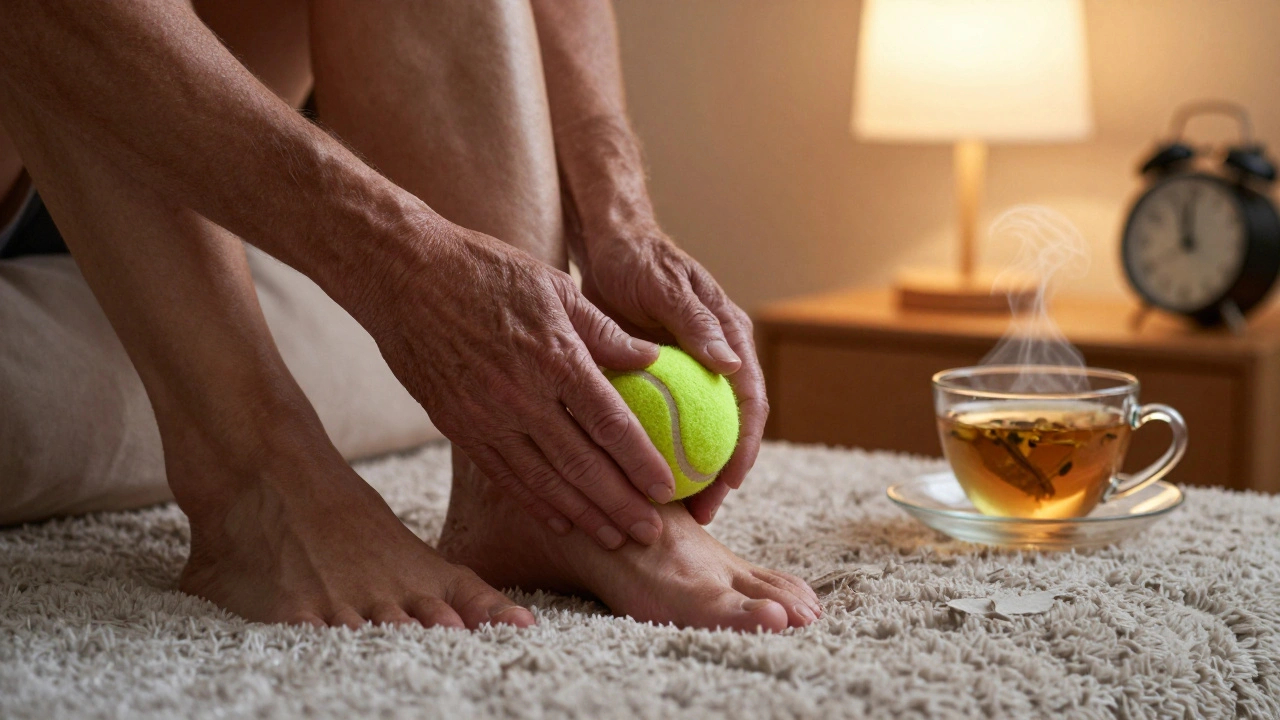
People with plantar fasciitis-a common cause of heel pain-often find relief through daily self-massage. A 2021 trial showed that those who spent just 10 minutes a day rolling their feet over a tennis ball reduced their pain by 65% after six weeks. No drugs. No injections. Just pressure and consistency.
Even if you don’t have pain, the benefits add up. Swollen ankles? A 15-minute foot rub can help drain fluid. Insomnia? Massaging your feet before bed raises serotonin, which your body converts to melatonin. That’s the hormone that tells your brain it’s time to sleep.
How to Do It Right (Even If You’re Not a Therapist)
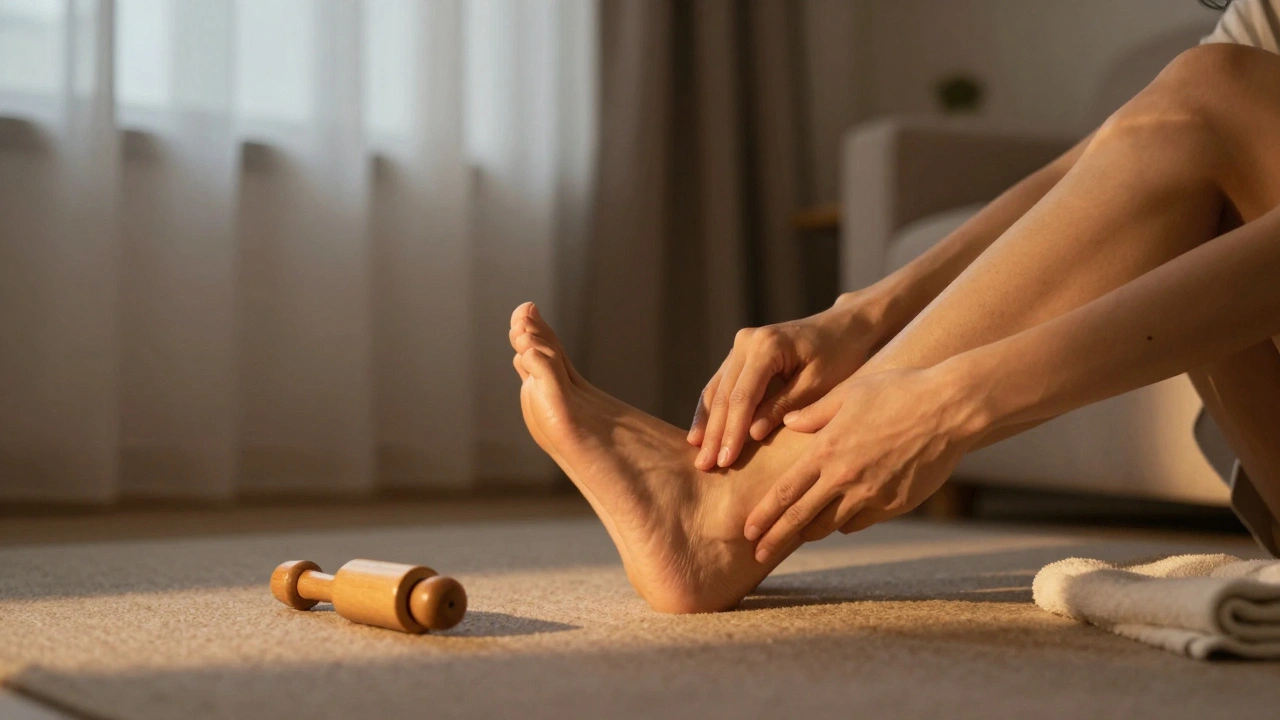
You don’t need expensive tools or years of training. Start simple. Sit in a chair, barefoot, with one foot resting on your opposite knee. Use your thumbs to apply slow, steady pressure. Don’t go hard-think of it like pressing into soft clay, not cracking a walnut.
- Start at the heel. Use your thumb to make small circles for 30 seconds.
- Move to the arch. Roll your thumb along the curve, pressing gently as you go.
- Work your way to the ball of the foot. This area is often tight. Spend extra time here.
- Pinch each toe between your thumb and finger. Gently pull and twist. It feels weird at first-but good.
- Finish by rubbing the top of your foot with your knuckles in long strokes.
Do this for 5 to 15 minutes a day. You can do it while watching TV, waiting for your coffee to brew, or right before bed. The key isn’t perfection. It’s repetition.

Tools That Help (But Aren’t Required)
Some people like using tools. A wooden roller, a spiked massage ball, or even a frozen water bottle can make the job easier. But they’re not necessary. Your hands are the best tool you already own.
If you do use a tool, keep it clean. Wash it with soap and water after each use. Don’t share it unless it’s sanitized. Bacteria thrive in warm, moist places-and your feet are perfect for them.
Some people swear by electric massagers. They’re fine for occasional use, but they can’t replace the awareness and adaptability of human touch. Your fingers feel how much pressure your foot needs. A machine just pushes the same force every time.
Who Should Avoid Foot Massage?
Most people benefit. But there are exceptions.
- If you have an open wound, infection, or severe bruising on your foot, wait until it heals.
- If you’re in your first trimester of pregnancy, avoid deep pressure on the inner ankle-it can trigger contractions in some women.
- If you have blood clots, deep vein thrombosis, or are on blood thinners, talk to your doctor first. Too much pressure could be risky.
- If you have neuropathy from diabetes, test sensitivity first. You might not feel if you’re pressing too hard.
If you’re unsure, start light. If it feels good, keep going. If it hurts, stop. Foot massage should never feel painful. It should feel like your body is sighing.
Make It a Habit
Foot massage doesn’t work as a one-time fix. It’s like brushing your teeth. Do it daily, and your body rewards you. Skip it for weeks, and you forget how good it feels.
Try this: Every night, after you wash your feet, spend five minutes massaging them. No phone. No TV. Just you and your feet. After a month, you’ll notice things: you fall asleep faster, your legs feel lighter, your posture improves because your body isn’t bracing for pain anymore.
It’s not glamorous. It’s not trendy. But it’s one of the most powerful wellness habits you can adopt-and it costs nothing.
When to See a Professional
If you have persistent pain, numbness, swelling, or changes in skin color, don’t rely on massage alone. See a podiatrist or physical therapist. Foot massage can support healing-but it can’t replace medical care.
Professional foot massage therapists use specific techniques based on anatomy, not guesswork. They know which points to target for digestive issues, hormonal balance, or lower back pain. If you’re serious about long-term wellness, a session every few weeks can deepen the benefits.
But don’t wait for a professional to start. Your hands are enough. Right now. Today. Just begin.