How Aromatherapy Massage Can Enhance Your Yoga Practice
Have you ever finished a yoga session and felt like something was still missing? You’ve stretched, breathed, and moved with intention-but your mind hasn’t fully let go. That’s where aromatherapy massage steps in. It’s not just a luxury; it’s a powerful partner to your yoga practice, deepening relaxation, quieting mental chatter, and helping your body release tension you didn’t even know you were holding.
Why Your Body Needs More Than Just Stretching
Yoga builds flexibility, strength, and awareness. But muscles don’t just tighten from physical strain-they hold onto emotional stress too. Think about how your shoulders creep up to your ears when you’re anxious, or how your jaw clenches during a tough workday. These patterns stick. No amount of downward dog will fully melt them away if your nervous system is stuck in fight-or-flight mode.
This is where scent becomes science. When you inhale essential oils like lavender, frankincense, or bergamot during a massage, molecules travel directly to your limbic system-the part of your brain that controls emotion, memory, and stress response. A 2023 study from the University of Westminster found that participants who received aromatherapy massage after yoga reported a 41% greater drop in cortisol levels than those who only did yoga. That’s not placebo. That’s biology.
How Aromatherapy Massage Works With Yoga
Think of yoga as clearing the room. Aromatherapy massage is the soft lighting and calming music that makes the space feel safe enough to truly rest.
- Before yoga: A light massage with citrus oils like sweet orange or grapefruit can gently awaken your senses, helping you transition from autopilot mode into mindful presence. It’s like turning on a warm lamp before stepping into a quiet room.
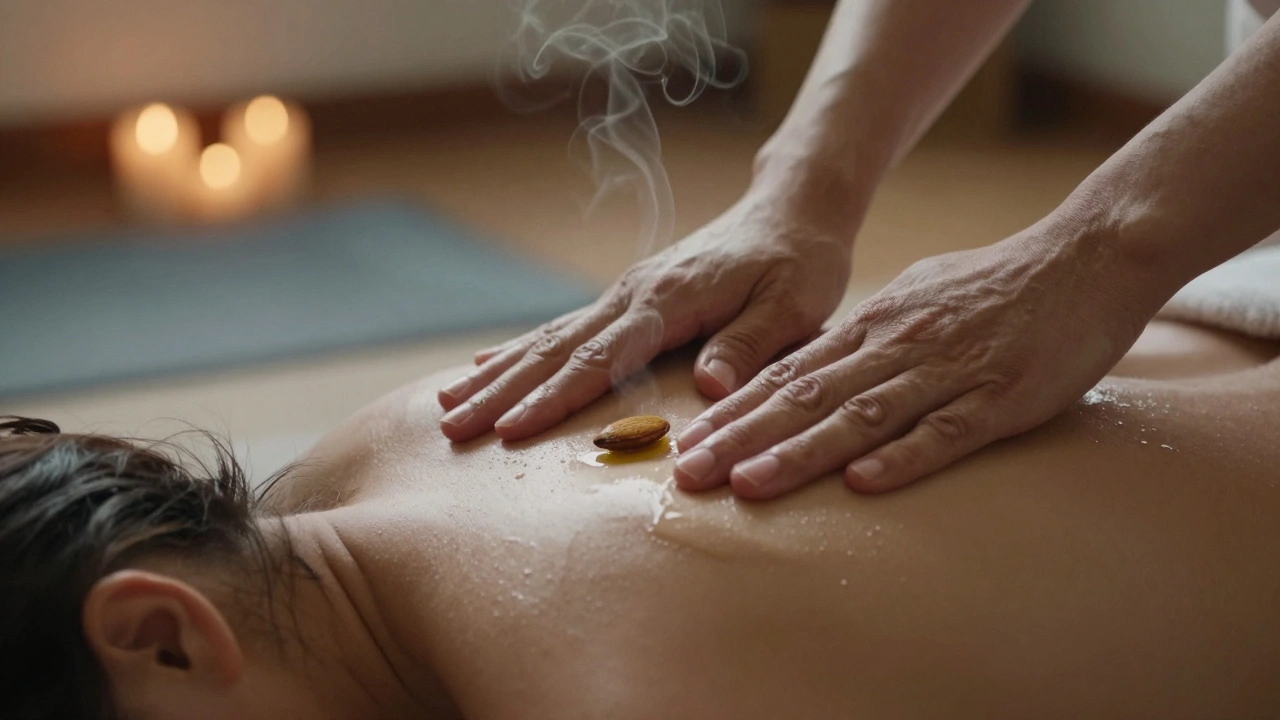
- After yoga: Lavender or chamomile oil blended into a slow, flowing massage helps your muscles relax deeper than stretching alone. The pressure of hands on skin signals safety to your nervous system. Combined with scent, it tells your body: You’re not in danger. You can let go.
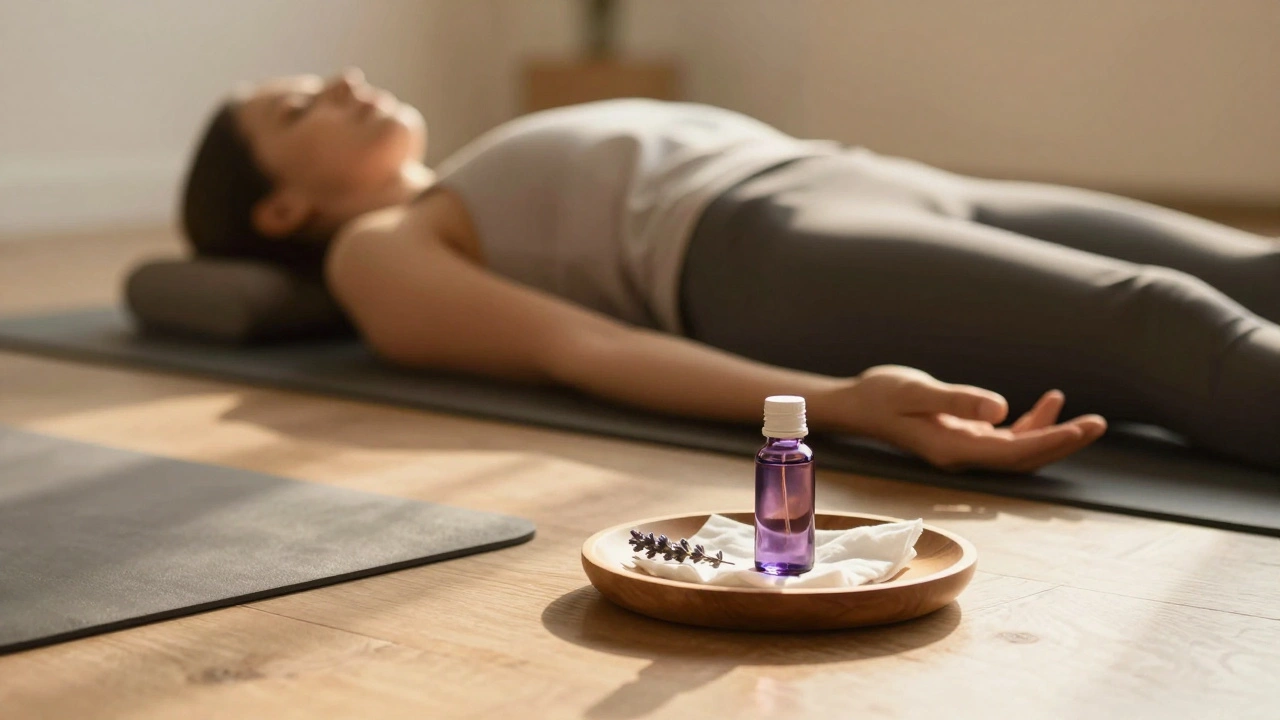
- During savasana: A single drop of cedarwood or sandalwood on a tissue near your mat can anchor your breath. The scent lingers, offering a subtle, non-intrusive focus point when your mind starts wandering.
Many yoga studios in London now offer post-class aromatherapy massage as part of their wellness packages. It’s not about replacing your practice-it’s about enhancing it.
The Best Essential Oils for Yoga Practitioners
Not all scents work the same. Some energize. Some soothe. Choose based on what you need-not what’s trendy.
| Oil | Effect | Best Used | Why It Works |
|---|---|---|---|
| Lavender | Calming, sleep-supporting | Post-yoga, bedtime | Reduces heart rate and promotes parasympathetic activation-perfect for winding down. |
| Bergamot | Mood-lifting, anxiety-reducing | Pre-yoga, morning practice | Contains linalool and linalyl acetate, compounds proven to lower stress hormones. |
| Frankincense | Grounding, meditative | During meditation, savasana | Slows and deepens breath, helps quiet mental chatter. |
| Eucalyptus | Clearing, invigorating | Post-workout, energy slump | Opens airways and improves oxygen flow-great for pranayama practices. |
| Chamomile | Anti-inflammatory, soothing | After intense sessions | Reduces muscle soreness and calms nervous system sensitivity. |
Always dilute essential oils in a carrier oil like sweet almond, jojoba, or coconut. Never apply neat oils to skin. A safe blend is 2-3 drops per tablespoon of carrier oil.
Real-Life Impact: What People Experience
One regular at a studio in Notting Hill started combining weekly yoga with biweekly aromatherapy massage after a car accident left her with chronic shoulder tension. She’d been doing yoga for years but couldn’t get past the tightness. After six weeks of the combo, she stopped taking muscle relaxants. "It’s not magic," she told me. "It’s just that now, when I breathe in, my body believes I’m safe. And that lets everything else loosen up."
Another man in his 50s, a former runner with stiff hips, began using a drop of sandalwood on his wrists before yoga. He said it helped him stay present during long holds. "I used to think about my to-do list. Now, I smell the wood and remember to breathe. It’s like my body has a new language."
How to Try It Yourself
You don’t need a professional massage every time to benefit. Start small.
- Buy a 10ml bottle of high-quality lavender or frankincense essential oil from a reputable brand like Neal’s Yard or The Perfumer’s Apprentice.
- Blend it with 30ml of sweet almond oil in a dark glass bottle.
- After your yoga session, lie down in savasana. Put two drops of the blend on your palms, rub them together, and gently press over your temples, the back of your neck, and your feet.
- Breathe slowly for five minutes. Don’t move. Just smell. Just feel.
Do this three times a week. In under a month, you’ll notice your body settles into relaxation faster. Your breath deepens without effort. Your mind stops racing as quickly.
The Science Behind the Scent
It’s not just anecdotal. Research from the Journal of Alternative and Complementary Medicine shows that aromatherapy massage increases vagal tone-the nerve that regulates heart rate, digestion, and stress recovery. Higher vagal tone = better resilience to stress. That’s exactly what yoga aims for.
And here’s the kicker: the combination of touch and scent activates more brain regions than either one alone. A 2024 fMRI study found that when massage and lavender were paired, activity increased in the prefrontal cortex (decision-making), the insula (body awareness), and the amygdala (emotional regulation)-all at once. That’s the trifecta of mindful presence.

What to Avoid
Not all oils are safe for everyone. Avoid:
- Citrus oils (like lemon or bergamot) if you’re going into sunlight after-some can cause photosensitivity.
- Peppermint if you have low blood pressure or are pregnant.
- Any oil you’re allergic to. Always patch test: put a drop on your inner forearm and wait 24 hours.
Also, don’t use aromatherapy massage as a replacement for medical care. If you have chronic pain, trauma, or anxiety, combine it with professional therapy-not instead of it.
Final Thought: It’s Not About Doing More
You don’t need to add another hour to your week. You don’t need expensive equipment or classes. You just need to let scent and touch work together.
Aromatherapy massage doesn’t change your yoga practice. It deepens it. It helps you go from doing yoga to feeling yoga. From moving your body to truly resting in it. From checking a box to coming home to yourself.
Can I use aromatherapy massage if I’m pregnant?
Yes-but with caution. Avoid oils like rosemary, clary sage, and juniper berry. Stick to lavender, chamomile, and mandarin. Always consult your midwife or prenatal yoga instructor first. Use only 1-2 drops per tablespoon of carrier oil, and avoid abdominal massage in the first trimester.
How often should I combine aromatherapy massage with yoga?
Three times a week is ideal for noticeable results. But even once a week can make a difference if you’re consistent. If you’re under high stress, try twice a week for four weeks, then scale back. Listen to your body-not a schedule.
Do I need to go to a spa for this?
No. You can do a simple self-massage at home with a good-quality oil blend. Many yoga studios in London offer post-class aromatherapy as an add-on for £10-15, but the real benefit comes from making it part of your routine-even 5 minutes after your mat time.
Can aromatherapy massage help with anxiety?
Yes. Lavender, frankincense, and bergamot have been clinically shown to reduce anxiety symptoms. A 2023 meta-analysis of 12 studies found aromatherapy massage reduced anxiety scores by an average of 37% in adults with mild to moderate anxiety. It’s not a cure, but it’s one of the most effective non-pharmaceutical tools available.
What’s the difference between aromatherapy massage and regular massage?
Regular massage focuses on muscles and circulation. Aromatherapy massage adds the layer of scent to influence your nervous system, mood, and emotional state. The touch is similar, but the effect is deeper-it doesn’t just relax your body, it calms your mind. It’s massage with intention.
Next Steps
Start tonight. After your next yoga session, take two drops of lavender oil, mix them with a teaspoon of coconut oil, and massage your feet. Breathe. Sit still. Notice how your body responds. You might be surprised how much peace can come from a single scent and a few minutes of quiet touch.