
Flexibility and Massage: How Touch Improves Mobility and Reduces Tension
When you think of flexibility, the ability of your muscles and joints to move through their full range of motion. Also known as mobility, it’s not just for yoga practitioners—it’s essential for everyday movement, from bending down to pick up groceries to turning your head while driving. Many people assume flexibility is something you’re born with, but the truth is, it’s something you can build—and massage is one of the most effective ways to do it.
Massage therapy, the manual manipulation of soft tissues to relieve tension and improve function. Also known as bodywork, it doesn’t just feel good—it physically changes how your muscles behave. Studies show that regular massage helps break down adhesions in connective tissue, reduces muscle stiffness, and increases blood flow to tight areas. This isn’t just about relaxation; it’s about restoring your body’s natural movement. When your muscles aren’t locked up, your joints move easier. That’s why people who get regular massage often notice they can bend farther, twist more comfortably, and wake up without that stiff feeling. And it’s not just deep tissue or sports massage that helps. Even gentle Swedish or Thai techniques improve flexibility over time by calming the nervous system and signaling muscles to release.
Muscle tension, the persistent tightness in muscles caused by stress, poor posture, or overuse. Also known as chronic tightness, it’s the silent thief of flexibility. You might not even realize how tight your shoulders or hips are until you try to touch your toes or reach behind your back. Massage targets these areas directly, using pressure and movement to soften hardened tissue. It’s why so many Londoners who sit at desks all day turn to massage—not just to feel better, but to move better. When tension drops, your body naturally regains its range. You don’t need to stretch harder—you need to relax deeper.
And then there’s body relaxation, the state where muscles release their grip and the nervous system shifts from fight-or-flight to rest-and-digest. Also known as parasympathetic activation, this is the foundation of lasting flexibility. No amount of stretching works if your body is stuck in survival mode. Massage triggers this shift. It lowers cortisol, slows your heart rate, and tells your muscles it’s safe to let go. That’s when real progress happens—when flexibility isn’t forced, but earned through calm.
What you’ll find in the posts below isn’t just a list of massage types. It’s a practical guide to how touch—whether it’s a foot rub at home, a Thai session in Mayfair, or a hot stone treatment in Hampstead—helps you move with less pain and more ease. You’ll learn which techniques work best for tight hips, stiff necks, or sore backs. You’ll see how simple daily habits, like a 10-minute foot massage, can quietly improve your mobility over time. And you’ll discover why so many people in London keep coming back—not for luxury, but because their bodies finally feel free.
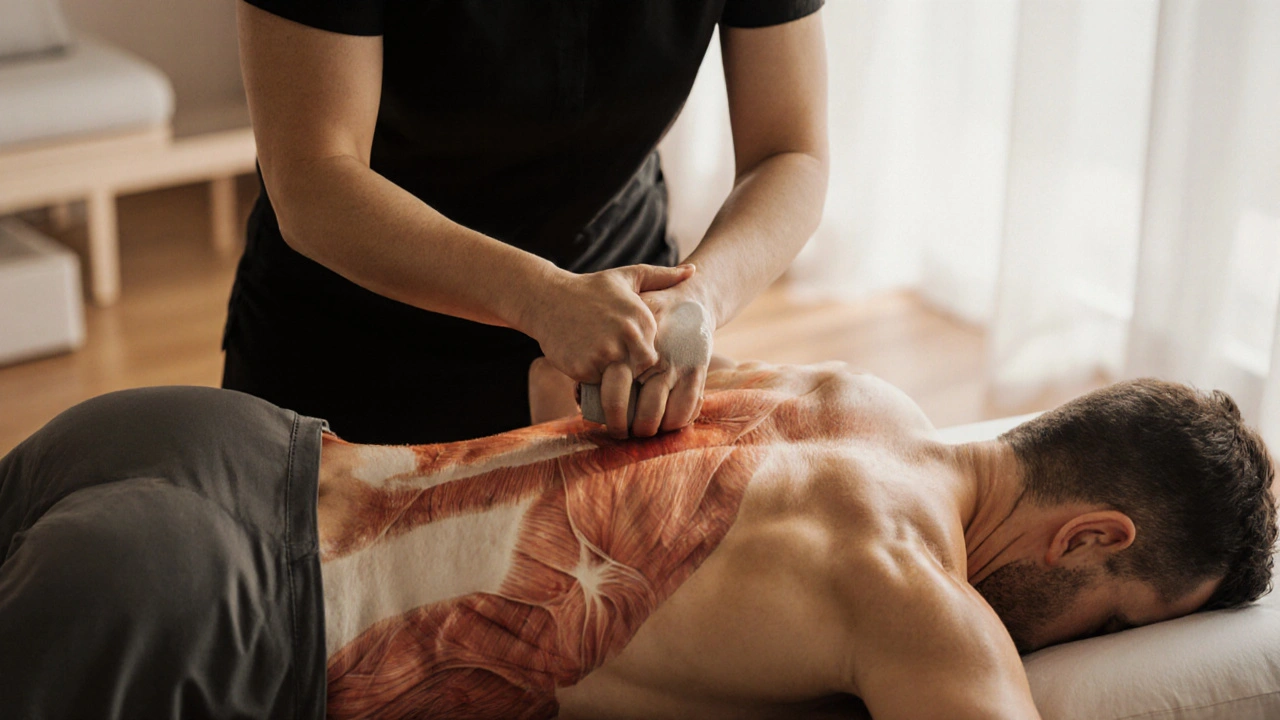
Deep Tissue Massage: How It Boosts Flexibility and Releases Chronic Tension
Deep tissue massage breaks down stubborn muscle adhesions to improve flexibility, reduce chronic pain, and restore natural movement. Learn how it works, who benefits most, and how to make it part of your routine.
VIEW MORE