
Thai Massage Techniques: Deep Stretching, Pressure, and Mobility for Londoners
When you think of Thai massage techniques, a dynamic form of bodywork that blends acupressure, assisted yoga postures, and rhythmic compression to restore mobility and release deep tension. Also known as Ancient Thai bodywork, it doesn’t use oils or require you to undress—just wear loose clothes and let your therapist guide your body through a series of controlled stretches and pressure points. Unlike Swedish or deep tissue massage, Thai massage moves you. It’s not passive. You’re not just lying there—you’re being gently pulled, twisted, and pressed into positions that open tight joints and reset your nervous system. This isn’t just relaxation—it’s active therapy designed for people who sit too long, stand too much, or move too little.
What makes Thai massage techniques stand out is how they connect bodywork, a hands-on approach to healing that treats the whole body as an interconnected system with traditional energy lines called sen lines. These aren’t meridians from acupuncture—they’re unique to Thai tradition, running from your toes to your head, and therapists apply pressure along them to clear blockages. You’ll feel it as a deep, rhythmic pulse in your muscles, not a sharp pain. This is the same method used for centuries in temples in northern Thailand, now adapted for busy Londoners dealing with chronic stiffness from desk jobs, commuting, or lack of movement.
Related to this is massage therapy, a broader category of treatments aimed at reducing pain, improving circulation, and restoring function through manual pressure. Thai massage is one branch of it—alongside Swedish, sports, and Indian head massage—all of which show up in the posts below. But Thai stands apart because it’s the only one that actively moves your limbs like a yoga session guided by someone who knows exactly where to press to unlock your hips, shoulders, or spine. You don’t need to be flexible. You don’t need to be athletic. You just need to be tired of feeling stiff every morning.
If you’ve ever tried a massage and walked out feeling relaxed but still tight, Thai massage might be what you’ve been missing. It doesn’t just soothe—it reprograms. The stretches open joints you didn’t know were stuck. The pressure on your lower back or neck doesn’t just ease pain—it resets how your muscles remember tension. And because it’s done fully clothed, it’s perfect for people who feel uncomfortable on a table. No oils. No awkwardness. Just real, lasting change.
Below, you’ll find real experiences from Londoners who’ve tried these techniques—from office workers who got relief after months of headaches, to athletes who improved their range of motion, to people who just wanted to stop waking up like they’d been hit by a truck. These aren’t marketing stories. They’re honest accounts of what happens when you let someone else move your body the way it was meant to move.
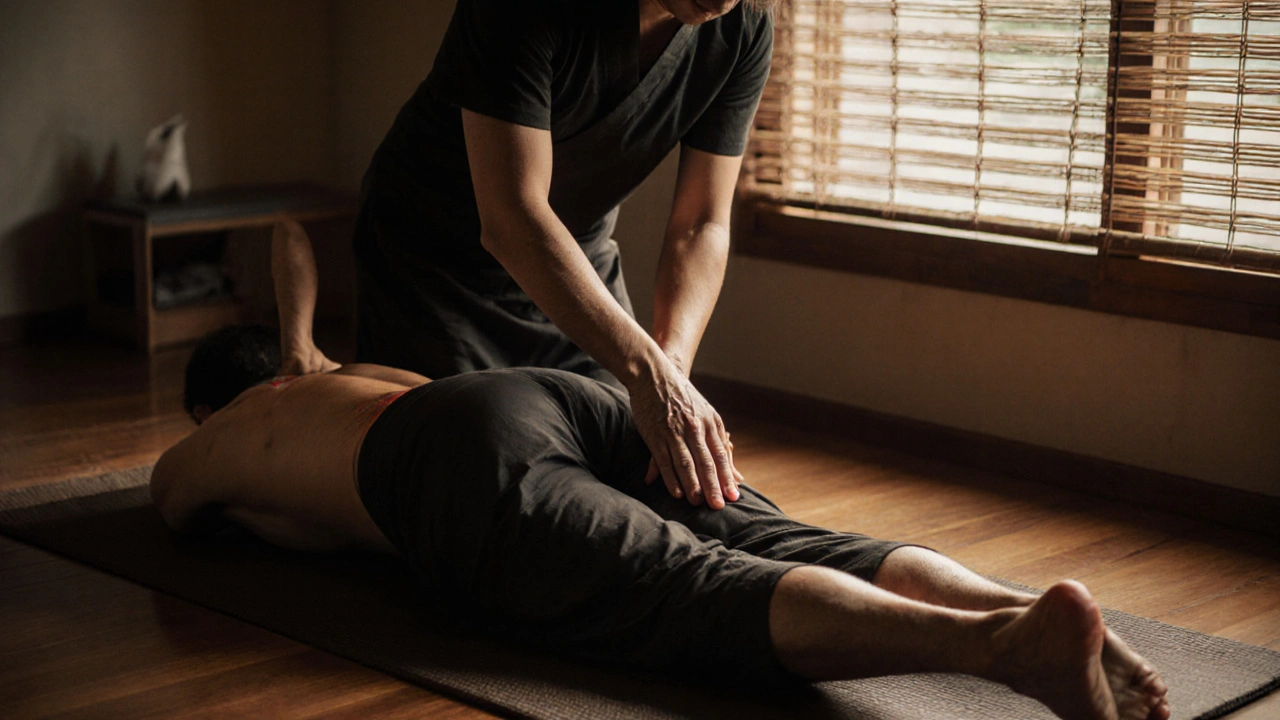
Thai Massage Techniques for Pain Relief: Proven Methods to Ease Chronic Aches
Thai massage uses deep pressure and passive stretching to relieve chronic pain. Learn how it works for back, neck, and joint pain, what to expect, and how often to get it for lasting relief.
VIEW MORE