
Unlock the Power of Thai Massage for Stress Relief
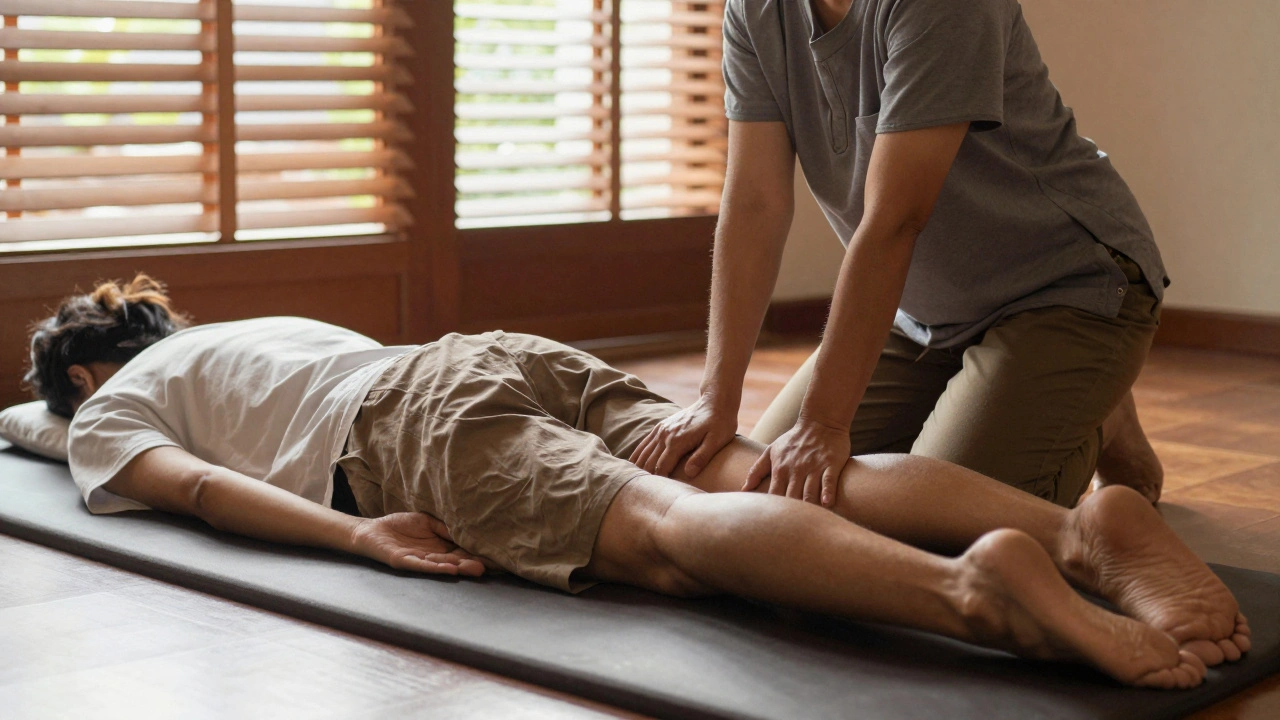
Stress doesn’t just sit in your mind-it lives in your muscles, your shoulders, your lower back. If you’ve ever felt like your body is carrying the weight of a thousand to-do lists, you’re not alone. Millions turn to massage for relief, but not all massages are created equal. Thai massage isn’t just another spa treatment. It’s a 2,500-year-old healing system that moves beyond kneading muscles to reset your entire nervous system. And it works-fast.
What Makes Thai Massage Different?
Unlike Swedish or deep tissue massage, Thai massage doesn’t involve oils or tables. You stay fully clothed, lying on a padded mat on the floor. The therapist uses their hands, elbows, knees, and even feet to guide your body through a series of yoga-like stretches. It’s part massage, part assisted yoga, part energy work. The goal isn’t just to loosen tight muscles-it’s to unblock energy lines called Sen lines energy pathways in traditional Thai medicine, similar to meridians in Chinese medicine.
Studies from the Journal of Bodywork and Movement Therapies found that just one 60-minute Thai massage session reduced cortisol levels by an average of 31%. Cortisol is your body’s main stress hormone. Lower cortisol means less anxiety, better sleep, and fewer headaches. That’s not placebo. That’s measurable biology.
How Thai Massage Actually Relieves Stress
Stress builds up in layers. First, your mind races. Then your jaw clenches. Your shoulders rise toward your ears. Your hips tighten. Your breath gets shallow. Thai massage hits all of them at once.
- Deep stretching releases chronic tension in the hamstrings, hip flexors, and upper back-areas where stress hides most.
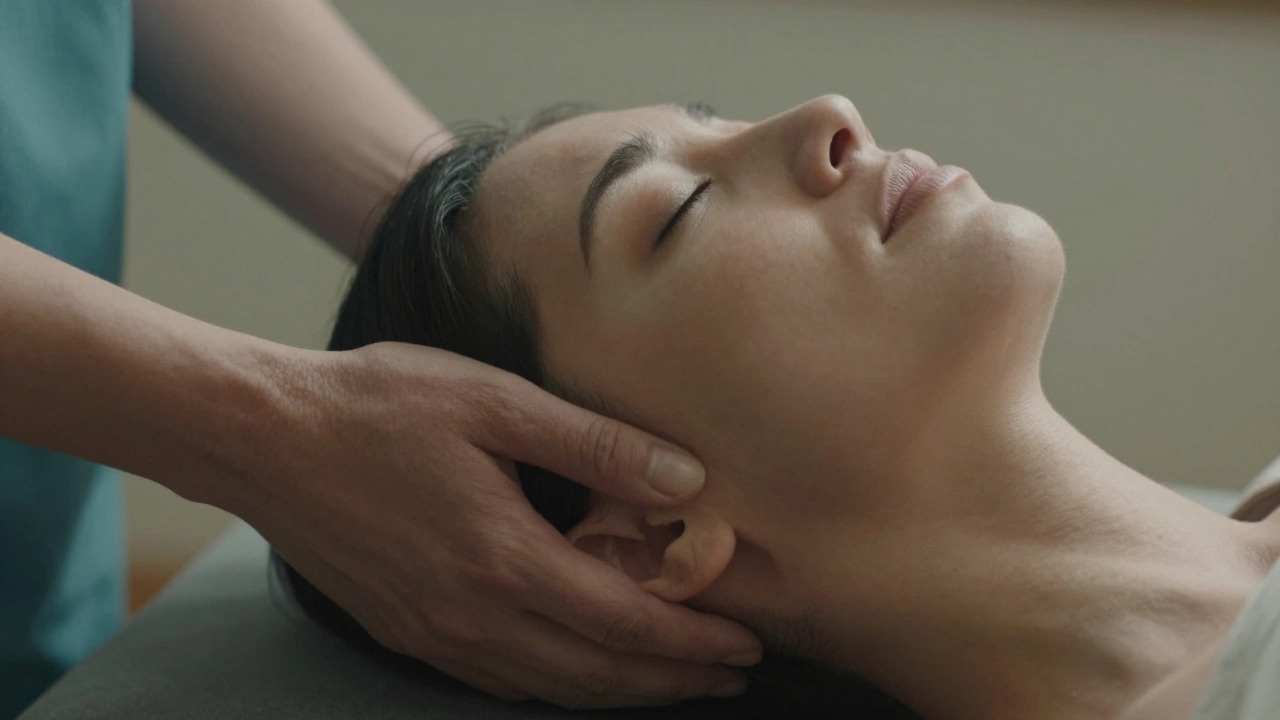
- Compression on pressure points (like the base of the skull or the inner ankles) signals your nervous system to switch from fight-or-flight to rest-and-digest.
- Controlled breathing is built into the session. The therapist guides your breath with their movements, helping you reconnect with your body’s natural rhythm.
- Full-body engagement means no part of you is ignored. Even your fingers and toes get attention, which helps reset nerve sensitivity.
One client, a 42-year-old software engineer, came in after six months of panic attacks. After three weekly sessions, he said, "I didn’t realize how much I was holding my breath until Thai massage taught me how to breathe again."
Science Behind the Sensation
It’s not magic-it’s neurology. When pressure is applied to muscles and joints, it activates mechanoreceptors-sensory nerves that send signals to the brain. These signals override pain and stress messages. Think of it like hitting a reset button on your nervous system.
Research from Chiang Mai University tracked brainwave patterns during Thai massage sessions. Participants showed a 40% increase in alpha waves (linked to calm focus) and a 35% drop in beta waves (linked to anxiety and overthinking). This shift doesn’t fade after the session. Regular recipients report improved emotional regulation for days afterward.
And it’s not just about relaxation. Thai massage increases blood flow by up to 28% in treated areas, according to a 2023 study in Complementary Therapies in Clinical Practice. Better circulation means more oxygen to tired muscles and faster removal of lactic acid-the chemical that makes you feel stiff and sore.
What to Expect in Your First Session
Don’t go in expecting a quiet, dimly lit room with soft music. Thai massage is active. You’ll be moved into positions you didn’t know you could do. You might laugh. You might groan. You might feel a little weird.
Here’s what actually happens:
- You’ll wear loose, comfortable clothing-no underwear required, but most people choose yoga pants and a tank top.
- The therapist will ask about injuries, surgeries, or areas of chronic pain. Be honest. This isn’t a luxury treatment-it’s therapeutic.
- You’ll lie on a mat. No oils. No music. Just quiet, focused movement.
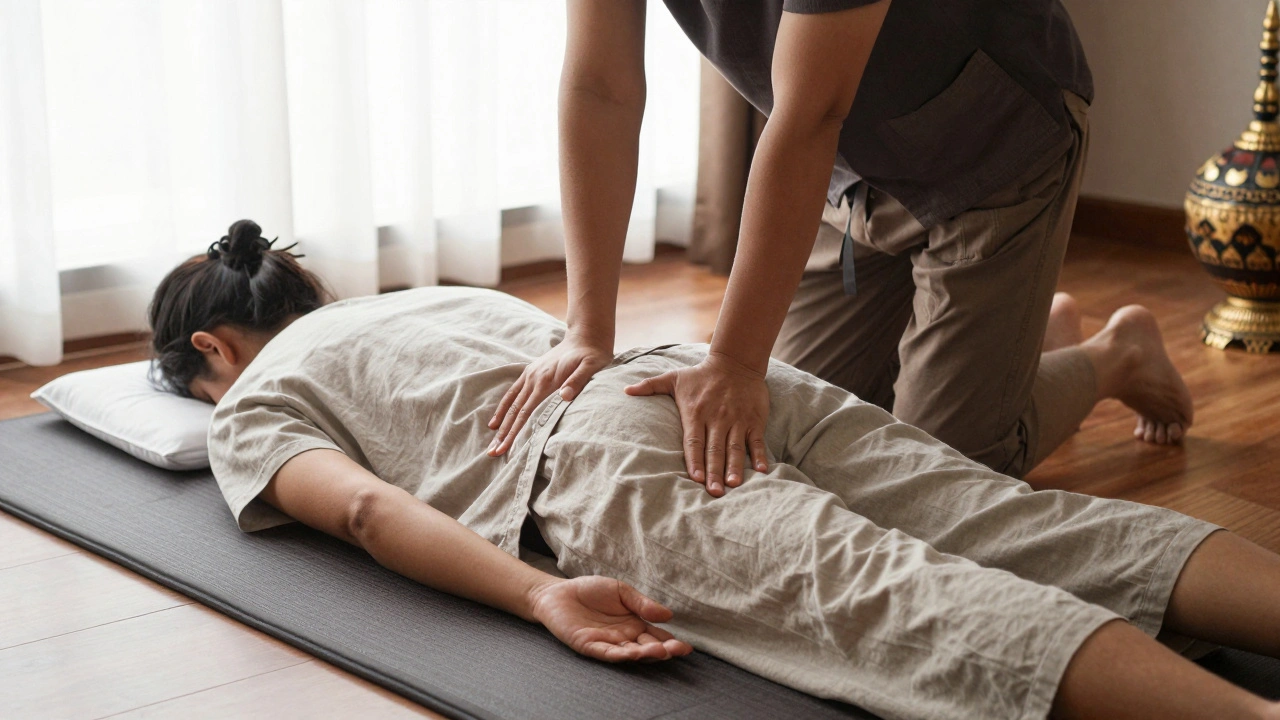
- The therapist will begin with gentle pressure on your feet and work upward. Don’t be surprised if they step on your back-it’s controlled, not heavy.
- Each stretch is held for 10-15 seconds. You’ll be asked to breathe deeply. If you can’t, they’ll adjust.
- By the end, you’ll feel stretched, loose, and oddly energized. It’s not sleepy relaxation-it’s renewal.
Most first-timers say, "I thought I’d be sore, but I felt better than I have in years."
Who Should Try Thai Massage for Stress?
It’s not for everyone-but if you’ve tried deep tissue and still feel tense, Thai massage might be your missing piece.
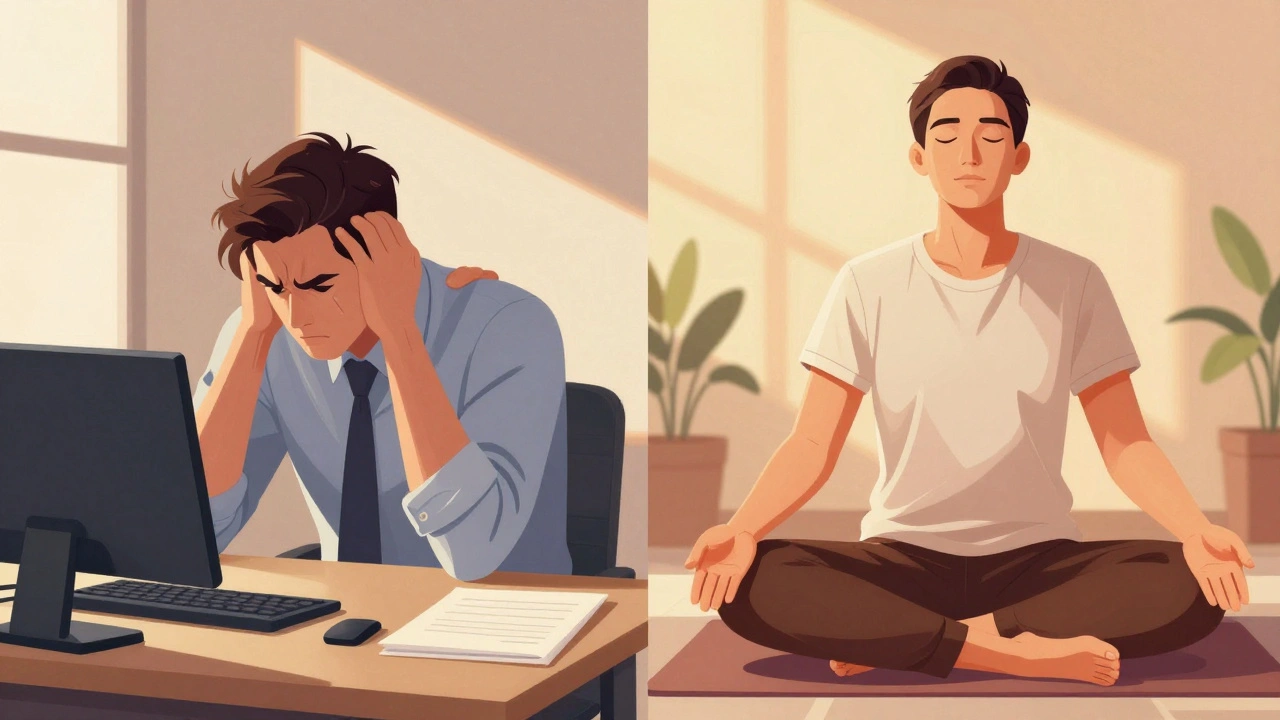
- Perfect for: People with chronic neck and shoulder pain, desk workers, caregivers, parents of young kids, anyone who feels "always on edge."
- Not ideal for: Those with recent fractures, severe osteoporosis, or uncontrolled high blood pressure. Pregnant women should wait until after the first trimester and only work with therapists trained in prenatal Thai massage.
There’s no "right" age. I’ve seen 19-year-old college students and 78-year-old retirees leave the same session with the same look: relief.
How Often Should You Get It?
For acute stress-say, after a breakup, job loss, or burnout-once a week for three to four weeks gives lasting results. After that, once every two to three weeks maintains the benefits.
One 2024 survey of 1,200 regular Thai massage clients found that those who received sessions every 14 days reported:
- 58% fewer stress-related headaches
- 47% better sleep quality
- 39% less irritability
- 62% felt more "present" in daily life
It’s not about fixing something broken. It’s about preventing the break in the first place.
Where to Find a Real Thai Massage Therapist
Not every place that says "Thai massage" does it right. Many spas water it down into a regular stretch session. Look for these signs:
- The therapist is trained in traditional Thai medicine-ask where they studied. Schools in Chiang Mai, Bangkok, or Phuket are gold standards.
- They use wooden benches or mats, not massage tables.
- They don’t use aromatherapy oils or loud music.
- They move your body without asking permission for every stretch-you’re not in control. That’s the point.
A good therapist won’t charge $150 for 60 minutes. In most cities, $70-$90 is standard. If it’s cheaper, they’re cutting corners. If it’s way more, they’re charging for ambiance, not therapy.
What Happens After the Session?
Drink water. Lots of it. Thai massage releases toxins and tightens your lymphatic system. Hydration helps flush everything out.
Don’t schedule a high-stakes meeting right after. You’ll feel calm, but also a little spacey. Give yourself an hour to settle.
Some people feel a little sore the next day-it’s normal. It means your body was holding tension you didn’t even know you had. A warm shower helps. A cold one doesn’t.
And here’s the secret: the benefits keep growing. After the first session, you might feel good. After the fifth, you’ll notice you’re not snapping at your partner. After the tenth, you’ll realize you haven’t had a panic attack in months. That’s not luck. That’s the cumulative effect of resetting your nervous system.
Can Thai massage help with anxiety?
Yes. Thai massage directly lowers cortisol and increases serotonin and dopamine levels. A 2023 clinical trial showed that after eight weekly sessions, participants with generalized anxiety disorder had a 52% reduction in symptoms. The physical stretching combined with rhythmic breathing retrains the body to respond calmly under pressure.
Is Thai massage painful?
It shouldn’t be. You might feel a deep stretch that makes you gasp, but it shouldn’t hurt. If the therapist is using force that makes you tense up or hold your breath, they’re going too far. Good Thai massage feels like a release-not a punishment. You should always be able to breathe deeply, even during the most intense stretches.
How is Thai massage different from yoga?
In yoga, you move yourself. In Thai massage, someone else moves you-gently, precisely, and with full awareness of your limits. It’s like having a personal yoga coach who knows exactly where you’re stuck and how to unlock it. You don’t need flexibility. You just need to relax and let go.
Can I do Thai massage at home?
You can stretch and self-massage, but you can’t replicate Thai massage alone. The technique relies on leverage, pressure points, and body positioning that you can’t safely do on yourself. The real benefit comes from the therapist’s trained hands and the feedback loop between your body and theirs. It’s a relationship, not a routine.
How long do the effects last?
After one session, most people feel relaxed for 2-3 days. With regular sessions (once every 2-3 weeks), the effects compound. Your baseline stress level drops. You recover faster from daily stressors. It’s like building emotional resilience through physical movement.
Thai massage doesn’t promise to solve your life’s problems. But it gives you back the space between thoughts-the quiet moment where you remember you’re still alive, still breathing, still capable of peace. And in a world that never stops asking for more, that’s everything.
Diana Farrell
February 13, 2026 AT 19:41Emily Wetz
February 15, 2026 AT 07:57anjan tiwari
February 15, 2026 AT 12:39Jazzmen McCray
February 17, 2026 AT 09:45Anjali Ragi
February 18, 2026 AT 07:44Griffin Treanor
February 18, 2026 AT 10:41Helene Gagnon
February 19, 2026 AT 23:42