
Unlock the Secrets of Deep Tissue Massage: A Complete Guide

Ever felt like your muscles are locked in a vice grip, no matter how much you stretch or foam roll? You’re not alone. Millions of people deal with deep, stubborn tension that just won’t let go-especially in the back, shoulders, and hips. That’s where deep tissue massage steps in. It’s not just a stronger version of a Swedish massage. It’s a targeted, therapeutic approach designed to break down chronic muscle knots and realign deep layers of connective tissue. If you’ve tried everything else and still feel tight, this might be the missing piece.
What Exactly Is Deep Tissue Massage?
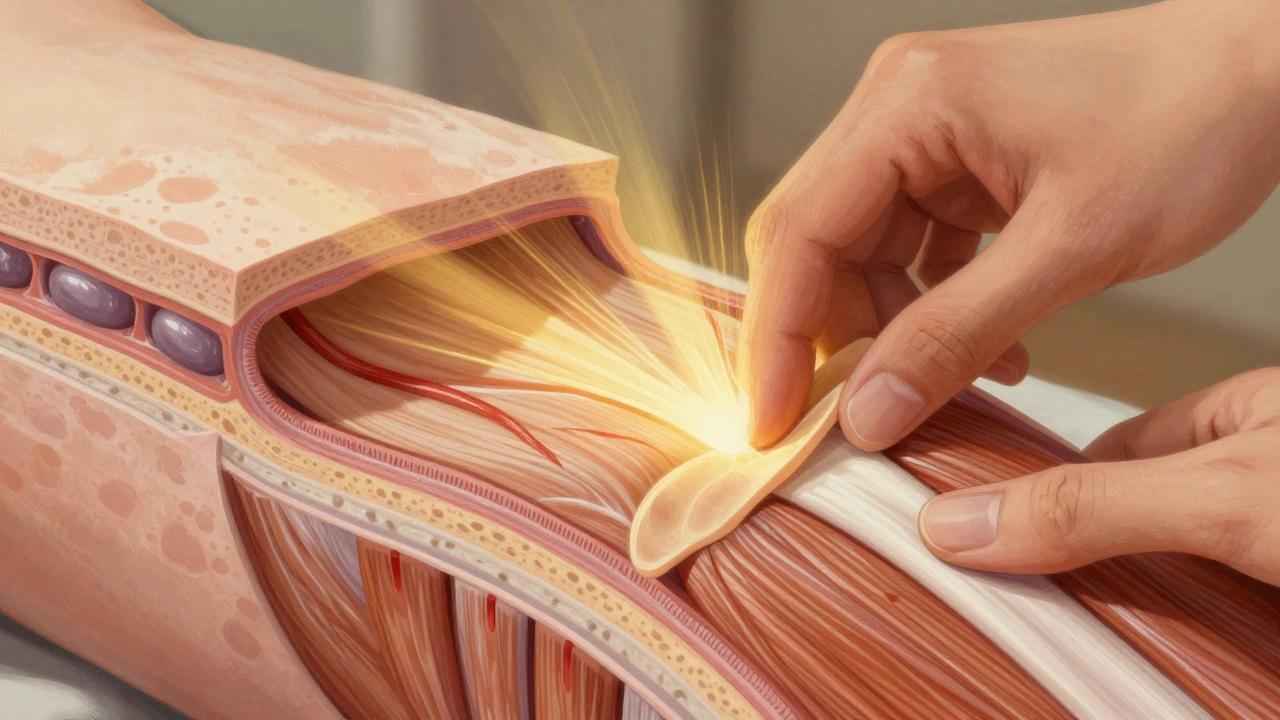
Deep tissue massage uses slower strokes and more pressure than other massage types. It’s not about relaxation-it’s about repair. The therapist works directly into the deeper layers of muscle and fascia (the tough, fibrous tissue that surrounds muscles). Think of it like peeling back layers of an onion: the surface might feel okay, but the real problem lies beneath.
This technique targets adhesions-those sticky, scar-like bands that form between muscles and fascia after injury, overuse, or poor posture. These adhesions restrict movement, cause pain, and even lead to referred pain elsewhere in the body. A 2021 study in the Journal of Bodywork and Movement Therapies found that participants with chronic lower back pain saw a 47% reduction in pain intensity after six weekly deep tissue sessions.
It’s not magic. It’s anatomy. The pressure applied during deep tissue massage increases blood flow to the area, flushes out metabolic waste like lactic acid, and helps break down fibrous tissue. This allows muscles to return to their natural length and function.
Who Needs It? The Real Candidates
Not everyone needs deep tissue. If you’re looking for a relaxing spa experience, this isn’t it. But if you fit any of these profiles, you’re likely a good candidate:
- You have persistent muscle soreness that doesn’t improve with rest or light stretching
- You’re an athlete or fitness enthusiast with recurring tightness in hamstrings, quads, or shoulders
- You sit at a desk all day and feel constant tension in your upper back and neck
- You’ve had a past injury-like a car accident or sports strain-that never fully healed
- You have conditions like plantar fasciitis, tennis elbow, or IT band syndrome
One client I worked with in Melbourne-a warehouse supervisor-had shoulder pain for over three years. He’d tried physio, chiropractic care, even acupuncture. Nothing stuck. After four deep tissue sessions focused on his rotator cuff and upper trapezius, he could lift boxes without wincing. His story isn’t unique. Deep tissue works when other methods fail because it goes where other massages don’t.
What Happens During a Session?
A typical session lasts 60 to 90 minutes. You’ll lie on a massage table, usually covered with a sheet. The therapist will start with lighter strokes to warm up the tissue, then gradually increase pressure. You’ll be asked for feedback-this isn’t a ‘no pain, no gain’ situation. Some discomfort is normal, but sharp or shooting pain means you need to speak up.
Techniques include:
- Friction: The therapist uses fingertips or elbows to apply cross-fiber pressure to break up adhesions
- Stripping: Long, gliding strokes along the length of the muscle fiber
- Trigger point therapy: Focused pressure on specific knots that refer pain to other areas
Most people feel sore afterward-like after a tough workout. That’s normal. The soreness usually fades within 24 to 48 hours. Drinking water helps flush out released toxins and reduces stiffness.
How Often Should You Get It?
There’s no one-size-fits-all answer. If you’re dealing with acute pain or a recent injury, weekly sessions for 3-4 weeks can make a big difference. For maintenance, once every 3-6 weeks is enough for most people.
Overdoing it can backfire. Too much pressure too often can inflame tissues instead of healing them. Think of it like strength training: you need recovery time. Your muscles need 48 hours to repair after a deep session. That’s why most therapists recommend spacing sessions at least 4-7 days apart.
One thing to watch: if you feel worse after two sessions, it might not be the right approach for you. Some people have conditions like osteoporosis, recent surgery, or blood clotting disorders that make deep tissue risky. Always talk to your doctor first if you’re unsure.
Deep Tissue vs. Other Massage Types
It’s easy to confuse deep tissue with other massage styles. Here’s how they differ:
| Technique | Pressure | Goal | Best For |
|---|---|---|---|
| Deep Tissue Massage | High | Break down adhesions, realign tissue | Chronic pain, injury recovery, athletes |
| Swedish Massage | Light to moderate | Relaxation, circulation | Stress relief, general wellness |
| Sports Massage | Variable | Prevent or treat sports injuries | Active individuals, pre/post-event |
| Hot Stone Massage | Light to moderate | Relax muscles with heat | Stiffness from cold or tension |
Deep tissue is the only one designed to physically restructure tissue. Others soothe. This one rebuilds.
What to Expect After Your First Session
Right after? You might feel a little dazed or lightheaded. That’s normal-your body’s adjusting to increased circulation and released tension. Drink water. Rest. Avoid intense exercise for 24 hours.
Within 24 hours, soreness may peak. It’s common to feel like you’ve been hit by a truck. But here’s the twist: that’s when the real healing starts. By day three, many people report feeling looser, more mobile, and surprisingly energized. One client said, ‘It felt like someone untangled my spine.’
Some people see immediate results. Others need multiple sessions. Don’t quit after one. Think of it like brushing your teeth-you don’t expect instant results after one session, but consistency changes everything.
Common Myths About Deep Tissue Massage
- Myth: It has to hurt to work. False. Discomfort is okay. Pain is a red flag. A good therapist adjusts pressure to your tolerance.
- Myth: It’s just for athletes. Nope. Office workers, parents, and retirees benefit just as much. Chronic tension doesn’t care how active you are.
- Myth: You need to go weekly. Only if you’re in rehab. Maintenance is far more sustainable.
- Myth: It’s the same as a chiropractor. Chiropractors adjust bones. Massage therapists work on soft tissue. They complement each other, but they’re not interchangeable.

How to Find the Right Therapist
Not all massage therapists are trained in deep tissue. Look for:
- Certification in advanced massage therapy (not just basic relaxation techniques)
- Experience working with chronic pain or sports injuries
- Willingness to explain their technique and adjust pressure
- Positive reviews mentioning ‘deep work’ or ‘long-term relief’
Ask them: ‘What’s your approach to breaking down adhesions?’ If they give you a vague answer like ‘I just go deep,’ walk away. Good therapists can describe exactly which layers they’re targeting and why.
In Melbourne, clinics that specialize in musculoskeletal therapy often have therapists with backgrounds in physiotherapy or sports rehab. That’s a strong sign.
Can You Do It Yourself?
You can’t fully replicate a professional deep tissue session, but you can support it. Tools like foam rollers, lacrosse balls, or massage guns can help release surface tension. But they can’t reach the deeper layers like a trained hand can.
Try this: Roll a lacrosse ball along your upper back for 30 seconds, then pause on any tender spot for 10-15 seconds. Breathe. Don’t push through pain. This is maintenance-not treatment.
For true healing, you still need a therapist. Self-care keeps things manageable. Professional care fixes what’s broken.
When to Skip Deep Tissue Massage
It’s not for everyone. Avoid it if you have:
- Recent fractures or sprains (wait at least 6-8 weeks)
- Blood clotting disorders or are on blood thinners
- Open wounds, infections, or severe osteoporosis
- Recent surgery in the area being treated
- Advanced cancer or metastatic disease
If you’re pregnant, deep tissue on the lower back and abdomen is generally avoided. But gentle, modified deep tissue on the shoulders and legs can be safe with a certified prenatal therapist.
Always disclose your full medical history. Your therapist isn’t judging-they’re protecting you.
Final Thought: It’s Not a Luxury. It’s Prevention.
Deep tissue massage isn’t just for when you’re in pain. It’s a tool to stop pain before it starts. Think of it like oiling a machine. If you wait until the gears grind, you’ve already damaged them. Regular deep tissue sessions-once every six weeks-can keep your muscles supple, your posture aligned, and your movement free.
The body remembers tension. It holds onto it like a grudge. But with consistent, targeted care, you can rewrite that story. You don’t have to live with tight shoulders, stiff hips, or aching lower back. The solution isn’t always more stretching. Sometimes, it’s deeper pressure. And sometimes, that’s all it takes.
Is deep tissue massage painful?
It shouldn’t be painful, but it can be uncomfortable. You should feel a deep pressure that feels intense but manageable-like a good stretch. If it hurts sharply, feels numb, or causes you to tense up, tell your therapist immediately. They’ll adjust. Pain isn’t a sign it’s working-it’s a sign you’re at risk of injury.
How long does it take to see results?
Some people feel better after one session, especially if their tension is recent. For chronic issues, it usually takes 3-5 sessions spaced over 2-4 weeks to notice lasting change. The goal isn’t instant relief-it’s structural change. Once the tissue reorganizes, the relief sticks.
Can deep tissue massage help with sciatica?
Yes, but not always directly. Sciatica often comes from tight piriformis muscle compressing the sciatic nerve. Deep tissue focused on the glutes and hip rotators can relieve that pressure. However, if the root cause is a herniated disc, massage alone won’t fix it-it can help manage symptoms, but you’ll still need medical evaluation.
Should I get deep tissue before or after a workout?
After. Deep tissue can leave muscles feeling tender, which might affect your next workout. Waiting 24-48 hours after a session before intense training is ideal. If you’re using it for recovery, schedule it 1-2 days after a hard session to flush out lactic acid and reduce soreness.
Does insurance cover deep tissue massage?
Sometimes. If you have a referral from a doctor for a diagnosed condition like chronic lower back pain or tendonitis, some health funds in Australia (like Medibank or HCF) may cover it under ‘ancillary benefits.’ Always check your policy. Many clinics offer receipts you can submit for reimbursement.