
Unwind and Rejuvenate with Hot Stone Massage Therapy
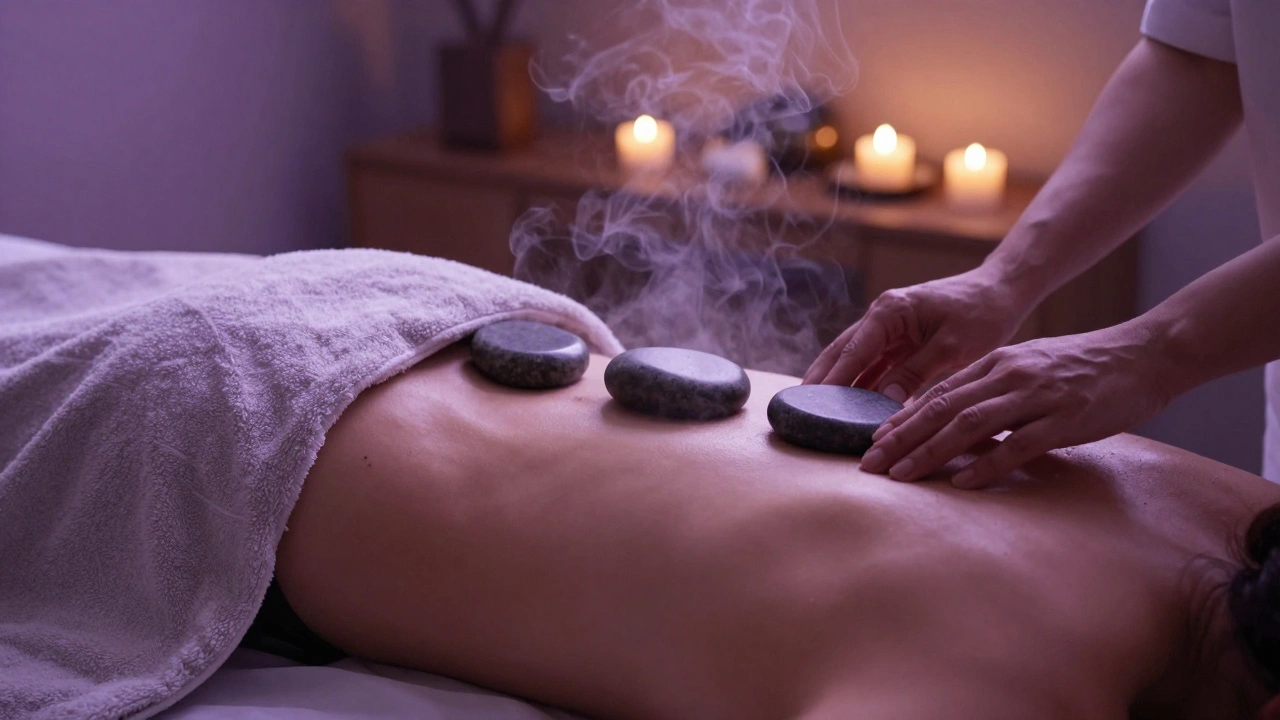
Imagine sinking into a warm, quiet room. The scent of lavender drifts through the air. Soft music plays just below hearing. Then, smooth, heated stones glide over your back-slowly, deliberately, melting tension you didn’t even know you were carrying. This isn’t fantasy. This is hot stone massage therapy, and it’s been helping people reset their nervous systems for centuries.
What Exactly Is Hot Stone Massage?
Hot stone massage uses smooth, flat basalt stones, heated to about 45-55°C (113-131°F), placed along your spine, hands, feet, and between tense muscles. Therapists also hold the stones to massage deeper layers of tissue. The heat doesn’t just feel good-it changes how your body responds.
Unlike a regular Swedish massage, where pressure is the main tool, hot stone therapy uses heat as its primary mechanism. The warmth relaxes muscles so thoroughly that the therapist can work deeper with less force. That means less discomfort and more release. Studies from the Journal of Bodywork and Movement Therapies show that heat application during massage increases blood flow by up to 30% in treated areas, helping flush out lactic acid and reduce inflammation.
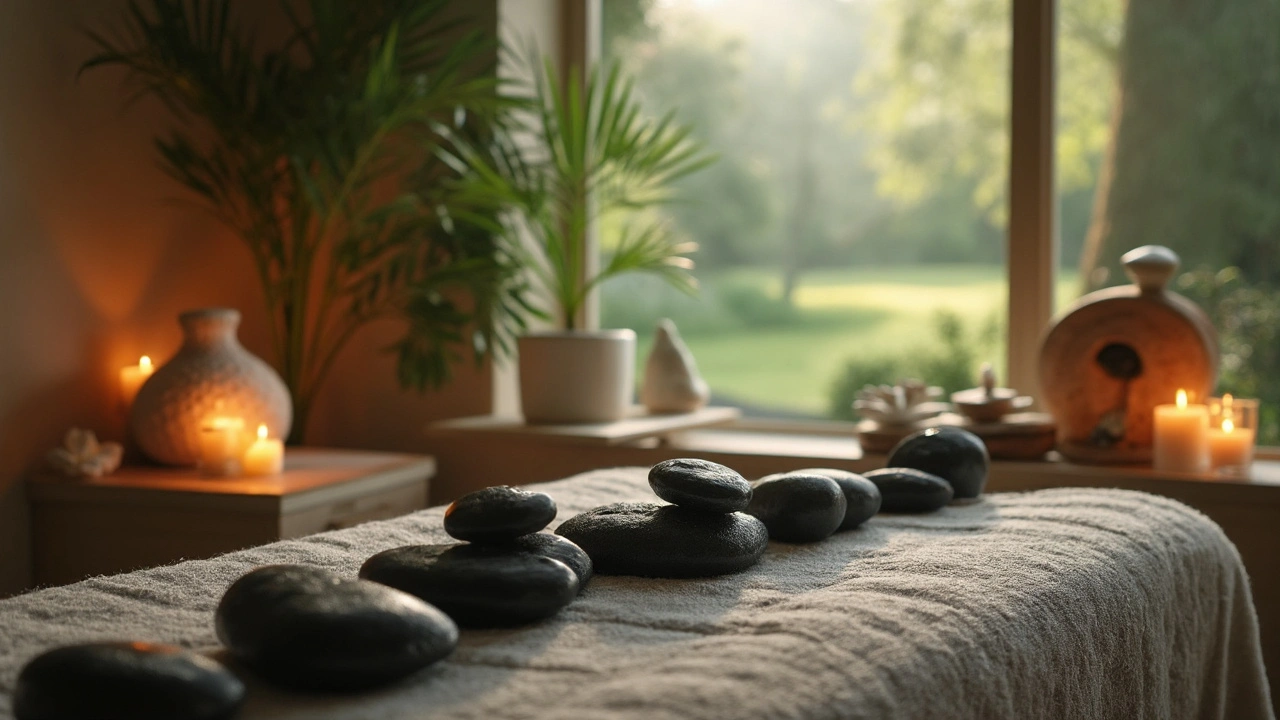
Basalt stones are used because they hold heat longer than other rocks. They’re naturally dense, rounded by river erosion, and free of sharp edges. Each stone is cleaned, sanitized, and tested for temperature before use. No one should ever feel burned.
How It Feels-And Why It Works
Most people describe the first touch of the stones as ‘surprisingly soothing,’ not scalding. The heat doesn’t shock-it welcomes. As the stones sit on your skin, your muscles begin to soften. Tight shoulders drop. Jaw unclenches. Breathing slows. It’s not just physical. The warmth triggers your parasympathetic nervous system-the part that says, ‘It’s safe to relax.’
Think of it like this: when you’re stressed, your body stays in ‘fight or flight.’ Muscles stay tight. Heart rate stays high. Cortisol stays elevated. Hot stone massage flips that switch. The heat sends signals to your brain: ‘You’re warm. You’re safe. You can let go.’ That’s why people often fall asleep during sessions-or wake up feeling like they’ve slept for eight hours, even if they only rested for 60 minutes.
One client in Melbourne, a nurse working 12-hour shifts, told me she started coming every three weeks after her first session. ‘I didn’t realize how much my shoulders were holding onto the day,’ she said. ‘Now I feel like I’m carrying less weight-physically and mentally.’
Who Benefits Most?
Hot stone massage isn’t just for people who want to ‘treat themselves.’ It’s a practical tool for specific kinds of stress and tension.
- People with chronic muscle stiffness-especially in the neck, back, and hips
- Those recovering from injury or surgery (once cleared by a doctor)
- Individuals dealing with anxiety, insomnia, or high cortisol levels
- People with arthritis or fibromyalgia (heat helps reduce joint stiffness)
- Anyone who sits at a desk all day or stands on their feet for work
It’s not a cure for disease, but it’s one of the most effective non-drug ways to manage pain and stress. A 2023 review in the International Journal of Therapeutic Massage & Bodywork found that regular hot stone sessions reduced self-reported pain levels by an average of 42% over eight weeks among participants with chronic lower back pain.
What Happens During a Session?
A typical session lasts 60 to 90 minutes. Here’s how it usually unfolds:
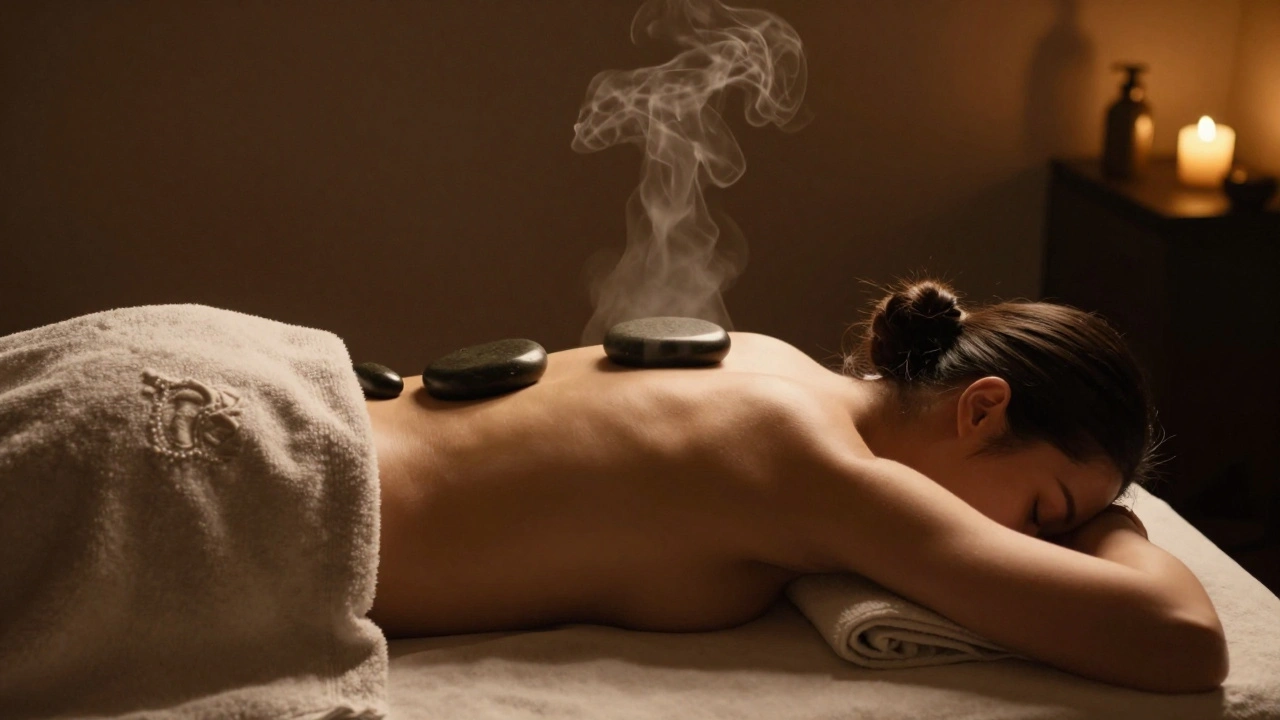
- You lie on a warmed table, covered with towels. The room is kept warm-no shivering allowed.
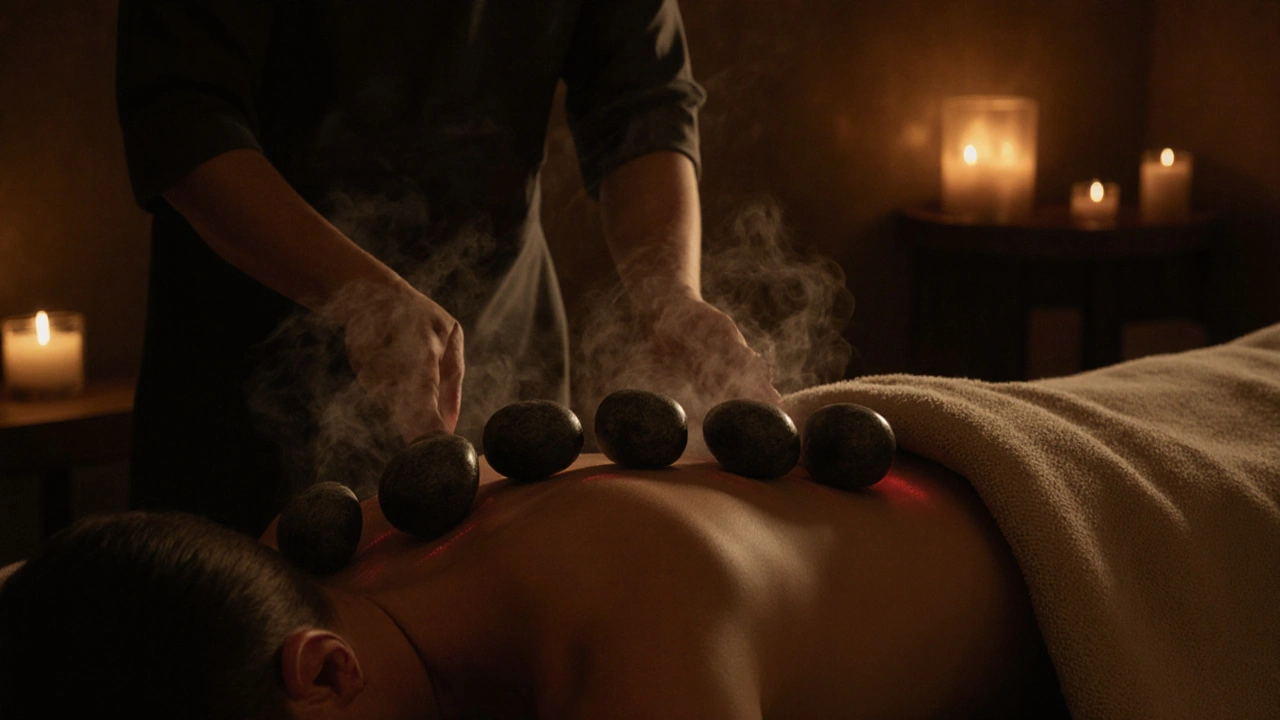
- The therapist places heated stones along your spine, palms, soles of your feet, and between your shoulder blades.
- While the stones rest, they begin to warm your deeper tissues.
- The therapist then uses the stones as tools, gliding them over your skin with oil, applying gentle pressure.
- Cold stones may be used briefly on inflamed areas to soothe swelling-this contrast helps regulate circulation.
- The session ends with a few minutes of quiet, often with a warm blanket draped over you.
You won’t be asked to remove all your clothes. Most people keep their underwear on. Towels are used to cover everything except the area being worked on. Privacy and comfort are non-negotiable.

What You Should Know Before Trying It
Hot stone massage is safe for most people-but not everyone.
Don’t book one if you have:
- Open wounds, burns, or recent skin infections
- Diabetes with poor circulation or nerve damage
- Blood clots or are on blood thinners
- High fever or active infection
- Pregnancy (unless the therapist is specially trained in prenatal hot stone)
Also, avoid it if you’re sensitive to heat. Some people with multiple sclerosis or lupus report discomfort from prolonged warmth. Always tell your therapist about any medical condition, even if you think it’s unrelated.
Hydration matters. Drink water before and after. The heat mobilizes toxins in your muscles, and your body needs water to flush them out. You might feel slightly lightheaded afterward-that’s normal. Rest for 15 minutes. Don’t jump into cold water or a brisk walk right after.
How Often Should You Do It?
There’s no universal rule. It depends on your goals.
- For acute tension or stress: once a week for 3-4 weeks, then monthly
- For chronic pain or recovery: every 2-3 weeks
- For maintenance and relaxation: once a month
Some people come seasonally-like in winter, when cold weather tightens muscles. Others use it as a monthly reset, like a mental health check-in.
One thing’s clear: the effects build over time. A single session gives relief. Regular sessions retrain your body to relax more easily.
Hot Stone vs. Other Massage Types
How does it compare to other popular therapies?
| Therapy | Primary Tool | Best For | Heat Used? | Depth of Pressure |
|---|---|---|---|---|
| Hot Stone Massage | Heated stones | Relaxation, chronic tension, stress | Yes | Medium to deep |
| Swedish Massage | Hands, oils | Light relaxation, circulation | No | Light to medium |
| Deep Tissue Massage | Hands, elbows | Chronic knots, scar tissue | No | Very deep |
| Aromatherapy Massage | Essential oils | Mood balance, anxiety | Optional | Light to medium |
| Thai Massage | Body weight, stretches | Flexibility, energy flow | No | Variable |
Hot stone stands out because it combines physical pressure with thermal therapy. You get the benefits of both touch and temperature-something no other massage offers in the same way.

Can You Do It at Home?
Some people buy heated stone kits online. They look tempting. But here’s the truth: home stone massage rarely works well.
Therapists spend years learning how to control temperature, placement, and pressure. Too hot, and you risk burns. Too cold, and you get no benefit. The stones need to be heated evenly-something home heaters can’t guarantee. And positioning them correctly on your own back? Nearly impossible.
Instead, if you want to recreate the feeling at home, try a warm bath with Epsom salts and lavender oil. Or use a heating pad on your shoulders for 20 minutes while breathing deeply. It won’t replace a professional session, but it can help bridge the gap.
Why This Therapy Endures
Hot stone massage isn’t new. Ancient cultures-from the Navajo to the Chinese-used heated stones for healing. What’s changed is the science behind it. We now know why heat works: it dilates blood vessels, reduces muscle spindle activity, and lowers pain signal transmission.
It’s not flashy. No machines. No needles. Just warm stones, skilled hands, and quiet space. In a world full of noise, that’s revolutionary.
If you’re tired of pushing through pain, if your body feels like it’s always braced for the next thing-this might be the reset you’ve been looking for. Not because it’s trendy. But because it works.
Is hot stone massage painful?
No, it shouldn’t be. The heat relaxes muscles so the therapist can use less pressure. If you feel pain, speak up. The stones should feel warm, not hot. A good therapist adjusts based on your feedback.
Can hot stone massage help with anxiety?
Yes. The combination of warmth, rhythmic touch, and quiet environment activates the parasympathetic nervous system, which lowers heart rate and cortisol. Many clients report feeling calmer for days after a session.
How long do the effects last?
Immediate relaxation lasts 24-48 hours. For lasting changes-like reduced chronic pain or better sleep-regular sessions every 2-4 weeks are needed. The body learns to relax more easily over time.
Are the stones cleaned properly?
Yes. Reputable therapists sterilize stones after each use with hospital-grade disinfectants. Stones are also inspected for cracks or damage. Ask your therapist about their cleaning process if you’re unsure.
Can I get a hot stone massage while pregnant?
Only if performed by a therapist trained in prenatal massage. Heat must be carefully controlled, and stones should never be placed on the abdomen. Always consult your doctor first.
What to Do After Your Session
Don’t rush out. Take a few minutes to sit quietly. Drink water. Avoid caffeine or alcohol for the next few hours-they can undo the calming effects.
If you feel sore the next day, it’s likely because your body is releasing stored tension. A warm shower helps. Gentle stretching too. But if you feel sharp pain, swelling, or numbness, contact your therapist. That’s not normal.
Try keeping a journal for a week after your session. Note how you sleep, how your body feels in the morning, whether your mind feels quieter. Many people are surprised by how much the small things change.
Hot stone massage isn’t a luxury. It’s a way to reconnect with your body after years of ignoring its signals. You don’t need to be broken to benefit. You just need to be tired. And that’s enough.
Dan Mihai
December 25, 2025 AT 09:45bro i tried this after reading some ‘neuroplasticity’ blogs and honestly? it’s the only thing that’s made my trapezius stop screaming at me like a caffeinated squirrel. basalt stones > foam rollers any day. the heat doesn’t just relax-it *reprograms* your fascia. also, if your therapist uses stones that aren’t river-polished basalt, you’re literally wasting your cortisol budget. 🤷♂️
gangadhar balina
December 25, 2025 AT 11:02This is what happens when westerners rediscover what ancient ayurvedic sages knew 5000 years ago. We used heated volcanic stones in Kerala long before ‘wellness’ became a LinkedIn buzzword. The science? Predictable. The wisdom? Indigenous. And yet, here we are, paying $150 for someone to replicate what a village healer did for free. The irony is thicker than the massage oil.
Michelle Yu
December 25, 2025 AT 17:29i just did this for the first time last week and wow. it felt like my muscles finally gave up and said ‘ok fine, you win.’ i cried a little. not because it hurt, but because i realized i’d been holding my breath for 7 years. also, the therapist used lavender oil that smelled like a spa in Bali. 10/10 would melt again.
Dustin Lauck
December 27, 2025 AT 06:08Let me get this straight: we’ve spent centuries inventing machines to measure stress, track heart rate variability, and quantify cortisol-yet the most effective intervention is a pile of rocks warmed by fire and held by human hands? How profoundly beautiful. And how tragically simple. We don’t need apps, pills, or biohacks. We need silence, warmth, and someone willing to sit with us without trying to fix us. The stones aren’t magic. We are. We just forgot how to relax.
sarah young
December 28, 2025 AT 12:32just a quick note: i got one last month and my back hasn’t been the same since-in a good way. if you’re even a little curious, just try it. no need to overthink it. your body already knows it needs this.