
What Is the Theory Behind Indian Head Massage?
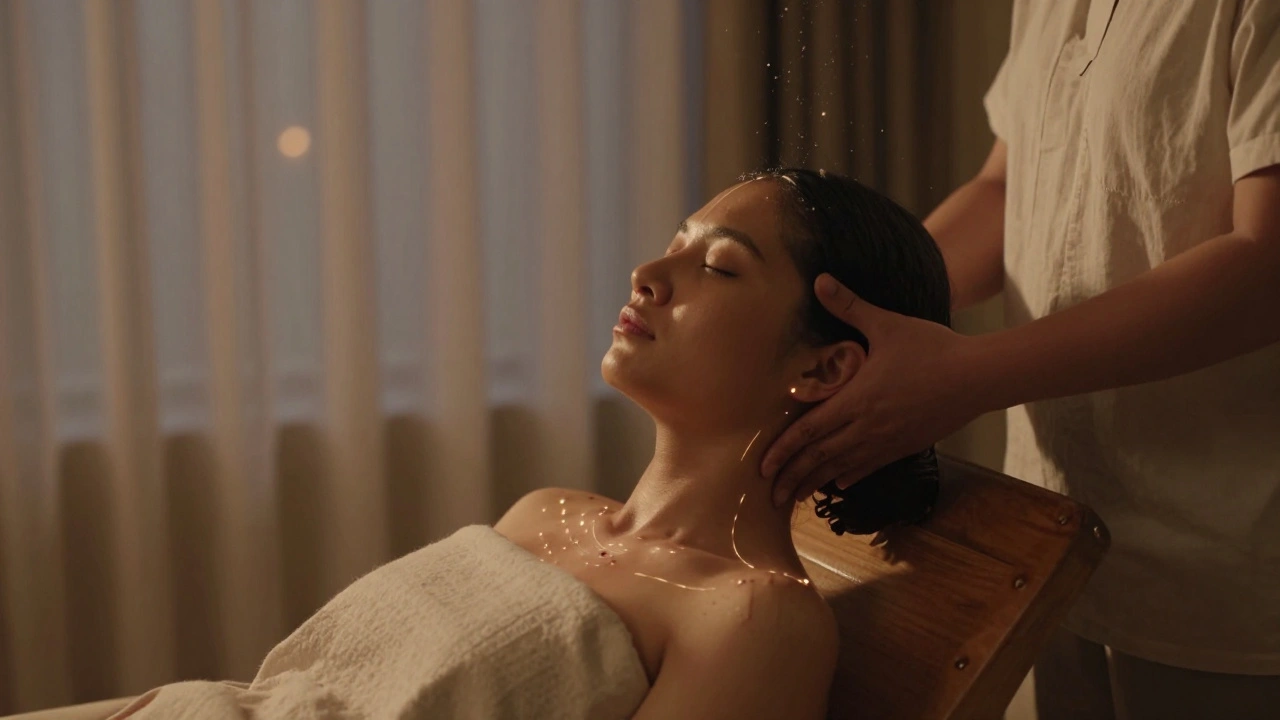
Indian head massage isn’t just about rubbing your scalp to feel relaxed. It’s a centuries-old practice rooted in a system of healing that goes far beyond surface-level comfort. If you’ve ever had one and felt a deep sense of calm-or even a sudden release of tension in your shoulders or jaw-you weren’t just getting a good rub. You were experiencing the effects of a theory built on energy, anatomy, and ancient wisdom.
The Origins in Ayurveda
The theory behind Indian head massage comes from Ayurveda, the traditional system of medicine from India that’s over 5,000 years old. Ayurveda doesn’t see the body as separate parts. It sees it as a network of energy, fluids, and channels working together. In this system, the head is not just where your brain sits-it’s considered the seat of consciousness, the connection point for all major energy pathways.
Ayurveda identifies three primary life forces, or doshas: Vata, Pitta, and Kapha. Each person has a unique balance of these, and when they’re out of sync, you feel it-in headaches, insomnia, anxiety, or even hair loss. Indian head massage works by restoring balance through touch, pressure, and rhythm. It’s not random. Every stroke, every circular motion on the scalp, every gentle pull on the ears, is designed to influence these forces.
The Marma Points: Where Energy Meets Touch
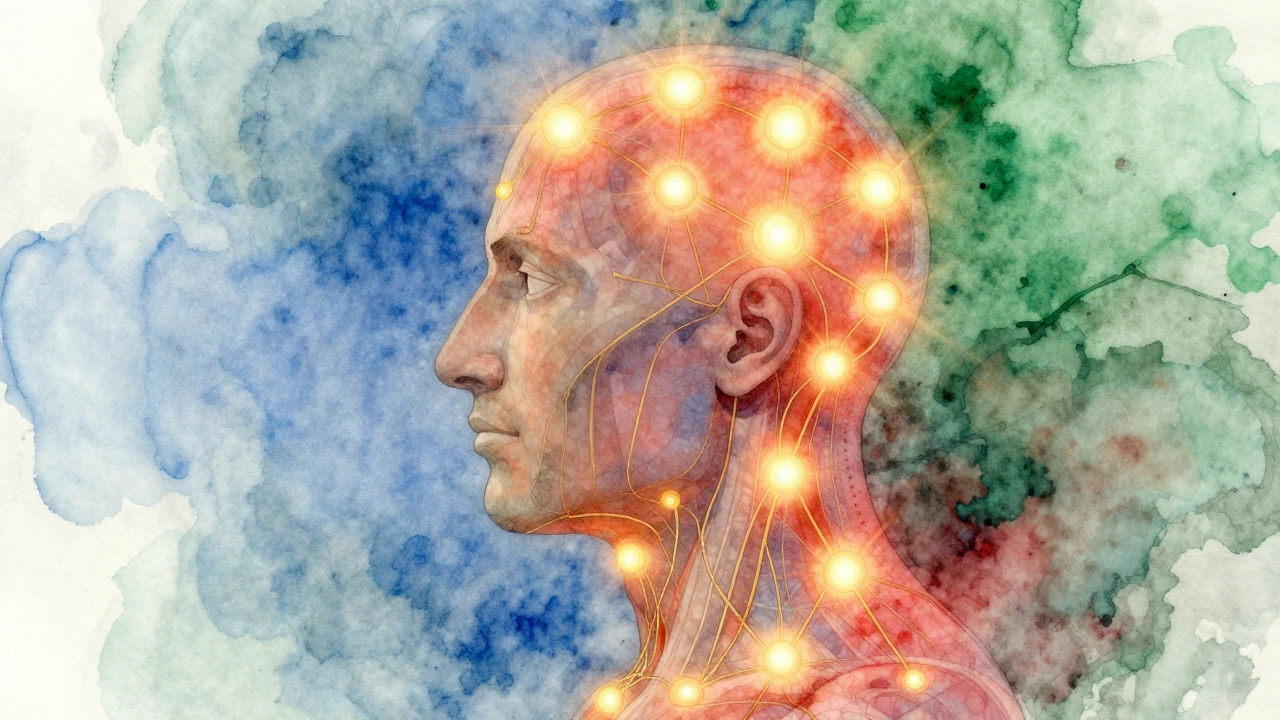
At the core of the theory are the marma points. These are 107 specific energy points in the body, according to Ayurvedic texts like the Sushruta Samhita. Of these, 22 are located in the head, neck, and shoulders. These aren’t just pressure points you find in acupressure charts-they’re seen as junctions where life energy (prana) flows, stored, and can become blocked.
For example, the Adhipati marma point, found at the center of the scalp, is linked to mental clarity and emotional balance. When this point is gently stimulated with the pads of the thumbs, it helps calm an overactive mind. The Parshva marma points along the sides of the head connect to the nervous system. Massaging them can reduce tension headaches and eye strain. Even the ears, often overlooked, contain marma points tied to digestion and hearing.
Practitioners don’t guess where to press. They follow a sequence based on which dosha is imbalanced. If someone has too much Vata (anxiety, dry skin, insomnia), the massage uses slow, grounding strokes with warm oil. If Pitta is high (anger, inflammation, hot flashes), cooler oils and lighter pressure are used. Kapha imbalances (fatigue, congestion) call for firmer, faster movements to stimulate circulation.
Energy Channels: The Nadis and Prana Flow
Ayurveda teaches that energy moves through 72,000 subtle channels called nadis. Three are considered primary: Ida, Pingala, and Sushumna. Ida runs along the left side of the spine and is linked to calm, introspective energy. Pingala runs along the right and governs action and heat. Sushumna, the central channel, connects the base of the spine to the crown of the head.
Indian head massage is designed to clear blockages in these channels, especially where they converge in the head. When you’re stressed, the Ida and Pingala channels get tangled. This leads to mental fog, poor sleep, or even migraines. The rhythmic movements of the massage-starting from the forehead, moving to the temples, then down the neck and shoulders-help untangle these channels. It’s like resetting a circuit.
Studies from the University of Westminster in 2017 showed that participants who received regular Indian head massage had measurable drops in cortisol levels, the stress hormone. Their heart rate variability improved, a sign their nervous system was shifting from fight-or-flight to rest-and-digest mode. That’s not magic. It’s the theory in action.
Why the Scalp Matters More Than You Think
The scalp has more nerve endings per square inch than almost any other part of the body. It’s packed with sensory receptors, blood vessels, and hair follicles that connect directly to the brain via the trigeminal nerve. When you massage the scalp, you’re not just stimulating the skin-you’re sending signals to the limbic system, the part of the brain that controls emotion and memory.
This is why people often feel emotional during or after a session. Tears, laughter, sudden calm-it’s common. The massage triggers a neurochemical response: serotonin rises, dopamine increases, and cortisol drops. This isn’t just relaxation. It’s neurological recalibration.
Plus, the scalp holds tension like a clenched fist. Most people carry stress in their forehead, jaw, and neck. Indian head massage releases that buildup before it turns into chronic tension headaches or migraines. A 2021 study in the Journal of Bodywork and Movement Therapies found that people who received weekly sessions for eight weeks reported a 63% reduction in tension-type headaches.
It’s Not Just About the Head
Even though it’s called “head” massage, the technique always includes the neck, shoulders, and upper back. Why? Because the energy doesn’t stop at the scalp. The trapezius muscles, often tight from sitting at desks or staring at screens, are connected to the occipital nerves. When those muscles are tense, they pull on the base of the skull, causing referred pain up into the head.
Indian head massage doesn’t treat the head in isolation. It treats the whole upper body as one connected system. The shoulders are massaged to release the tension that’s pulling the head forward. The neck is gently stretched to realign the cervical spine. This isn’t cosmetic-it’s structural. And it’s why people often say they feel taller or lighter after a session.

Modern Science Meets Ancient Practice
You don’t need to believe in energy channels to benefit from Indian head massage. Modern science confirms what Ayurveda observed long ago. The massage increases blood flow to the scalp, which supports hair follicle health. It reduces muscle spasms in the neck and upper back. It activates the parasympathetic nervous system, which lowers heart rate and blood pressure.
Research from the University of Miami in 2020 found that Indian head massage improved sleep quality in people with chronic insomnia. Another study in India showed it increased hair growth in people with mild alopecia by stimulating follicular activity through increased circulation.
It’s not a cure-all. But when practiced correctly, it’s a powerful tool for resetting the nervous system, easing chronic tension, and improving mental clarity. You don’t need to be spiritual to feel the difference. You just need to let your body receive the touch.
What You Can Expect in a Session
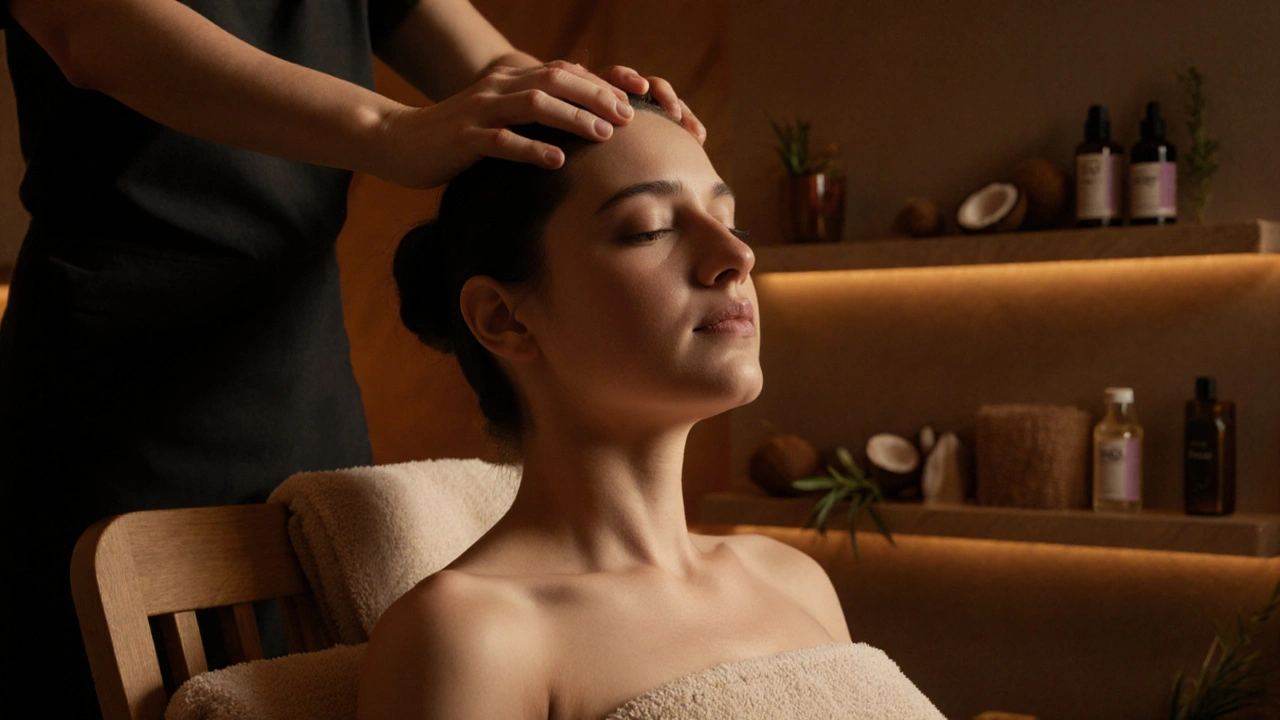
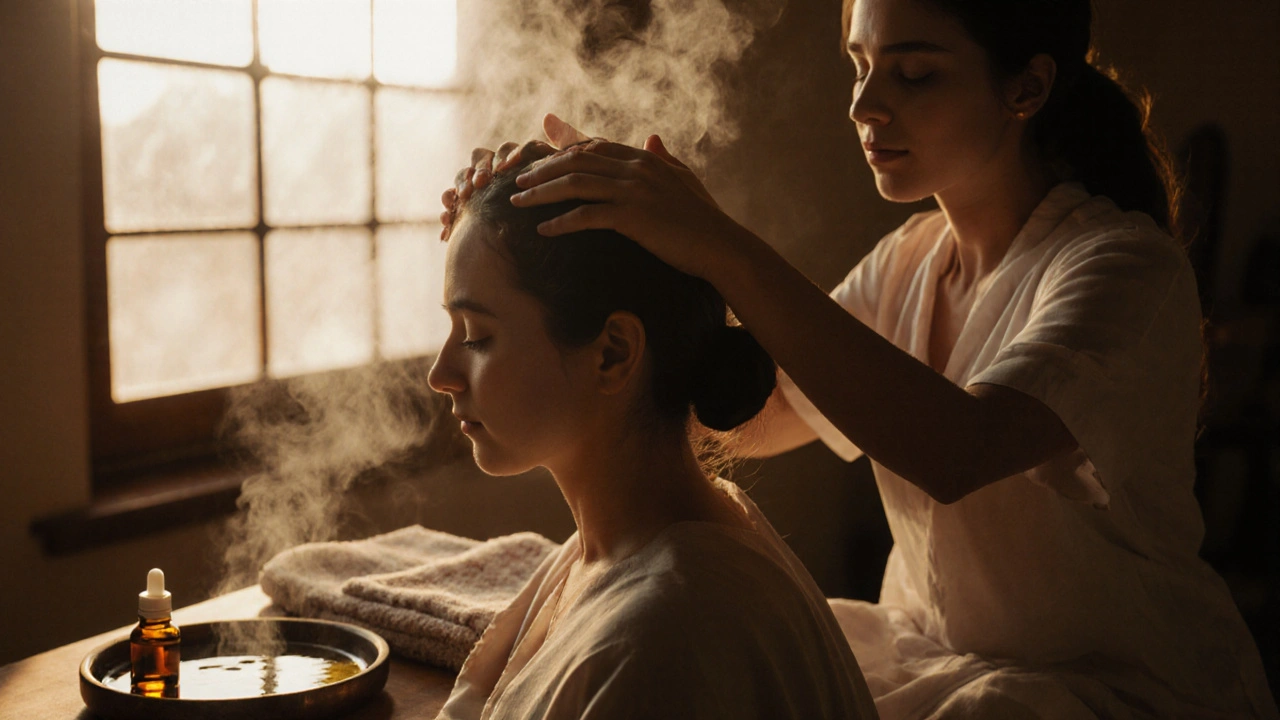
A typical session lasts 20 to 45 minutes. You stay fully clothed-usually sitting in a chair. No oils are required, though many practitioners use warm sesame or coconut oil for added benefit. The therapist uses their thumbs, fingers, and palms to apply pressure in circular motions across the scalp, forehead, temples, and behind the ears. Then they move to the neck and shoulders, using kneading, stretching, and rocking motions.
There’s no need to be an expert. You don’t need to know your dosha. Just show up. Let your head be held. Let the rhythm take over. The theory does the rest.
Is Indian head massage the same as a regular scalp massage?
No. A regular scalp massage focuses only on the head and is often done for relaxation or hair health. Indian head massage includes the neck, shoulders, and upper back, and follows a specific sequence based on Ayurvedic principles. It targets energy points (marma points) and aims to balance the body’s systems, not just relieve surface tension.
Can Indian head massage help with migraines?
Yes, many people find relief. The massage reduces muscle tension in the neck and scalp, improves blood flow, and calms the nervous system-all factors that contribute to migraines. A 2021 study showed a 63% reduction in tension-type headaches after eight weeks of weekly sessions. It’s not a replacement for medical treatment, but it can be a powerful complementary therapy.
Do I need to use oil for Indian head massage?
No, oil isn’t required, but it enhances the experience. Warm oils like sesame, coconut, or almond help the hands glide smoothly and nourish the scalp. In Ayurveda, the type of oil used is chosen based on your dosha-sesame for Vata, coconut for Pitta, and mustard for Kapha. Dry versions work fine too, especially if you’re getting a massage in a clinic or office setting.
How often should I get an Indian head massage?
For general stress relief, once a week is ideal. If you have chronic tension, headaches, or insomnia, two sessions a week for a month can make a noticeable difference. Once you feel balanced, you can reduce it to every two weeks or as needed. Even a 10-minute self-massage at home, three times a week, can help maintain the benefits.
Is Indian head massage safe for everyone?
Most people can safely receive it. But avoid it if you have scalp infections, recent head injuries, blood clots, or severe osteoporosis. If you’re pregnant, have high blood pressure, or are undergoing cancer treatment, consult your doctor first. A trained therapist will adjust pressure and technique based on your condition.
Sean Phoenix
January 5, 2026 AT 07:52Of course it's about energy channels... just like how your WiFi router 'balances chi' when you reboot it. Ayurveda? More like Ay-what? They've been selling this same ancient magic trick since before the pyramids were a thought. And don't get me started on 'marma points'-those are just pressure points with a Bollywood soundtrack. I've seen a guy in Goa charge $200 for 'realigning your third eye' while humming bhajans. Wake up, people. It's just a fancy scalp rub with essential oils and confirmation bias.
Erika Hernández
January 6, 2026 AT 05:48OMG I just had my first Indian head massage last week and I cried-like, actual, ugly-sobbing tears-during the ear massage. I didn't even know I was holding that much stress in my jaw! It felt like my brain finally exhaled. I swear I’ve been walking taller since. The therapist used coconut oil and whispered something in Sanskrit and I felt like I was being hugged by the universe. I’m booking another one next Tuesday and I’m bringing my whole family. This is healing, y’all. Real healing.
vincent ngeso
January 6, 2026 AT 06:38I used to get migraines every week and nothing worked until I started doing this on myself with my fingers while watching Netflix. I just press where it hurts and move slow. Now I only get them once a month. I don't care if it's marma points or energy or whatever. It works. My head doesn't feel like a balloon about to pop anymore. I'm not smart enough to explain why but I know it helps. Maybe science will catch up someday. For now I'll just keep rubbing my scalp.
Sophie Kerr
January 7, 2026 AT 06:43Reductive. The notion that ‘touch’ can regulate prana is a pre-scientific metaphor. Modern neurology explains vasodilation, parasympathetic activation, and trigeminal modulation. To call this ‘ancient wisdom’ is to romanticize ignorance. The oil? A placebo vehicle. The rhythm? A hypnotic scaffold. The rest? Anthropological theater.
Shaun Chooi
January 8, 2026 AT 07:38Listen, I get that some of you think this is just woo-woo nonsense, but I grew up in a family where my grandmother did this every Sunday morning before prayer. She’d massage my scalp with warm mustard oil and hum old Punjabi songs. I didn’t know what marma points were-I just knew I felt better. Now I work in tech, I sit 12 hours a day, and I’ve got a knot in my neck that could hold a small dog. I tried this massage last month and for the first time in years, I slept through the night. So yeah, maybe it’s ‘ancient’-but if it works, why argue? I’m not here to debate philosophy. I’m here because I feel human again.
Deepak Raj Aryan
January 9, 2026 AT 23:59Bhaiya, this is not just massage-this is our DNA! In my village in Uttar Pradesh, every aunty knows which point to press for sleep, which for headache, which for when you are angry like a monkey! My dad used to say, ‘Head is the king, body is the kingdom’-and if king is unhappy, kingdom falls! Now you say ‘science’? Ha! Science is just modern man trying to explain what our grandmas knew with their fingers! I do this on my bus drivers every morning-they thank me with chai! You think your cortisol drops because of ‘nerve signals’? No! It drops because someone cared enough to touch you! That’s the real medicine!
Aradhana Agarwal
January 10, 2026 AT 03:11Thank you for writing this with such care. As someone raised in a household where head massage was part of daily life-not a luxury, just a quiet act of love-I’m moved to see it honored like this. My mother never called it Ayurveda. She just said, ‘Your head is heavy, beta, let me help.’ She didn’t need to know the doshas or the nadis. She knew touch. She knew rhythm. She knew silence. That’s the heart of it. Not theory. Not marketing. Just presence.