
Discover the Ancient Wisdom of Foot Massage
For thousands of years, people have known that the feet hold more than just toes and arches-they hold the key to whole-body balance. Foot massage isn’t just a luxury you get at a spa after a long day. It’s a practice rooted in some of the oldest healing systems on Earth, passed down through generations in China, India, Egypt, and beyond. Today, science is catching up to what ancient cultures already knew: your feet are connected to nearly every organ, muscle, and system in your body.
Where Foot Massage Really Came From
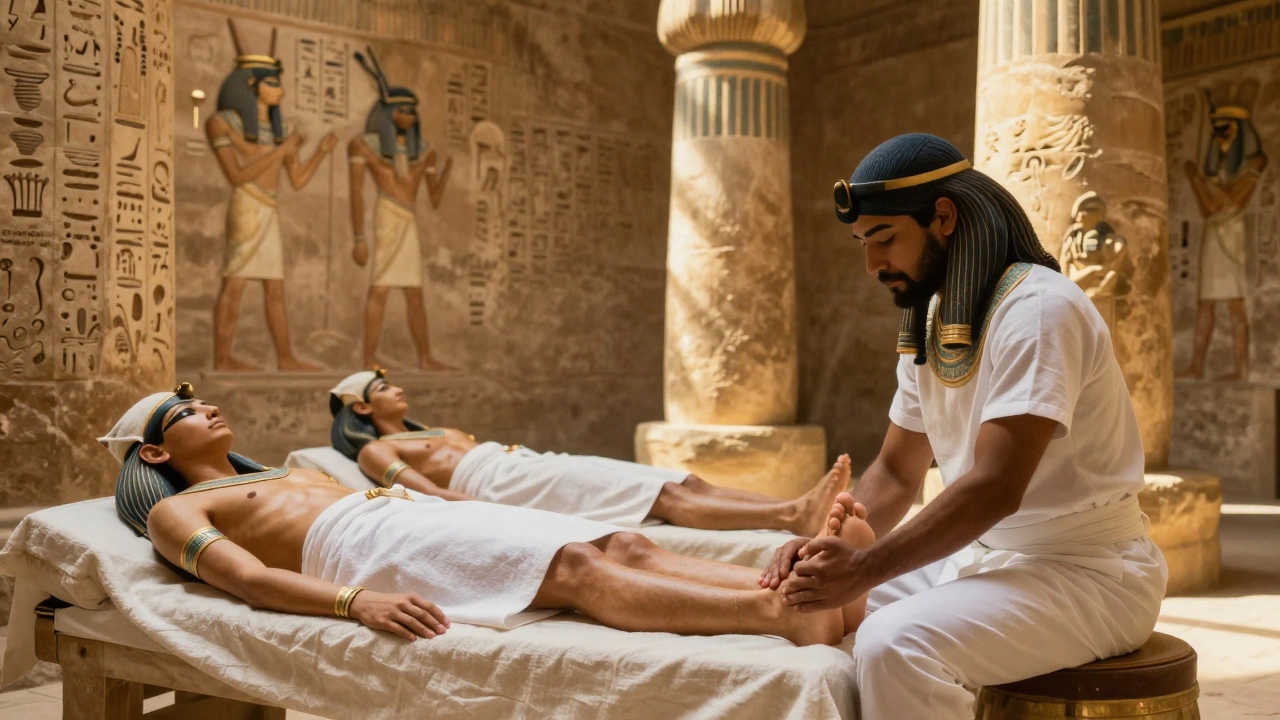
The earliest written record of foot massage comes from a 5,000-year-old Egyptian tomb painting in the tomb of Ankmahor, a physician in the Old Kingdom. It shows two men receiving foot and hand treatments. Around the same time, in ancient China, practitioners were mapping pressure points along the soles, believing energy-called Qi-flowed through channels that ended in the feet. This became the foundation of reflexology, a system still used today.
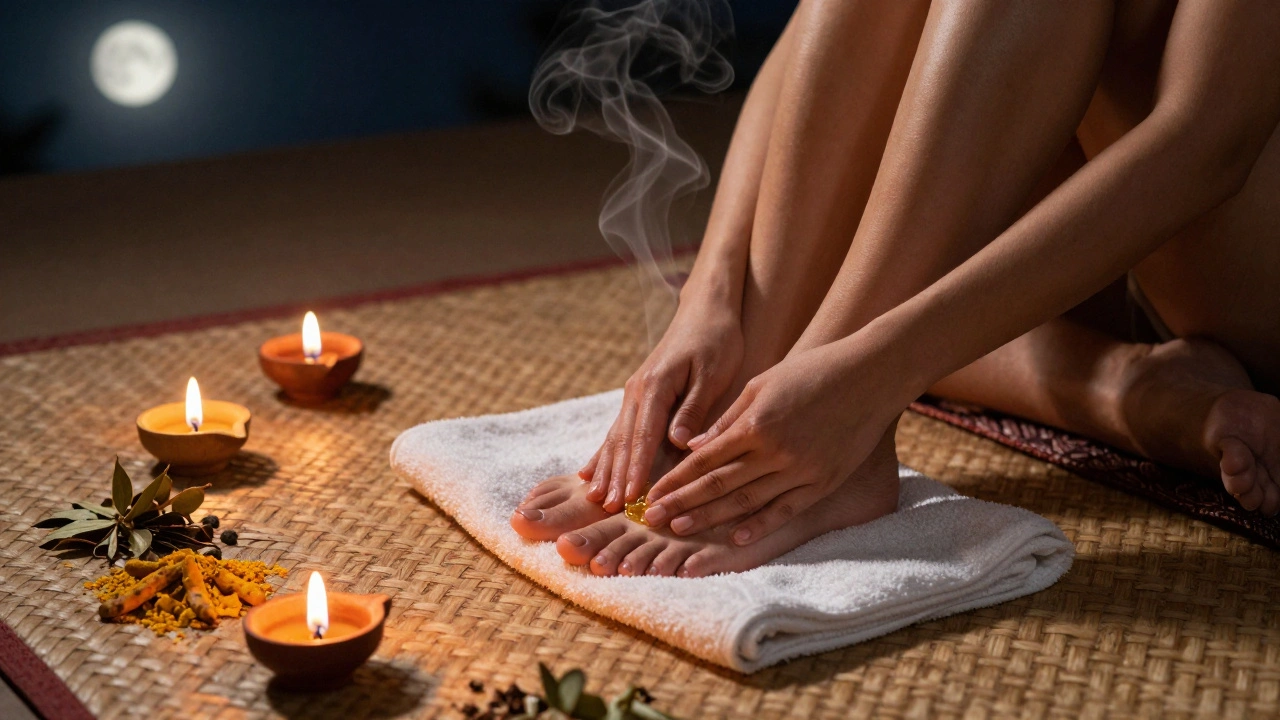
In India, Ayurvedic texts from 1500 BCE describe Padabhyanga, a ritual foot massage using warm herbal oils. It wasn’t just for relaxation; it was part of daily wellness, done before bedtime to calm the nervous system and improve sleep. In traditional Chinese medicine, the foot was seen as a mirror of the body. Stimulating specific zones could influence the liver, kidneys, heart, or lungs. These weren’t guesses-they were observed patterns, repeated over centuries with consistent results.
How Your Feet Talk to Your Body
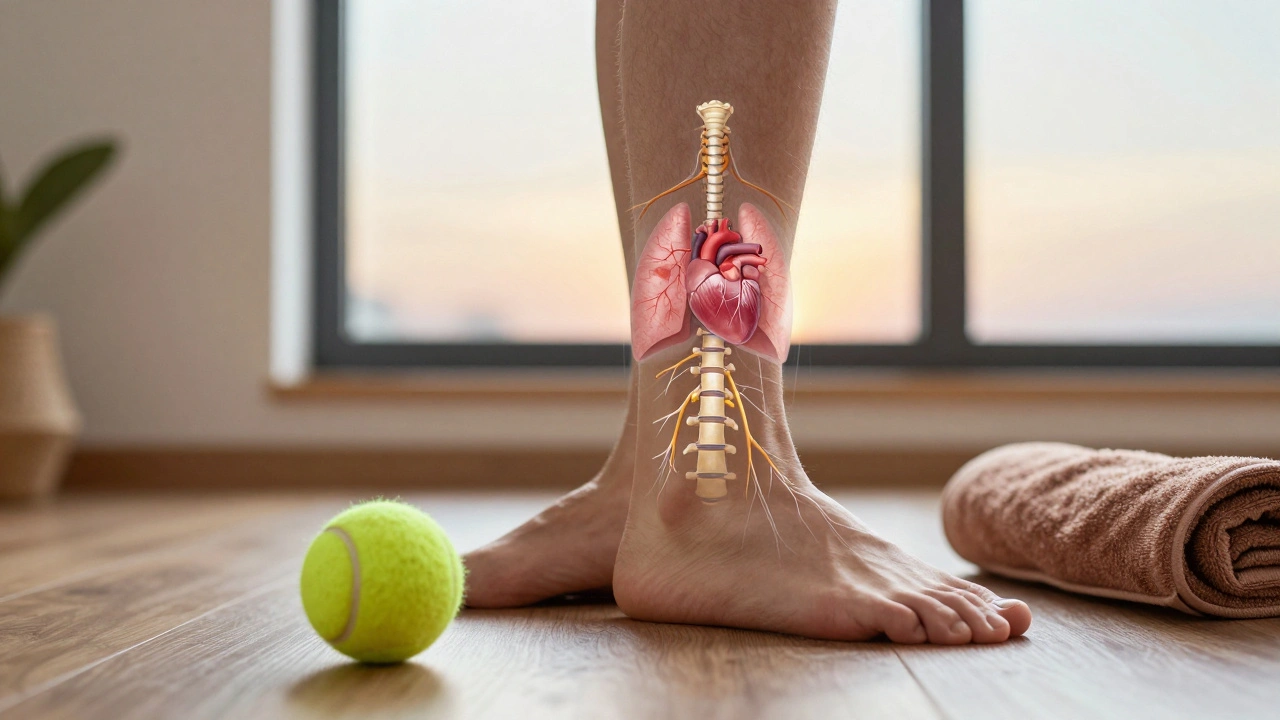
Modern anatomy confirms what ancient healers noticed: your feet are packed with nerve endings. Each foot has over 7,000 nerves, more than any other part of the body except the hands. These nerves connect directly to the spinal cord and brain. When you press or rub a point on the sole, signals travel up those nerves and trigger responses in distant organs.
For example, applying pressure to the ball of the foot, just under the toes, is linked to the lungs and chest. People with chronic congestion often report easier breathing after targeted foot work. The heel? That area corresponds to the lower back and sciatic nerve. Many with persistent lower back pain find relief not from pills or adjustments, but from regular foot massage.
Studies from the University of Miami’s School of Medicine in 2020 showed that patients recovering from heart surgery who received daily 15-minute foot massages had 30% lower cortisol levels-meaning less stress-and slept better than those who didn’t. Another trial in Japan in 2023 found that elderly patients with diabetes saw improved circulation in their feet after just four weeks of daily self-massage, reducing numbness and tingling.
Why It Works Better Than You Think
Foot massage isn’t magic. It’s mechanics. When you rub your feet, you’re doing three things at once:
- Increasing blood flow-bringing oxygen and nutrients to tired tissues
- Stimulating lymphatic drainage-helping flush out toxins and fluid buildup
- Activating the parasympathetic nervous system-your body’s ‘rest and digest’ mode
This last one is huge. Most people live in a state of constant low-grade stress. Their bodies are stuck in ‘fight or flight.’ Foot massage flips the switch. The gentle pressure tells your brain: ‘You’re safe. You can relax.’ That’s why people feel calm, even sleepy, after a session-even if they were anxious before.
And it’s not just about the feet. When your feet feel better, your whole posture changes. Tight calves and sore arches pull your pelvis out of alignment. That leads to knee pain, hip strain, even neck tension. Fix the foundation, and the rest follows. Many physical therapists now include foot work as part of rehabilitation programs for runners, office workers, and postpartum patients.
Simple Techniques You Can Do Today
You don’t need a therapist or expensive tools. You can start right now, even while watching TV.
- Thumb circles: Use your thumb to make slow, deep circles on the arch of your foot. Start at the heel and move toward the ball. Do this for 2-3 minutes per foot.
- Toe pulls: Gently pull each toe one at a time, holding for 5 seconds. This releases tension in the tendons and improves flexibility.
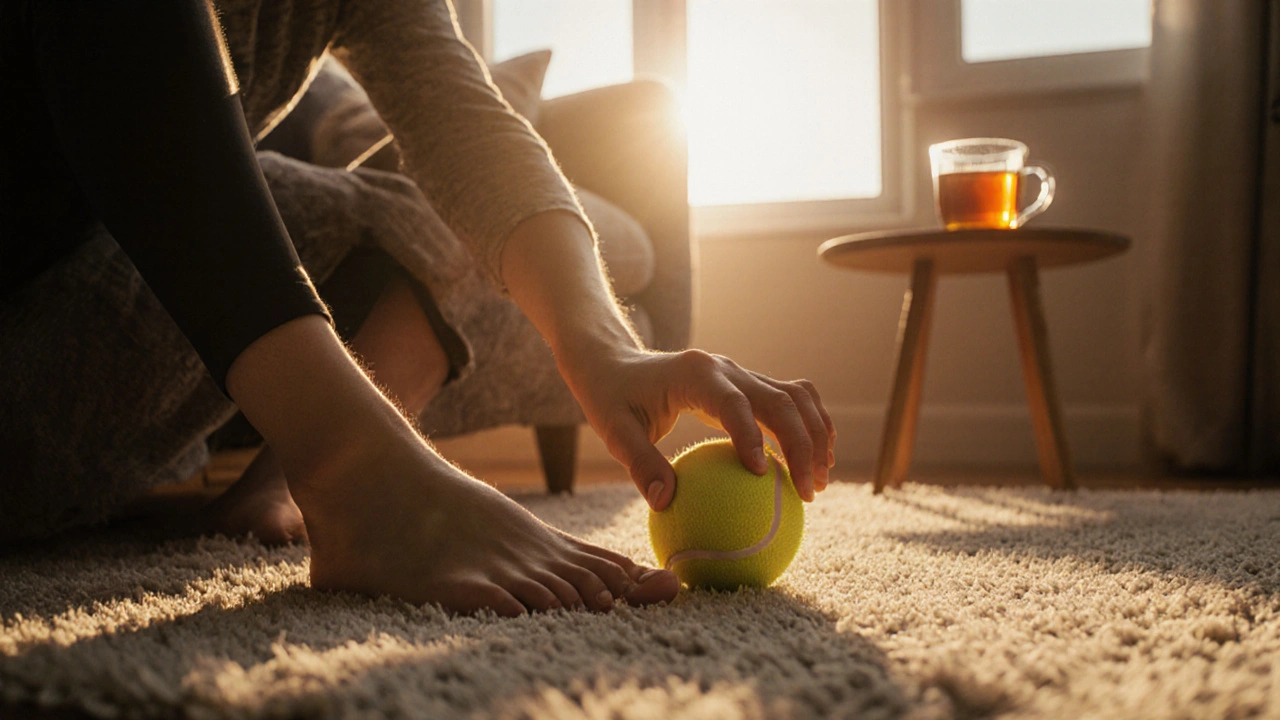
- Rolling with a ball: Place a tennis ball or a smooth stone under your foot and roll it forward and back. Apply light pressure. Do this for 1-2 minutes. It’s like a mini massage for your plantar fascia.
- Warm oil massage: Heat a tablespoon of coconut or sesame oil. Massage it into your feet before bed. Wrap them in a warm towel. This is an Ayurvedic trick that improves sleep and reduces nighttime cramps.
Do this for just 10 minutes a day. In two weeks, you’ll notice your feet feel lighter. Your legs won’t ache as much. You might even fall asleep faster.
When to Skip It
Foot massage is safe for almost everyone-but not always.
Avoid it if you have:
- An open wound, infection, or severe bruise on the foot
- Deep vein thrombosis (DVT)-massaging could dislodge a clot
- Recent foot surgery or a broken bone
- Severe diabetic neuropathy without proper sensation-too much pressure could cause unnoticed injury
If you’re pregnant, talk to your doctor first. Some reflexology points on the feet can stimulate contractions. It’s not dangerous, but it’s best to be cautious in early pregnancy.
Connecting Ancient Practice to Modern Life
In a world of screens, sitting, and stress, we’ve forgotten how to listen to our bodies. Foot massage brings us back to that. It’s slow. It’s tactile. It doesn’t require apps, gadgets, or subscriptions. Just your hands, a little time, and the willingness to care for yourself.
Think of it as a daily reset button. Not a cure-all, but a simple, powerful way to reconnect with your body’s natural rhythms. Ancient civilizations didn’t have MRI machines or blood tests. They had observation, patience, and hands-on care. They knew that healing doesn’t always come from something new-it often comes from remembering what was already there.
Next time your feet ache, don’t just reach for painkillers. Sit down. Take off your shoes. And start rubbing.
Can foot massage help with insomnia?
Yes. Foot massage activates the parasympathetic nervous system, which lowers heart rate and cortisol levels. A 2021 study in the Journal of Alternative and Complementary Medicine found that participants who did a 10-minute foot massage before bed fell asleep 20% faster and reported deeper sleep over four weeks. The warmth and rhythm mimic the soothing touch of a caregiver, triggering a natural relaxation response.
Is reflexology the same as foot massage?
Not exactly. Foot massage focuses on general relaxation, circulation, and muscle release. Reflexology is more targeted-it uses a map of the feet to stimulate specific points linked to organs. For example, pressing the inner edge of the foot is believed to affect the spine. Reflexology is a subset of foot massage, not the whole thing. Many people combine both.
How often should I do foot massage?
For general wellness, 10-15 minutes daily is ideal. If you’re dealing with pain, stress, or poor circulation, aim for twice a day-morning and night. Even three times a week can make a noticeable difference. Consistency matters more than duration. A short daily session beats a long one once a month.
Can foot massage help with plantar fasciitis?
Yes, but it needs to be done carefully. Gentle rolling with a tennis ball, toe stretches, and light pressure along the arch can reduce inflammation and loosen tight tissue. Avoid deep pressure directly on the heel if it’s swollen. Combine massage with calf stretches and supportive footwear. Many physical therapists include foot massage in their plantar fasciitis protocols.
Do I need special oils or tools?
No. Plain water, coconut oil, or even just your skin’s natural oils work fine. A tennis ball, a smooth stone, or a frozen water bottle can double as a roller. Expensive gadgets aren’t necessary. The real tool is your hands-and your willingness to use them.
What to Try Next
Once you’re comfortable with basic foot massage, explore these next steps:
- Try a warm foot soak with Epsom salts and lavender before massaging
- Learn the basic reflexology map-there are free charts online
- Ask a partner to help. Foot massage is a great way to connect with someone
- Keep a journal: note how you feel before and after each session
This isn’t a trend. It’s a return to something timeless. Your feet carried you through every step of your life. It’s time to give them the care they’ve always deserved.

minakshi gaval
January 11, 2026 AT 18:44Okay but have you ever considered that reflexology is just a cover for ancient energy manipulation cults? I mean, the Egyptians didn’t just paint foot rubs-they were channeling star beings through the metatarsals. I read this PDF from a 1987 CIA declassified file that links Qi to extraterrestrial biofields. You think your coconut oil is healing you? It’s actually syncing your chakras to Mars. You’re welcome.
David Din Greenberg
January 12, 2026 AT 18:24You’re all missing the point. This isn’t about feet-it’s about surrender. The foot is the last organ to receive the soul’s signal before it exits the body. Every pressure point? A doorway to your karmic debt. You massage your arches to pay off sins from your third life. The fact that you need science to validate it? That’s your problem. True wisdom doesn’t need a study. It needs silence. And maybe a better pair of socks.
Nadia Di Qual
January 14, 2026 AT 05:16Oh honey, you’ve got a 5000-year-old healing practice and you turned it into a bullet-pointed self-help blog. Congrats. You didn’t discover foot massage-you monetized it. But hey, at least you didn’t sell a $200 ‘Qi-Aligning Foot Crystal Kit.’ That’s progress. I’m just glad someone finally made ‘rub your feet’ sound like a TED Talk instead of a nap.
George Merkle
January 15, 2026 AT 00:33I appreciate the effort here. The historical references are solid. The science citations are legit. The tone is warm. But you missed one thing-foot massage in Ayurveda isn’t just about oils and pressure points. It’s about intention. You rub the foot while breathing slowly and thinking of gratitude. That’s the real magic. Not the ball. Not the oil. The mind. Also, plantar fasciitis protocols should include heel cord stretches. Just saying.
Ryan Frioni
January 16, 2026 AT 08:31So let me get this straight-you’re telling me that if I rub my toes for 10 minutes, I can avoid a heart attack? That’s it? No pills? No surgery? No insurance denial? This is the most dangerous thing I’ve ever read. What if I miss a day? Am I doomed? Is my left pinky toe secretly plotting my downfall? I need a flowchart. And maybe a therapist. And a new pair of shoes. And a backup foot.
Amar Ibisevic
January 18, 2026 AT 06:13My grandma used to do this every night before bed with warm mustard oil. Said it kept the demons out of our legs. I didn’t believe her till I started working night shifts and my feet felt like concrete. After a week of just rolling a glass bottle under my soles? I slept like a baby. No magic. Just pressure. And love. I still do it. Even when I’m drunk. Even when I’m tired. Even when I forget my socks. My feet remember.
Gabby Eniola
January 19, 2026 AT 22:18Just tried the tennis ball thing. My arches screamed. But also… I cried. Not because it hurt. Because it felt like someone finally noticed my feet had been carrying me for 37 years. Thanks. I’ll keep doing it.