
Foot Massage for Stress Relief: A Step-by-Step Guide

After a long day on your feet, your toes don’t just feel tired-they feel heavy, achy, and wired all at once. That’s not just physical fatigue. It’s stress building up in your body, showing up where you least expect it: your soles. Foot massage isn’t just a luxury spa treat. It’s a simple, powerful tool your body actually craves to reset, calm down, and release tension you didn’t even know you were holding.
Why Your Feet Hold So Much Stress
Your feet are your foundation. They carry your whole weight, absorb every step, and react to everything you do-standing all day, walking on concrete, wearing tight shoes, running from place to place. Over time, that constant pressure tightens muscles, compresses nerves, and triggers stress signals straight to your brain. Studies from the Journal of Bodywork and Movement Therapies show that just 10 minutes of foot massage can lower cortisol levels by up to 25%. That’s the same drop you’d see after a short walk in nature or 20 minutes of deep breathing.And here’s the kicker: your feet are packed with nerve endings-over 7,000 of them. That’s more than your fingertips. When you massage them, you’re not just relaxing skin and muscle. You’re sending calming signals to your nervous system. It’s like hitting a reset button for your whole body.
What You Need to Get Started
You don’t need fancy tools, expensive oils, or a massage table. All you need is:- Your hands (yes, really)
- A quiet space (even a kitchen chair works)
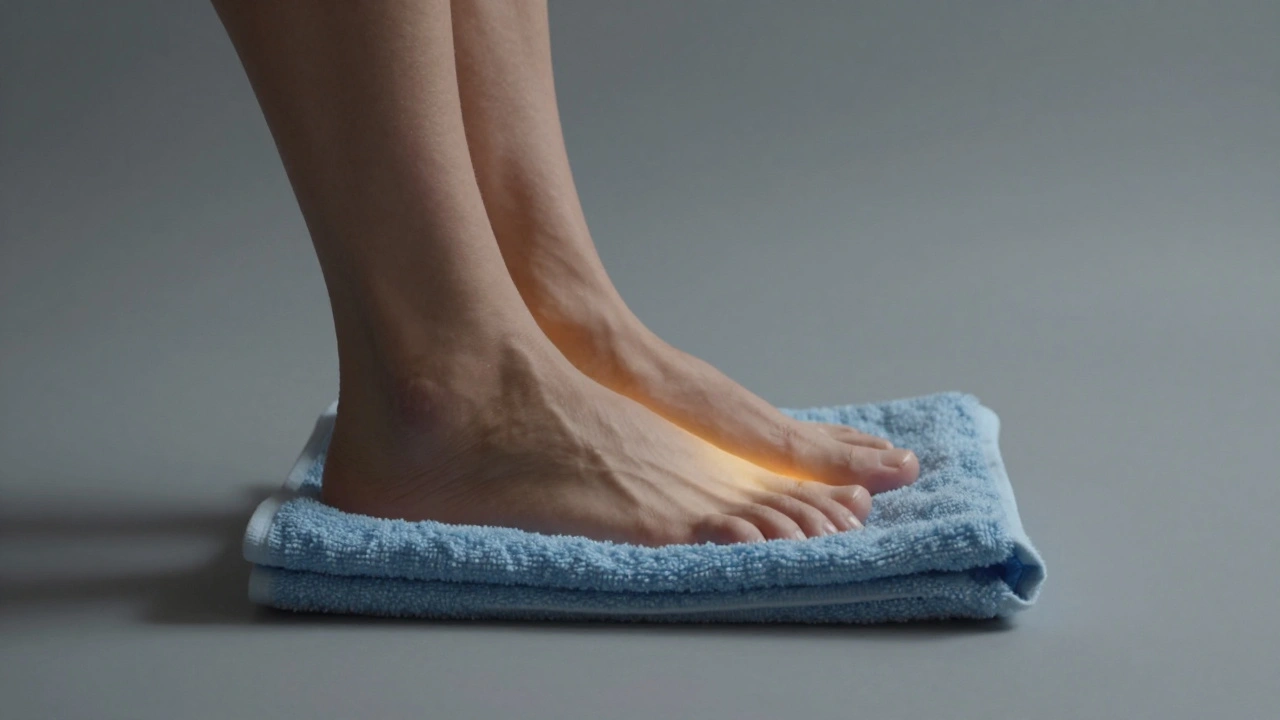
- A towel or small blanket to sit on
- Optional: a bit of coconut oil or almond oil (for glide, not required)
Forget expensive massagers. Most of them just vibrate. Real relief comes from pressure, rhythm, and attention. Your hands are the best tool because they adapt to your body’s needs in real time.
Step-by-Step Foot Massage Routine
Do this for 10-15 minutes, once a day, especially after work or before bed. You’ll feel the difference within a week.- Start with warmth-Soak your feet in warm (not hot) water for 5 minutes. Add a pinch of Epsom salt if you have it. This relaxes the muscles and softens the skin so your hands can move easier.
- Hold and breathe-Dry your feet. Sit comfortably. Pick one foot and hold it gently in both hands. Take three slow breaths. Just hold it. This tells your nervous system: It’s safe to relax now.
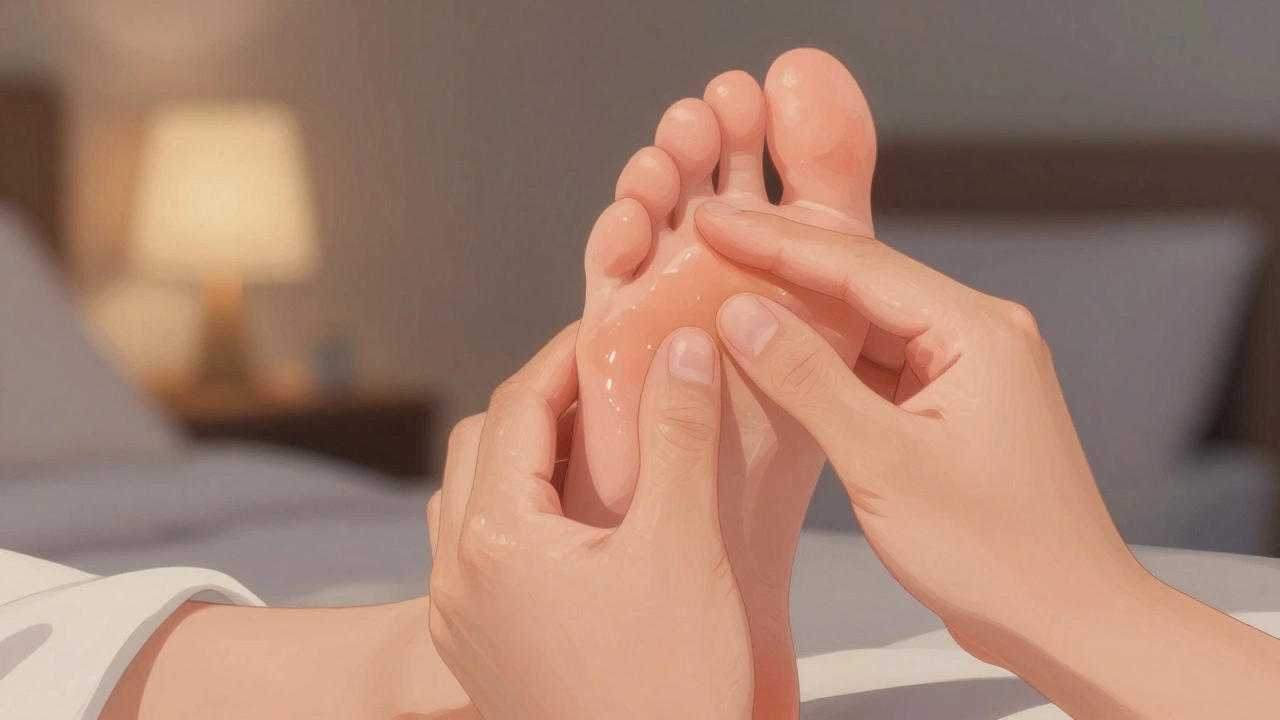
- Thumb circles-Use your thumb to make small circles on the ball of your foot. Start at the base of your toes and work toward your heel. Apply firm but not painful pressure. Do this for 1 minute per foot.
- Arch pressure-Place your thumb along the arch of your foot. Press down slowly and hold for 5 seconds. Release. Repeat 5 times. This targets the area most people ignore-and it’s where stress builds up the most.
- Toe wiggles and pulls-Gently pull each toe one at a time, like you’re stretching a rubber band. Then wiggle them in circles. Do this for 30 seconds per toe. It releases tension in the tendons and improves circulation.
- Heel squeeze-Use both thumbs to press into the heel from both sides. Move in small circles. Hold for 5 seconds, release. Repeat 4 times. The heel holds a lot of stored tension from standing and walking.
- Finish with a gentle shake-Hold your foot loosely and shake it gently for 10 seconds. It’s like shaking off static. Do the same for the other foot.
That’s it. No complicated moves. No need to memorize pressure points. Just slow, steady pressure and attention.
Where to Press for Instant Calm
You don’t need to be a reflexology expert to feel results. But if you want to target specific stress zones, here are three spots that work fast:- Between the big and second toe-Press firmly with your thumb for 10 seconds. This helps with anxiety and headaches.
- Center of the sole-Right under the ball of your foot. Press with your knuckle for 15 seconds. This calms your whole nervous system.
- Inner edge of the foot-Just above the arch, near the ankle. This spot links to your lower back and hips. Press and hold for 10 seconds if you’re feeling stiff or tense.
These aren’t magic spots. They’re just areas where nerves and muscles are especially sensitive. Gentle pressure here sends a signal to your brain: Stop worrying. You’re safe.
When to Do It (and When Not To)
Best times: after work, before bed, or during a break. Even 5 minutes counts. Try doing it while watching TV or listening to music. Make it part of your wind-down ritual.Avoid foot massage if you have:
- An open wound, infection, or recent injury on your foot
- Severe varicose veins or blood clots
- Diabetes with neuropathy (talk to your doctor first)
- A fever or acute illness
If you’re unsure, skip it. Your body will tell you. If it hurts too much, ease off. You’re not trying to break anything-you’re trying to release.
Why This Works Better Than You Think
Most people think stress relief means meditation, yoga, or therapy. Those are great-but they’re mental. Foot massage works on the physical level, where stress hides. It’s not about thinking differently. It’s about feeling differently.When you press into your foot, your brain releases endorphins. That’s your body’s natural painkiller and mood booster. At the same time, your heart rate slows, your breathing deepens, and your muscles unclench. You don’t need to force calm. Your body does it for you.
One woman in Melbourne told me she started doing this after her third child was born. She was exhausted, overwhelmed, and couldn’t sleep. She did this routine for 10 minutes every night. Within two weeks, she said: “I didn’t realize how much tension I was carrying until my feet stopped aching.”
Make It a Habit
Consistency beats intensity. Doing this for 5 minutes every day is better than 30 minutes once a week. Set a reminder. Keep a small bottle of oil by your chair. Leave a towel near your bed.Try pairing it with something you already do: after brushing your teeth, before turning off the lights, while your coffee brews. Make it easy. Make it quiet. Make it yours.
Over time, you’ll notice more than just relaxed feet. You’ll sleep deeper. You’ll feel less reactive. You’ll breathe easier. Your shoulders won’t stay tight. Your jaw won’t clench. That’s not coincidence. That’s your nervous system finally catching up to the peace you’ve been giving it, one foot at a time.
Frequently Asked Questions
Can foot massage really help with anxiety?
Yes. Foot massage activates the parasympathetic nervous system-the part of your body that says, "It’s safe to relax." A 2023 study in the Journal of Alternative and Complementary Medicine found that participants who did daily foot massages for two weeks reported a 30% drop in anxiety symptoms. It doesn’t replace therapy, but it’s a powerful daily reset.
How often should I do a foot massage for stress relief?
Once a day is ideal. Even 5 minutes helps. If you’re going through a high-stress period, do it twice-morning and night. The goal isn’t to fix everything at once. It’s to give your body small, regular signals that it’s okay to unwind.
Do I need special oils or tools?
No. Plain hands work best. Oil just helps your fingers glide. Coconut or almond oil are fine if you like the smell. But if you don’t have any, just use dry hands. Pressure matters more than lubrication.
Why does my foot hurt when I press on it?
If it’s tender but not sharp or burning, that’s normal. It means that area is tight or inflamed. Ease off slightly and use slower, circular motions. If it’s a sharp, shooting pain, stop. That could be nerve irritation or an injury. Don’t push through pain.
Can I do this for someone else?
Absolutely. Foot massage is one of the most personal ways to show care. If you’re doing it for a partner, parent, or friend, keep the pressure gentle at first. Ask them what feels good. The connection matters as much as the technique.
How long until I notice results?
Most people feel calmer right after the first session. Better sleep and less tension usually show up within 3-5 days. For lasting changes-like lower stress levels or reduced muscle tightness-stick with it for two weeks. Your body learns to relax when you give it the signal, again and again.
Next Steps
Start tonight. No equipment. No cost. Just your hands and five minutes. Do the routine once. Notice how your feet feel. Notice how your breath changes. That’s your body thanking you.If you like it, add it to your routine. If you forget, set a phone reminder. If you skip a day, just start again tomorrow. This isn’t about perfection. It’s about showing up for yourself-again and again-until your feet stop screaming, and your mind finally listens.



Alice Decogateaux
January 8, 2026 AT 20:31Melanie Carp
January 9, 2026 AT 04:54Maureen Addison-Smith
January 9, 2026 AT 19:21Andre Möller
January 9, 2026 AT 23:06Eddie Moss
January 11, 2026 AT 04:57Natasha Malundu
January 12, 2026 AT 10:05Tyler Crimp
January 13, 2026 AT 14:19Madison Horst
January 14, 2026 AT 23:55