
From Pain to Relief: How Deep Tissue Massage Heals Chronic Muscle Tension

If you’ve ever woken up with your shoulders locked up like a rusty hinge, or felt a dull ache in your lower back that won’t quit no matter how much you stretch - you’re not alone. Millions of people live with deep, stubborn muscle pain that doesn’t go away with rest, ibuprofen, or even a good yoga session. That’s where deep tissue massage comes in. It’s not the relaxing, lavender-scented kind you might picture. This is targeted, sometimes intense work that digs into the layers of muscle and connective tissue to break up knots, release chronic tension, and reset how your body moves.
What deep tissue massage actually does to your muscles
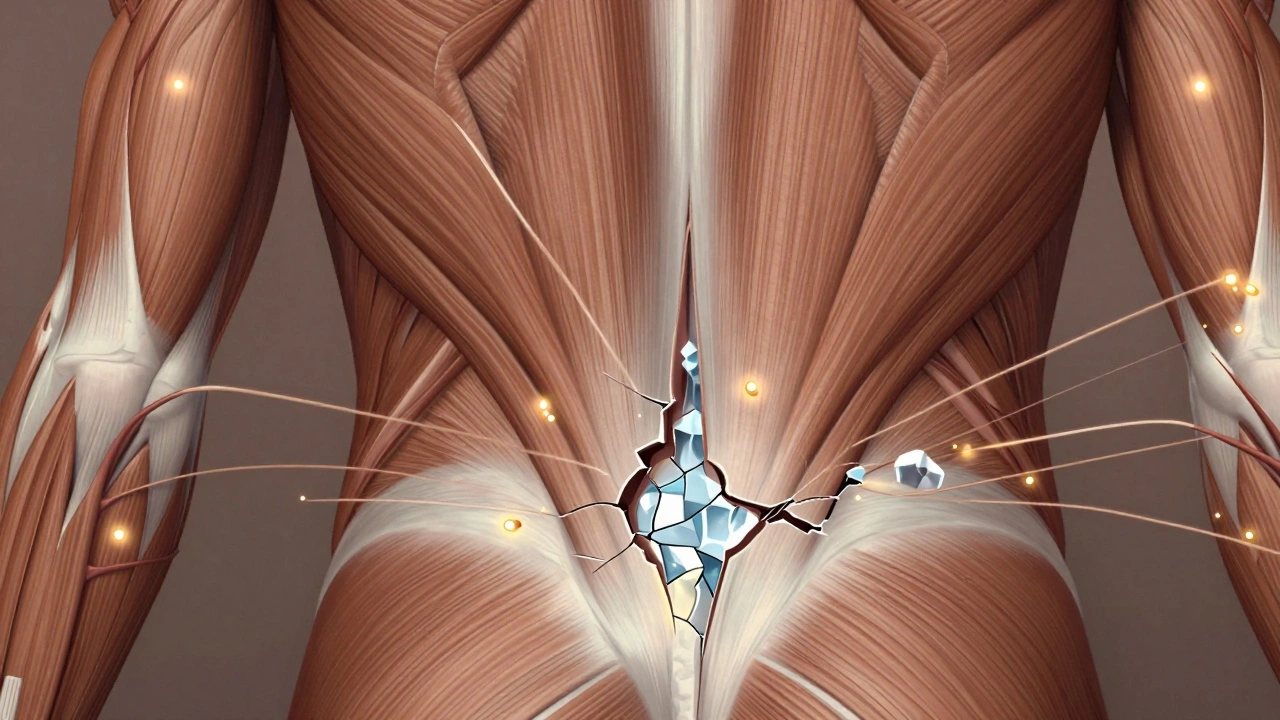
Most people think massage is about relaxation. Deep tissue massage is about repair. It uses slower strokes and more pressure than Swedish massage, focusing on the deeper layers of muscle and fascia - the tough, web-like tissue that surrounds and connects your muscles. When you sit at a desk all day, lift heavy things, or run hard on weekends, your muscles tighten up. Over time, these tight spots turn into adhesions: sticky, scar-like bands that restrict movement and cause pain.
A 2023 study from the Journal of Bodywork and Movement Therapies found that participants with chronic lower back pain who received eight weekly deep tissue sessions reported a 57% reduction in pain intensity. That’s not just feeling better - it’s functional change. The massage breaks up those adhesions, increases blood flow to the area, and helps flush out metabolic waste like lactic acid that builds up in overworked muscles. Think of it like cleaning out a clogged drain - you’re not just masking the problem, you’re clearing the blockage.
Who benefits most from deep tissue massage?
This isn’t for everyone. If you’re looking for a soothing, full-body pamper session, you’re better off with Swedish or hot stone. Deep tissue is for people who:
- Have persistent muscle soreness that doesn’t improve with rest
- Play sports regularly and need recovery beyond foam rolling
- Sit at a desk for 8+ hours a day with neck and shoulder tension
- Have had past injuries that left tight spots behind
- Struggle with posture-related pain like rounded shoulders or forward head
One client I worked with in Bristol - a 42-year-old graphic designer - came in with pain so bad she couldn’t lift her coffee cup without grimacing. Her shoulders were so tight, the muscles felt like rock. After four sessions of deep tissue work, focusing on her upper trapezius and levator scapulae, she could finally reach for her coat without pain. She didn’t need surgery. She didn’t need more pills. Just targeted pressure and time.
What to expect during your first session
It’s not gentle. That’s the first thing to know. You’ll feel pressure - sometimes a lot of it. But it shouldn’t hurt in a sharp, burning way. Think of it like a deep stretch: uncomfortable, but not unbearable. A good therapist will check in with you constantly. If you’re clenching your fists or holding your breath, you’re too tense. Tell them to ease off. The goal isn’t to punish your body - it’s to teach it to relax.
Before the session, you’ll be asked about your pain history, any injuries, and what areas feel tightest. You’ll lie on a table, usually covered with a towel, and the therapist will use their knuckles, thumbs, or forearms to apply slow, deliberate pressure. They might ask you to breathe deeply as they work - this helps the muscle release. Don’t hold your breath. Inhale through your nose, exhale slowly through your mouth. It makes a huge difference.
Some people feel sore the next day, like after a hard workout. That’s normal. Drink water. Move gently. A warm bath helps. If you’re bruised or in sharp pain for more than 48 hours, something went wrong. That’s not normal, and you should speak up.
How often should you get it?
There’s no one-size-fits-all answer. For acute pain - say, after a marathon or a bad lifting injury - once a week for 3-4 weeks is common. For chronic tension, like from sitting all day, once every 3-4 weeks keeps things under control. Think of it like brushing your teeth. You don’t wait until your gums bleed to do it.
Some people try it once, hate the discomfort, and never go back. That’s fine. But others find it life-changing. One cyclist I know gets it every 3 weeks year-round. He says it’s the only thing that keeps him riding without his hips locking up. He doesn’t take painkillers anymore. He just shows up for his massage.
What to avoid
Deep tissue massage isn’t safe for everyone. Don’t get it if you have:
- Recent fractures or bone injuries
- Open wounds or skin infections
- Blood clots or are on blood thinners
- Severe osteoporosis
- Are pregnant without clearance from your doctor
Also, avoid it right after a workout. Wait at least 24 hours. Your muscles are already inflamed. Adding pressure too soon can make things worse.
How it compares to other massage types
| Massage Type | Pressure Level | Best For | Duration of Relief |
|---|---|---|---|
| Deep Tissue | High | Chronic knots, injury recovery, posture issues | 3-6 weeks |
| Swedish | Light to medium | Relaxation, circulation, stress relief | 1-3 days |
| Sports | Medium to high | Athletes, pre/post-event, flexibility | 1-4 weeks |
| Hot Stone | Medium | Relaxation, muscle warmth, tension release | 2-5 days |
| Lymphatic Drainage | Very light | Swelling, post-surgery, detox | 1-3 days |
Deep tissue is the only one designed to physically break down scar tissue and adhesions. The others help you feel better - deep tissue helps you heal.
What to do after your session
Don’t sit down and binge Netflix. Move. Walk for 10 minutes. Do some light stretching. Hydrate well. Your body is processing released toxins and rebuilding tissue. If you skip water and rest, you’ll feel stiff the next day - and wonder why the massage didn’t work.
Some therapists recommend using a foam roller on the area 24-48 hours later. It helps maintain the release. But don’t overdo it. One roll per muscle group, gentle pressure. You’re not trying to hurt yourself again.

Why it works when other treatments fail
Physical therapy helps with movement patterns. Chiropractic adjustments fix joint alignment. Painkillers mask the signal. But deep tissue massage targets the root of the problem: the muscle itself. If your bicep is knotted, no amount of stretching will fix it until you break up the adhesion. That’s what deep tissue does.
It’s not magic. It’s biomechanics. Your muscles are made of fibers that can stick together. When they do, they pull on tendons, irritate nerves, and create pain that radiates - like when a tight hip flexor makes your lower back hurt. Deep tissue massage untangles the mess.
Real results, not just relief
People don’t just feel better - they move better. One client, a 58-year-old gardener, couldn’t bend over to pick up his tools without sharp pain. After six sessions, he could kneel again. He started gardening again. He said, "I didn’t realize how much I missed it." That’s the real win. It’s not about feeling good for a day. It’s about getting your life back.
How to find a good therapist
Not all massage therapists are trained in deep tissue. Look for someone with certifications in myofascial release, trigger point therapy, or sports massage. Ask if they’ve worked with clients who have chronic pain. A good therapist will ask detailed questions, not just start rubbing.
In Bristol, many clinics list their specialties. Look for keywords like "deep tissue specialist," "chronic pain," or "injury rehab." Avoid places that push packages or upsell aromatherapy oils. You’re here for results, not a spa day.
Is it worth the cost?
A single session in the UK typically costs between £50 and £80. That’s more than a gym membership per visit. But think of it this way: if you’re spending £30 a month on painkillers and still can’t sleep or move, how much is that costing you? Deep tissue massage isn’t a luxury. It’s a tool for long-term health.
Many physiotherapists now refer patients to massage therapists. Insurance sometimes covers it if you have a referral. It’s worth asking.
Does deep tissue massage hurt?
It can feel intense, but it shouldn’t be sharp or burning pain. A good therapist will work with your tolerance level. You should feel pressure and release, not injury. If it hurts too much, speak up. The goal is to relax the muscle, not fight it.
How long does it take to see results?
Some people feel better after one session. For chronic pain, it usually takes 3-6 sessions to make lasting changes. Think of it like rehab - one visit won’t fix years of tension. Consistency matters.
Can deep tissue massage help with sciatica?
It can help if the pain is caused by tight glutes or piriformis muscle pinching the sciatic nerve. Many people with sciatica find relief after targeted work on the hips and buttocks. But if the root cause is a herniated disc, massage alone won’t fix it. Always get a proper diagnosis first.
Is deep tissue massage safe during pregnancy?
Only if done by a therapist trained in prenatal massage. Deep pressure on the lower back and abdomen should be avoided. Lighter deep tissue work on the legs and shoulders can help with pregnancy-related aches, but always check with your doctor first.
Why do I feel tired after a deep tissue massage?
Your body is repairing tissue and flushing out metabolic waste. It’s like recovering from a hard workout. Drink water, rest, and avoid intense activity for the rest of the day. This tiredness usually passes within 24 hours.
If you’ve tried everything else and your pain won’t quit, deep tissue massage might be the missing piece. It’s not quick. It’s not always comfortable. But for those who stick with it, the payoff is real: less pain, more movement, and the quiet confidence that comes from knowing your body can still move freely.


Jamie Farquharson
January 27, 2026 AT 16:21bro i swear deep tissue saved my life after i wrecked my shoulder lifting dumbbells wrong. felt like my traps were made of concrete. after 3 sessions i could finally reach the top shelf without crying. also side note: drink water or you’ll feel like a zombie the next day. 🥵
Graeme Edwards
January 27, 2026 AT 18:12Actually, the mechanism isn’t just breaking up adhesions-it’s modulating nociceptive signaling via mechanotransduction pathways in the fascia. 🧠💥 Studies show increased beta-endorphin release post-deep tissue, not just mechanical release. Also, foam rolling post-session? Nah. That’s just tissue trauma with extra steps. Static stretching > rolling. #science
jessica zhao
January 28, 2026 AT 07:24It’s funny how we treat pain like an enemy to be crushed, when really it’s just our body screaming for attention. Deep tissue doesn’t fix the muscle-it gives the nervous system permission to let go. That’s the real magic. Not pressure. Not technique. Trust. And maybe a little bit of breath.
We’ve forgotten how to listen to our bodies. We pop pills, scroll, and numb. But the body remembers everything. Even the tension we ignore.
Rajan Chaubey
January 28, 2026 AT 21:09Deep tissue = myofascial release + neuroplasticity. Not magic. Biomechanics. Adhesions = fibrotic cross-linking. Lactic acid? Minor. It’s collagen remodeling. You need 8–12 sessions for structural change. One session? Placebo. Also, avoid if you have elevated CRP. Inflammation + pressure = bad combo. 🇮🇳
Whitby Burkhart
January 29, 2026 AT 16:02"Lavender-scented kind you might picture" - should be "picture." Also, "you’re not alone. Millions..." - comma splice. And "doesn’t go away with rest, ibuprofen, or even a good yoga session" - Oxford comma missing. I love the content, but ugh. Fix the grammar. 🙄
Julia McCarthy
January 30, 2026 AT 15:41i just want to say thank you for writing this. i’ve been avoiding massage for years because i thought it had to be painful to work. but you made it sound like something i could actually do for myself. no shame in needing help. your body deserves care, not punishment. you’re not weak for needing pressure. you’re wise.
and if you’re scared to try? start with 20 minutes. just one area. breathe. let it be okay to feel something.
you’ve got this
Piotr Williams
January 31, 2026 AT 15:53...and don’t forget to avoid deep tissue if you have recent fractures, open wounds, blood clots, severe osteoporosis, or are pregnant without clearance from your doctor... Also, don’t get it right after a workout... Wait 24 hours... And don’t binge Netflix... Move... Stretch... Hydrate... Foam roll... But don’t overdo it... And make sure your therapist is certified... And ask about their experience... And avoid places that upsell oils... And check insurance coverage... And remember, it’s not a luxury... It’s a tool... And it’s worth the cost... And you should drink water... And breathe... And speak up if it hurts... And don’t expect miracles after one session... And... And... And...
Matt H
February 1, 2026 AT 13:28Y’ALL. This is the missing link in recovery culture. We’re obsessed with mobility drills and foam rollers but ignore the actual tissue remodeling. Deep tissue isn’t a treatment-it’s a reset button for your neuromuscular system. My clients who used to need PT every 2 weeks? Now they come in every 6 weeks. They’re moving like they’re 25 again. Stop treating symptoms. Fix the source. 💪🔥
Ashok Sahu
February 3, 2026 AT 05:23When I was in Delhi last year, my uncle’s physiotherapist used to say, 'Muscle is memory.' I didn’t get it until I had my first deep tissue session. It wasn’t just pain leaving-it was years of holding my breath while working, while worrying, while pretending I was fine. The massage didn’t fix my back. It reminded me how to relax. Thank you for this.
For those from cultures where pain is ignored-this is your permission to ask for help. You are not weak. You are human.