Full Body Massage: Your Guide to a Spa-Like Experience at Home
Imagine this: it’s 8 p.m. on a Tuesday. You’ve just finished work, your shoulders are tight from staring at a screen all day, and your feet feel like they’ve been carrying the weight of the world. No time to book a spa appointment. No need to drive across town. You don’t need a therapist. You just need 45 minutes, a quiet room, and a few simple tools. That’s all it takes to give yourself a full body massage that feels just as good as one from a professional spa.
Why a Full Body Massage at Home Works
A full body massage isn’t just about feeling good-it’s about resetting your nervous system. Studies show that regular massage lowers cortisol, the stress hormone, by up to 30% and increases serotonin and dopamine, the feel-good chemicals. You don’t need a luxury spa for this. The real magic happens when you combine touch, rhythm, and warmth. And doing it at home means you can make it part of your routine, not a rare treat.
Think about it: most people get a massage once a month, if that. But your body needs care every single day. A 20-minute session three times a week is more effective than a one-hour session once a month. At home, you control the pressure, the temperature, the scent, and the timing. No rush. No awkward small talk. Just you, your body, and peace.
What You Need (No Fancy Gear Required)
You don’t need to spend hundreds on gadgets. A basic home massage setup costs less than £20. Here’s what you actually need:
- Massage oil - Coconut, almond, or jojoba oil. They glide smoothly and nourish skin. Avoid mineral oil-it clogs pores.
- A towel - Two will help. One to lie on, one to cover up.
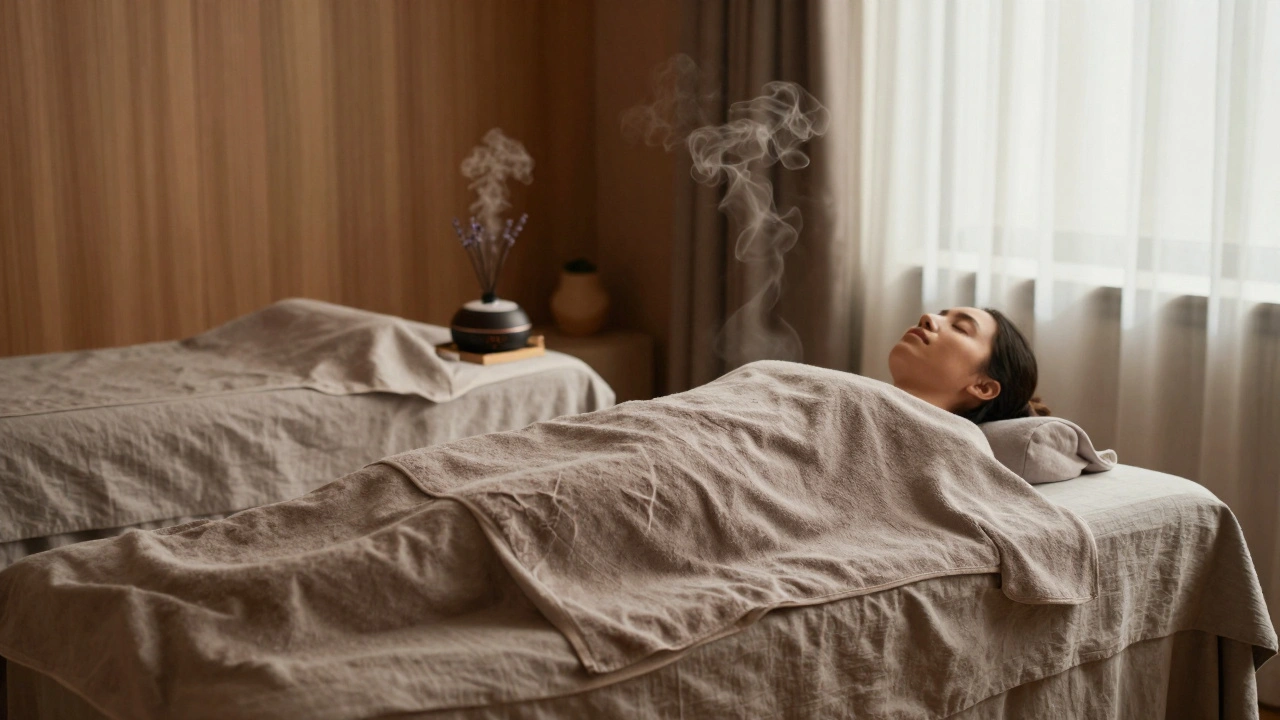
- A quiet, warm room - Turn off your phone. Light a candle if you like. Keep the temperature around 22°C (72°F).
- A firm surface - Your bed works. A yoga mat on the floor works too. Just make sure you’re not sinking in.
- A timer - Set it for 15-20 minutes per body section. This keeps you focused.
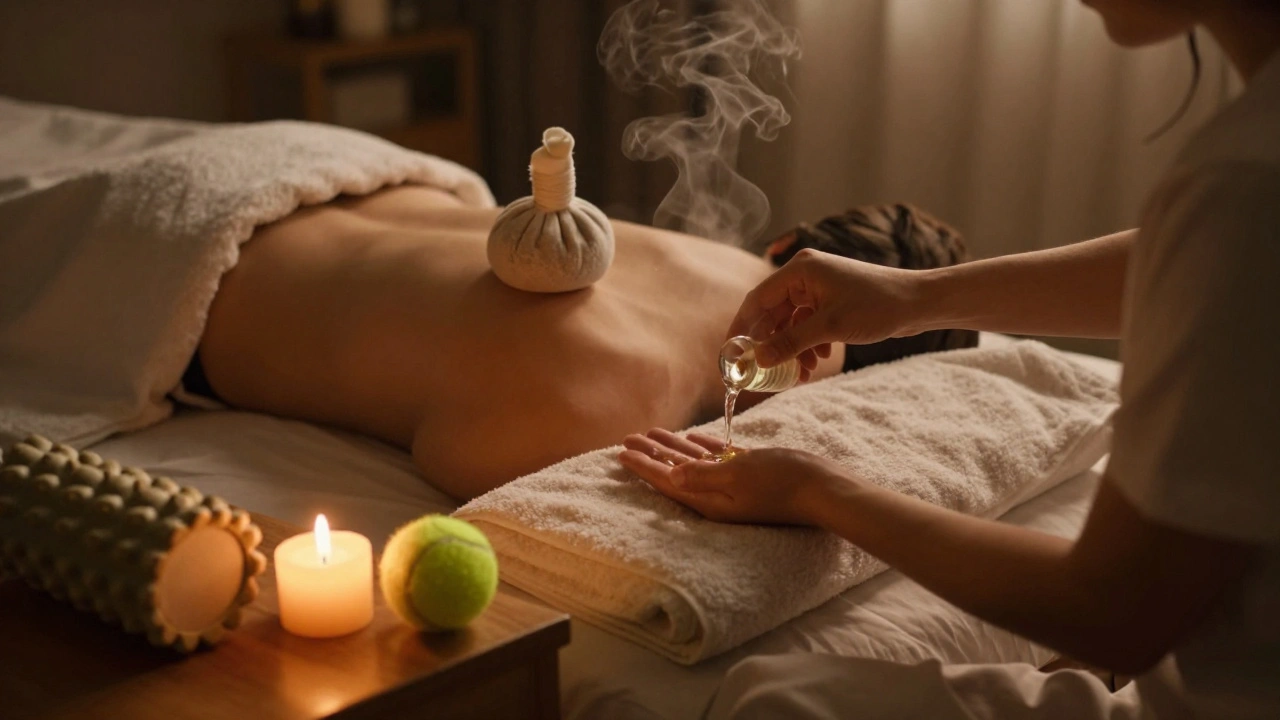
Optional but helpful: a foam roller for your back, a tennis ball for your feet, and a heated rice bag for warmth.
Step-by-Step: How to Give Yourself a Full Body Massage
Start at your feet. Work upward. Spend about 15 minutes on each major area: feet, legs, back, arms, neck, and head. Here’s how.
1. Feet - The Foundation
Your feet carry you everywhere. They deserve attention. Sit on the edge of your bed. Pour a tablespoon of oil into your palm. Rub your hands together to warm it.
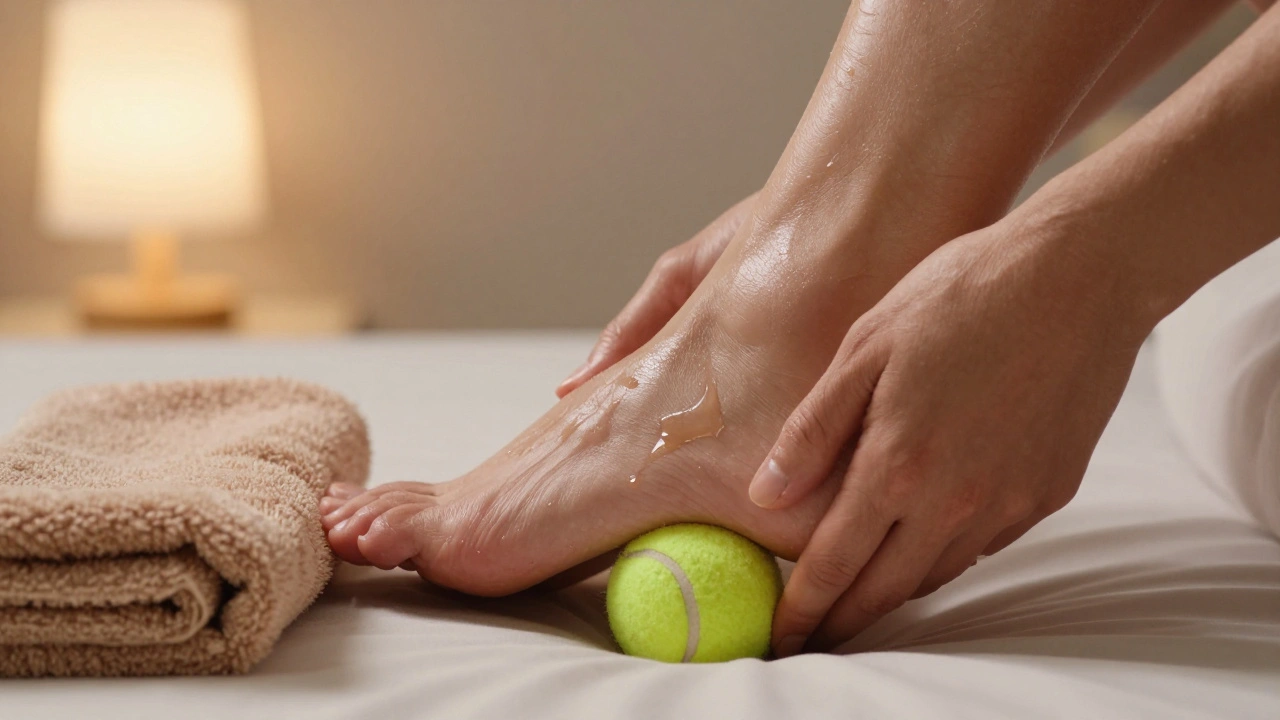
Use your thumbs to press along the sole of each foot. Start at the heel and move toward the toes. Use circular motions on the ball of the foot. Then, gently pull each toe one at a time. It feels strange at first, but it releases tension you didn’t even know you had.
If you have a tennis ball, roll it under your foot for a minute. It’s like a mini acupuncture session.
2. Legs - From Thighs to Calves
Grab your left leg with both hands. Start at the thigh. Use long strokes down toward the knee. Don’t press hard-this isn’t deep tissue. Think of it like squeezing toothpaste out of a tube: steady, smooth pressure.
Work your way down to the calf. Use your knuckles to roll over the muscle. Then, wrap your hands around the ankle and rotate it slowly. Switch legs.
Tip: If your legs feel heavy, elevate them on a pillow for five minutes after massaging. It helps circulation.
3. Back - The Silent Sufferer
This is the hardest part to do yourself. Lie face down on your bed. Pour oil along your spine, then spread it out with your palms. Use the heel of your hand to make long strokes from your neck down to your lower back.
For your shoulder blades, grab a foam roller. Lie on it horizontally, then roll slowly side to side. It’s not perfect, but it helps. If you have a partner, ask them to press gently on your upper back with their palms. Even 30 seconds makes a difference.
4. Arms and Hands
Start at the shoulder. Use both hands to glide down the upper arm. Then, circle around the elbow. Move to the forearm. Use your thumb to press along the inner side-this area holds tension from typing and holding phones.
For your hands, squeeze each finger between your thumb and index finger. Gently pull each one. Rub the palm in circles. It feels amazing after a long day of gripping things.
5. Neck and Shoulders - The Stress Hotspot
Lean your head to one side. Use your opposite hand to gently press behind your ear, down toward your collarbone. Hold for five seconds. Then switch.
Use your fingertips to make small circles around the base of your skull. Don’t dig in. Just a light, rhythmic touch. This area is packed with nerves. Too much pressure can make you dizzy.
If you have a heated rice bag, rest it on your shoulders for five minutes. The warmth melts tension better than any cream.
6. Head - The Final Touch
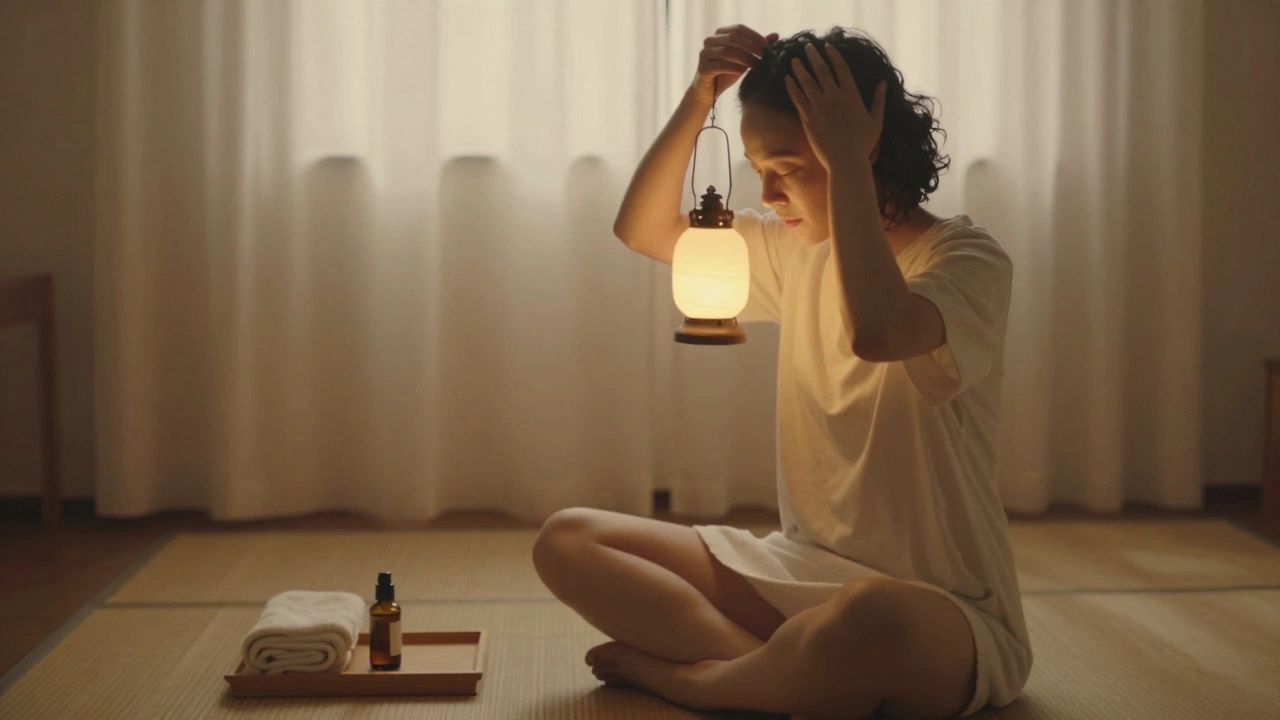
Sit up. Run your fingers through your hair. Gently massage your scalp with your fingertips. Start at your forehead and move back toward your neck. Use circular motions. Don’t pull.
Press lightly on the temples. Then, use your thumbs to trace from your eyebrows out to your ears. This helps with headaches and eye strain.
Finish by taking three slow breaths. Close your eyes. Just sit. Let your body settle.
What to Avoid
Even simple things can go wrong. Here’s what not to do:
- Don’t use too much oil - It makes you slippery and hard to grip. Start with a teaspoon per area.
- Don’t massage over bruises, rashes, or open wounds - Wait until skin heals.
- Don’t rush - A 10-minute massage is better than a rushed 40-minute one.
- Don’t ignore pain - If something hurts, stop. Massage shouldn’t hurt. It should release.
- Don’t do it right after eating - Wait at least an hour after a meal.
Make It a Ritual
A massage isn’t a chore. It’s a ritual. And rituals stick when they’re tied to something you already do.
Try this: every Sunday night, after your bath, you give yourself a 20-minute full body massage. No phone. No TV. Just you and the oil. After a few weeks, your body starts to expect it. Your muscles relax before you even start. You sleep deeper. You wake up calmer.
Some people pair it with lavender essential oil. Others use peppermint for energy. Try both. See what your body responds to.
Keep a small bottle of oil on your nightstand. That way, if you’re stressed midweek, you can do a quick 10-minute session on your feet or shoulders. It’s not about perfection. It’s about consistency.
When to Skip It
There are times when massage isn’t safe:
- If you have a fever or infection
- If you’re in the first trimester of pregnancy (unless cleared by your doctor)
- If you have blood clots or are on blood thinners
- If you have severe osteoporosis or recent fractures
If you’re unsure, check with your GP. But for most people, self-massage is not just safe-it’s healing.
Real Results, Not Just Relaxation
One woman in London, 42, started doing 15-minute home massages every night after her kids went to bed. She had chronic neck pain from sitting at her desk. After six weeks, she cut her painkillers in half. Her sleep improved. She stopped dreading Mondays.
You don’t need to be an expert. You don’t need to spend money. You just need to show up for yourself. A full body massage at home isn’t a luxury. It’s self-care that works.
Can I use coconut oil for a full body massage?
Yes, coconut oil is excellent for massage. It’s naturally antibacterial, absorbs slowly, and leaves skin soft. Make sure it’s unrefined and cold-pressed. If you live in a cold climate, warm it slightly in your hands before applying-it solidifies below 24°C.
How often should I do a full body massage at home?
Three times a week is ideal for most people. But even once a week makes a difference. If you’re under high stress, daily 10-minute sessions on your feet or neck can help. Listen to your body. If you feel refreshed, you’re doing it right.
Do I need massage tools like rollers or balls?
No, but they help. A foam roller is great for the back. A tennis ball under your foot releases plantar fascia tension. You can start with just your hands and oil. Add tools later if you want deeper pressure.
Can I do this if I have arthritis?
Light massage is often helpful for arthritis pain, especially in the hands and knees. But avoid direct pressure on swollen or inflamed joints. Use gentle strokes and warm oil. Always check with your doctor first if you’re unsure.
Why does my skin feel dry after massage?
If you’re using too little oil or a low-quality one, your skin might feel dry. Switch to pure almond, jojoba, or coconut oil. You can also add a drop of vitamin E oil to nourish skin. Always rinse off excess oil with lukewarm water after 20 minutes-don’t leave it on overnight.
At the end of the day, a full body massage at home isn’t about mimicking a spa. It’s about reconnecting with your body. You don’t need permission. You don’t need a booking. Just a quiet moment, a little oil, and the willingness to care for yourself. That’s the real luxury.