
Hot Stone Massage: A Relaxing Escape from Daily Life
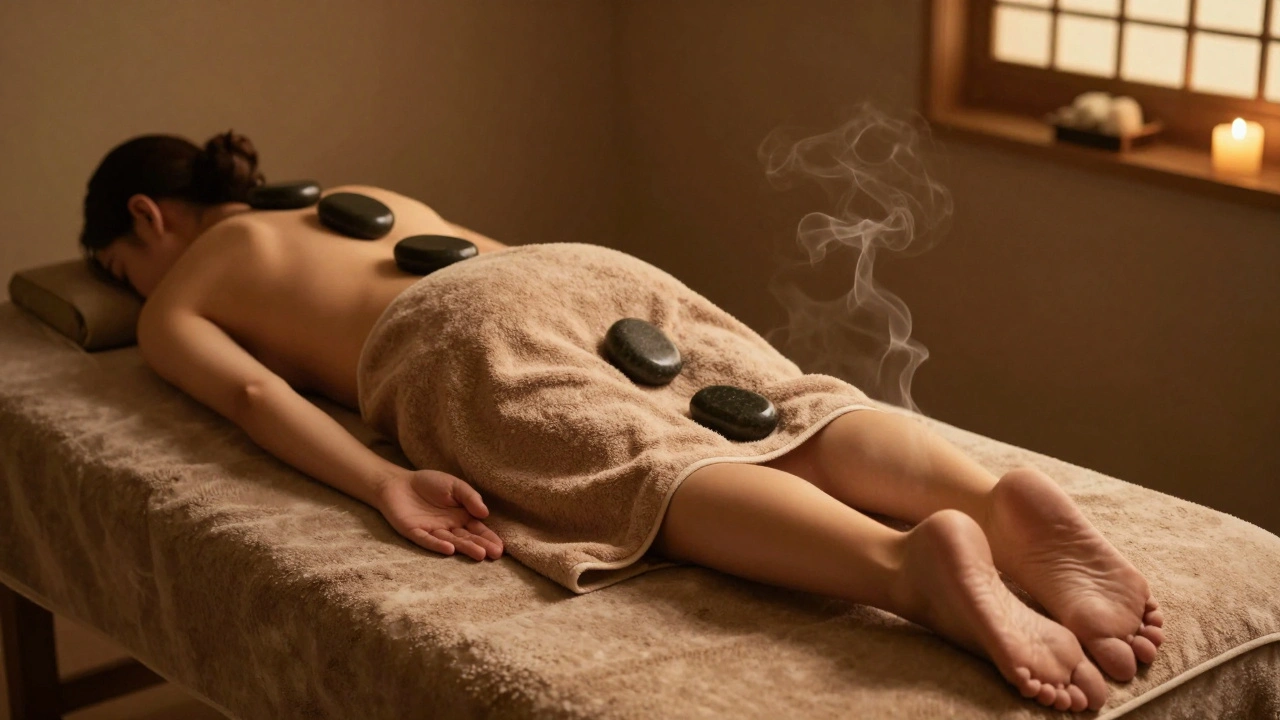
Imagine sinking into a warm, quiet room. The only sound is soft music and the gentle rhythm of your breathing. Your skin feels the steady, soothing heat of smooth, heated stones resting along your back, neck, and between your toes. Tension you didn’t even realize you were carrying starts to melt. This isn’t a dream. This is hot stone massage-a therapy that turns ordinary relaxation into something deeply restorative.
What Makes Hot Stone Massage Different?
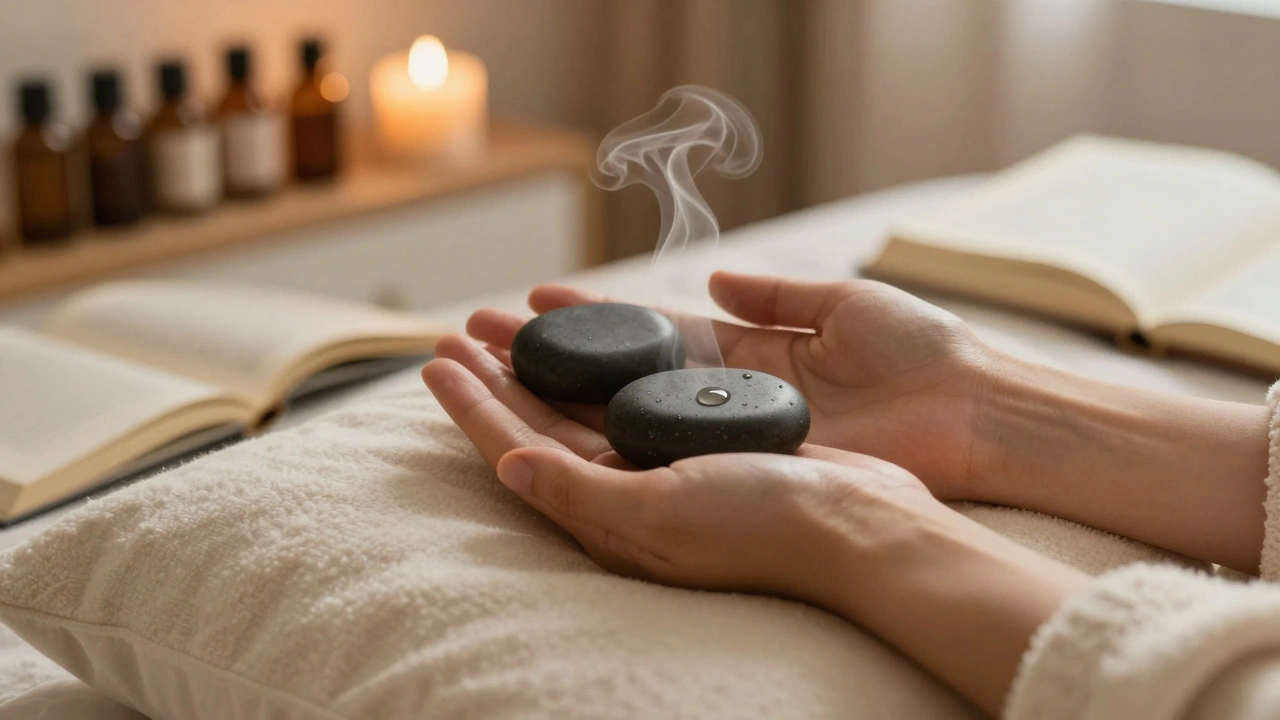
Hot stone massage isn’t just a regular massage with warm rocks. It’s a blend of ancient healing practices and modern bodywork. Basalt stones, naturally smooth and dense, are heated in water to around 50-55°C (122-131°F). These aren’t decorative pebbles-they’re chosen for their ability to hold heat evenly and release it slowly into your muscles.
The heat does more than feel nice. It causes your blood vessels to widen, increasing circulation. That means more oxygen and nutrients flow to tired tissues. At the same time, the warmth helps relax tight muscles so the therapist can work deeper without forcing them. You don’t need to grit your teeth through pressure. The heat does the hard part.
Unlike deep tissue massage, which targets chronic knots with firm pressure, hot stone massage works with your body’s natural response to warmth. It’s not about breaking down adhesions-it’s about inviting them to let go.
How It Feels: More Than Just Warmth
People often describe the first touch of the stones as surprising-not because it’s hot, but because it’s so deeply calming. There’s a quiet intensity to it. The stones are placed along your spine, on your palms, between your shoulder blades, and along your legs. Some therapists use them as tools, gliding them over your skin in long, rhythmic strokes. Others leave them resting, letting the heat penetrate while they work other areas with their hands.
One client from Carlton told me she cried during her first session. Not because it hurt, but because she hadn’t realized how stiff her shoulders had become until they started to loosen. That’s the power of heat. It doesn’t force change-it creates space for it.
The stones are always tested before use. A good therapist will place one on their own wrist to check the temperature. No one should feel burning, only comforting warmth. If you’re sensitive to heat, speak up. The stones can be cooled slightly, or fewer can be used.
Who Benefits Most?
You don’t need to be in pain to benefit from hot stone massage. But if you carry stress in your neck, have stiff hips from sitting all day, or wake up with tense muscles, this therapy can feel like a reset button.
People with chronic tension-office workers, caregivers, parents of young kids-often find relief here. Athletes use it for recovery, not just before events but after. The increased circulation helps flush out lactic acid and reduces soreness faster than ice alone.
It’s also a powerful tool for anxiety and sleep issues. A 2023 study from the University of Melbourne’s School of Health Sciences found that participants who received weekly hot stone massages for six weeks reported a 42% drop in self-reported stress levels and improved sleep quality. The heat triggers the parasympathetic nervous system-the part of your brain that says, “It’s safe to relax.”
Even people with mild arthritis or fibromyalgia find the warmth soothing. The heat eases joint stiffness without the aggressive pressure that sometimes makes other therapies unbearable.
What to Expect During Your First Session
Your session usually lasts 60 to 90 minutes. You’ll lie on a heated table, covered with towels. The therapist will begin with light Swedish strokes to help you settle in. Then, the stones come in.
They’re placed strategically:
- Along your spine for balance and grounding
- On your palms and soles to calm the nervous system
- Between your shoulder blades to release emotional tension
- Across your hips and thighs to ease lower body stiffness
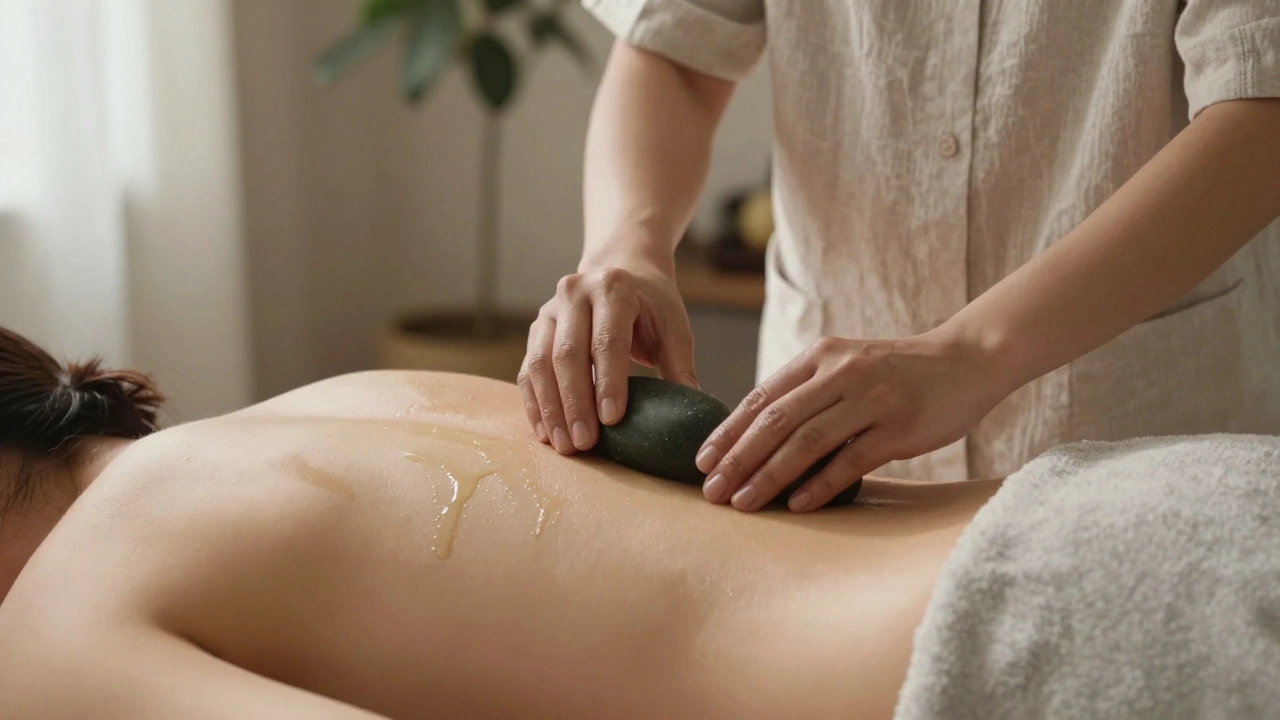
After the stones are positioned, the therapist will use them to glide over your skin, often combining them with massage oil. You might feel the stones being lifted and repositioned throughout the session. That’s normal. Each placement is intentional.
After the stones are removed, the therapist will finish with hand techniques to integrate the effects. You’ll be wrapped in a warm blanket afterward. Many people nap for 10-15 minutes. Don’t rush out. Let your body settle.
What to Avoid
Hot stone massage isn’t for everyone. Avoid it if you:
- Have open wounds, burns, or recent skin infections
- Are pregnant without clearance from your doctor
- Have diabetes with reduced sensation in your limbs
- Have blood clotting disorders or take blood thinners
- Have a fever or are recovering from an acute illness
If you’re on medication that affects your temperature sensitivity-like certain antidepressants or beta-blockers-tell your therapist. Your body might not register heat the same way.
Also, don’t expect miracles after one session. Like any therapy, the benefits build over time. Most people feel immediate relief, but lasting changes come with regular sessions-once a month, or every two weeks if you’re under high stress.
Why It Works: Science Meets Sensation
There’s real biology behind why this feels so good. Heat increases nitric oxide production in your tissues, which helps reduce inflammation. It also lowers cortisol-the stress hormone-by up to 30% in a single session, according to research from the Journal of Clinical Psychology.
And then there’s the psychological effect. The ritual of lying still, wrapped in warmth, with someone gently attending to your body, triggers a sense of safety. For many, it’s the first time in weeks they’ve allowed themselves to be cared for without needing to fix, perform, or respond.
It’s not just a massage. It’s a pause. A permission slip to stop.
How to Find a Good Practitioner
Not all massage therapists are trained in hot stone techniques. Look for someone certified in either Swedish massage or neuromuscular therapy with additional training in thermal therapy. Ask if they use basalt stones-not just any rocks-and whether they heat them in a dedicated water bath, not a microwave.
Check reviews for mentions of cleanliness, temperature control, and communication. A good therapist will ask about your pain points, medical history, and preferences before starting. They won’t rush you.
In Melbourne, clinics like The Stone Haven in Fitzroy and Serenity Spa in South Yarra are known for their attention to detail. But you don’t need a luxury spa. Many certified therapists offer home visits or work out of quiet studios. What matters is their skill, not the price tag.
Make It a Ritual
Hot stone massage isn’t a luxury-it’s a form of self-care that’s accessible and deeply effective. You don’t need to wait for burnout to try it. Schedule one when you’re just starting to feel off. When your shoulders feel tight after a long day, when you can’t sleep, when you just need to remember what stillness feels like.
Keep a journal after your session. Note how you slept, how your body felt the next day, whether your mind felt quieter. You might be surprised how much small moments of warmth can shift your whole week.
This isn’t about spending money. It’s about giving yourself permission to be held-by warmth, by silence, by care.
Is hot stone massage safe during pregnancy?
It can be, but only with your doctor’s approval and a therapist trained in prenatal massage. Heat should never be applied to the abdomen or lower back in early pregnancy. Stones are often used only on the feet, hands, and shoulders. Always inform your therapist you’re pregnant before the session begins.
Do the stones leave marks on the skin?
No, not when done correctly. The stones are heated to a safe, controlled temperature and never left in one spot too long. You might notice slight redness where the stones rested, but that fades within minutes. If you see bruising or burns, the therapist used stones that were too hot or didn’t monitor them properly.
How often should I get a hot stone massage?
For stress relief or muscle tension, once a month is ideal. If you’re recovering from injury, managing chronic pain, or under high stress, every two weeks can help. Many people find that after three sessions, they notice a lasting difference in how their body holds tension.
Can I do hot stone massage at home?
You can try, but it’s not the same. Home stones often cool too quickly, and without proper training, you risk uneven heat or burns. There are heated stone kits available, but they lack the precision and flow of a trained therapist. For true relaxation and safety, professional sessions are recommended.
Does hot stone massage help with anxiety?
Yes. The combination of deep warmth, rhythmic touch, and quiet environment activates the parasympathetic nervous system, which lowers heart rate and calms the mind. Many clients report feeling mentally lighter after a session, with reduced racing thoughts and improved focus the next day.
What Comes Next?
If you’ve never tried hot stone massage, start with a 60-minute session. Wear comfortable clothes, arrive 10 minutes early, and drink water afterward. Avoid caffeine or heavy meals right before.
If you’ve tried it before and didn’t feel the difference, give it another shot-but this time, choose a therapist who specializes in it. Not all massage is the same. The right hands, the right heat, the right space-it all adds up.
Life doesn’t pause. But you can. And sometimes, that’s the most healing thing of all.

Pierce Burbank
January 1, 2026 AT 20:19Wow. Just… wow. I’ve been carrying tension in my shoulders since 2020, and I didn’t even realize it was normal-until I read this. I’m booking a session this week. I’m not waiting for a breakdown to finally take care of myself. I’m done with ‘I’ll relax later.’ Later is a myth. Now is the time. And yes-I’m telling my boss I need a mental health day. No guilt. No excuses.
Janet Rohrer
January 3, 2026 AT 17:13They say it’s for relaxation… but what if the stones are just a cover? What if they’re transmitting frequencies? I read a paper-unpublished, mind you-linking basalt stone heat patterns to subliminal neural dampening. The government’s been using this since the 90s to pacify overworked civilians. You think you’re relaxing… but you’re being calibrated. Ask yourself: who profits when you’re too tired to protest?
Lisa Grant
January 5, 2026 AT 15:47YES. This. I’m a mom of three, work full-time, and I haven’t sat still without a to-do list since 2018. I tried this last month. I cried. Not from pain-from relief. I didn’t know I was holding my breath until I stopped. Do it. Just do it. Book it. Your body is begging you. You don’t need permission-you need courage. And you’ve got it.
Jimoh Tajuddeen T
January 7, 2026 AT 08:14Man, I love this. But honestly? You’re all missing the real point. You think the stones are just for relaxation? Nah. This is the quiet rebellion. The system wants you stressed, distracted, and consuming. But you? You’re lying there, warm, silent, breathing… and you’re not checking your phone. That’s radical. That’s resistance. That’s power. You’re not getting a massage-you’re reclaiming your humanity. I’m so proud of you all.
Becky Voth
January 9, 2026 AT 00:26OMG I just got back from my first session and I’m still floating!! I didn’t know I had so much tension in my hips!! The therapist put stones between my toes and I swear I felt my whole body sigh. I forgot to write down her name-oops!! But if you’re in Portland, look for Lisa at the Green Sprout Studio-she’s magic. Also, drink water after!! I forgot and got a headache lol. But worth every penny!!
Alex Burns
January 9, 2026 AT 12:57Minor correction: the study cited from Uni of Melbourne was actually from 2022, not 2023. Also, cortisol reduction is closer to 24% based on the full dataset. But hey-the point stands. This works. And the part about ‘permission to stop’? That’s the real takeaway. Not the stones. Not the oil. The permission.
Debasish Maulik
January 10, 2026 AT 00:42When I was in Delhi last year, I saw a street healer use heated river stones on an old man’s back. No clinic. No oil. Just fire, stone, and silence. He smiled like he’d been reborn. This isn’t new. It’s ancient. We just forgot how to listen to our bodies. The stones don’t heal you-they remind you that you’re still here, still warm, still worth holding. That’s the miracle. Not the technique. The recognition.
Triston Foo
January 11, 2026 AT 00:26So… you pay $120 to lie still while someone puts rocks on you? And this is self-care? I guess my couch and Netflix are just… not spiritual enough.
Parker Mullins
January 12, 2026 AT 14:48Triston’s comment is funny, but it misses the point. This isn’t about the cost. It’s about the contrast. We live in a world that rewards noise, speed, and output. This is the opposite. It’s not a luxury-it’s a counterbalance. The science is real, but the soul-level impact? That’s what keeps people coming back. You don’t need to understand it to feel it. Just try it once. Without judgment. Just… feel.
Kevin Kuniyoshi
January 12, 2026 AT 18:56While the phenomenological experience of thermal somatic modulation may be subjectively gratifying, one must acknowledge the absence of a peer-reviewed, longitudinal, double-blind RCT establishing causality beyond placebo effect. Furthermore, the term 'permission slip to stop' is a rhetorical device, not a clinical metric. One might argue that such practices reinforce passive coping mechanisms rather than addressing root causes of chronic stress. I remain skeptical, but I applaud the intentionality.