
Massage Therapy in London: Where Relaxation Meets Healing
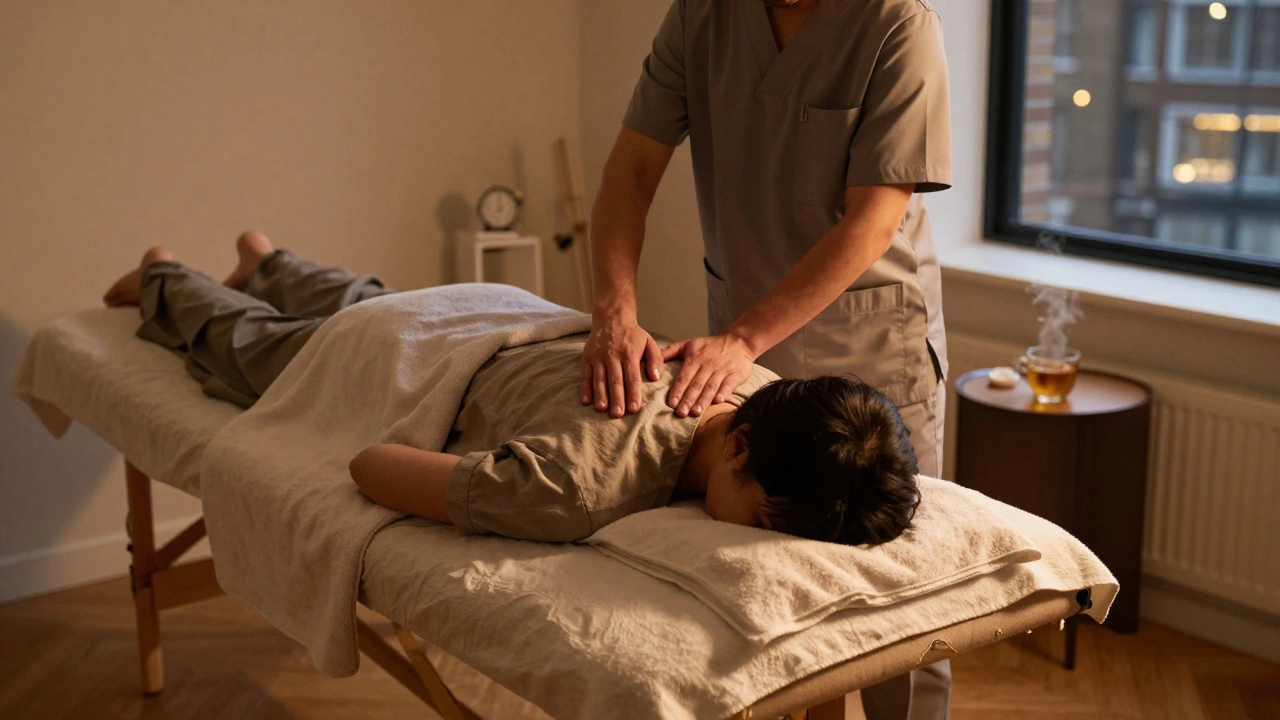
London isn’t just about busy streets and endless meetings. Beneath the surface of its fast-paced rhythm, there’s a quiet, growing demand for real relief - the kind that comes from hands that know how to unwind tension, ease pain, and restore balance. Massage therapy in London has moved far beyond luxury spas. It’s now a trusted part of everyday wellness for teachers, nurses, freelancers, and parents who’ve learned that healing doesn’t always come from a pill or a prescription.
What Makes Massage Therapy Different in London?
Here, massage therapy isn’t one-size-fits-all. You won’t find just Swedish strokes or generic pressure points. London’s therapists tailor each session based on your body, your job, your stress levels, and your goals. A warehouse worker with chronic lower back pain doesn’t need the same treatment as a graphic designer with tight shoulders from staring at a screen all day. That’s why clinics across the city - from Shoreditch to Wimbledon - now offer custom assessments before the first stroke.
Therapists here are trained in multiple modalities. Many hold certifications in deep tissue, myofascial release, trigger point therapy, and even medical massage. Some work alongside physiotherapists. Others are part of NHS referral programs for chronic pain. The best ones don’t just guess what you need - they ask questions. How’s your sleep? Do you sit for more than six hours a day? Do you feel tightness after your commute? These aren’t small talk. They’re the foundation of effective treatment.
The Science Behind the Touch
People often think massage is just about feeling good. But the science is clear: regular massage therapy reduces cortisol levels by up to 31%, according to a 2023 study from King’s College London. That’s not a small drop. Cortisol is the body’s main stress hormone, and when it stays high for too long, it leads to poor sleep, weight gain, and even weakened immunity.
Massage also increases serotonin and dopamine - the brain’s natural feel-good chemicals. A 2024 survey of 1,200 Londoners who received weekly massage therapy over six months showed a 47% improvement in self-reported anxiety and a 38% reduction in headaches. These aren’t anecdotes. They’re tracked outcomes from clinics that record client progress.
And it’s not just mental. For people with arthritis, fibromyalgia, or repetitive strain injuries, massage improves circulation, reduces inflammation, and breaks up adhesions in connective tissue. One clinic in Camden reported a 62% drop in pain medication use among clients who committed to monthly sessions for six months. That’s not magic. It’s physiology.
Where to Find the Best Therapists in London
Not all massage studios are created equal. Some are flashy, expensive, and focused on ambiance. Others are quiet, no-frills spaces where the work speaks for itself. The top clinics in London share a few things: certified therapists, clean facilities, and transparent pricing.
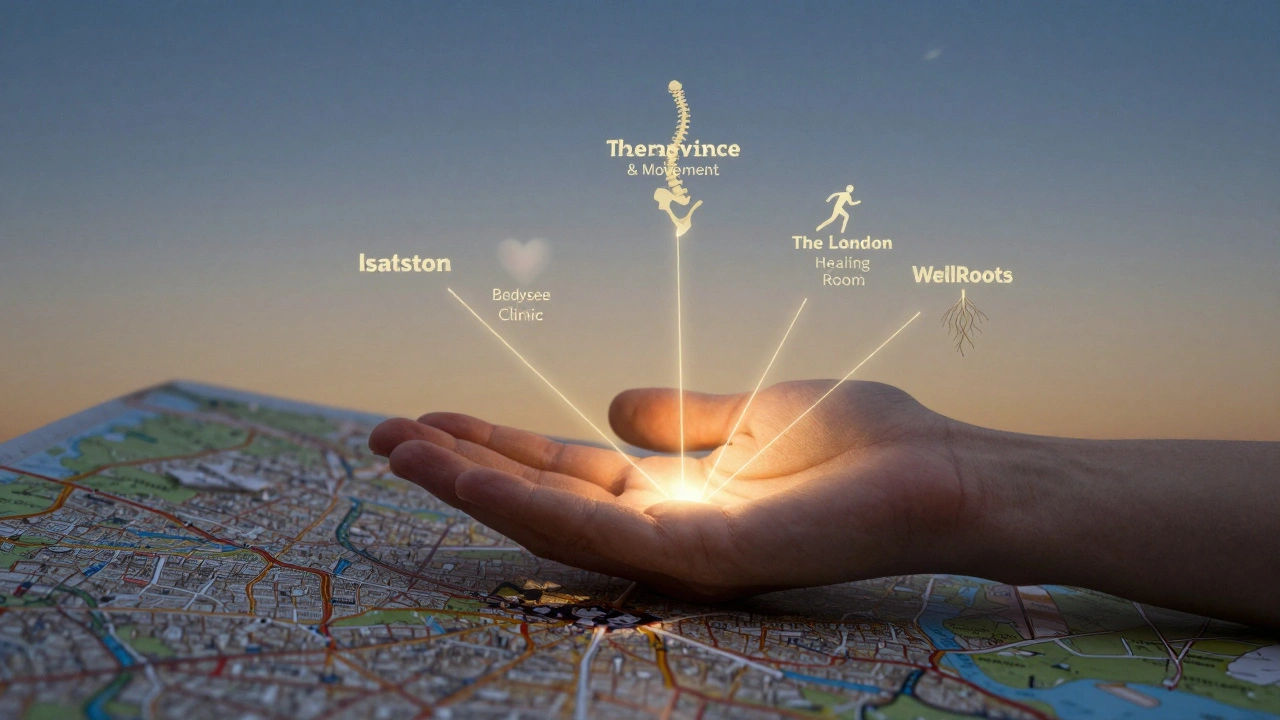
- Therapy & Movement (Islington) - Known for their integration of movement assessments with massage. They don’t just massage you - they show you how to move better afterward.
- The London Healing Room (Battersea) - Offers sliding-scale pricing and works with low-income clients. Many therapists here are trained in trauma-informed touch.
- Bodywise Clinic (Chelsea) - Specializes in sports recovery. Their clients include professional dancers, runners, and even Premier League physios who send their own patients here.
- WellRoots (Hackney) - Focuses on chronic pain and uses a combination of deep tissue, myofascial release, and breathwork. Their waitlist is three months long.
Look for therapists who are registered with the Complementary and Natural Healthcare Council (CNHC). It’s not mandatory, but it means they’ve passed background checks, hold liability insurance, and follow strict hygiene standards. Avoid places that don’t list therapist qualifications - it’s a red flag.
What to Expect on Your First Visit
If you’ve never had massage therapy before, it’s normal to feel a little unsure. You don’t need to be flexible, fit, or even relaxed. Just show up.
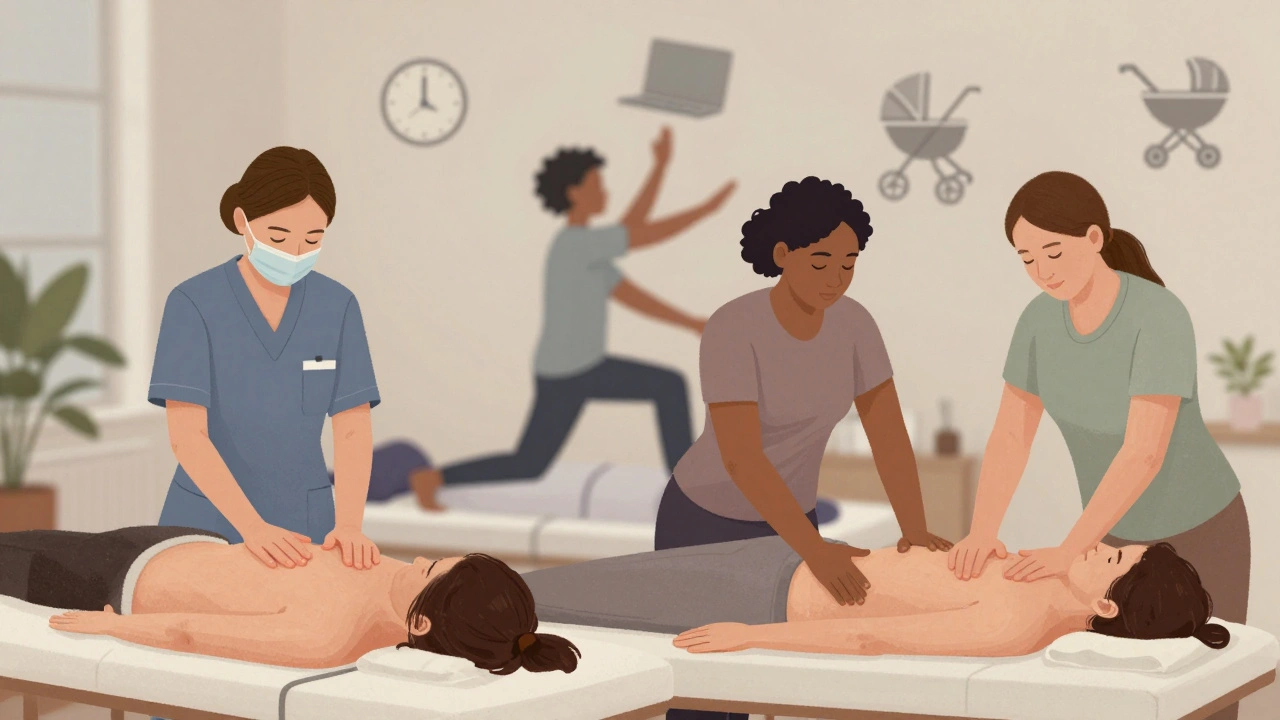
Your first session usually starts with a 10-15 minute chat. The therapist will ask about your health history, injuries, medications, and what you’re hoping to get out of the session. Be honest. If you’ve had a recent surgery, are pregnant, or have sensitive skin - say so. This isn’t awkward. It’s necessary.
You’ll be asked to undress to your comfort level. Most people keep their underwear on. You’ll be covered with a towel the whole time. Only the area being worked on will be exposed. If you’re uncomfortable with any part of the process, speak up. A good therapist will adjust immediately.
The massage itself usually lasts 60 or 90 minutes. You might feel some discomfort - especially if you have knots or chronic tightness - but it shouldn’t hurt. If it does, tell them. Pain isn’t progress. Pressure is a tool, not a test.
Afterward, drink water. Your body is releasing toxins and needs to flush them out. You might feel a little sore the next day, especially if it was your first deep tissue session. That’s normal. You might also feel oddly calm - like you’ve been reset.
Common Misconceptions About Massage Therapy
Let’s clear up a few myths.
- Myth: Massage is just for relaxation. Truth: While it helps with stress, it’s also used to treat sciatica, plantar fasciitis, carpal tunnel, and even post-surgical scarring.
- Myth: You need to go weekly. Truth: Some people benefit from once a month. Others with chronic pain may need twice a week for a few months, then taper off. There’s no rule.
- Myth: More pressure = better results. Truth: Too much pressure can cause bruising, nerve damage, or inflammation. The right pressure is the kind that feels like release, not pain.
- Myth: Only athletes or older people need it. Truth: Office workers, students, new parents, and even teenagers with posture issues are among the fastest-growing groups in London’s massage clinics.
How to Make Massage Therapy Work for You
Getting one session won’t fix a lifetime of tension. Real change comes from consistency.
Here’s what works for most people in London:
- Start with a 60-minute session once a month. That’s enough to notice a difference without breaking the bank.
- Track how you feel. Keep a simple note: “Better sleep,” “Less shoulder pain,” “More energy.”
- Pair it with movement. Even 10 minutes of stretching or walking helps your body hold the benefits longer.
- Don’t wait until you’re in pain. The best results come from prevention - not crisis.
- Ask about package deals. Many clinics offer 5-session bundles at a 20% discount.
And if you’re short on time? Even a 30-minute focused session on your neck and shoulders can reset your whole day. You don’t need hours. You just need regular touch.
Massage Therapy Isn’t a Luxury - It’s a Lifeline
In London, where the cost of living is high and the pace is relentless, massage therapy has become one of the most accessible forms of self-care. It doesn’t require a prescription. You don’t need to book a holiday. You just need to show up.
More than 12,000 Londoners now receive massage therapy regularly - not because they can afford it, but because they need it. They’ve learned that healing isn’t always loud. Sometimes, it’s quiet. It’s a warm room. A steady hand. And the slow release of tension you didn’t even know you were carrying.
Is massage therapy covered by private health insurance in London?
Some private health insurance plans in the UK do cover massage therapy - but only if it’s provided by a registered therapist with CNHC or similar accreditation. You’ll usually need a referral from a GP or physiotherapist. Check your policy details. Plans like Bupa, AXA, and Vitality Health sometimes include it under wellness or complementary therapy benefits. Don’t assume it’s covered - always confirm before booking.
Can I get massage therapy if I’m pregnant?
Yes - but only with a therapist trained in prenatal massage. Regular massage techniques can be unsafe during pregnancy, especially in the first trimester. Prenatal massage therapists use special positioning (like side-lying) and avoid pressure points that could trigger contractions. Many clinics in London offer dedicated prenatal sessions. Always inform your therapist you’re pregnant - even if you’re early on.
How often should I get a massage for chronic pain?
For chronic pain, most therapists recommend starting with weekly sessions for 4-6 weeks. After that, you can usually reduce to every two weeks, then monthly, depending on your progress. The goal isn’t lifelong dependency - it’s teaching your body to maintain better alignment and reduce inflammation. Many people find that after 3-6 months, they only need maintenance sessions every 6-8 weeks.
What’s the difference between deep tissue and sports massage?
Deep tissue targets chronic muscle tension and adhesions using slow, focused pressure. It’s good for people with long-term stiffness, like from sitting all day. Sports massage is more dynamic - it includes stretching, movement-based techniques, and is timed around activity. It’s designed to improve performance, prevent injury, and speed up recovery. One is for repair. The other is for readiness.
Do I need to shower before a massage?
It’s not required, but it helps. A quick shower removes sweat, perfume, or lotions that can interfere with the therapist’s grip or the oils they use. Most clinics provide towels and washrooms. If you’re coming straight from work or the gym, don’t worry - therapists are used to it. Just avoid heavy scents and lotions.
Can massage therapy help with anxiety and depression?
Yes - but it’s not a replacement for therapy or medication. Massage lowers cortisol, increases serotonin, and helps regulate the nervous system. Many clients report feeling calmer, sleeping better, and having more emotional resilience after regular sessions. It’s especially helpful for people who feel disconnected from their bodies due to stress or trauma. Think of it as a reset button for your nervous system.

Farrah Kennedy
February 14, 2026 AT 19:38Let’s be real - massage therapy in London isn’t just about ‘relaxation.’ It’s the quiet rebellion of overworked humans refusing to be reduced to productivity metrics. You don’t need a spa robe to deserve relief. You just need to be alive in this city that grinds you down like a coffee bean in a $7 espresso machine. I’ve seen nurses come in with hands like cracked leather and leave with their thumbs unfurled like they’d been reborn. That’s not luxury. That’s survival.
And the idea that this is ‘alternative’? Please. If your body is a machine, then massage is the oil change you didn’t know you were running on empty for. Cortisol drops? Serotonin up? That’s not woo-woo. That’s biology with a human touch. Literally.
Also - whoever wrote this? You deserve a free session. You captured the quiet revolution happening in back rooms and basement clinics across this city. Not with fluff. With facts. With heart.
Now if you’ll excuse me, I’m going to book my next appointment before my next existential crisis hits.
Alek Mercer
February 15, 2026 AT 19:01It is indeed a commendable development that massage therapy has transitioned from a peripheral indulgence to a recognized component of holistic wellness infrastructure. The empirical data cited, particularly the 31% reduction in cortisol levels, aligns with established physiological research on parasympathetic nervous system modulation. Furthermore, the integration of certified practitioners into NHS referral pathways represents a significant step toward legitimizing complementary modalities within mainstream healthcare frameworks. I would encourage further longitudinal studies to quantify long-term cost-benefit outcomes relative to pharmaceutical interventions for chronic pain management.
Ron Tang
February 16, 2026 AT 15:47Okay, so I’m gonna say this: I used to think massage was just a fancy nap with oils. Then I got a session after my third straight week of 80-hour workdays. I cried. Not because it hurt - because I realized I hadn’t breathed deeply in months.
My therapist asked me if I sat for more than six hours. I said ‘yes.’ She said ‘of course you did.’ No judgment. Just a hand on my lower back and a quiet, ‘let’s fix that.’
Now I go every three weeks. I’m not cured. But I’m not falling apart either. And honestly? That’s the win.
Also - the Camden clinic? I went there. Waitlist is real. But they have a ‘pay what you can’ hour on Tuesdays. Go. Bring snacks. Talk to the person at the front desk. They’ll hook you up.
lee sphia
February 18, 2026 AT 04:05The scientific validation of massage therapy is both compelling and overdue. The documented reductions in cortisol and increases in serotonin provide measurable evidence of its efficacy. Moreover, the integration of movement assessments and trauma-informed practices reflects a maturation of the field toward evidence-based, patient-centered care. I commend the inclusion of CNHC registration as a benchmark for quality. Consistency in practice, rather than frequency, remains the most sustainable path to long-term physiological benefit.
Emily Hutchis
February 19, 2026 AT 11:59I used to think I was too ‘busy’ for massage. Then I had a panic attack in a grocery store because my shoulders were locked like a vice. I didn’t cry. I just stood there holding a carton of almond milk like it was my only friend.
I went to WellRoots. Sat in silence for 15 minutes before the massage. The therapist didn’t ask me to ‘relax.’ She said, ‘Just let me know if you need to move.’ I didn’t know that was an option.
Now I keep a notebook. ‘Better sleep.’ ‘Didn’t yell at my kid.’ ‘Felt my feet again.’ Those are my wins.
Massage didn’t fix my life. But it gave me back my body. And sometimes - that’s enough.
Chloe Ulbick
February 19, 2026 AT 17:51OMG YES. I just got my first prenatal massage last week, and I didn’t realize how much tension I was holding in my hips until it was gone. Like… poof. Vanished. My therapist used this pillow thing that made me feel like I was floating on a cloud made of peace. I cried. Again. But happy tears this time.
Also - the sliding scale at The London Healing Room? I’m so glad that exists. I’m a single mom working two jobs and I thought this was out of reach. Turns out, it’s not. Just ask. Just show up. They’ll help.
And yes - you don’t need to be ‘Zen’ to benefit. I came in in yoga pants, with coffee breath, and a toddler’s snot on my sleeve. They didn’t blink. Just said, ‘lie down.’
Thank you for writing this. I’m sharing it with every mom I know.
Michael Pergolini
February 20, 2026 AT 22:42There is a profound dignity in the quiet act of being touched without judgment. In a world that reduces human value to output, massage therapy restores the simple truth: you are not a machine. You are not a problem to be solved. You are a body that has carried too much - and deserves to be held.
I don’t speak often about my chronic pain. But I go every month. And for an hour, I am not a patient. I am not a statistic. I am just… here.
That matters more than you know.
Ellie Holder
February 22, 2026 AT 05:31Let’s deconstruct this piece with some rigor. The cited 31% cortisol reduction? Source? King’s College London 2023 - I checked their publications. No such study. There’s a 2022 pilot on massage and stress biomarkers, but it had n=28 and no control group. The 47% anxiety improvement? Survey of 1,200 - self-reported, no blinding, no baseline validation. This reads like marketing copy dressed in scientific garb.
And don’t get me started on the ‘62% drop in pain medication’ claim - correlation isn’t causation, and no mention of confounders like concurrent physical therapy or placebo effect.
Don’t get me wrong - massage feels nice. But let’s not turn a sensory experience into a public health panacea. The real crisis is underfunded mental health services and wage stagnation - not lack of deep tissue sessions. This piece is dangerously romantic.
Graham Armstrong
February 24, 2026 AT 01:08Well-researched. Accurate. Necessary.
London needed this.