
Hot Stone Massage: A Therapeutic Touch of Warmth
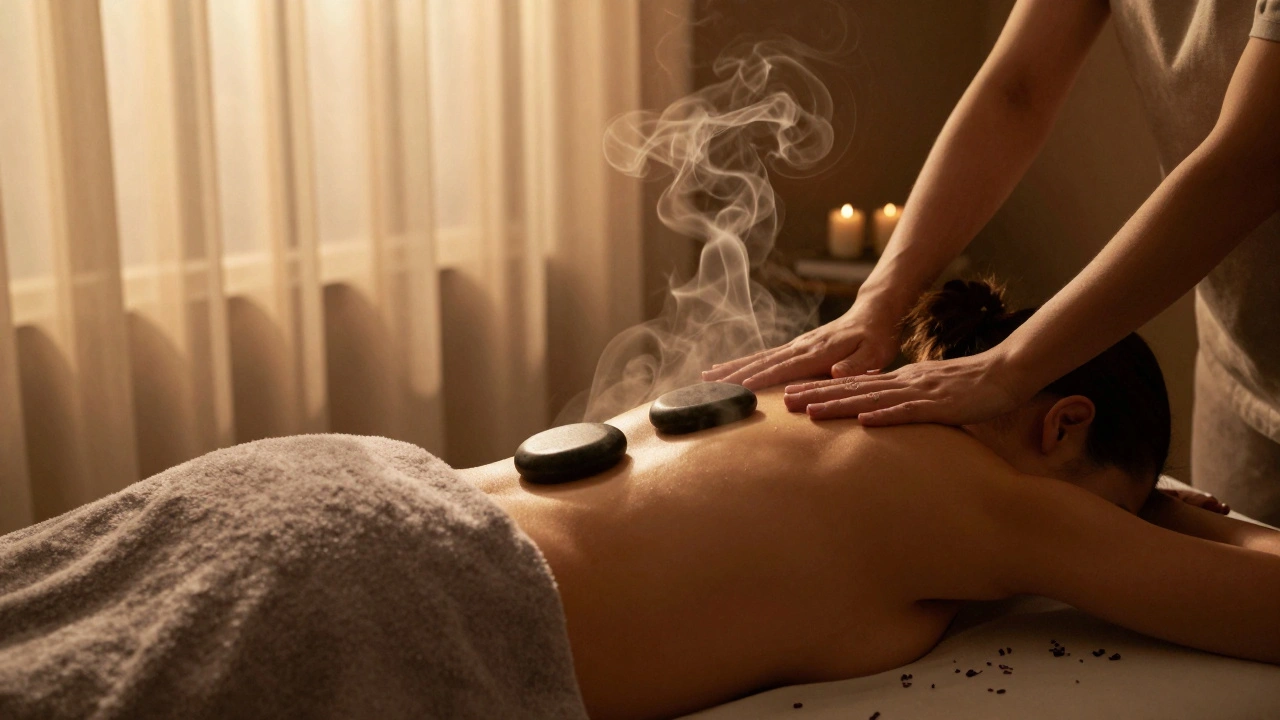
Imagine lying down as smooth, warm stones glide over your back, shoulders, and legs-each one releasing tension like a slow, deep breath. This isn’t magic. It’s hot stone massage, a centuries-old practice that’s now a staple in wellness centers from Bristol to Bali. The heat doesn’t just feel good-it changes how your body responds to touch. Muscles soften. Blood flows easier. Stress doesn’t just fade; it melts away.
How Hot Stone Massage Works
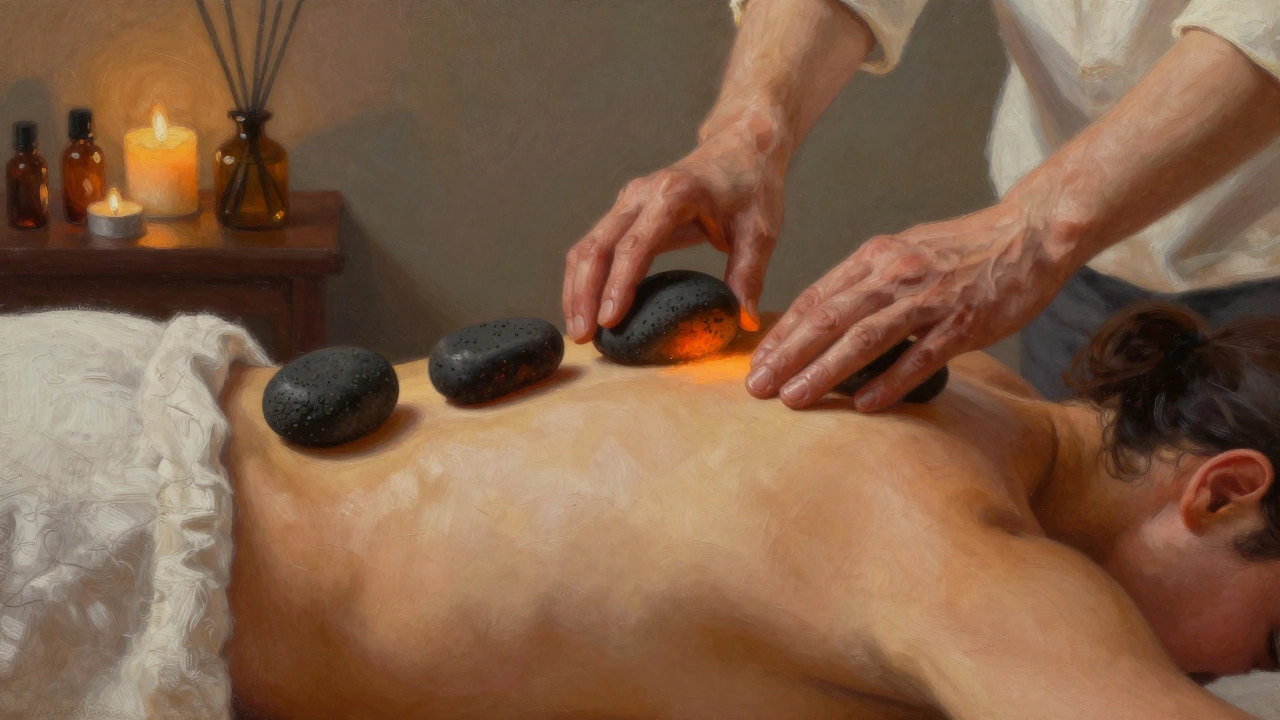
The stones used are usually basalt, a volcanic rock that holds heat for a long time. They’re heated to between 120°F and 130°F (49°C-54°C), then placed along your spine, in your palms, between your toes, or moved slowly over tight areas. The warmth triggers a reflex in your nervous system: your muscles relax before the therapist even touches them. This makes deep work easier and less painful than with traditional massage.
Studies from the Journal of Alternative and Complementary Medicine show that heat therapy increases circulation by up to 40% in treated areas. That means more oxygen and nutrients reach tired muscles, and waste products like lactic acid flush out faster. You don’t just feel relaxed-you recover faster.
What Happens During a Session
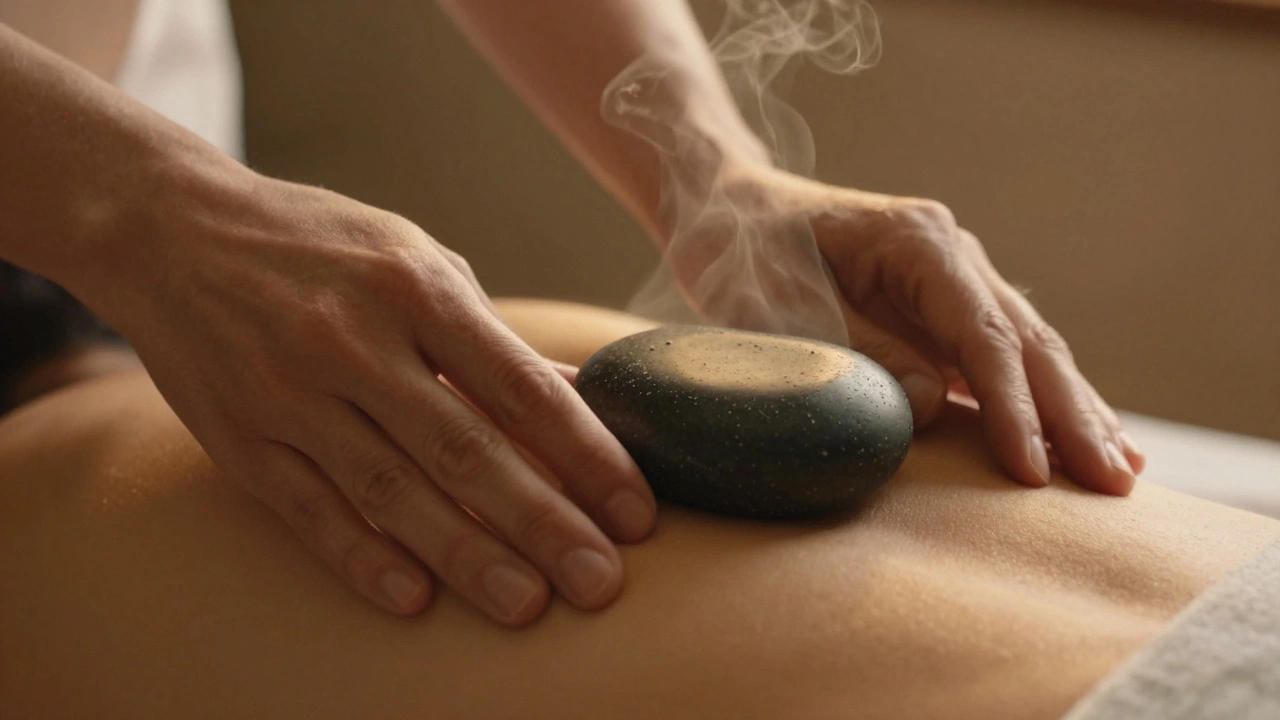
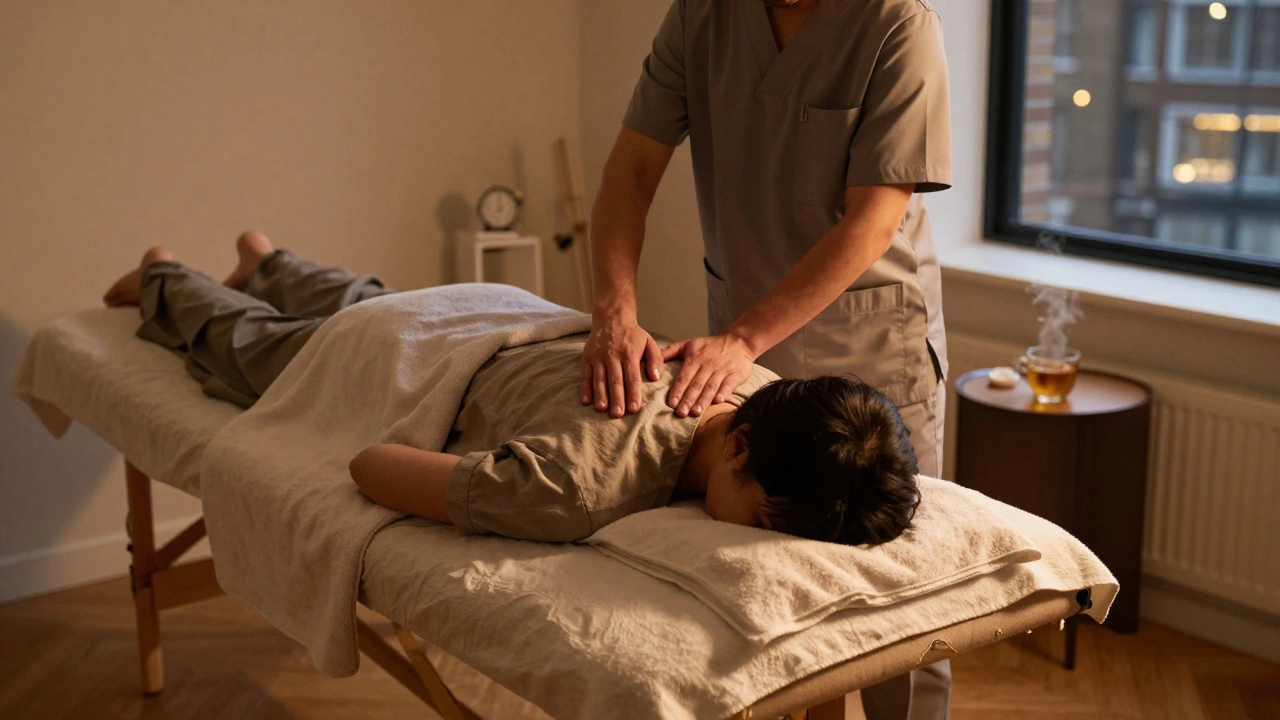
A typical session lasts 60 to 90 minutes. You’ll lie on a heated table, covered with towels. The therapist starts by placing warm stones on key energy points-your chakras, if you follow that path-or just where tension builds: your shoulders, lower back, feet. Then they use the stones like extensions of their hands, gliding them over your skin in long, rhythmic strokes.
Some therapists combine the stones with Swedish massage techniques-long strokes, circular movements, kneading. Others use them for trigger point release, holding a stone over a knot until it releases. Cold stones might be added at the end to calm inflammation or reduce puffiness.
You’ll feel the heat sink into your muscles. It’s not scalding. It’s the kind of warmth you feel when you step into a sunlit room after a cold walk. Your breathing slows. Your jaw unclenches. By the end, you might forget your name.
Who Benefits Most
Hot stone massage isn’t just for people who want to unwind. It’s used by:
- People with chronic muscle stiffness-from sitting all day or aging
- Those with arthritis or fibromyalgia, where heat eases joint pain
- Recovering athletes who need faster muscle recovery
- Anyone dealing with anxiety or insomnia-heat calms the nervous system
- People who find deep tissue massage too intense
One client in Bristol, a 58-year-old teacher with lower back pain from years of standing, said after three sessions: “I haven’t slept through the night without painkillers in five years. After my third hot stone massage, I woke up without a single ache.”
What Makes It Different from Other Massages
Swedish massage uses hands only. Deep tissue targets knots with pressure. Thai massage involves stretching and acupressure. Hot stone massage? It uses heat as the first tool. The warmth does the heavy lifting-softening tissue, opening blood vessels, calming nerves-so the therapist can work more gently and deeply.
It’s also more sensory. The weight of the stones, the rhythm of their movement, the smell of essential oils (often lavender or eucalyptus), the quiet warmth-it’s a full-body experience. You’re not just being massaged. You’re being held.
What to Expect After
Most people feel deeply relaxed. Some feel a little lightheaded. That’s normal. Drink water. Your body is flushing out toxins released by the heat and movement.
You might feel sore the next day, especially if you’re new to massage or have tight muscles. But it’s the kind of soreness that feels like you’ve been gently worked on-not bruised. Many clients say they sleep better that night. Others notice reduced headaches or improved digestion.
Don’t rush out after your session. Sit quietly. Breathe. Let your body settle. The effects can last for days.
Who Should Avoid It
Hot stone massage is safe for most people. But skip it if you:
- Have open wounds, burns, or recent surgery
- Have diabetes with nerve damage (you might not feel if the stone is too hot)
- Are pregnant without clearance from your doctor
- Have a fever or active infection
- Have blood clots or are on blood thinners
Always tell your therapist about any health condition-even if you think it’s unrelated. A good therapist will adjust the heat, pressure, or technique to keep you safe.

How to Find a Good Practitioner
Not all spas are created equal. Look for someone certified in hot stone therapy, not just someone who learned it on YouTube. Ask:
- Do you have specific training in stone massage?
- How do you test the temperature of the stones?
- Do you use clean, sanitized stones every time?
- Can you adjust the heat if I feel too warm?
Reputable therapists keep stones in a heated water bath, never in dry heat. They test each stone on their own wrist before placing it on you. They use disposable towels between you and the stones. If they can’t answer these questions, walk away.
Can You Do It at Home?
You can try a simplified version at home. Buy smooth, flat basalt stones from a wellness supplier (not a garden center-they might contain minerals that react with heat). Heat them in warm water, not a microwave. Wrap them in a towel and roll them over your calves, feet, or back. Don’t use stones hotter than your skin can comfortably handle.
But don’t expect the same depth or precision as a trained therapist. The real benefit comes from the combination of heat, technique, and timing-something you can’t replicate alone.
Why It Feels Like More Than Just a Massage
Hot stone massage doesn’t just work on your muscles. It works on your mind. The steady warmth mimics the feeling of being held by someone who cares. It’s primal. Humans have used heat for healing since the first fire was lit. The rhythm of the stones, the silence, the slow release of tension-it’s meditative.
In a world that never stops demanding more from you, this is a rare gift: permission to be still. To let go. To feel safe.
That’s why people keep coming back.
Is hot stone massage painful?
No, it shouldn’t be. The heat relaxes muscles before pressure is applied, so most people find it deeply soothing. If you feel pain, speak up. The stones should feel warm, not hot. A good therapist adjusts based on your feedback.
How often should I get a hot stone massage?
For general relaxation, once a month works well. If you have chronic pain, stress, or muscle tension, weekly or biweekly sessions for 4-6 weeks can make a big difference. After that, maintenance every 3-6 weeks helps keep things balanced.
Do hot stones leave marks on the skin?
Not if done correctly. Stones are always wrapped in towels and tested for temperature. Temporary redness is normal-like after a warm bath-but bruises or burns mean something went wrong. Report it immediately.
Can I combine hot stone massage with other therapies?
Yes. Many therapists combine it with aromatherapy, reflexology, or Swedish massage. It also pairs well with acupuncture or chiropractic care. Just let your therapist know what else you’re doing so they can adjust the session.
Are the stones cleaned between clients?
Absolutely. Reputable spas sterilize stones after each use with medical-grade disinfectants. They’re also stored in a sealed, heated container. If a therapist reuses stones without cleaning them, find someone else.
Does hot stone massage help with anxiety?
Yes. Heat activates the parasympathetic nervous system-the part of your body that says, “It’s safe to relax.” Studies show reduced cortisol levels and slower heart rates after sessions. Many clients report feeling calmer for days afterward.
Steve Wilson
January 13, 2026 AT 04:57Just had my first hot stone massage last week and wow. I didn’t think I’d like it-I’m not really into spa stuff-but the warmth just melted everything. I slept like a baby that night. No more tossing and turning. Feels like my body finally got a hug.
William Sogus
January 13, 2026 AT 16:26Yeah right. Hot stones? Sounds like a scam to sell overpriced towels and lavender oil. The government’s probably behind this. They want us all relaxed so we don’t question the system. Also, basalt rocks? That’s just volcanic trash. Next they’ll tell us to rub hot lava on our backs for ‘healing.’ 😏
Jessica Horcher
January 14, 2026 AT 18:21Important note: Always confirm the stones are heated in a water bath, not dry. Dry heat can cause microfractures in the stone and uneven temperatures. Also, therapists should never use stones hotter than 125°F-your skin can’t safely handle more. I’ve seen too many burns from lazy spas. Ask for the temp log. It’s your right.
Kayla Hochard
January 15, 2026 AT 14:24Of course it works. America invented relaxation. We just forgot to charge for it until now. You think the Chinese or Germans let their people lie around on hot rocks? No. They work. And they’re better for it. This is just another way to make Americans feel special while they’re still overweight and stressed. 🇺🇸
Andre Estrela
January 17, 2026 AT 07:44OMG I CRIED DURING MY LAST SESSION 😭🔥 the warmth… the silence… the way the stone rested on my sacrum like it just KNEW… i felt my soul exhale 🌿✨ i’m not even kidding. my dog started sleeping on my lap after. he knew. he just KNEW.
Kelsey Stratton
January 17, 2026 AT 12:51My mom swears by it. She gets it every month. Says it helps her arthritis. I tried it once. Felt nice. Didn’t change my life. But I didn’t hate it either. Water after. That’s the only rule.
Sean Marcus
January 17, 2026 AT 14:29So… it’s just a fancy warm bath with hands? I could do that with a heating pad and a YouTube video. Save $120. 🤷♂️
prajesh varma
January 18, 2026 AT 12:20Bro, in India we’ve been using heated river stones for centuries-called ‘Shila Snehana.’ No spa needed. Just a bonfire, some river rocks, and a cousin who knows how to not burn you. This whole thing is just capitalism repackaging ancient wisdom. But hey, if you wanna pay $150 for someone to roll a rock on your back, go ahead. I’ll be here, sweating in the sun with my stones, free as a bird 🌞🪨
Selene Becmar
January 20, 2026 AT 11:03It’s not just massage-it’s a ritual. The stones are ancient emissaries of Gaia, their volcanic origins whispering forgotten lullabies to your sympathetic nervous system. You’re not being touched-you’re being *remembered*. The warmth? That’s the echo of the Earth’s core, calling you back to your primordial stillness. 🌋🌙✨ And if you don’t feel it… you’re just not listening deeply enough.
Carli Lowry
January 21, 2026 AT 18:33Just a quick tip: If you’re doing this at home, never microwave the stones. They can explode. Seriously. I know someone who did it. Messy. Also, use a thermometer. Your wrist isn’t reliable. And please, for the love of all that’s holy, don’t use rocks from your backyard. Some minerals react badly to heat. Stay safe, stay warm.