
How Often Should You Get a Swedish Massage? Expert Guide for 2025
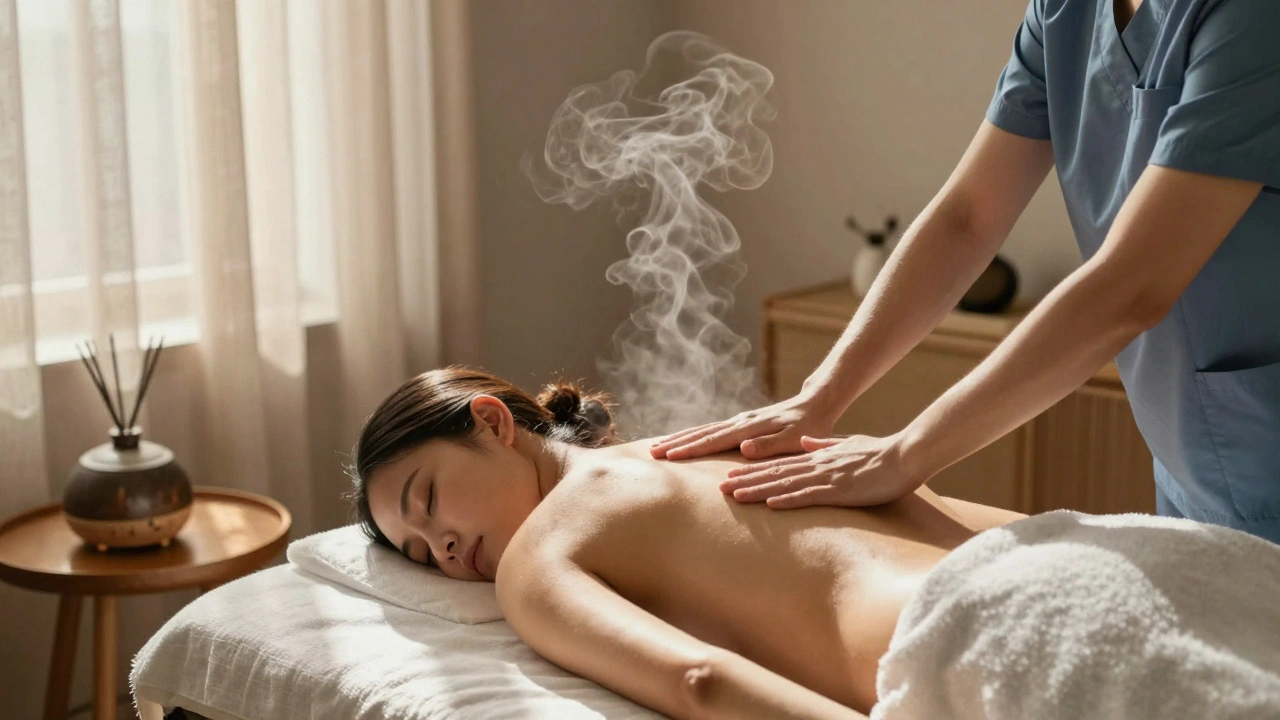
Swedish massage is one of the most popular types of massage in the UK - and for good reason. It’s gentle, flowing, and designed to melt away tension without digging into deep muscle knots. But if you’re thinking about making it part of your routine, the big question is: how often should you get a Swedish massage? There’s no one-size-fits-all answer, but knowing what works for most people - and what doesn’t - can help you get the most out of every session.
What Swedish Massage Actually Does
Swedish massage uses long, gliding strokes, kneading, circular movements, and light tapping. It’s not meant to fix chronic pain like deep tissue work. Instead, it’s built for relaxation, improving circulation, and easing everyday stress. Think of it like a reset button for your nervous system. A 2023 study from the University of Bristol’s Centre for Complementary Medicine found that people who received weekly Swedish massages for six weeks reported a 34% drop in cortisol levels - the main stress hormone - compared to those who didn’t.
It’s also great for sleep. Many clients notice they fall asleep faster and stay asleep longer after a session. That’s because the massage triggers the parasympathetic nervous system - your body’s natural ‘rest and digest’ mode. No caffeine, no meditation apps, just hands-on calm.
General Guidelines: How Often Is Right?
If you’re new to massage or just using it for stress relief, start with once a month. That’s enough to keep tension from building up without overspending. Most people in Bristol who work desk jobs, commute long hours, or juggle family life find this schedule keeps them feeling balanced.
But if you’re dealing with high stress - say, you’re running a business, caring for someone, or recovering from burnout - bump it up to every two weeks. That’s the sweet spot for people who feel their shoulders climbing up to their ears by Wednesday. One client I’ve worked with for two years, a school principal, swears by biweekly sessions. She says she notices the difference after just ten days. Without it, she feels foggy and irritable.
For most healthy adults, going more than once a week isn’t necessary. Your body needs time to process the effects. Massage doesn’t just relax muscles - it also helps flush out metabolic waste and triggers healing responses. Too much too often can overwhelm your system instead of helping it.
When to Go More Often
There are times when more frequent sessions make sense. If you’ve just recovered from an injury, are training for a big event, or are going through a major life change - like moving, divorce, or starting a new job - your body is under extra strain. In these cases, once or even twice a week for four to six weeks can help you adapt faster.
Post-surgery recovery is another example. After a hip replacement or abdominal surgery, gentle Swedish massage can reduce swelling and improve mobility. Many physiotherapists in Bristol recommend it as part of rehabilitation, usually starting two to three weeks after the procedure, once the incision has healed.
Chronic conditions like fibromyalgia or arthritis don’t require daily massage, but regular sessions - say, every 10 to 14 days - can keep symptoms manageable. A 2024 survey by the British Association of Massage Therapists showed that 68% of fibromyalgia patients who stuck to a biweekly routine reported fewer flare-ups over six months.
When to Back Off
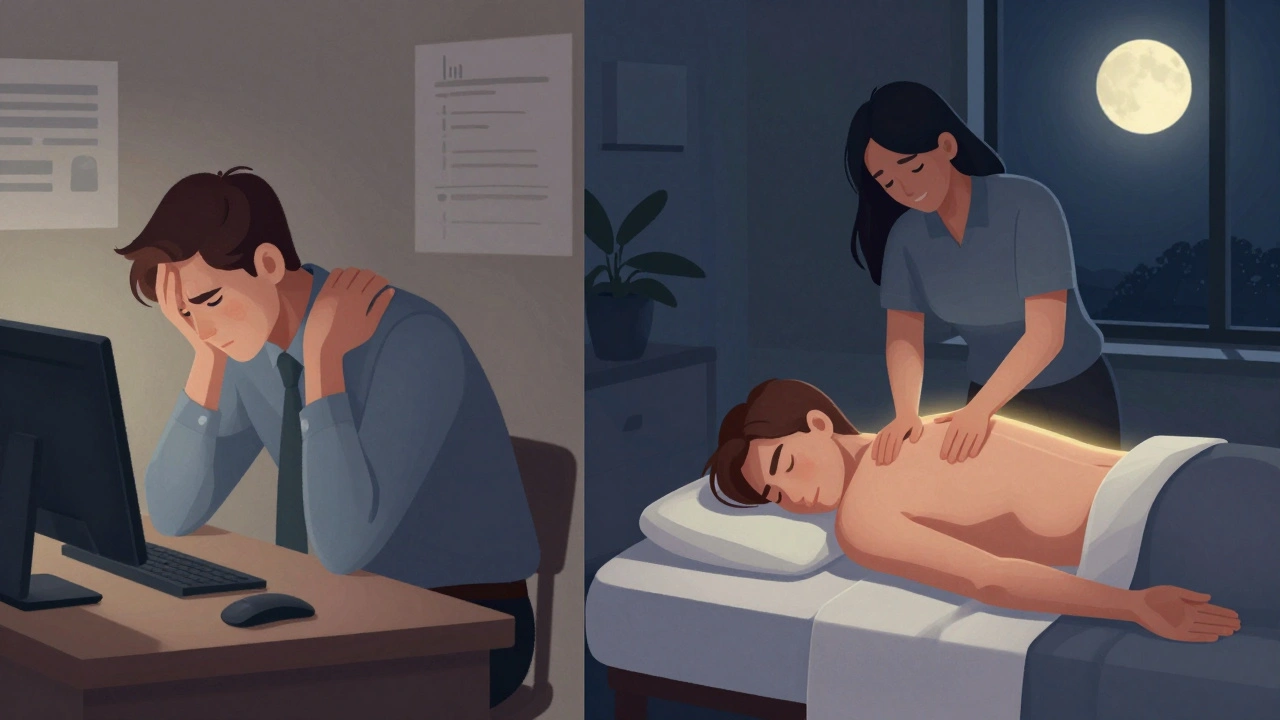
More isn’t always better. If you’re feeling sore after a massage, bruised, or unusually tired for more than a day, you’re probably going too often. Swedish massage should leave you feeling lighter, not drained. If you’re getting weekly sessions and still feeling tense, it might not be the right type of therapy for your needs.
Also, if you have certain health conditions, you need to be careful. Active infections, blood clots, severe osteoporosis, or recent radiation therapy are red flags. Always check with your doctor before starting any massage routine if you’re on blood thinners or have uncontrolled high blood pressure.
How to Make It Work for Your Budget
Let’s be honest - regular massage isn’t cheap. In Bristol, a 60-minute Swedish massage costs between £55 and £85, depending on the therapist and location. Going weekly would cost over £2,800 a year. That’s not realistic for most people.
Here’s a smarter way: combine professional sessions with self-care. Do 15 minutes of self-massage with a foam roller or tennis ball after work. Take warm baths with Epsom salts. Stretch for five minutes before bed. These small habits stretch the benefits of your monthly or biweekly massage.
Some spas offer membership plans - 4 sessions for the price of 3, or monthly credits. Look for those. Or ask your therapist if they have a loyalty discount. Many do, especially for clients who come consistently.

Signs You’re Getting the Right Frequency
How do you know if your schedule is working? Look for these real-life changes:
- You’re sleeping through the night without waking up with stiff shoulders
- You’re not reaching for painkillers after a long day
- Your partner notices you’re less snappy or more present
- You’re actually looking forward to your next appointment - not dreading the cost
- You feel calm for more than 48 hours after a session
If you’re seeing two or more of these, you’re on the right track. If none of them apply, it might be time to rethink your approach - either the frequency, the therapist, or the type of massage.
What Happens If You Stop?
Swedish massage isn’t addictive. Stopping won’t hurt you. But the benefits fade. Without regular sessions, muscle tension creeps back in. Stress hormones rise. Sleep gets lighter. You might not notice it day by day, but after three months without a massage, most people say they feel ‘heavier’ - like they’ve been carrying something invisible.
That’s why consistency matters more than intensity. One great massage every few months won’t fix chronic stress. But a small, steady rhythm - even just one session a month - keeps your body in tune.
Final Thoughts: Find Your Rhythm
There’s no magic number. Some people thrive on monthly sessions. Others need every two weeks. A few go weekly during tough times. The key is to listen to your body, not your calendar.
Start with once a month. Pay attention to how you feel after each session. Track your energy, sleep, and mood for six weeks. Then adjust. Maybe you’ll find you need more. Or maybe you’ll realize you only need a few sessions a year - and that’s perfectly fine too.
Swedish massage isn’t a luxury. It’s a tool - simple, effective, and deeply human. Use it when you need it. Skip it when you don’t. The goal isn’t to get it done. It’s to feel better - and stay that way.
Can I get a Swedish massage every day?
Technically, yes - but it’s not recommended. Daily Swedish massages can overstimulate your nervous system and lead to fatigue or soreness. Your body needs time to recover and integrate the benefits. Most people see the best results with sessions spaced at least 48 hours apart.
Is Swedish massage good for anxiety?
Yes. Swedish massage lowers cortisol, increases serotonin, and activates the parasympathetic nervous system - all of which help calm anxiety. A 2024 meta-analysis in the Journal of Bodywork and Movement Therapies found that regular Swedish massage was as effective as mild cognitive behavioural therapy for reducing symptoms of generalized anxiety in adults.
Should I get a Swedish massage before or after exercise?
After is better. A Swedish massage after a workout helps flush out lactic acid and reduces muscle stiffness. Getting one before might make you too relaxed to perform at your peak. For recovery, aim for 24 to 48 hours post-exercise.
Does Swedish massage help with headaches?
Yes, especially tension headaches caused by tight neck and shoulder muscles. A 2023 trial in the UK found that participants who received biweekly Swedish massages for eight weeks reduced their headache frequency by 57%. The massage targets the upper trapezius and suboccipital muscles - common trouble spots for stress-related headaches.
Can children get Swedish massage?
Yes, but only with a therapist trained in pediatric massage. Children as young as five can benefit from gentle Swedish techniques to help with sleep, anxiety, or sensory regulation. Sessions should be shorter - 30 minutes max - and always with parental consent.
Cheyenne M
December 3, 2025 AT 04:42Okay but have you considered that Swedish massage is just a capitalist placebo wrapped in lavender oil? The cortisol study? Probably funded by some spa conglomerate. I read on a forum that the real benefit is just the 60 minutes of forced stillness in a world that never lets you stop. Also why is everyone in Bristol? Is this some secret UK cult? I swear if this is a MI6 mind-control experiment I’m out.
Also typo: ‘orthography’ is spelled wrong in the article. Just sayin’.
Jessica Buchanan-Carlin
December 3, 2025 AT 21:29Why are we paying 80 quid for someone to rub us like a cat? In America we got chiropractors and ibuprofen and that’s enough. This whole thing feels like rich people pretending they’re spiritual. I’m not spending my paycheck on a glorified hug.
Also who even has time for this?
Tolani M
December 5, 2025 AT 04:07As a Nigerian who grew up with traditional bone-setters and herbalist healers who used rhythmic palm strokes and ancestral chants, I find this Western obsession with Swedish massage both fascinating and oddly familiar. We didn’t call it ‘stress relief’-we called it ‘listening to the body’s whisper’.
Back home, elders say the skin remembers what the mind forgets. The long gliding strokes? That’s not just anatomy-it’s rhythm, it’s lineage. In Lagos, we do it under mango trees with palm oil and ginger steam. No spa. No £85. Just community and sweat and silence.
So yes, the science checks out-but don’t let the price tag make you forget the soul behind the stroke. You don’t need a membership plan. You need a human hand that knows how to hold space. And maybe a cousin who’s good with thumbs.
Also, children? Of course they can. My niece, five years old, gets her hands massaged every Sunday before prayer. Calms her ADHD better than any pill. No consent forms needed-just love and a little coconut oil.
Michael J Dean
December 6, 2025 AT 20:10Okay I just got back from my biweekly and I’m obsessed. I used to think this was a luxury but now I treat it like brushing my teeth. After my last session I slept 8 hours straight for the first time in years. No alarm. No coffee crash. Just… peace.
Also the part about self-care? 100% true. I do foam rolling while watching Netflix and it’s a game changer. My therapist said I’m ‘a walking knot factory’-which I took as a compliment.
Also side note: the guy who wrote this? He’s a genius. I’m sending this to my entire family. My mom cried when I read her the part about ‘feeling heavier’ after three months. She said that’s exactly how she felt after my dad passed.
And yes I spelled ‘massage’ wrong twice in this comment. I’m typing on my phone in the car. Sue me.
Ankush Jain
December 8, 2025 AT 04:05This article is full of western nonsense. In India we have Ayurveda and Panchakarma and 5000 years of wisdom and you’re talking about £55 Swedish massage like it’s the only way to live? We massage with warm sesame oil and herbs and chants and it’s not just for stress it’s for dosha balance and chakra alignment and you think a few gliding strokes is enough?
Also the cortisol study? Who funded it? American spa chain? I don’t trust any study that doesn’t mention Ayurveda. And why no mention of yoga? Why no mention of pranayama? This is cultural erasure.
Also I’m not paying 80 pounds for a massage when I can get a 300 rupee session from my uncle’s cousin’s neighbor in Jaipur who learned from his grandfather who learned from a monk in Varanasi.
Also the punctuation? Why so many periods? I’m not a robot.
Also the part about children? That’s fine but in India we do it with family around. No private room. No silence. Just laughter and chai and aunts yelling at the therapist to go easier on the ribs.
Also the author needs to learn that ‘Swedish’ is not a synonym for ‘better’.
Robin Moore
December 9, 2025 AT 14:49Let’s cut through the fluff. The real answer is: get a massage when you feel like you’re running on fumes. Not because of some chart. Not because your friend does it. Not because Instagram says so.
My rule? If I wake up and my neck feels like it’s been stapled to my shoulder blade, I book it. If I feel fine? I skip it. Simple. No science needed. No budget spreadsheets. Just listen to your body.
Also the ‘once a month’ thing? That’s just a spa sales pitch. I’ve gone three months without and felt fine. Then I went a week after a bad breakup and it was like my nervous system finally exhaled.
And yes I know the difference between Swedish and deep tissue. Stop pretending they’re interchangeable. Also typo in the article: ‘suboccipital’ is misspelled. Just saying.
Millennial Avid
December 10, 2025 AT 01:25THIS. IS. THE. BEST. ARTICLE. I’VE. READ. THIS. YEAR.
Let’s be real-Swedish massage is the original self-care hack. It’s not about luxury, it’s about neurochemical recalibration. We’re talking GABA activation, serotonin upregulation, parasympathetic dominance-all without a single pill. And the fact that it’s accessible? Game changer.
I’ve been doing monthly + foam rolling + Epsom salt soaks for 18 months now. My HRV (heart rate variability) improved by 32%. My therapist calls me ‘the human chill pill’. I’m not even joking.
Also the budget tip? Genius. I got a 4-for-3 deal at my local studio and now I’m basically getting paid to relax. My dog even waits by the door now when I leave for my appointment.
And to the person who said ‘it’s just a hug’? Nah. It’s a hug from the universe. And the universe? It’s been really busy lately. So yeah. Book it. Your nervous system will thank you.
Also-children? YES. My nephew got a 20-minute session before his first day of kindergarten. He cried. Then he smiled. Then he hugged his teacher. That’s the magic.