
How to Make the Most Out of Your Time with a Massage Therapist

Most people book a massage thinking it’s just about relaxation. But if you’ve ever left a session feeling like you wasted time-or worse, didn’t get any real relief-you know it’s not that simple. A massage therapist isn’t just a person who rubs your back. They’re a skilled practitioner who can help with chronic pain, stress, mobility, and even sleep. The problem? Most clients don’t know how to use that hour effectively.
Know What You Want Before You Show Up
You wouldn’t walk into a doctor’s office and say, ‘Fix me,’ without explaining what’s wrong. Yet that’s exactly what most people do with massage therapists. You need to be specific. Are you dealing with tight shoulders from hunching over a computer? Lower back pain after lifting kids or groceries? Or just feeling mentally drained and needing to reset? Write down one or two main goals before your appointment. Something like: ‘I need help with tension in my neck and upper back’ or ‘I want to reduce stress so I can sleep better.’ This gives your therapist a clear direction. It’s not about being perfect-it’s about giving them a starting point.Communicate During the Session
A good massage therapist will check in with you. But don’t wait for them to ask. If the pressure feels too light or too hard, say something. ‘Can you go a bit deeper?’ or ‘That’s a little too intense on my left shoulder.’ Too many people stay quiet because they think it’s rude. It’s not. Your therapist has heard it all. They’ve worked with people who were too tense to speak, too embarrassed to say no, or too polite to ask for more pressure. You’re helping them do their job better by speaking up. If something feels sharp, burning, or electric-not just deep pressure-speak up immediately. That’s not normal, and it’s not therapeutic. Massage should feel like release, not pain.Be Honest About Your Health
Your therapist needs to know your full health picture. Not just injuries. Think: Are you on blood thinners? Do you have high blood pressure? Are you pregnant? Have you had recent surgery? Even something like ‘I get migraines often’ matters. A therapist who doesn’t know your history might accidentally use a technique that could hurt you. For example, deep pressure near the neck isn’t safe for someone with uncontrolled hypertension. Or certain strokes can trigger migraines in sensitive people. You don’t need to give your whole medical history-but the basics? Essential. If you’re unsure what to share, just say: ‘I’m not sure if this matters, but…’ They’ll tell you if it’s relevant. Better safe than sorry.Use the Right Type of Massage for Your Goal
Not all massages are the same. A Swedish massage is great for relaxation. A deep tissue massage targets chronic muscle knots. Sports massage helps with recovery after training. Hot stone massage can ease stiffness from arthritis. If you’re unsure which one to pick, ask your therapist. Say: ‘I’m dealing with tightness in my lower back from sitting all day-what would you recommend?’ They’ll guide you based on your needs, not just what’s popular. Don’t just book the most expensive one or the one your friend raves about. Match the technique to your goal. If you’re stressed out and need to unwind, a gentle aromatherapy massage might be more useful than a brutal deep tissue session.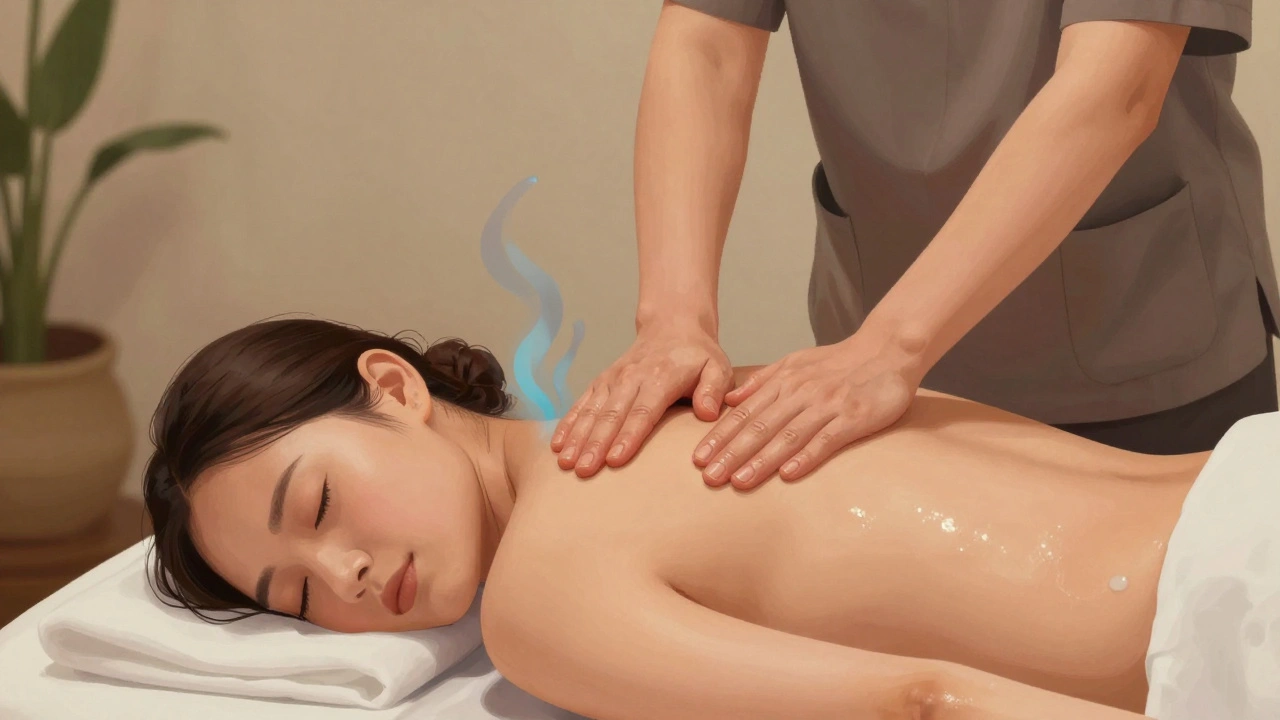
Prepare Your Body and Mind
Show up hydrated. Drink water in the hours before your session. Dehydrated muscles are stiffer and harder to work on. They also recover slower. Avoid heavy meals right before. You don’t want to be full and sluggish. A light snack like a banana or nuts 30-60 minutes before is fine. Try to arrive 5-10 minutes early. Use that time to breathe. Turn off your phone. Let your mind shift from ‘work mode’ to ‘rest mode.’ If you’re rushing in from a meeting, still in your suit and mentally replaying emails, you won’t relax-even if the therapist does everything right.Don’t Rush Out After
The biggest mistake people make? Getting up right after the massage and jumping back into their day. That’s like turning off a hot bath and stepping into a snowstorm. Give yourself 10-15 minutes to sit quietly. Sip water. Let your nervous system settle. Your body is still processing the release. If you jump into traffic, a loud meeting, or scrolling through social media, you undo half the benefit. Some therapists offer a quiet room or even herbal tea after. Use it. If they don’t, just sit in the waiting area. Breathe. Don’t check your phone. Let the calm stick.Track What Works
Keep a simple note after each session. Write down:- What you asked for
- What the therapist did
- How you felt 2 hours later
- How you felt 24 hours later
Make It a Habit, Not a Treat
One massage a year isn’t enough to move the needle on chronic pain or stress. Think of it like exercise or brushing your teeth. Regular maintenance works better than waiting until something breaks. If you’re dealing with ongoing tension, aim for once every 3-4 weeks. For stress relief or recovery from training, once a month is a solid baseline. Even if you feel fine, a monthly session keeps your body from slipping back into old patterns. Some clinics offer membership plans. Others let you book a recurring slot. Lock in the same time each month. Treat it like a doctor’s appointment-not something you cancel when you’re ‘too busy.’
Ask Questions After
At the end of your session, ask: ‘What can I do between visits to make this last longer?’ A good therapist will give you one or two simple tips. Maybe it’s a stretch for your neck. Or breathing exercises before bed. Or avoiding sitting for more than 45 minutes at a time. These aren’t just nice-to-haves. They’re the secret sauce. Massage gives you relief. But your daily habits determine how long it lasts.What to Avoid
- Don’t expect miracles in one session. Chronic issues take time.
- Don’t compare your session to someone else’s. Everyone’s body is different.
- Don’t skip the consultation form. It’s there to protect you.
- Don’t be afraid to switch therapists if you’re not connecting.
- Don’t ignore post-session soreness. Mild soreness is normal. Sharp pain isn’t.
Real Results: What People Actually Experience
One client in Melbourne, a graphic designer with chronic neck pain, started seeing a therapist every 3 weeks. After two months, she stopped needing painkillers on weekends. She started sleeping through the night. She didn’t just feel better-she got her life back. Another guy, a warehouse worker with lower back issues, added monthly sports massages to his routine. His doctor noticed improved mobility during his check-up. He didn’t need surgery. These aren’t outliers. They’re people who treated massage like part of their health plan-not a luxury.Final Thought: You’re the Partner
Your massage therapist is skilled. But they can’t fix you if you don’t show up ready to participate. Your goals, your feedback, your consistency-those matter just as much as their hands. The best massage isn’t the one with the most oil or the quietest room. It’s the one where you walked in with a question, spoke up when something didn’t feel right, stayed hydrated, took the time to recover, and came back next month because you knew it was worth it. That’s how you make the most out of your time with a massage therapist.How long should a massage session be to get real benefits?
A 60-minute session is the sweet spot for most people. It gives enough time to work through tension without rushing. If you have specific problem areas-like chronic lower back pain or shoulder stiffness-90 minutes can be more effective. But 30 minutes is often just enough for stress relief or a quick reset. Anything shorter than 30 minutes rarely allows the therapist to go deep enough to make a difference.
Should I shower before my massage?
It’s not required, but it helps. A quick shower removes sweat, lotions, or perfume that could interfere with the therapist’s oils or techniques. It also signals to your body that it’s time to relax. If you can’t shower, at least wash your hands and face. Avoid heavy perfumes or scented body washes-they can trigger headaches in sensitive people.
Is it normal to feel sore after a massage?
Mild soreness-like after a good workout-is normal, especially after deep tissue or sports massage. It usually fades in 1-2 days. If you feel sharp pain, swelling, numbness, or tingling that lasts longer than 48 hours, contact your therapist. That’s not typical and could mean too much pressure was applied or there’s an underlying issue.
Can I talk during the massage?
Yes, but it depends. Some people prefer silence. Others like light conversation to stay relaxed. If you want to talk, go ahead. If you want quiet, say so at the start. A good therapist will follow your lead. Don’t feel pressured to chat if you’re not in the mood.
What if I fall asleep during the massage?
Falling asleep is actually a good sign. It means your body trusts the therapist and is letting go. Most therapists see it as a win. They’ll adjust their technique to keep you comfortable-maybe lighten the pressure or use slower strokes. Don’t feel embarrassed. Your body knows what it needs.
How do I know if my massage therapist is good?
Look for these signs: They ask about your goals and health history before starting. They check in during the session. They don’t use one-size-fits-all moves. They give you simple aftercare tips. And they don’t pressure you to book more sessions than you need. A great therapist makes you feel heard, not sold to.



Jodie Rae Plaut
December 3, 2025 AT 04:11So many people treat massage like a spa day when it’s actually a therapeutic intervention. If you’re dealing with chronic tension, you need to approach it like physical therapy-not a luxury. I’ve seen clients go from migraines every other day to zero in 8 weeks just by being specific about their goals and showing up consistently. It’s not magic, it’s biomechanics.
Also, hydration isn’t optional. Muscles are 75% water. If you show up dehydrated, you’re basically asking them to work with concrete instead of clay. And post-session stillness? Non-negotiable. Your nervous system needs 10 minutes to shift from sympathetic to parasympathetic mode. Otherwise, you’re just buffering stress, not releasing it.
Colin Napier
December 4, 2025 AT 19:00Let’s be clear: if you don’t communicate pressure adjustments during a session, you’re not just wasting your own time-you’re wasting the therapist’s. I’ve had therapists assume ‘deep tissue’ means ‘pain is good,’ and that’s dangerous. There’s a difference between therapeutic discomfort and tissue trauma. The former feels like a release; the latter feels like your muscle is being shredded. If you can’t articulate that difference, you’re not an informed client-you’re a passive recipient. And that’s not okay.
Patsy Ferreira
December 5, 2025 AT 20:29First of all, the article says ‘don’t skip the consultation form’ but then in the next paragraph it says ‘you don’t need to give your whole medical history’-which is it? Contradiction. Also, ‘aromatherapy with lavender helps you sleep better’? That’s anecdotal, not evidence-based. And ‘massage isn’t a treat’? Really? It’s literally a luxury service. You can’t reframe it as healthcare unless you’re paying for it with insurance. And why does everyone assume ‘deep tissue’ means ‘painful’? That’s a myth. Deep doesn’t mean brutal. I’ve had therapists use 20 lbs of pressure and still call it deep tissue. That’s not technique-that’s laziness.
William Terry
December 6, 2025 AT 23:59Man I wish more people knew this. I used to think massage was just for rich people who wanted to smell like vanilla. Then I started going monthly after my car accident and holy crap it changed everything. No more muscle spasms at 3am. No more waking up like a rusty robot. My therapist gave me a stretch for my hip flexors that I do every morning now. It’s not expensive if you think of it as preventing a doctor visit. And yeah I fall asleep every time. Best part of my week.
Also don’t shower with that weird soap right before. Smells like a candle store and my therapist said it messes with the oils. Just wash your face. Easy.
Peter Jones
December 8, 2025 AT 14:41The emphasis on post-session integration is critical. Neurophysiological research shows that the parasympathetic rebound following somatic therapy peaks between 10 and 20 minutes post-treatment. Disrupting this window with sensory overload-phone use, traffic, loud environments-negates up to 40% of the neuromodulatory benefits. Furthermore, consistent scheduling aligns with circadian rhythm regulation and myofascial remodeling cycles, which operate on approximately 21-day intervals. Therefore, monthly sessions are not arbitrary-they are biologically optimized. I recommend tracking outcomes using a simple Likert scale for pain, sleep quality, and stress levels over a 90-day period to establish baseline efficacy.
Theophilus Twaambo
December 8, 2025 AT 16:59Anyone who says ‘falling asleep is a good sign’ is either a therapist trying to make themselves feel important or someone who’s never been to a real session. I’ve had therapists just stop working because I passed out. Then they charge full price like I paid for a nap. And ‘don’t compare your session to someone else’s’? That’s nonsense. If your therapist gives you a 30-minute Swedish while your coworker gets a 90-minute deep tissue for the same price, you’re being ripped off. And why do people think ‘I’m not sure if this matters but I have migraines’ isn’t enough? That’s a red flag for contraindications. If your therapist doesn’t know that cervical manipulation can trigger a stroke in migraine patients, they shouldn’t be licensed.
Douglas McCarroll
December 9, 2025 AT 22:40Biggest game-changer for me? Asking ‘what can I do between visits?’ That one question turned my massage from a treat into a tool. My therapist taught me how to self-release my pecs with a lacrosse ball-10 minutes a day, and my shoulder pain dropped 80%. Also, don’t be afraid to try different styles. I used to only book deep tissue because I thought ‘more pressure = better.’ Turns out, my body responds way better to myofascial release. It’s not about being tough. It’s about being smart.
And yeah, drink water. I used to skip it because I thought ‘it’s just a massage.’ Then I got so sore after one session I couldn’t reach my own back. Learned my lesson. Hydration isn’t optional. It’s part of the treatment.
Andrew Cheng
December 11, 2025 AT 02:18Just wanted to say thank you for this. I’ve been going for 6 months now and I finally stopped dreading Mondays. I used to feel like my body was a broken machine. Now I feel like I’m learning how to tune it. I don’t talk during sessions-I just breathe. And after? I sit with my tea, stare out the window, and let my shoulders drop. It’s not about fixing me. It’s about remembering I’m alive. 🌿
Jillian Angus
December 12, 2025 AT 03:08Wait-so you’re telling me that if I don’t tell my therapist I have anxiety and take SSRIs, they might accidentally trigger a panic attack with deep pressure? And they don’t even ask? That’s terrifying. What if they don’t know that certain strokes can activate the vagus nerve and cause fainting? I read a case study where someone died because the therapist didn’t know they had a clotting disorder. Are we just trusting random people with our nervous systems? Who’s regulating this? Who’s checking their credentials? I think this whole industry is a glorified loophole in the healthcare system. And what if your therapist is secretly judging you for being ‘too tense’? I’ve felt that. I know it. They look at you like you’re broken. I’m not broken. I’m surviving.
Olivia Pang
December 13, 2025 AT 23:58Actually, the article says ‘a 60-minute session is the sweet spot’-but that’s completely arbitrary. Studies show that 45 minutes is statistically just as effective for myofascial release in non-chronic populations, and significantly more cost-efficient. Also, ‘don’t shower before’? That’s medically unsound. Sweat and sebum create a barrier that inhibits topical absorption of oils and reduces friction control. A lukewarm rinse with pH-neutral cleanser is ideal. And ‘don’t compare your session’? That’s not advice-that’s gaslighting. If you’re paying $120 for 30 minutes while someone else gets 90, you’re being exploited. Transparency is ethical. Vagueness is predatory.