
Is Indian Head Massage New Age? The Real History and Why It’s Still Popular Today
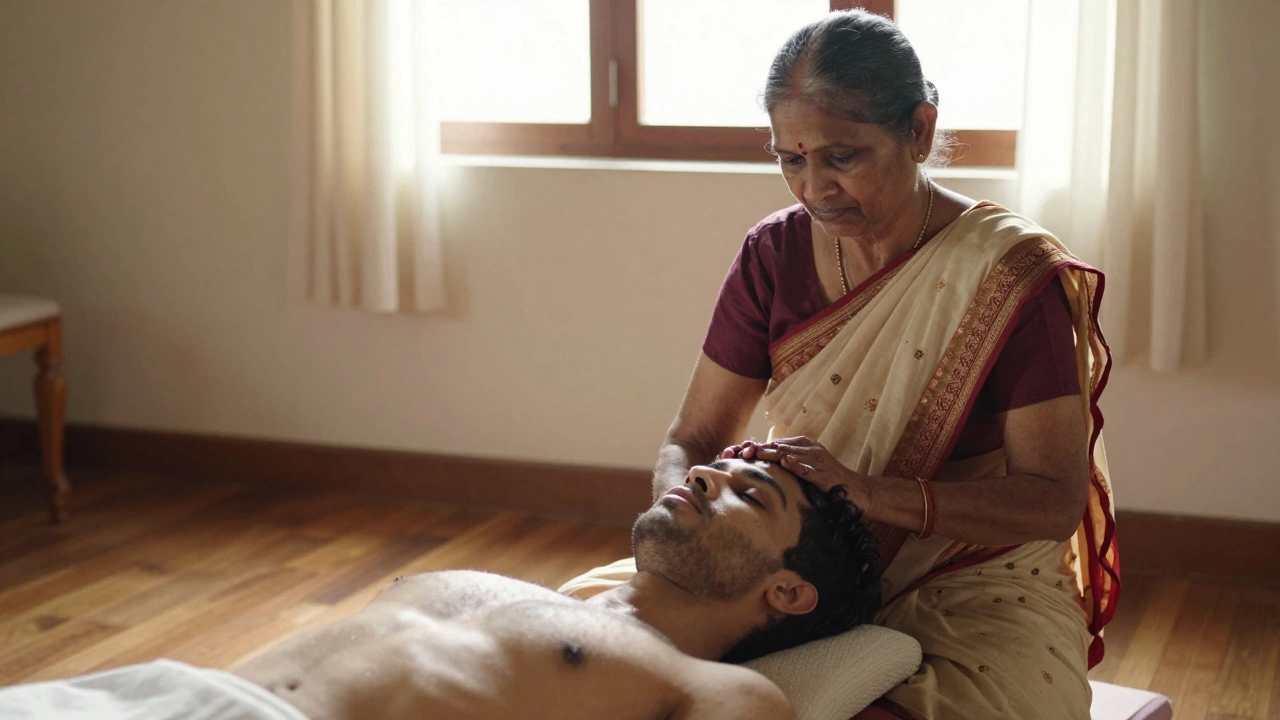
People often call Indian head massage "new age"-like it’s just another trendy wellness fad that popped up in Silicon Valley yoga studios. But if you’ve ever had one, you know it’s not about crystals or chanting. It’s about pressure points, ancient techniques, and hands that have been doing this for centuries. So is it new age? No. It’s older than most modern wellness trends combined.
Where Indian Head Massage Really Comes From
Indian head massage didn’t start in a boutique spa in Notting Hill. It comes from Ayurveda, India’s 5,000-year-old system of healing. Ayurveda doesn’t treat symptoms-it treats the whole person. And one of its core practices is champi, the Sanskrit word for head massage. Traditionally, it wasn’t done in quiet rooms with lavender oil. It was done in homes, by family members, after long days of work or before bedtime.
The technique focuses on the head, neck, shoulders, and upper back. Why? Because Ayurveda believes these areas hold tension tied to the mind, senses, and energy flow. Massaging them clears blockages in the prana (life force), improves circulation, and calms the nervous system. This isn’t guesswork. It’s a system passed down through generations of practitioners in villages across India.
Why People Think It’s New Age
The confusion comes from timing. Indian head massage became popular in the UK in the 1970s and 80s, thanks to Indian immigrants bringing their traditions with them. By the 1990s, London salons started offering it as a "relaxation treatment." Suddenly, it was wrapped in silk robes, played with sitar music, and marketed as "spiritual healing." That’s when the "new age" label stuck.
But here’s the thing: just because something gets repackaged doesn’t mean it’s new. Think of it like sushi. When it first arrived in the U.S., it was called "exotic." Now it’s in grocery stores. That doesn’t make sushi a modern invention. Same with Indian head massage. The ritual didn’t change-just the packaging.
The Science Behind the Pressure
Modern research backs up what Ayurveda has known for millennia. A 2017 study published in the Journal of Alternative and Complementary Medicine found that participants who received regular Indian head massage showed significant drops in cortisol levels-the main stress hormone. Another trial in 2020, conducted by researchers at King’s College London, reported improved sleep quality and reduced headaches in 82% of participants after six weekly sessions.
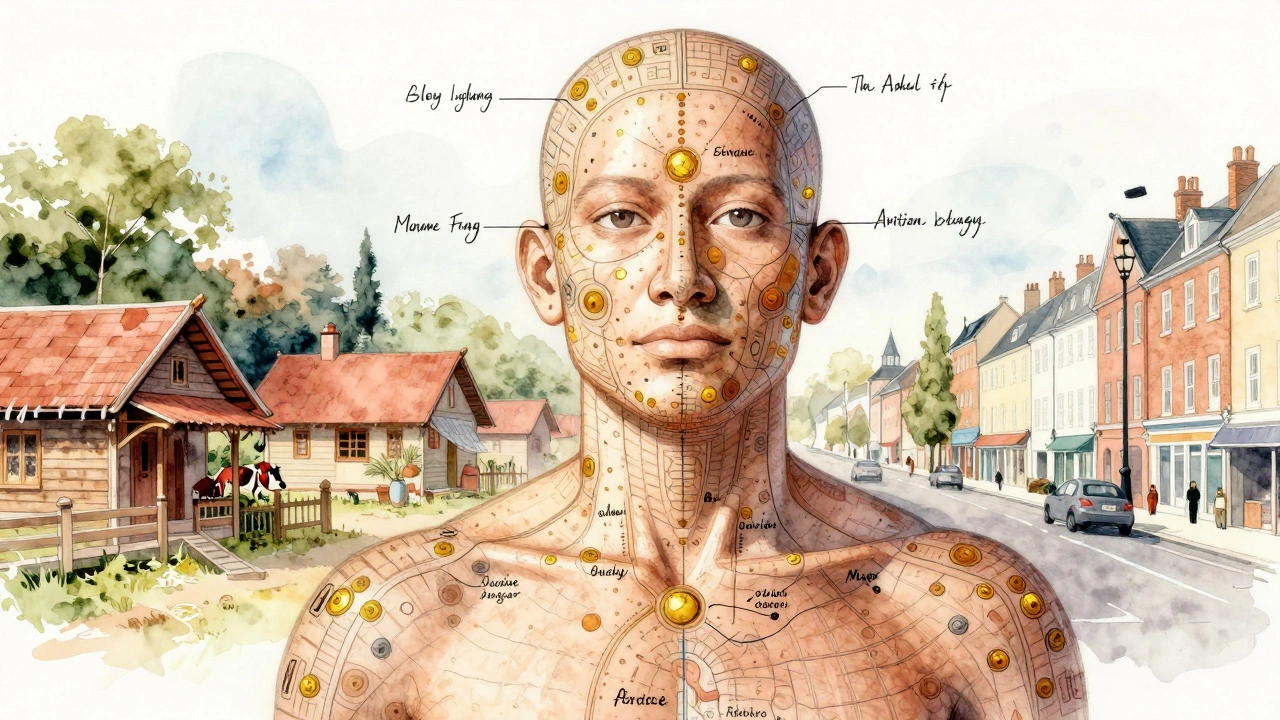
Why does it work? The massage stimulates nerve endings in the scalp, which connect directly to the brain’s limbic system-the part that controls emotion and stress. It also increases blood flow to the scalp, which can help with hair health and reduce tension headaches. Unlike a regular head rub, Indian head massage uses specific thumb and finger movements along the scalp, neck, and shoulders in a rhythmic pattern. It’s not random. It’s mapped.
What It’s Not
It’s not a full-body massage. You stay fully clothed. No oils are usually applied to the scalp unless requested-most traditional versions use dry hands only. It’s not erotic. It’s not a luxury spa gimmick. It’s not even always relaxing. Sometimes, it feels intense. The pressure on the temples or base of the skull can be uncomfortable at first. That’s not a flaw-it’s part of the release.
And it’s not magic. You won’t suddenly gain clairvoyance or heal past traumas with one session. But you might notice your shoulders drop, your breathing slow, and your thoughts quiet down. That’s the real benefit: grounding.
How It’s Done Today in London
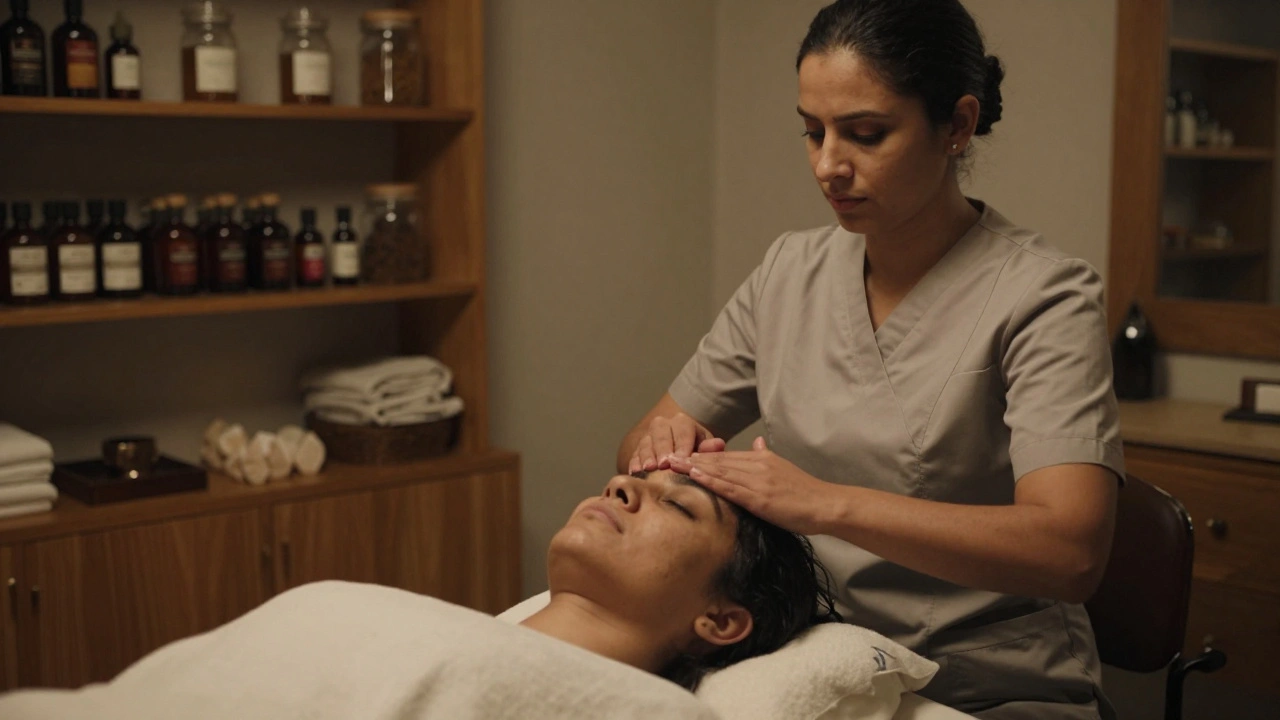
Today, you can find Indian head massage in over 120 salons across London-from high-end spas in Mayfair to small family-run shops in Southall. Most practitioners now train through accredited courses, often blending traditional techniques with modern anatomy knowledge. But the best ones still follow the old rules: use your thumbs for the scalp, your fingers for the neck, and your palms for the shoulders. No machines. No heated stones. Just hands.
Many therapists in London still learn from Indian masters or have trained in cities like Delhi or Varanasi. Some even bring back authentic oils like coconut or sesame, pressed the traditional way. The ones who skip the cultural roots? They’re the ones who call it "new age." The ones who honor it? They don’t need the label.
Who Benefits Most
If you sit at a desk all day, this massage is for you. If you get tension headaches, feel mentally drained, or have trouble sleeping, it’s worth trying. It’s especially helpful for people with long hair-tugging, styling, and tight ponytails create tension that builds up over weeks. A 20-minute session can undo that.
It’s also great for students, caregivers, and anyone who feels like their mind is always "on." You don’t need to believe in energy channels to feel the difference. Just lie down, close your eyes, and let the pressure do the work.
The Real Difference Between New Age and Traditional
New age practices often rely on vague ideas: "vibrations," "cleansing energy," "aligning chakras." Indian head massage doesn’t need those words. Its power comes from something simpler: consistent pressure on specific points, repeated over time. It’s physical. It’s measurable. It’s been tested by millions of people across centuries.
Calling it "new age" does a disservice to its roots. It’s not a trend. It’s a tool. And like any good tool, it works best when you understand where it came from.
What to Expect in Your First Session
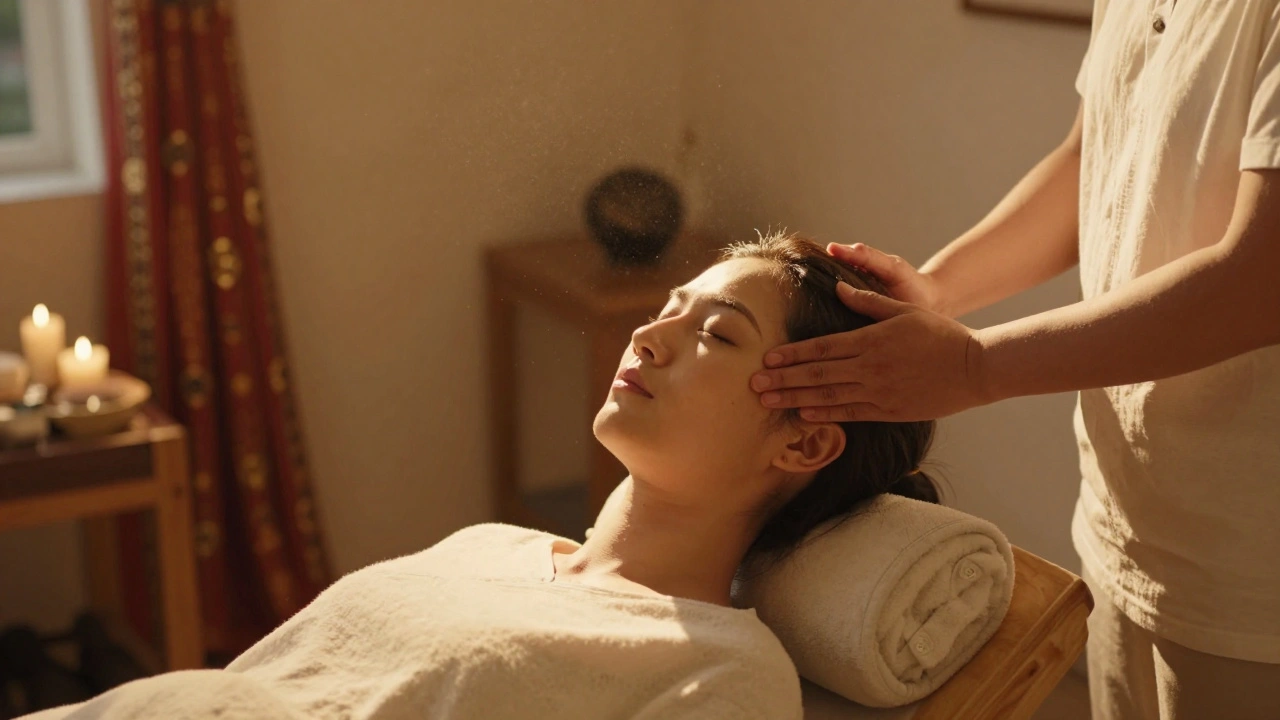
You’ll sit in a comfortable chair. No need to undress. The therapist will start at your forehead, using slow, circular motions with their thumbs. Then they’ll move to your temples, scalp, neck, and shoulders. You might feel a few tender spots-that’s normal. The massage usually lasts 20 to 45 minutes. Afterward, you might feel slightly lightheaded. That’s not a side effect-it’s your nervous system resetting.
Drink water afterward. Avoid screens for 15 minutes if you can. Let your body settle. The effects often last for days.
How Often Should You Get It?
Once a week is ideal if you’re dealing with chronic stress or headaches. Once every two weeks works for maintenance. Some people do it monthly as part of their self-care routine. There’s no rule. But if you try it once and feel like you’ve been given back your calm, you’ll probably keep coming back.
Where to Find an Authentic Practitioner in London
Look for therapists who mention Ayurveda, traditional Indian techniques, or training in India. Avoid places that use the word "holistic" as a buzzword without explaining the method. Ask if they use dry hands or if they apply oils. Ask where they trained. The best ones will tell you without hesitation.
Some reputable chains like Head to Toe and Champi London have therapists who trained under Indian masters. Smaller studios in areas like Brixton, Camden, and Walthamstow often offer more personal, culturally grounded sessions.
Myths About Indian Head Massage
- Myth: It’s just a scalp rub. Truth: It includes the neck, shoulders, and upper back-key tension zones.
- Myth: You need to believe in energy to feel results. Truth: The benefits are physical: reduced muscle tension, better blood flow, lower stress hormones.
- Myth: It’s only for women. Truth: Men make up nearly 40% of clients in London salons now.
- Myth: It’s expensive. Truth: A 30-minute session often costs under £35. Cheaper than a coffee in some parts of the city.
Final Thought
Indian head massage isn’t new. It’s not a trend. It’s not even really "wellness" in the modern sense. It’s a quiet, powerful practice that’s been helping people stay grounded for thousands of years. The fact that it’s still around-still effective, still in demand-is proof.
If you’re in London and you’re tired of feeling like your head is full of static, try it. Not because it’s trendy. But because it works.
Is Indian head massage the same as a regular head massage?
No. A regular head massage is usually just a quick scalp rub, often done in barbershops or salons for relaxation. Indian head massage follows a specific technique based on Ayurvedic principles, targeting the scalp, neck, shoulders, and upper back with deliberate pressure points. It’s structured, not random, and includes rhythmic movements designed to release tension and improve energy flow.
Does Indian head massage help with hair growth?
It can help indirectly. By improving blood circulation to the scalp, it delivers more oxygen and nutrients to hair follicles. While it won’t regrow lost hair or cure genetic baldness, many people notice less shedding and stronger strands after consistent sessions. It’s also great for reducing scalp tension that can contribute to hair breakage.
Can I do Indian head massage on myself?
Yes, you can do a simplified version at home. Use your fingertips to make slow circles on your scalp, then gently squeeze your neck and shoulders. But it’s hard to reach all the right spots alone-especially the back of your head and upper trapezius muscles. For full benefits, a trained practitioner can apply the right pressure and sequence that you can’t replicate on your own.
Is Indian head massage safe during pregnancy?
Yes, it’s generally safe and often recommended for pregnant women. It helps reduce headaches, neck pain, and stress without using oils or deep pressure on the abdomen. Just avoid strong pressure on the neck and shoulders if you have high blood pressure or have been advised to avoid massage. Always tell your therapist you’re pregnant.
Why do some people feel dizzy after a session?
It’s common and usually harmless. The massage stimulates nerve endings connected to the brain’s balance centers and can cause a temporary drop in blood pressure. Drinking water and sitting quietly for 10-15 minutes afterward helps. If dizziness lasts more than 20 minutes or is accompanied by nausea, talk to your therapist-it could mean too much pressure was applied.
Do I need to use oils for Indian head massage?
No. Traditional Indian head massage is done dry, with bare hands. Oils like coconut or sesame are sometimes added for extra moisture or aroma, but they’re not necessary for the technique to work. In fact, many Ayurvedic practitioners prefer dry massage because it allows better grip and more precise pressure on the scalp and muscles.
How long does it take to feel the benefits?
Many people feel calmer immediately after the session. For lasting effects-like fewer headaches, better sleep, or reduced shoulder tension-you’ll typically notice changes after 3-4 sessions spaced a week apart. It’s cumulative, like exercise. One session helps. Regular sessions transform.

Clay Caldwell
December 2, 2025 AT 00:06Been getting this done in Delhi for years. My grandma did it to me every night before bed. No oils, no music, just hands. People in the West act like it’s magic when it’s just good old-fashioned pressure on tight muscles. It’s not new age-it’s just what people did before they had stress balls and TikTok.
Also, the fact that you mention London salons? That’s just cultural diffusion. Same way sushi went from fish market to Whole Foods. Doesn’t make it fake.
anjan tiwari
December 2, 2025 AT 06:48lol new age? 😂
My uncle in Varanasi does this with his bare hands while watching cricket. No spa. No crystals. Just sweat and chai.
Now some white guy in Camden charges £40 for it and calls it ‘energy alignment’ 🤦♂️
Jazzmen McCray
December 2, 2025 AT 07:18Let’s be real-the term ‘new age’ is just code for ‘I don’t understand non-Western traditions so I’ll dismiss them as trendy nonsense’
This isn’t about vibes or chakras. It’s about anatomy. Nerves in the scalp connect to the brainstem. Pressure = signal. Signal = relaxation. Biology doesn’t care if you call it Ayurveda or ‘Indian head thing.’ It just works.
And yes, men get it too. 40% of clients? That’s not a fluke. That’s science with cultural roots.
Stop romanticizing it. Start respecting it.
Anjali Ragi
December 2, 2025 AT 22:41Wait… did you just say ‘traditional oils are sometimes added’? 🤔
That’s a red flag. In authentic Ayurveda, the massage is ALWAYS dry. Always. If they’re using coconut oil, they’re either ignorant or selling you a fake experience.
And why are there ‘accredited courses’ in London? That’s not tradition-that’s commodification. They’re turning sacred practice into a certification scam. 💀
Also, ‘Head to Toe’? That’s a franchise. Franchises don’t honor lineage. They honor profit.
They’re erasing the roots and calling it ‘wellness.’ I’m not buying it. 🙄
And who approved the King’s College study? Who funded it? 🤔
Griffin Treanor
December 2, 2025 AT 22:49They say it’s not magic but then they talk about ‘energy flow’ and ‘prana’ like it’s real
That’s the exact same language new agers use
It’s all just placebo dressed in cultural clothing
You don’t need 5000 years of history to explain why rubbing your head feels good
It’s a massage. It’s pressure. It’s blood flow. End of story
The mysticism is the scam. The tradition is the cover
And don’t get me started on ‘authentic practitioners’
There’s no such thing anymore
It’s all been sanitized for white consumers
They take the ritual, strip the meaning, slap on a price tag
And call it healing
It’s cultural capitalism with a side of incense
Trent Curley
December 3, 2025 AT 15:11You think you’re being deep by saying it’s not new age
But you’re just performing cultural authenticity like it’s a resume bullet point
‘I know the real way’-like you’ve been initiated into some secret Ayurvedic brotherhood
Meanwhile, you’re sitting in a Brooklyn apartment typing this on your MacBook
And you’re the same person who thinks ‘organic’ means better and ‘artisanal’ means sacred
Indian head massage isn’t a relic to be preserved in a glass case
It’s a living practice that evolves
Just like your avocado toast
Stop pretending tradition is static
It’s not about purity
It’s about relevance
And if a London salon makes it accessible to people who’d never step foot in an ashram
That’s not theft
That’s transmission
Stop acting like you’re the only one who gets to define what’s real
It’s not your heritage to police