London's Top Thai Massage Therapists Share Their Secrets
When you walk into a quiet studio in Notting Hill or a tucked-away spot in Shoreditch, and the scent of lemongrass and kaffir lime hits you, you know you’re in the right place. Thai massage isn’t just another spa treatment-it’s a living tradition passed down through generations. And in London, a small group of therapists have mastered it so deeply, clients travel across the city just to feel their hands.
These aren’t just practitioners. They’re storytellers. Each movement carries meaning. Each stretch is timed. Every pressure point has a purpose. But what makes them stand out from the rest? We asked five of London’s most respected Thai massage therapists-those with over 15 years of experience, trained in Chiang Mai and Bangkok-and they shared what most people never see.
It Starts With Your Breath, Not Your Back
Most people think Thai massage is about deep pressure. It’s not. It’s about rhythm. One therapist, Nattaya, who trained at the Wat Po Temple in Bangkok, says, "If your breath is shallow, your body stays locked. No amount of stretching will change that."
Before the first touch, she asks clients to lie still for 90 seconds. No talking. Just breathing in through the nose, out through the mouth. This isn’t meditation for relaxation-it’s preparation. The body needs to drop its guard before it can be safely guided into deep stretches. Clients who skip this step often tense up, making the session less effective and sometimes even painful.
Their technique? Slow, intentional, and silent. No music. No chatty therapists. Just the sound of breath and the quiet shift of weight. This is how real Thai massage feels: like a conversation between two bodies, not a performance.
There’s No Such Thing as "Too Tight"
Many people come in thinking they’re "too stiff" for Thai massage. That’s the biggest myth. One therapist, Somchai, who’s been working in London since 2011, says, "The tighter you are, the more you need this."
He’s worked with office workers who can’t touch their toes, athletes with chronic hip restrictions, and even people recovering from surgery. Thai massage doesn’t force you into poses. It invites you into them. Using gentle, rhythmic rocking and controlled leverage, therapists guide the body-not push it.
Think of it like stretching a rubber band slowly. If you yank it, it snaps. If you ease into it, it gives. That’s the difference between Thai massage and other deep tissue work. The pressure isn’t about pain-it’s about awareness. You’ll feel a stretch in your hamstrings, but also in your lower ribs, your jaw, even your fingertips. That’s because Thai massage works the whole energy line, not just isolated muscles.
It’s Not Just Stretching-It’s Energy Work
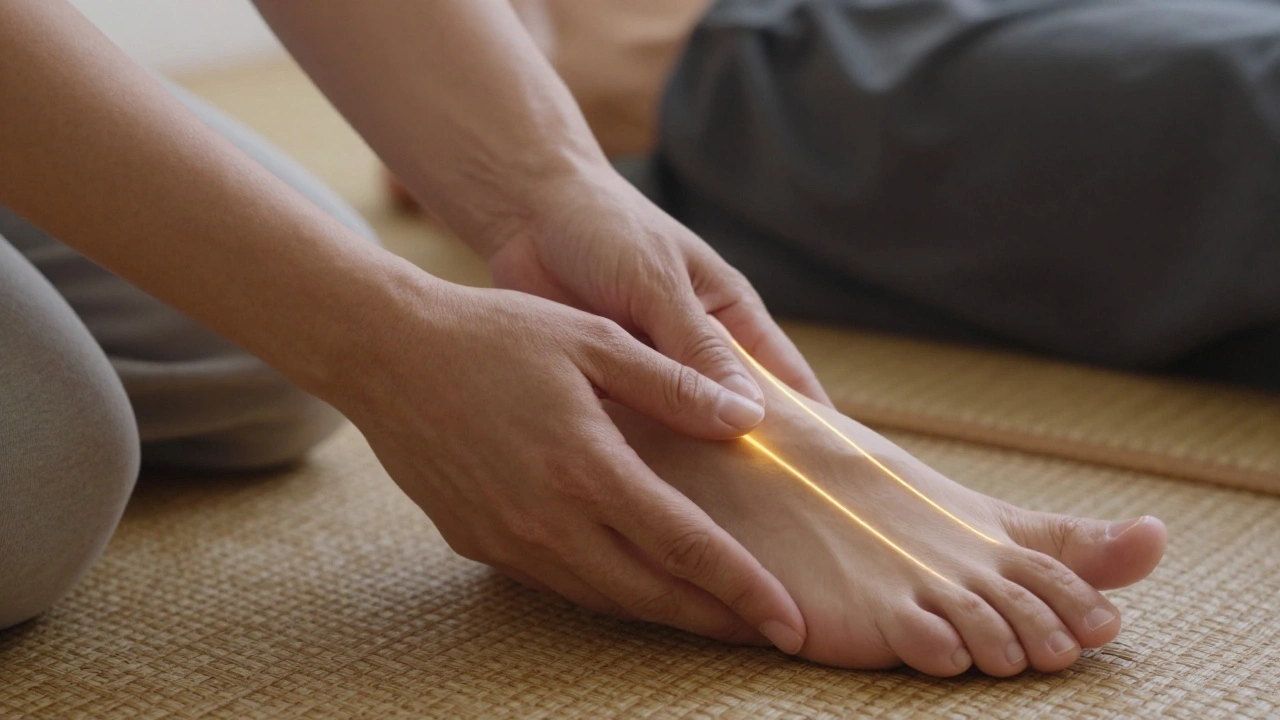
Thai massage is often called "yoga for lazy people." That’s misleading. It’s not yoga. It’s Sen lines a system of 10 energy pathways in the body, rooted in ancient Thai medicine, that connect vital organs and control physical and emotional flow. Also known as energy channels, these lines are the foundation of the practice.
Unlike acupuncture or acupressure, Thai massage doesn’t use needles or points. It uses motion. Therapists apply pressure along these Sen lines using thumbs, palms, elbows, knees, and even feet. One line runs from the big toe up the inner leg to the collarbone. Another spirals from the base of the spine to the crown of the head.
When these lines are blocked-by stress, injury, or poor posture-you feel it. Tight shoulders. Headaches. Low energy. A good Thai massage therapist doesn’t just stretch your legs. They trace the energy flow, releasing tension where it’s hidden. One client, a graphic designer who came in for lower back pain, found her chronic migraines disappeared after three sessions. Not because her spine changed. Because her energy flow did.
Therapists Use Their Whole Body-Not Just Hands
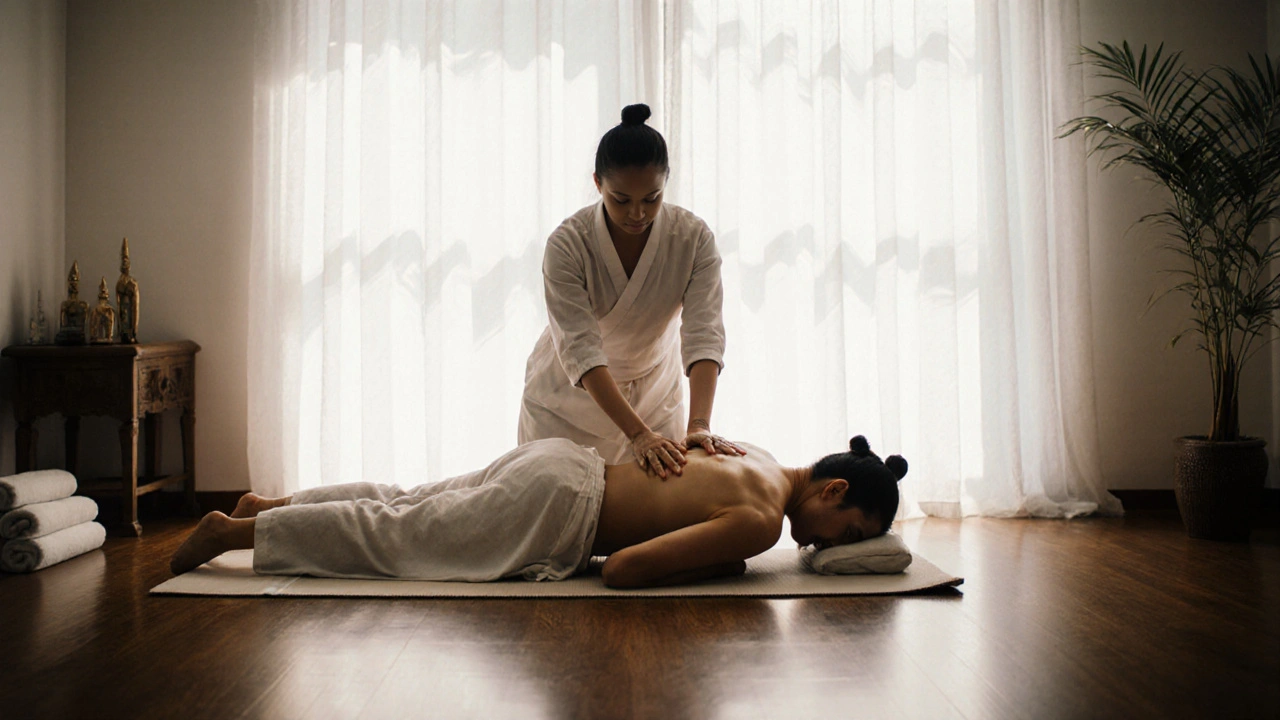
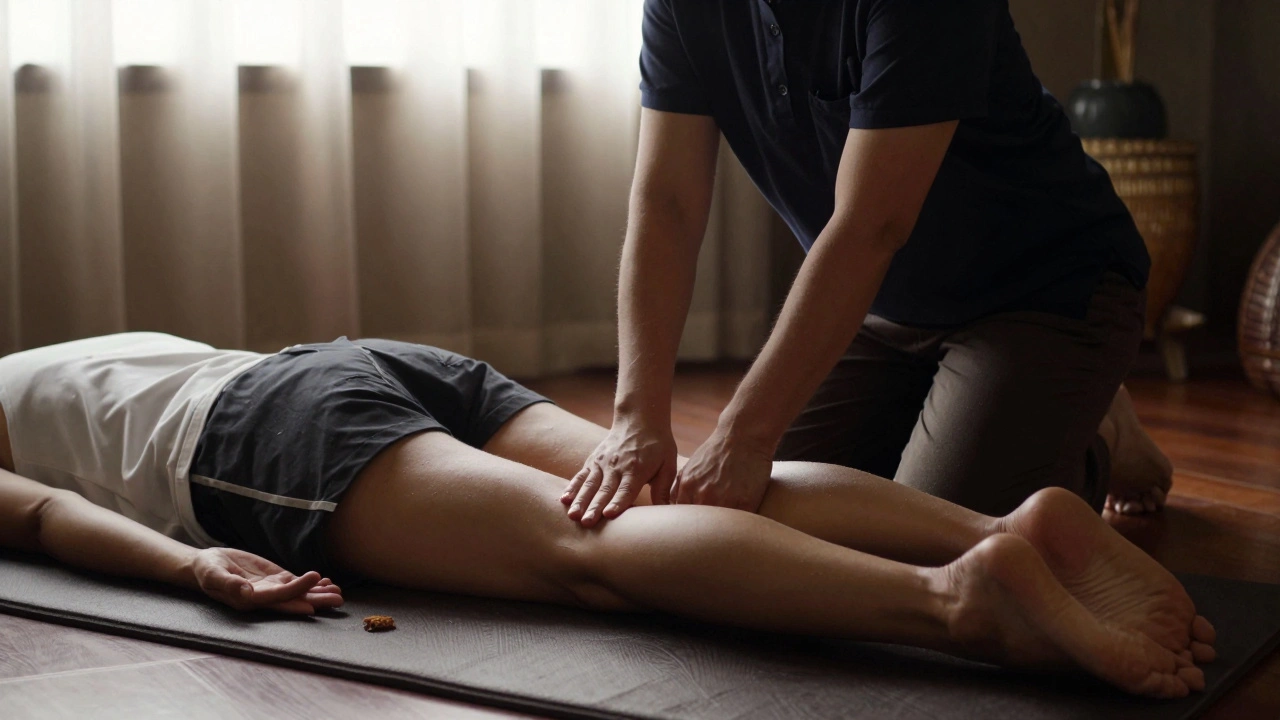
Most massage styles rely on hands. Thai massage uses the whole body. You’ll see therapists leaning into your back with their forearms. Kneeling to apply pressure with their knees. Standing to use their body weight for a deep hamstring release.
This isn’t because they’re strong. It’s because they’re smart. Using the body’s leverage allows them to apply consistent pressure without tiring. It also means they can reach areas that hands alone can’t. A skilled therapist can release tension in your hip rotators by balancing on one foot and using their heel-something no hand could do safely.
That’s why you’ll never see a Thai massage therapist sitting on a stool. They move. They shift. They flow. And you’ll feel it. Not just in your muscles, but in your sense of balance. After a session, many clients say they feel lighter-not just physically, but mentally.
The Secret Ingredient: No Oil, No Music, No Distractions
Here’s what you won’t find in a true Thai massage session: coconut oil. Lavender scent. Soft piano music. Even candles.
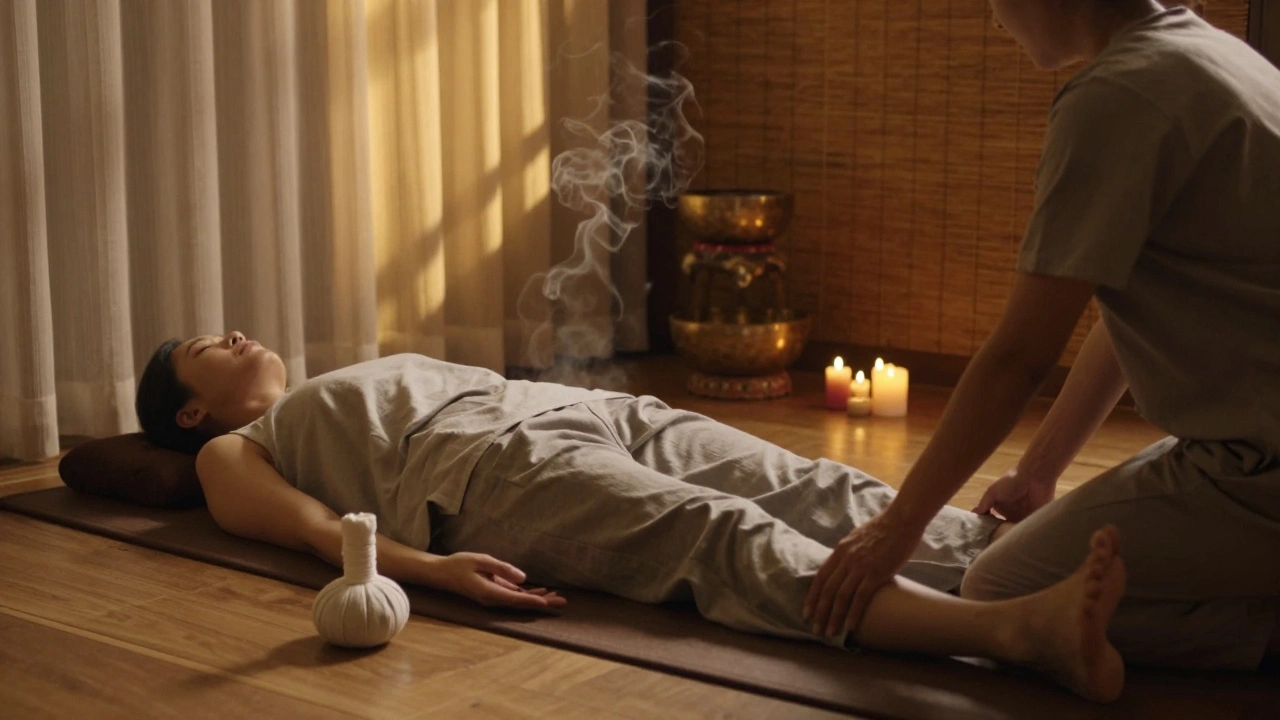
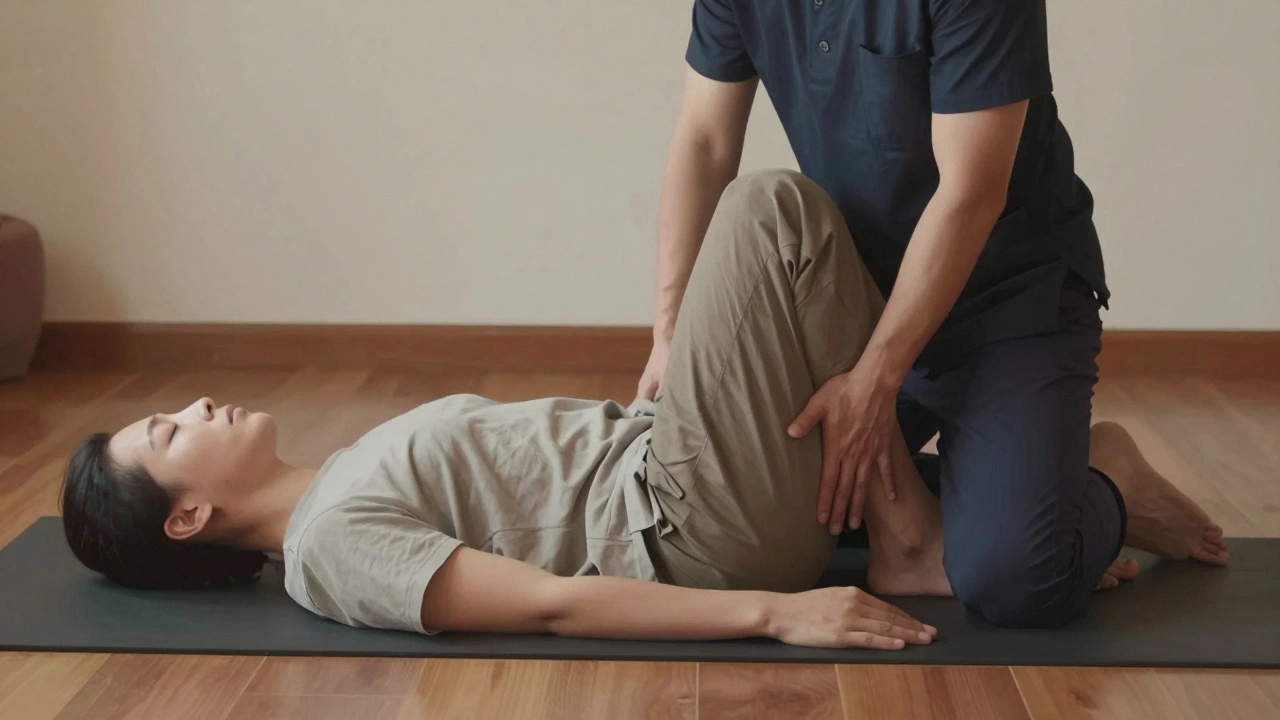
That’s intentional. Thai massage is done fully clothed, on a mat on the floor. No lotions. No aromatherapy. No distractions. The focus is on movement, breath, and connection. The absence of oil lets the therapist grip your limbs and guide them with precision. No music lets you hear your own breath-and notice where you’re holding tension.
One therapist, Lek, who moved from Chiang Mai to London 18 years ago, says, "Oil is for relaxation. Thai massage is for transformation. You don’t want to slip when your body is moving into places it hasn’t been in years. You want to feel it. All of it."
That’s why sessions are quiet. No chit-chat. No phone checks. Just you, your breath, and the therapist’s steady presence. It’s intense. And that’s the point.
What Happens After? (And Why Most People Don’t Do It Right)
After a Thai massage, you’ll feel stretched, tired, and oddly energized. That’s normal. But here’s where most people mess up: they go straight to their phone, grab a coffee, or jump into a meeting.
Therapists recommend the same thing every time: wait. At least 30 minutes. Drink water. Sit quietly. Let your nervous system settle.
Why? Because Thai massage doesn’t just relax muscles-it resets your nervous system. It shifts you from "fight or flight" to "rest and digest." If you rush back into stress, you undo the work. One client, a nurse working night shifts, started doing 15 minutes of quiet breathing after each session. Within a month, her sleep improved. Her anxiety dropped. She didn’t need caffeine anymore.
Don’t treat it like a luxury. Treat it like medicine. Because it is.
How Often Should You Go?
There’s no one-size-fits-all answer. But the top therapists agree: once every 3 to 4 weeks is ideal for maintenance. If you’re in chronic pain, twice a month for the first two months helps reset your body. Athletes? Every 2 weeks. Office workers? Every 3 weeks.
Some clients come weekly. Others come once a year. It depends on your body, not your schedule. But here’s the rule they all follow: if you feel stiff, sluggish, or emotionally heavy, it’s time. Don’t wait for pain. That’s too late.
What to Expect on Your First Visit
- You’ll wear loose, comfortable clothing (no tight jeans or leggings)
- The session lasts 90 to 120 minutes
- You’ll lie on a thick mat on the floor-no table
- No oil. No music. No talking unless you initiate
- You’ll be guided through stretches you’ve never tried
- You might feel sore the next day-like after a good workout
- Hydrate well before and after
Where to Find Real Thai Massage in London
Not every studio that says "Thai massage" does it right. Some mix it with Swedish techniques. Others use oil. Some even play spa music.
The real ones? They don’t advertise loudly. You’ll find them through word of mouth. Look for therapists who:
- Train in Thailand (preferably Wat Po or Northern schools)
- Work on mats, not tables
- Don’t use oils or scents
- Focus on energy lines, not just muscles
- Have at least 10 years of experience
Some trusted names in London include: Siam Thai Massage a studio in Camden founded by a third-generation Thai therapist trained in Chiang Mai, known for authentic Sen line work and no-frills sessions, Wat Po London a branch of the original temple school in Bangkok, offering traditional curriculum-based sessions, and Lek’s Thai Studio a quiet space in Brixton where the founder, Lek, has been practicing since 2008.
What Thai Massage Can’t Fix
It’s powerful, but it’s not magic. It won’t cure arthritis. It won’t reverse nerve damage. It won’t replace physical therapy for serious injuries.
But it can help you move better. Sleep deeper. Breathe easier. Reduce stress. And that’s more than enough.
Is Thai massage painful?
It shouldn’t be. Thai massage uses deep pressure, but it’s not meant to hurt. You should feel a stretch, not sharp pain. If it hurts, tell your therapist. A good one will adjust. Pain means you’re tensing up, not releasing.
Can I get Thai massage if I’m pregnant?
Yes-but only with a therapist trained in prenatal Thai massage. Not all are. Look for someone who modifies positions, avoids abdominal pressure, and uses supportive bolsters. Avoid sessions in the first trimester unless cleared by your doctor.
How is Thai massage different from Swedish massage?
Swedish massage uses oil, is done on a table, focuses on relaxation, and targets muscles with long strokes. Thai massage is done on a mat, fully clothed, no oil, uses stretching and energy lines, and aims for structural and energetic rebalancing. One soothes. The other transforms.
Do I need to be flexible to try Thai massage?
No. In fact, the less flexible you are, the more you’ll benefit. Thai massage adapts to your body-not the other way around. Therapists use gentle leverage to guide you into stretches you can’t do on your own.
Why do I feel emotional after a session?
Thai massage releases stored tension-not just physical, but emotional. Tight shoulders can hold grief. A clenched jaw can carry anxiety. When those areas open, emotions can surface. It’s normal. Let it happen. Journaling or sitting quietly afterward helps.
Thai massage in London isn’t just a trend. It’s a quiet revolution. People are waking up to the fact that healing doesn’t always come from machines, pills, or expensive creams. Sometimes, it comes from a therapist kneeling on the floor, using their body weight, breathing with you, and guiding you back to yourself.