Unwind with Authentic Thai Massage in London: A Journey to Serenity
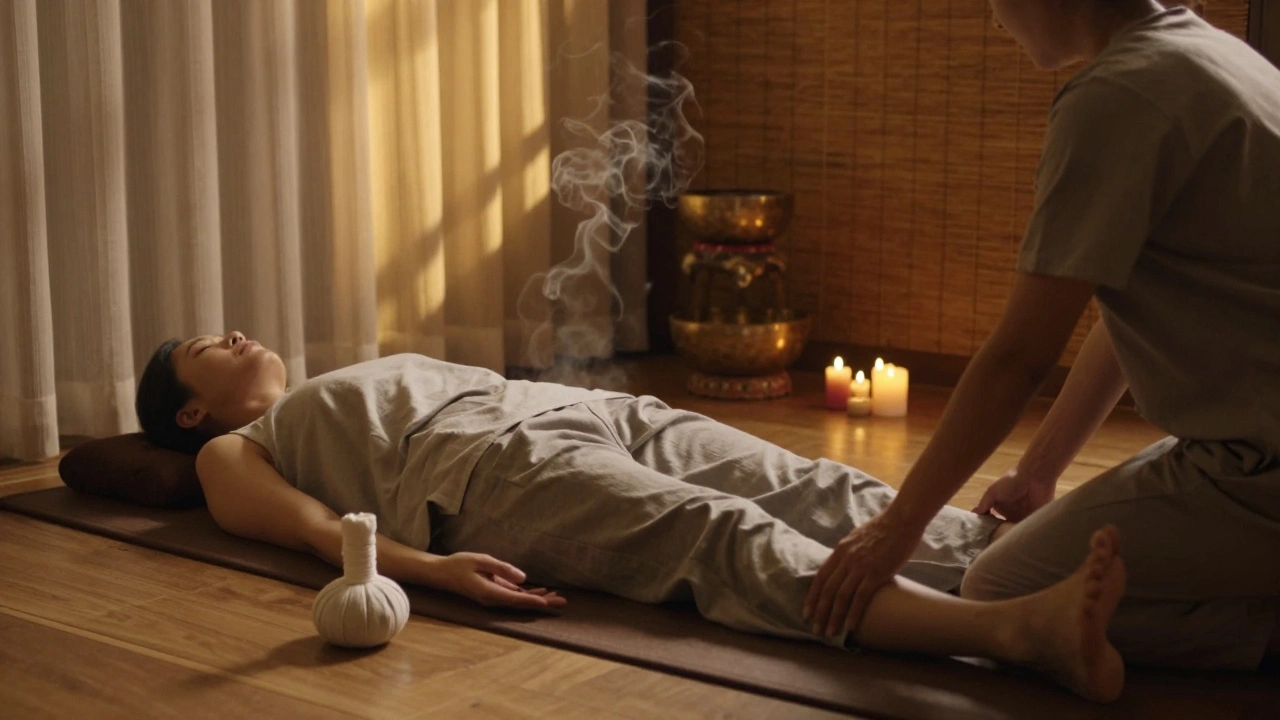
Imagine sinking into a quiet room where the scent of lemongrass and coconut oil lingers in the air, and your body feels like it’s being gently guided back into balance. This isn’t a spa fantasy-it’s what happens during an authentic Thai massage in London. Unlike Swedish or deep tissue massages that focus on kneading muscles, Thai massage is a full-body experience that combines acupressure, assisted yoga postures, and energy line work. It’s not just relaxation-it’s restoration.
What Makes Thai Massage Different?
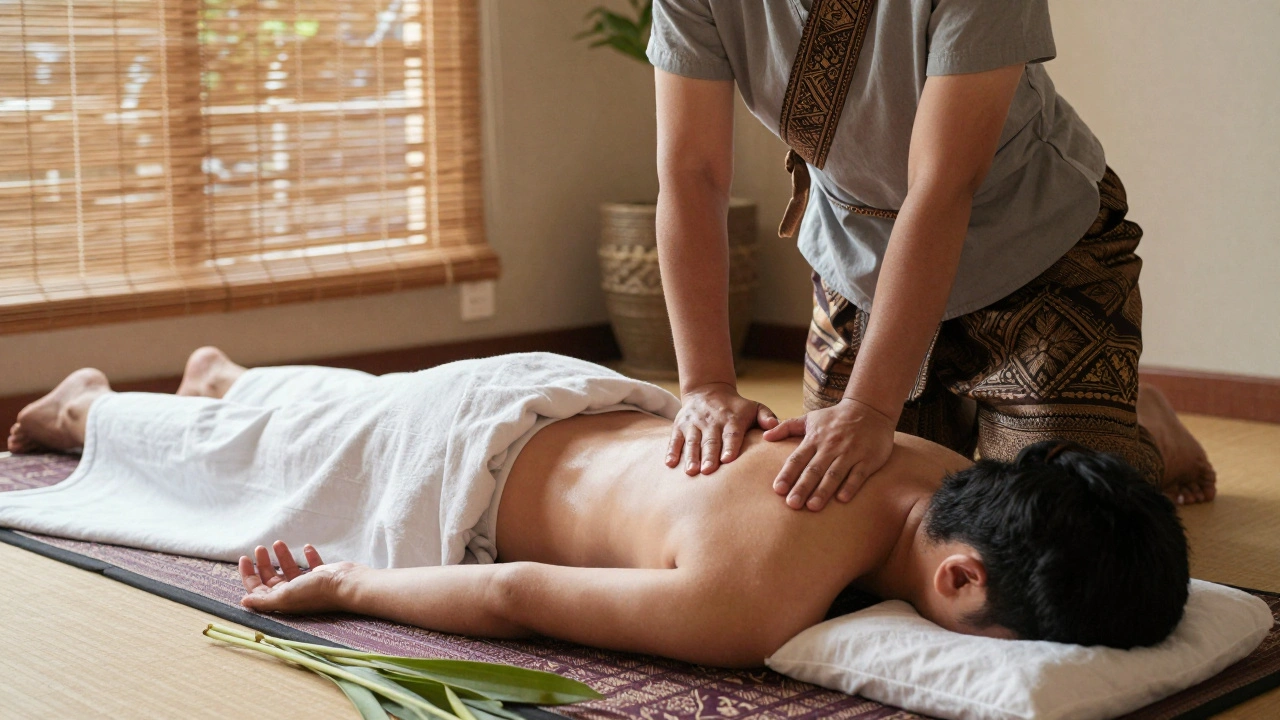
Thai massage, or Nuat Phaen Boran, comes from ancient healing traditions in Thailand, dating back over 2,500 years. It’s rooted in Ayurvedic principles and Buddhist spiritual practices. Practitioners use their hands, thumbs, elbows, knees, and feet to apply pressure along ten energy lines called sen lines. These lines are believed to carry life energy, much like meridians in Chinese medicine.
You don’t lie on a table. You stay fully clothed-usually in loose cotton pants and a t-shirt-and move through a series of stretches as the therapist guides your body. It’s like yoga, but someone else is doing the work. There’s no oil, no draping, no silence. You might hear soft chants or the sound of a singing bowl. The pace is slow, deliberate, and deeply intentional.
In London, you’ll find plenty of places offering "Thai massage," but not all are authentic. Many spas have watered-down versions that skip the stretching and energy work, turning it into a basic pressure massage. Authentic Thai massage requires training in Thailand, often at schools like Wat Pho in Bangkok, where the practice was formalized in the 19th century. Look for therapists who’ve trained there or at recognized Thai institutions like the Traditional Medicine Hospital in Chiang Mai.
Why It Works for Londoners
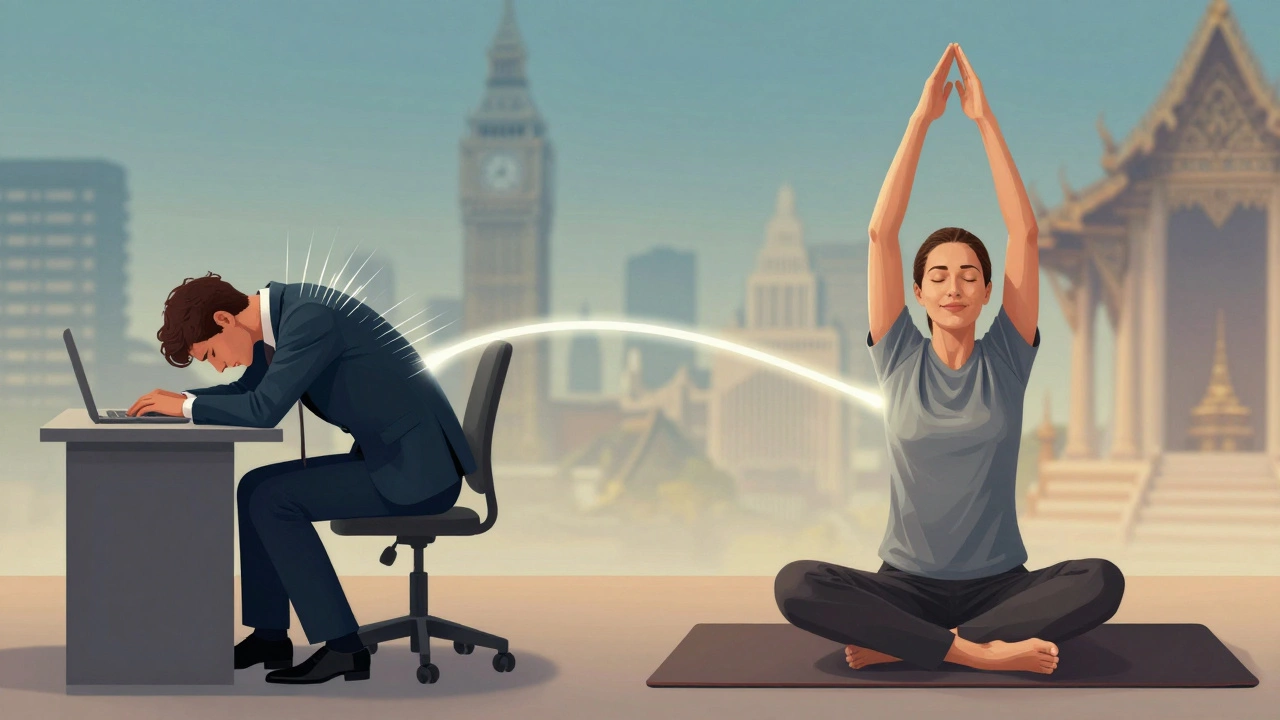
Life in London moves fast. The Tube rush, back-to-back Zoom calls, standing desks, and endless scrolling leave people tight-not just in their shoulders, but in their hips, spine, and even their breath. A 90-minute Thai massage doesn’t just loosen muscles; it resets your nervous system. Studies from the Journal of Bodywork and Movement Therapies show that Thai massage reduces cortisol levels by up to 27% after one session. That’s not placebo-it’s physiology.
People who come in with chronic lower back pain often report feeling taller afterward. Why? Because Thai massage gently decompresses the spine through passive stretches like the "cobra" and "child’s pose"-movements you’d struggle to hold on your own. It also releases tension in the iliotibial band, a common source of knee and hip pain for commuters and runners.
One regular client, a 42-year-old graphic designer from Shoreditch, told me she started coming twice a month after her car accident. "I used to think massage was for people who could afford to relax," she said. "Now I know it’s for people who can’t afford not to."
What to Expect on Your First Visit
Your first session starts with a short chat. The therapist will ask about injuries, surgeries, or areas of tightness. No judgment. No pressure. They’re not here to fix you-they’re here to listen to your body.
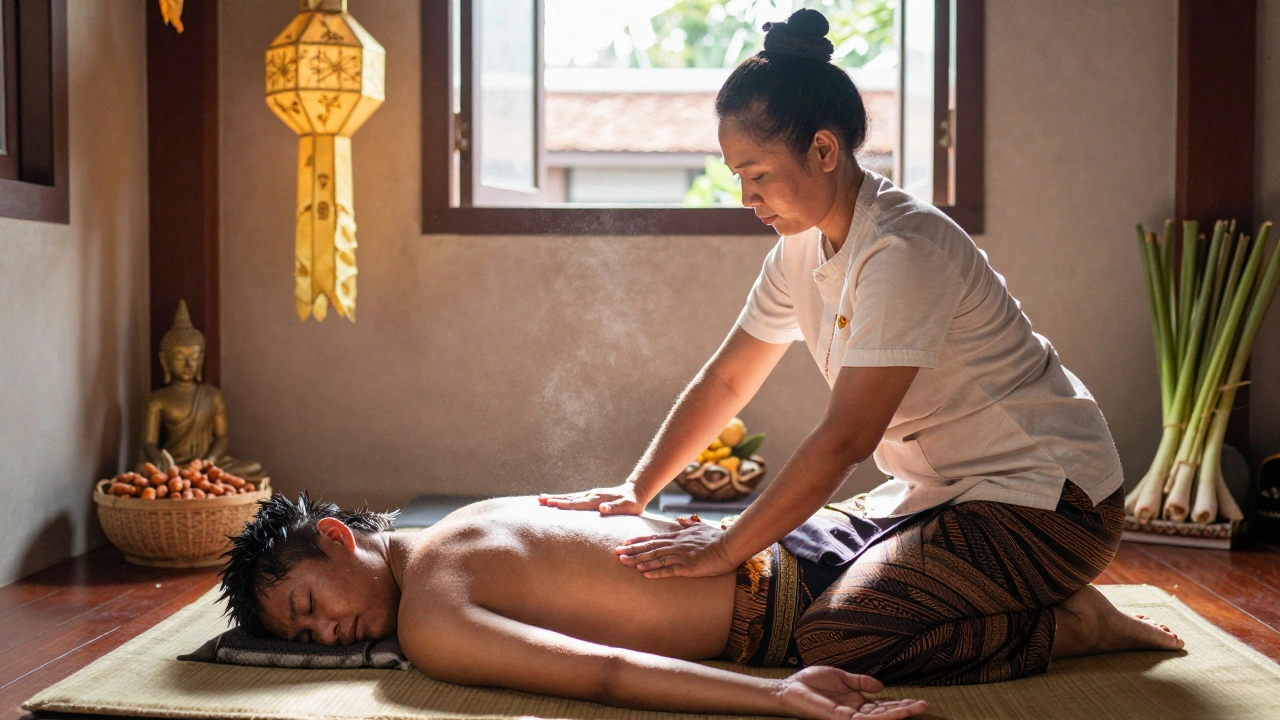
You’ll be shown to a mat on the floor, not a massage table. The room will be dim, warm, and quiet. You’ll wear comfortable clothes. No need to undress. The therapist will begin by working on your feet, then move up your legs, back, arms, and neck. You might feel a deep stretch that makes you gasp-or laugh. That’s normal. Thai massage doesn’t hurt, but it can be intense.
During the session, you might feel:
- A gentle but firm pressure along your spine
- Your legs being folded into a seated forward bend
- Your arms being rotated like a windmill
- Your hips being gently rocked side to side
It’s not a passive experience. You’re involved. You breathe. You relax into the stretch. The therapist won’t force you. If something feels too much, say so. Good practitioners adjust on the spot.
Afterward, you’ll feel light, loose, and oddly calm-like you’ve just woken up from a deep nap you didn’t know you needed. Most people don’t want to move for 20 minutes. That’s the point.
Where to Find Authentic Thai Massage in London
London has over 120 places offering Thai massage. But only about 15% of them have therapists trained in Thailand. Here’s how to spot the real deal:
- Check the therapist’s credentials. Look for training from Wat Pho, Chiang Mai University, or the Thai Traditional Medicine Society.
- Ask if they use the traditional mat-not a table.
- See if they use herbal compresses (a warm bundle of steamed herbs like turmeric and lemongrass) as part of the treatment.
- Listen for Thai music or chanting in the background. It’s not decoration-it’s part of the rhythm.
Some trusted spots in London include:
- Wat Pho London (Camden) - Run by a former teacher from the original Wat Pho in Bangkok.
- Thai Healing Centre (Soho) - Offers 90-minute sessions with herbal compresses included.
- Chiang Mai Thai Massage (Notting Hill) - Therapists trained in northern Thai techniques.
Avoid places that advertise "Thai-style massage" or "Thai-inspired" unless they clearly state their training background. Authenticity matters.
The Benefits Beyond Relaxation
Thai massage isn’t just about feeling good for an hour. Regular sessions bring lasting changes:
- Improved flexibility: A 2023 study in the International Journal of Therapeutic Massage & Bodywork found participants increased their hamstring flexibility by 32% after six weekly sessions.
- Reduced anxiety: Participants reported lower stress scores on the Perceived Stress Scale after just four visits.
- Better sleep: Many clients say they fall asleep faster and wake up less during the night.
- Less reliance on painkillers: People with chronic back or neck pain often reduce their ibuprofen use by half after a month of weekly sessions.
It’s not magic. It’s biomechanics. Thai massage realigns the body’s natural movement patterns. It doesn’t just release tension-it teaches your body how to hold itself differently.
Who Should Avoid It?
Thai massage is safe for most people, but not everyone. Avoid it if you:
- Have a recent fracture, sprain, or surgery (wait at least 6 weeks)
- Have osteoporosis or severe arthritis (gentle modifications are possible, but ask first)
- Are pregnant (unless you’re seeing a therapist trained in prenatal Thai massage)
- Have an active infection, fever, or blood clot
If you’re unsure, talk to your doctor. Most therapists will ask for a medical history anyway. Better safe than sorry.
How Often Should You Go?
There’s no one-size-fits-all answer. If you’re stressed, sedentary, or recovering from injury, once a week for a month gives you a baseline. After that, every two to four weeks is enough to maintain the benefits. Athletes and desk workers often stick to weekly sessions.
Think of it like brushing your teeth. You don’t wait until your gums bleed to start. You do it regularly because it keeps things running.
What to Do After Your Session
Don’t rush off. Drink water. Your body is flushing out toxins released during the massage. Avoid caffeine and alcohol for at least two hours. Give yourself time to sit quietly. Maybe take a short walk. Don’t schedule a high-stakes meeting right after.
Some people feel a little sore the next day-like after a good workout. That’s normal. It means your body is adjusting. If you feel sharp pain or numbness, call your therapist. That’s not normal.
Final Thought: It’s Not Just a Massage
Authentic Thai massage in London isn’t a luxury. It’s a quiet act of self-preservation. In a city that never sleeps, it’s one of the few places where you’re allowed to stop-and be held.
You don’t need to believe in energy lines or ancient traditions to feel the difference. You just need to show up. Let go. Breathe. And let someone else carry your weight for an hour.
Is Thai massage painful?
Thai massage isn’t supposed to hurt, but it can feel intense. You’ll feel deep pressure and stretches that challenge your flexibility, but it should never be sharp or unbearable. A good therapist adjusts based on your feedback. If you’re tense, they’ll go slower. If you’re relaxed, they might deepen the stretch. Communication is key.
Do I need to be flexible to try Thai massage?
No. Thai massage is designed for people who aren’t flexible. In fact, that’s who benefits most. The therapist moves your body for you, so you don’t have to stretch on your own. Many clients start stiff and end up surprised by how much looser they feel after just one session.
How long does a Thai massage session last?
Most sessions are 60, 90, or 120 minutes. For first-timers, 90 minutes is ideal. It gives enough time to work through your whole body without rushing. Shorter sessions (60 minutes) focus on the back, legs, and arms. Longer ones include the neck, shoulders, and even the face.
Can I get Thai massage if I’m pregnant?
Yes-but only with a therapist trained in prenatal Thai massage. Standard Thai massage includes deep stretches and pressure points that aren’t safe during pregnancy. Prenatal-trained therapists use modified positions, avoid abdominal pressure, and support your body with pillows. Always inform them you’re pregnant before the session.
What’s the difference between Thai massage and Swedish massage?
Swedish massage uses oil, you lie on a table, and it’s mostly about relaxation with long strokes and light kneading. Thai massage is done on a mat, you stay clothed, and it’s active-think yoga meets acupressure. Thai massage is more energizing and structural, while Swedish is calming and surface-level. They serve different purposes.
How much does a Thai massage cost in London?
Prices range from £50 for a 60-minute session to £120 for a 120-minute session at premium studios. Authentic places with Thai-trained therapists usually charge £75-£95 for 90 minutes. Be wary of deals under £40-they often mean untrained staff or a watered-down version. Quality matters more than price.
Do I need to book in advance?
Yes. Authentic Thai massage spots are popular and often booked a week ahead, especially on weekends. Walk-ins are rare. Book online or call ahead. Some places offer first-time discounts-ask when you book.
Can Thai massage help with sciatica?
Many people with sciatica find relief because Thai massage gently stretches the piriformis muscle and releases tension along the sciatic nerve pathway. It doesn’t cure the root cause-like a herniated disc-but it reduces the muscle tightness that worsens the pain. Always inform your therapist about your condition so they can adjust the pressure and avoid direct nerve compression.