
Massage Therapist Approved Stretches for Everyday Flexibility
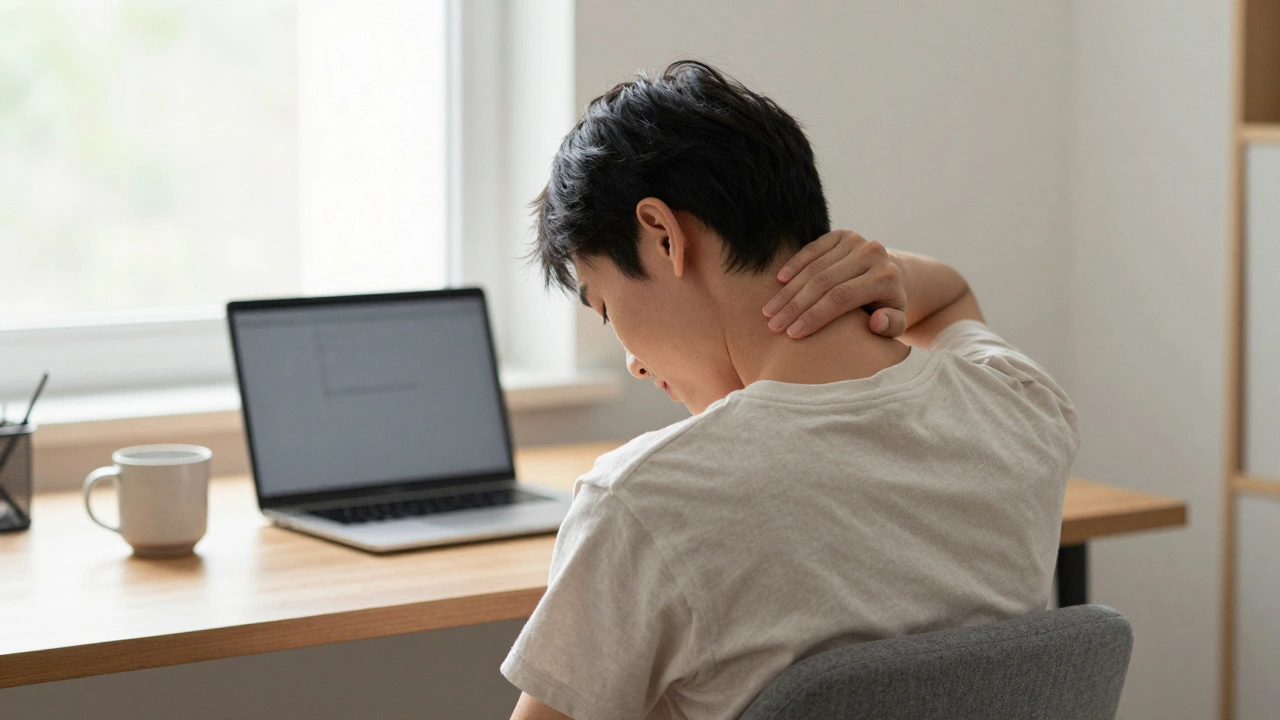
If you sit at a desk all day, drive for hours, or chase kids around the house, your body isn’t built for that. Your hips lock up. Your shoulders hunch. Your lower back screams by 3 p.m. You might think you need a deep tissue massage to fix it - and maybe you do, once in a while. But the real secret? It’s not the massage. It’s what you do between them.
Why Stretching Isn’t Just for Athletes
Most people think stretching is for yogis, runners, or people who wear lycra. But if you’re reading this, you’re probably not doing that. You’re just trying to get out of bed without groaning. That’s exactly why you need these stretches.
Massage therapists see the same patterns every day: tight hamstrings from sitting, stiff necks from looking at screens, rounded shoulders from carrying bags or typing. We can loosen those muscles in a session, but if you go back to the same habits, they tighten again in 48 hours. That’s why we give clients stretches - not as a bonus, but as part of the treatment.
These aren’t fancy yoga poses. They’re simple, safe, and designed to undo the damage of modern life. Do them for five minutes a day, and in a month, you’ll notice you can turn your head while reversing the car. Or reach for the top shelf without wincing. Or sit cross-legged on the floor without feeling like your legs are breaking.
Stretch 1: Seated Neck Release
Start sitting upright in a chair. Feet flat. Hands resting on your thighs. Drop your right ear toward your right shoulder. Don’t lift your shoulder - let it stay relaxed. Hold for 30 seconds. Switch sides.
Feel that little knot behind your ear? That’s your upper trapezius, screaming from phone calls, computer work, or stress. This stretch doesn’t need a wall, a strap, or a partner. Just your head and gravity.
Pro tip: Breathe out slowly as you drop your ear. Don’t force it. If you feel a sharp pain, stop. You’re not trying to crack your neck. You’re trying to calm it.
Stretch 2: Doorway Chest Opener
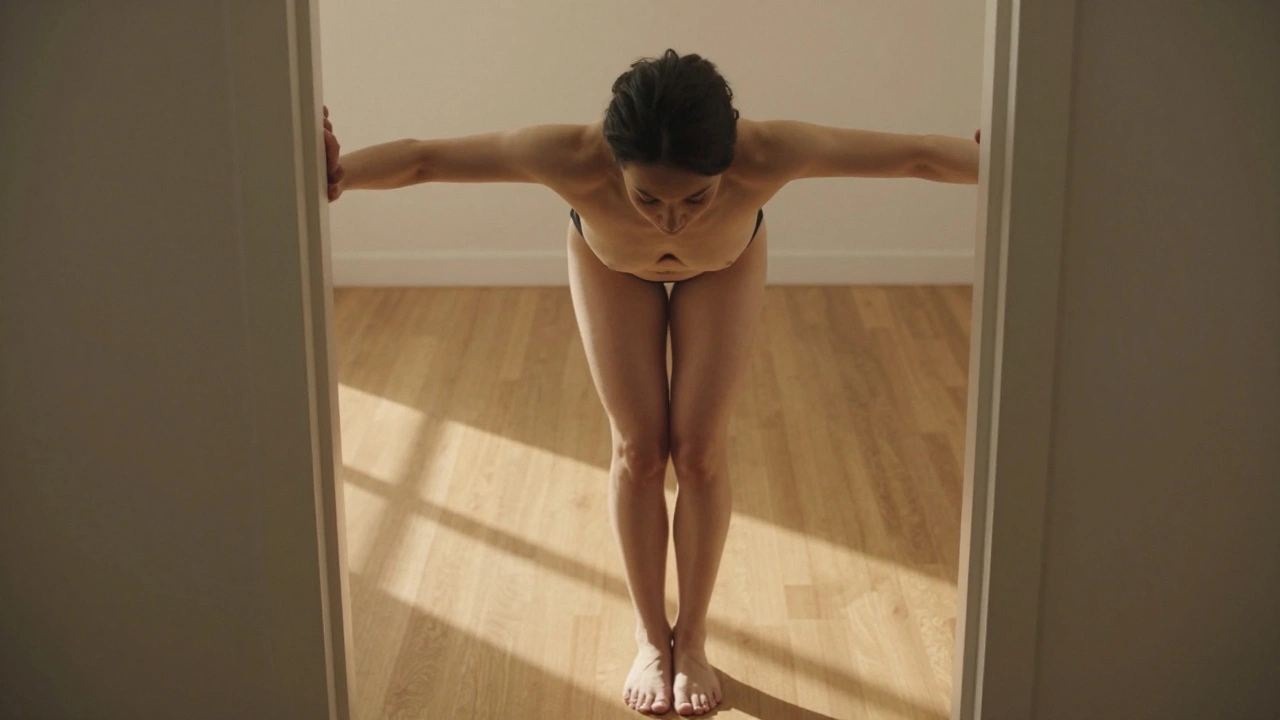
Stand in a doorway. Place your forearms on the frame, elbows at shoulder height. Step one foot forward, letting your chest gently drift toward the door. Keep your back straight - don’t arch it. Hold for 45 seconds.
This one’s a game-changer for people who spend hours hunched over keyboards. Your chest muscles get tight, pulling your shoulders forward. That’s why your posture looks like you’re trying to hide from the world. This stretch opens the front of your body, letting your shoulders roll back naturally.
Do it before you sit down at your desk. Do it after you get home. Do it while you’re waiting for your coffee to brew. No equipment. No time. Just a doorway.
Stretch 3: Seated Figure-Four Glute Stretch
Still sitting? Good. Cross your right ankle over your left knee. Keep your back straight. Gently lean forward until you feel a deep pull in your right buttock. Hold for 40 seconds. Switch sides.
This is the stretch we recommend most often to clients who say, “I’ve got sciatica” or “My hip feels locked.” Nine times out of ten, it’s not the sciatic nerve - it’s your piriformis muscle, tight from sitting too long. This stretch targets it directly.
Don’t bounce. Don’t push hard. Just sit still and breathe. You’ll feel the tension melt. If you can’t reach your foot, don’t worry. The stretch still works just by leaning forward.
Stretch 4: Standing Calf Stretch Against the Wall
Stand facing a wall. Place your hands on it at shoulder height. Step your right foot back, keeping your heel flat on the floor. Bend your left knee slightly. Keep your right leg straight. Feel the stretch along the back of your calf. Hold for 30 seconds. Switch legs.
Most people forget their calves. But if your calves are tight, it affects your ankles, your knees, even your lower back. Think about it: if your heel can’t drop down properly, your whole body compensates. That’s why runners and desk workers both end up with the same problems.
Do this stretch after you’ve been standing for a while. Or right before bed. Your feet will thank you in the morning.
Stretch 5: Child’s Pose with Side Reach
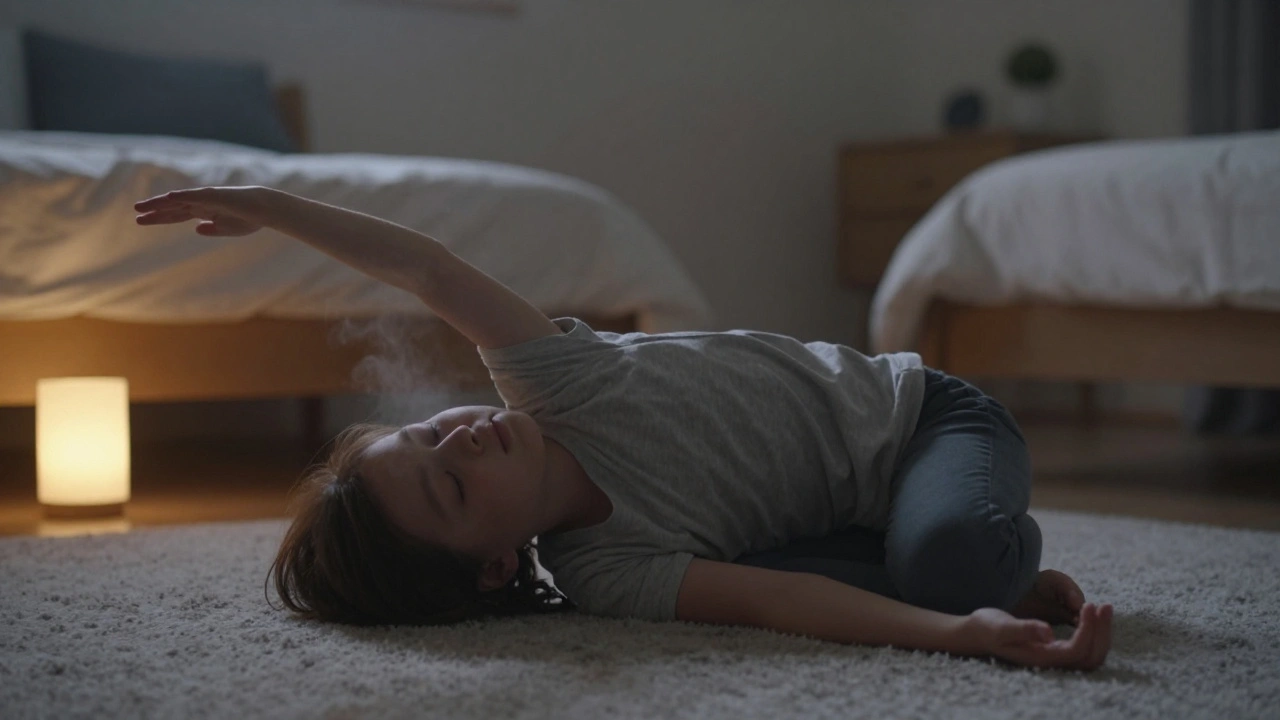
Kneel on the floor. Sit back on your heels. Lower your chest toward your thighs. Extend your arms out in front of you. Hold for 20 seconds. Then, slowly slide your right arm out to the side, letting your torso turn slightly. Feel the stretch along your left ribcage. Hold for 20 more seconds. Return to center and switch sides.
This one does double duty. It releases your lower back and stretches your side body - the area that gets squeezed when you twist in your chair or sleep curled up. It’s also calming. If you’re stressed, this stretch slows your breathing and quiets your nervous system.
Don’t rush it. Stay here. Let your breath sink deeper each time. That’s when the real release happens.
When to Do These Stretches
You don’t need a big block of time. Five minutes total - broken into two sessions - is enough.
- Morning: Do the neck release and chest opener to reset your posture before the day starts.
- Evening: Do the glute stretch, calf stretch, and child’s pose to unwind before bed.
That’s it. No gym. No equipment. Just your body and a few minutes of attention.
What Not to Do
Don’t stretch cold muscles. Do a quick walk around the room first - even two minutes helps.
Don’t hold your breath. Breathing is what tells your muscles to let go. If you’re holding your breath, you’re fighting yourself.
Don’t push into pain. A stretch should feel like a gentle pull - not a stab. If it hurts, you’re doing too much. Ease off. Come back tomorrow.
Don’t expect overnight results. Flexibility builds slowly. But consistency? That’s the magic.
What Happens When You Stick With It
After two weeks, you’ll notice small wins: you can tie your shoes without bending your knees. You can turn your head to check your blind spot without craning your neck. You sleep better because your body isn’t holding tension anymore.
After a month, people start asking, “Have you been to a chiropractor?” No. I just moved differently.
Massage therapists don’t fix you. We help you feel better - temporarily. The real work is yours. These stretches are the tools. Use them daily, and you won’t need us as often.
Final Thought: Flexibility Is Freedom
Flexibility isn’t about touching your toes. It’s about moving without pain. It’s about not needing help to get out of a chair. It’s about being able to reach for your kid, your bag, your keys - without thinking about it.
That’s not a luxury. That’s your body asking for basic care. And you owe it to yourself.
Matt Basler
January 31, 2026 AT 06:15Just did the doorway chest opener before coffee and my shoulders literally sighed. 🙌 I’ve been hunched over my laptop like a question mark for years and this one stretch felt like someone untied a knot I didn’t know was there.
Michael Thompson
January 31, 2026 AT 13:48These are the stretches my physio gave me but I never stuck with them until I saw how small the time investment is. Five minutes? That’s less than scrolling through memes. I started doing the neck release while waiting for my toast to pop and now I don’t even think about it anymore. Game changer.
BRIAN KING
January 31, 2026 AT 16:32omg i did the figure four stretch last night and my hip felt like it was breathing again 😭 i thought i had sciatica but turns out i just sat on my butt too much. also i spelled piriformis wrong in my notes but it still worked so who cares lol
Shawn McGuire
February 1, 2026 AT 20:51There’s a flaw in the logic here. You claim massage therapists don’t fix you-but they do. They provide acute relief. What you’re describing is maintenance, not correction. Stretching won’t reverse structural adaptations from years of poor ergonomics. It’ll only delay the inevitable if you don’t address the root cause: your workstation, your sleep posture, your stress load. Don’t mistake symptom management for healing.
Hallam Bailie
February 2, 2026 AT 00:33Child’s pose with the side reach is my new bedtime ritual. Feels like a hug for my spine 🤍 I used to wake up stiff as a board. Now I roll out of bed like a human again. Also, I just did it while watching Netflix. No excuses.
Shayla O'Neil
February 3, 2026 AT 14:25Flexibility isn’t about touching your toes-it’s about not needing help to get out of a chair. That line hit me harder than any stretch ever has. We treat our bodies like machines that don’t need oil, and then wonder why they break down. Maybe the real luxury isn’t the massage… it’s the daily act of listening.