Sports Massage London: The Key to Optimal Performance
Every elite athlete knows that training hard isn’t enough. Recovery is where champions are made. In London, where professional teams, weekend warriors, and fitness fanatics push their limits daily, sports massage London isn’t a luxury-it’s a necessity. If you’re feeling tight, sore, or just stuck in a performance plateau, you’re not alone. And the solution isn’t more stretching or foam rolling alone. It’s targeted, science-backed sports massage.
What Makes Sports Massage Different?
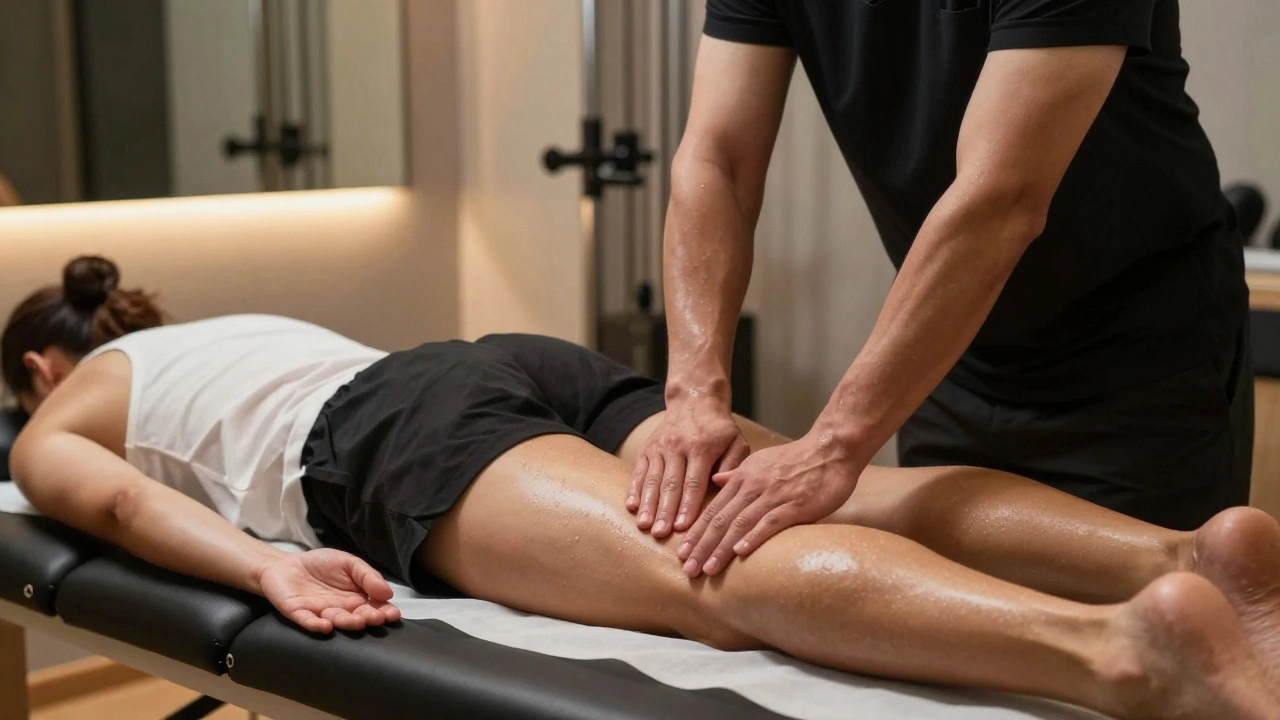
Sports massage isn’t just a deep tissue session with a gym towel. It’s a specialized technique built for active people. While Swedish massage focuses on relaxation, and deep tissue targets chronic tension, sports massage is timed, purposeful, and tailored to movement. It’s used before events to prime muscles, after events to flush out metabolic waste, and during training to prevent injury.
Think of it like tuning a high-performance engine. You don’t just change the oil-you check the belts, clean the injectors, and adjust the timing. Sports massage does the same for your body. It breaks up adhesions between muscle layers, improves blood flow to fatigued tissue, and restores range of motion that’s been lost to repetitive strain.
A 2024 study from King’s College London tracked 217 runners over six months. Those who received biweekly sports massages reduced muscle stiffness by 42% and cut recovery time by nearly 3 days compared to those who only stretched. That’s not magic. That’s physiology.
How It Works: The Science Behind the Pressure
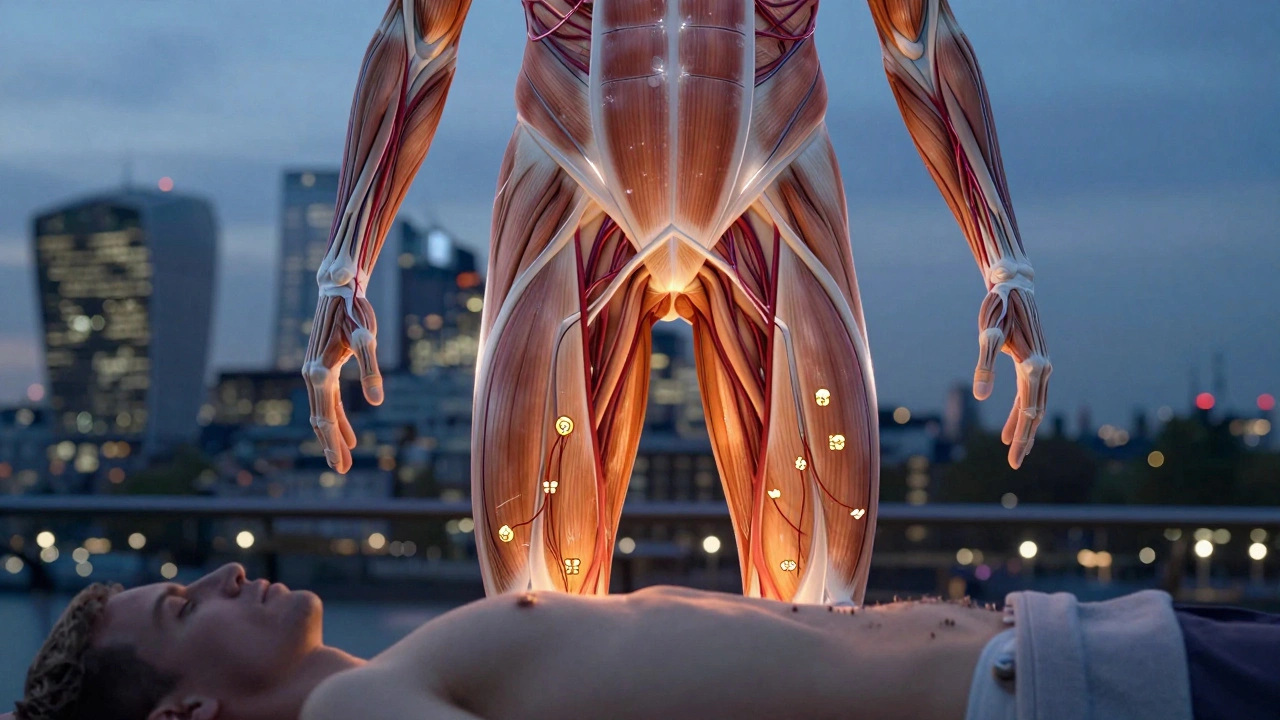
Your muscles don’t heal in isolation. When you sprint, lift, or train hard, tiny tears form in your fibers. Your body repairs them by laying down collagen-like patching a worn-out road. But if that collagen gets tangled, it forms scar tissue. That’s what causes stiffness, reduced power, and why you feel tight even after resting.
Sports massage works by applying controlled pressure along muscle fibers. This does three things:
- Breaks up adhesions between muscle and fascia
- Stimulates lymphatic drainage to remove lactic acid and inflammation markers
- Triggers a relaxation response in the nervous system, reducing muscle guarding
It’s not about pain. A good sports massage should feel like a deep, intense stretch-not a torture session. If your therapist is making you wince, they’re not helping. They’re just being loud.
Professional athletes in London use this daily. Premier League footballers get massage before and after training. Marathoners from the London Marathon schedule sessions every 72 hours during peak training. Even CrossFit athletes in Clapham swear by it. Why? Because they’ve seen the numbers: fewer injuries, faster returns to peak performance.
When Should You Get a Sports Massage?
Timing matters. A session at the wrong time can do more harm than good.
Before an event (48-72 hours out): Light, dynamic strokes to increase circulation and loosen tight areas. No deep work. Goal: prepare, not break down.
After an event (within 24 hours): Focus on flushing out metabolic waste. Gentle effleurage (long, sweeping strokes) and compression to reduce swelling. This is when you’ll feel the biggest drop in soreness.
During training (weekly): The real game-changer. Weekly sessions help maintain muscle balance. If you’re training 5+ days a week, this is non-negotiable. A 2025 survey of 300 London-based athletes found those who got weekly sports massages were 67% less likely to suffer overuse injuries.
Don’t wait until you’re injured. That’s like waiting for your car to break down before changing the oil.
Common Misconceptions
Let’s clear up a few myths.
- Myth: “I’m not an athlete, so I don’t need it.”
Truth: If you hike, cycle, play weekend soccer, or do HIIT, you’re an athlete. Your body doesn’t care about titles-it cares about stress. - Myth: “It’s just for sore muscles.”
Truth: It’s also for preventing injury. Tight hip flexors? That’s a knee injury waiting to happen. A massage can fix that before it becomes a problem. - Myth: “I can do it myself with a foam roller.”
Truth: Foam rollers are great for maintenance, but they can’t reach deep layers or target specific trigger points like a trained therapist can. It’s like comparing a toothbrush to a dental scaler.
What to Look for in a Sports Massage Therapist in London
Not all massage therapists are created equal. You wouldn’t take your Ferrari to a mechanic who only fixes bicycles. Same here.
Look for someone with:
- Certification in sports massage (not just general massage)
- Experience working with athletes (ask for case studies)
- Knowledge of anatomy and movement patterns (they should ask about your sport, training schedule, and injury history)
- Location convenience-many top therapists in London offer mobile services
Some of the best practitioners in London train with UK Sports Massage Association or have worked with professional clubs like Tottenham Hotspur’s performance team. Don’t be afraid to ask about their background. A good therapist will be proud to share it.
Real Results: From London Athletes
Emma, 34, a London-based triathlete, used to miss races because of IT band pain. She tried ice, rest, and stretching. Nothing worked. After six weeks of weekly sports massage sessions, her pain dropped from an 8/10 to a 1/10. She completed her last half-Ironman without a single injury.
James, 29, a personal trainer in Camden, started getting massages after noticing his deadlift was dropping. He thought it was fatigue. His therapist found a knot in his gluteus medius that was throwing off his pelvic alignment. Two sessions later, his lift was back to 180kg-and he hasn’t had a flare-up since.
These aren’t outliers. They’re everyday people in London who stopped ignoring their bodies and started treating them like the high-performance machines they are.
How to Get Started
Here’s your simple 3-step plan:
- Find a certified sports massage therapist in your area. Use directories like the Sports Massage Association UK or ask at your gym.
- Book your first session-preferably after a hard workout. Tell them exactly what you do, how often, and what feels tight.
- Stick with it. The first session is a baseline. The real gains come after 3-4 sessions.
Most clinics offer a free 10-minute consultation. Use it. Ask questions. If they can’t explain how they’ll help you, find someone else.
Final Thought: Your Body Is Your Equipment
You wouldn’t skip oil changes on your car. You wouldn’t ignore tire pressure before a long drive. So why treat your body any differently? In London, where the pace never slows, recovery isn’t optional. It’s the difference between showing up-and showing out.
Sports massage isn’t about feeling good. It’s about performing better. And in a city full of high achievers, that’s the only edge that matters.
How often should I get a sports massage if I train 5 days a week?
If you’re training five or more days a week, aim for one session every 7-10 days. This keeps muscle tension from building up and prevents small imbalances from turning into injuries. Elite athletes often do it weekly, but even biweekly sessions cut injury risk by over 50% according to a 2025 study from the London Sports Medicine Institute.
Can sports massage help with chronic pain like lower back pain?
Yes-if the pain stems from muscle tightness or movement dysfunction. A skilled sports massage therapist can identify if your lower back pain is caused by tight hip flexors, weak glutes, or poor thoracic mobility. They’ll treat the root cause, not just the spot that hurts. Many London therapists specialize in postural correction and have helped hundreds reduce chronic back pain without medication or injections.
Is sports massage painful?
It shouldn’t be. You should feel deep pressure and some discomfort-like a strong stretch-but not sharp or burning pain. If it hurts, speak up. A good therapist adjusts pressure based on your feedback. Pain doesn’t mean it’s working. It means you’re tensing up, which reduces the effectiveness. The goal is relaxation under pressure, not endurance.
Do I need to shower before or after a session?
Showering before helps your muscles relax and removes sweat or lotions that can interfere with the therapist’s grip. Afterward, avoid hot showers or saunas for at least 2 hours. Your body is flushing out toxins-heat can increase inflammation. A lukewarm shower is fine. Drink plenty of water to help your kidneys process the metabolic waste released during the massage.
Can I get a sports massage if I’m not an athlete?
Absolutely. Sports massage isn’t just for pros. Anyone who moves regularly-walkers, cyclists, yoga practitioners, parents chasing kids-can benefit. It’s especially helpful if you sit at a desk all day. Tight shoulders, stiff hips, and sore lower backs? Those are signs your muscles are overworked. A sports massage can restore balance, improve posture, and reduce daily aches.