
The Art of Relaxation: Indian Massage in London
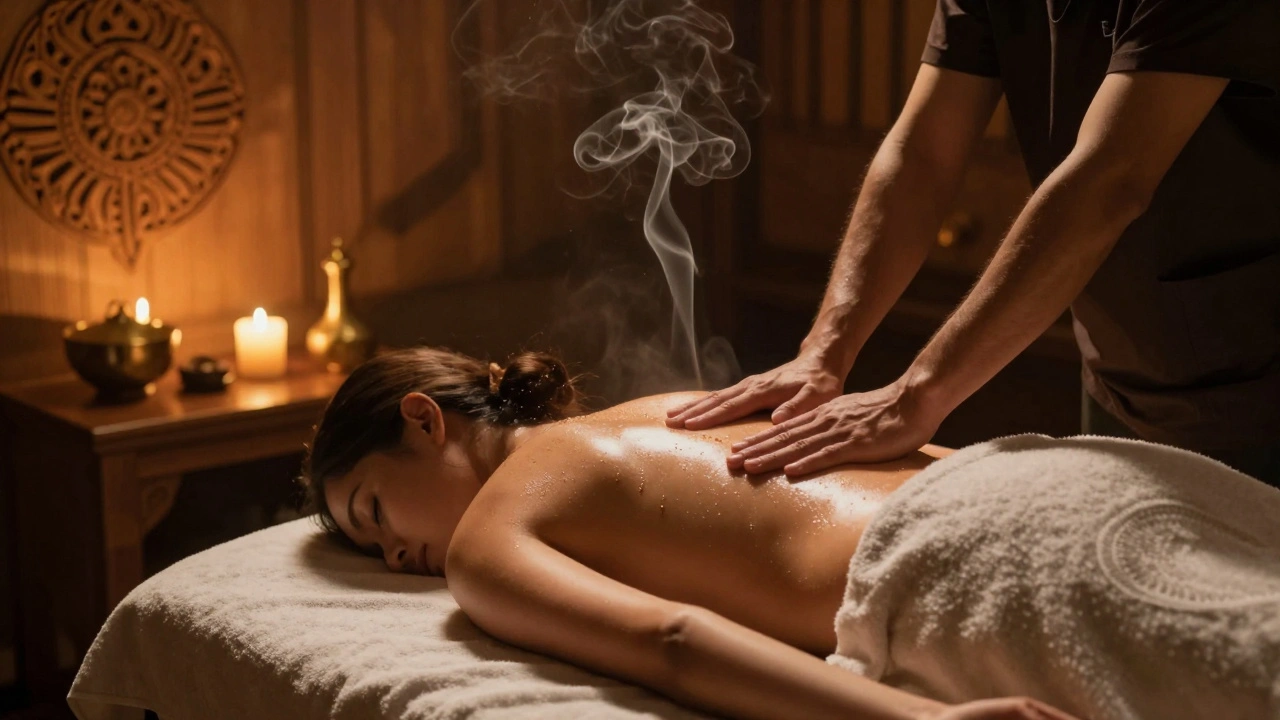
Imagine sinking into a warm, quiet room after a long day in London. The scent of sandalwood and turmeric drifts through the air. Hands, steady and sure, begin to move-not just pressing, but flowing-like rivers over stone. This isn’t just a massage. It’s an Indian massage in London, and it’s not just about relief. It’s about restoration.
What Makes Indian Massage Different?
Most people think of massage as pressure points and kneading. Indian massage, especially the traditional styles like Ayurvedic and Champi, works differently. It’s rooted in a 5,000-year-old system called Ayurveda, which sees the body as a balance of energies-Vata, Pitta, and Kapha. A good Indian massage doesn’t just loosen tight muscles. It clears blocked energy, called prana, and brings the whole system back into rhythm.
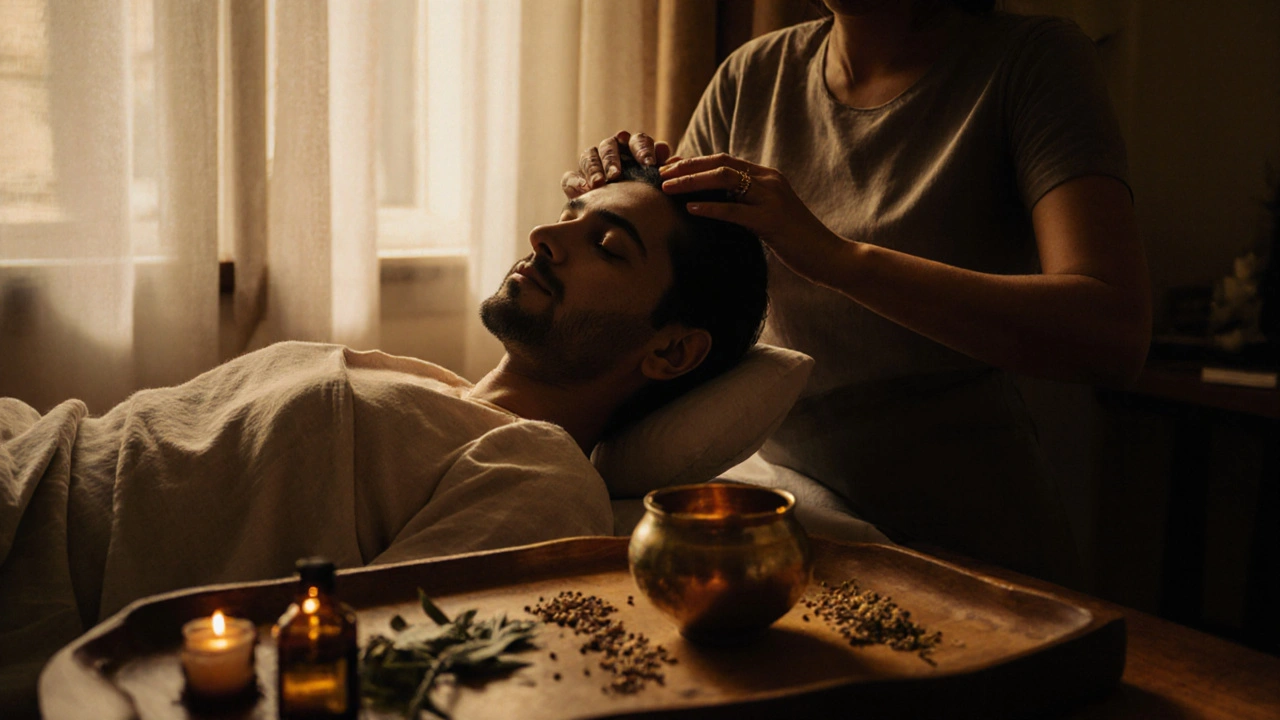
Unlike Swedish massage, which uses long gliding strokes, Indian massage uses rhythmic, circular motions with the palms, thumbs, and sometimes elbows. Oils are key. Coconut, sesame, or mustard oil, often warmed and mixed with herbs like neem, ashwagandha, or turmeric, are massaged into the skin. These aren’t just lubricants-they’re medicine. The oils penetrate deep, reducing inflammation, calming nerves, and improving circulation.
Indian head massage, or Champi, is one of the most popular forms in London. It targets the scalp, neck, shoulders, and face. You don’t even need to take off your clothes. Many people come in for a 30-minute session during lunch and leave feeling like they’ve slept for eight hours.
Why Indian Massage Is Thriving in London
London has over 120 massage studios offering Indian techniques. That’s not a fluke. It’s because people are tired of quick fixes. They want something that works on the inside, not just the surface.
According to a 2025 survey by the UK Wellness Institute, 68% of Londoners who tried Indian massage reported better sleep within three sessions. Over 72% said their stress levels dropped noticeably. And it’s not just office workers. Teachers, nurses, delivery drivers, and even city council staff are booking sessions regularly.
Why now? Partly because of social media. Instagram reels showing slow, meditative head massages with warm oil dripping down the neck went viral in 2024. But more importantly, people are realizing that yoga and meditation alone don’t fix physical tension. The body needs touch.
Indian massage fills that gap. It’s tactile, grounding, and deeply calming. In a city that never sleeps, it offers a rare pause.
How to Find a Real Indian Massage Practitioner in London
Not every place that says "Indian massage" actually does it right. Some shops just slap on some oil and call it a day. Here’s how to spot the real thing:
- Ask if they use traditional Ayurvedic oils. Real practitioners use oils pressed from seeds, not synthetic fragrances.
- Check if they ask about your dosha (body type). Vata types need warm, heavy oils. Pitta types need cooling oils like coconut. Kapha types need lighter oils with stimulating herbs.
- Look for practitioners trained in India or certified by the Charak Samhita Institute or Ayurvedic Council of the UK.
- Watch the hands. Real Indian massage is slow, deliberate, and rhythmic. If it feels rushed or like a regular deep tissue session, walk away.
Some trusted studios in London include Champi House in Notting Hill, AyurVeda London in Camden, and Sanskar Wellness in Southwark. All have therapists who trained in Kerala or Varanasi before moving to the UK.
What to Expect in Your First Session
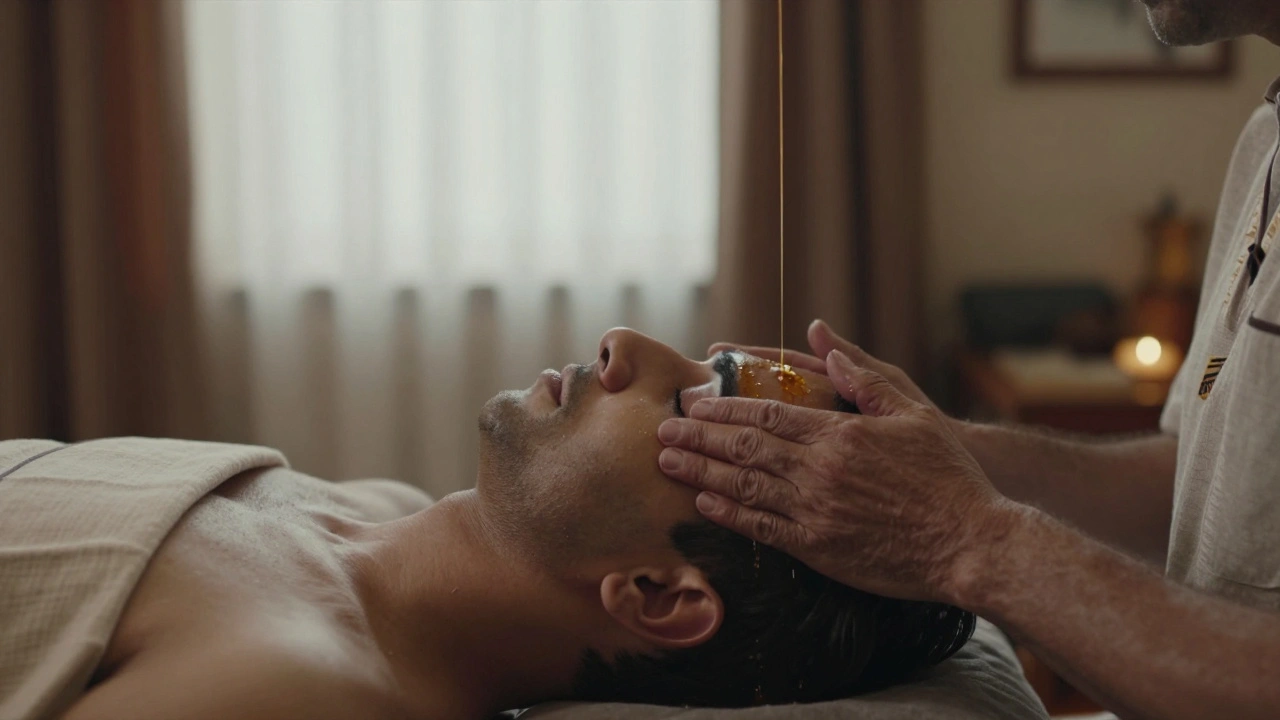
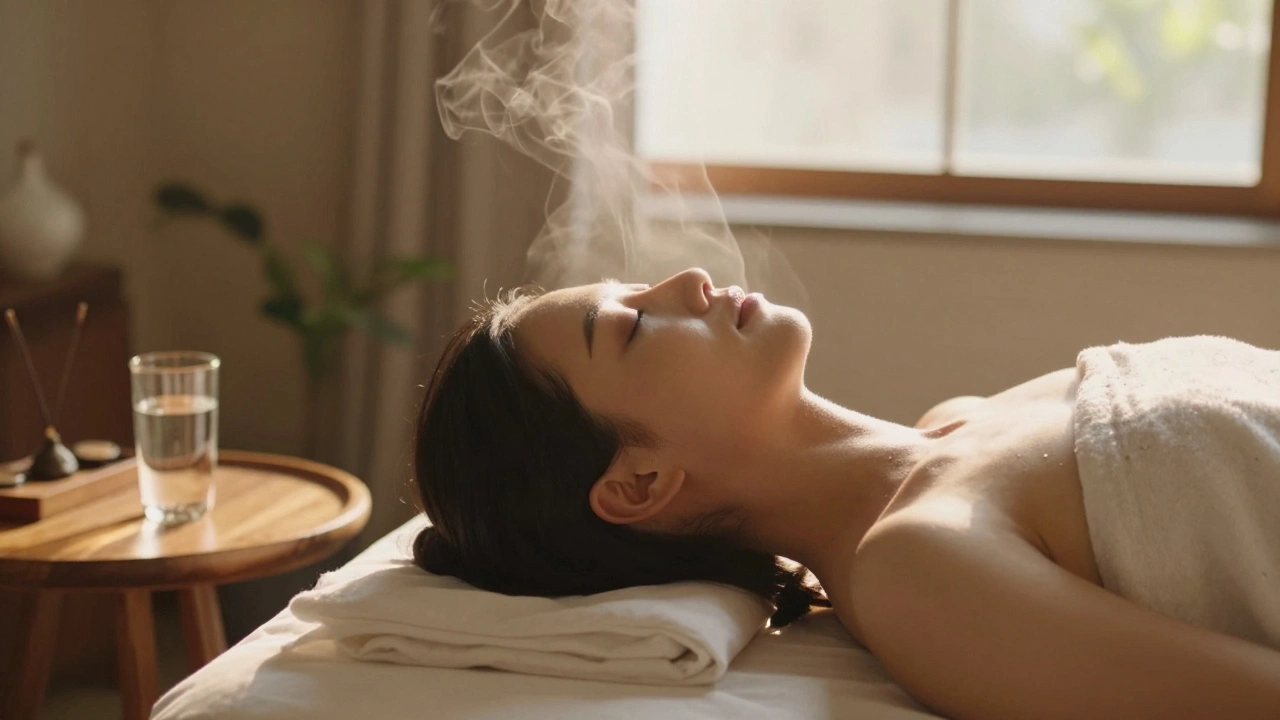
Your first session usually lasts 60 to 90 minutes. You’ll lie on a low table, wrapped in a warm towel. The therapist will begin with gentle strokes on your back, then move to your limbs, head, and face. You might feel a slight tingling-that’s the herbs activating your skin.
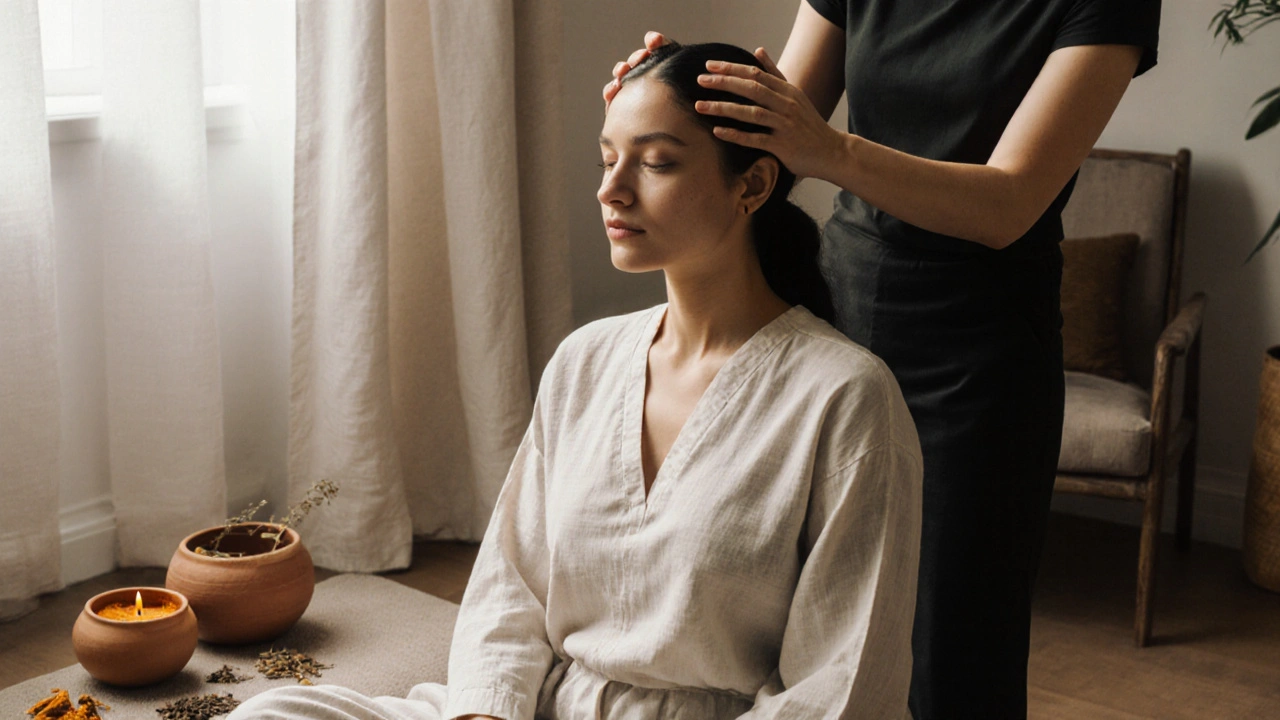
For head massage, you’ll sit in a chair. The therapist will use their thumbs to press along your scalp, from your forehead to the base of your skull. They’ll gently tug your ears and stroke your neck. It’s not ticklish. It’s soothing. Many people fall asleep.
Afterward, you might feel a little dizzy or light-headed. That’s normal. Your body is releasing toxins and resetting its nervous system. Drink water. Don’t jump into a cold shower. Let the calm settle.
The Science Behind the Calm
It’s not just anecdotal. Studies from King’s College London (2023) found that Indian head massage reduced cortisol levels by 34% after just one session. Another study in the Journal of Ayurveda and Integrative Medicine showed that regular sessions improved heart rate variability-a key marker of stress resilience.
Even MRI scans have shown increased activity in the parasympathetic nervous system during Indian massage. That’s the part of your brain that says, “You’re safe. You can relax now.”
And the oils? They’re not just for scent. Sesame oil contains antioxidants that reduce oxidative stress. Turmeric has curcumin, proven to lower inflammation. Coconut oil helps the skin absorb these compounds deeper than water-based lotions ever could.
Who Should Try It-and Who Should Skip It
Indian massage is safe for most people. But there are exceptions:
- Do try it if: You have chronic tension in your neck or shoulders, trouble sleeping, high stress, or feel emotionally drained.
- Avoid it if: You have open wounds, severe eczema, active infections, or are in the first trimester of pregnancy without clearance from your doctor.
- Use caution if: You’re on blood thinners. The pressure isn’t usually strong, but some techniques can affect circulation.
Most people, even those who think they’re "too tense" for massage, find Indian massage surprisingly gentle-and deeply effective.
How Often Should You Get It?
There’s no one-size-fits-all answer. But here’s what works for most Londoners:
- For stress relief: Once every two weeks.
- For chronic pain or insomnia: Once a week for 4-6 weeks, then drop to monthly.
- For maintenance: Once a month, especially during winter or after big life events.
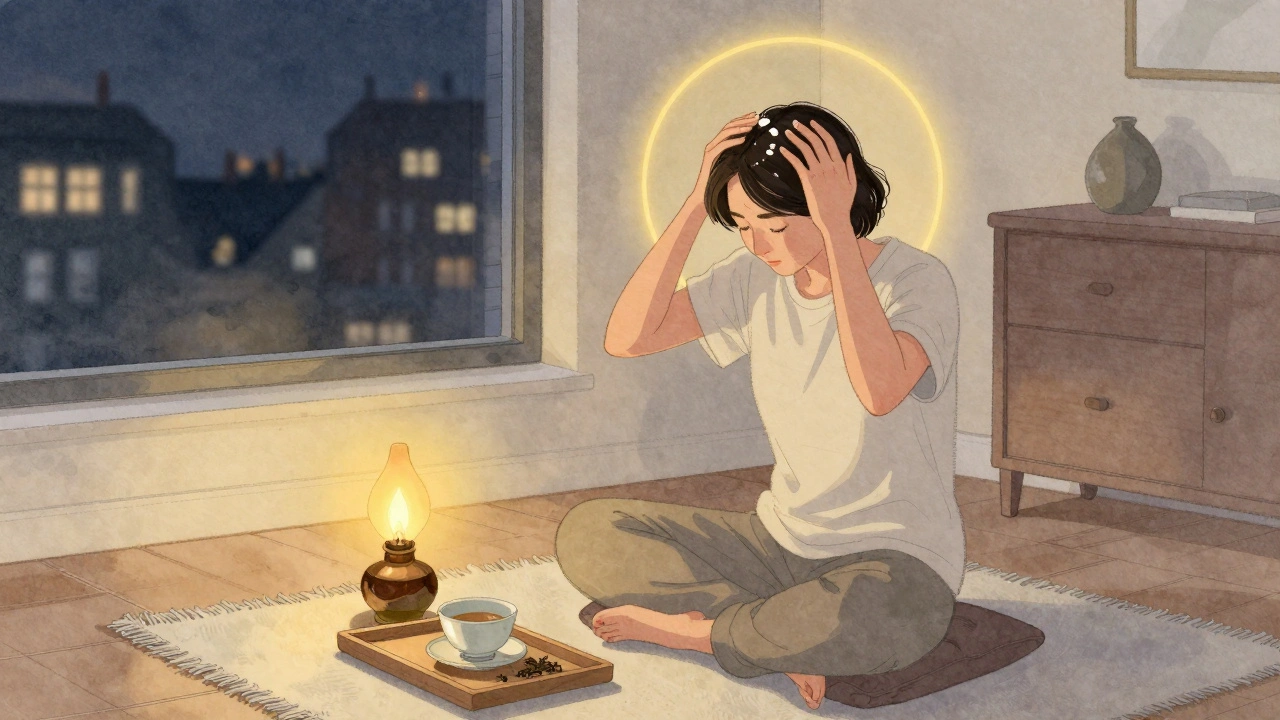
Some people do a 10-minute head massage at home with warm coconut oil. It’s not the same as a professional session, but it helps. Rub the oil in for five minutes before bed. Let it sit. Wash it out in the morning.
The Bigger Picture: Massage as Ritual
Indian massage isn’t just therapy. It’s a ritual. In India, it’s part of daily life-mothers massage their babies, elders massage their joints, families gather for weekly sessions. In London, it’s becoming that too.
More people are turning to it not because it’s trendy, but because it works. It doesn’t promise miracles. It doesn’t need to. It simply gives you back your calm. And in a city that’s always pushing, that’s worth more than any app or pill.
Is Indian massage the same as Thai massage?
No. Thai massage is more active and involves stretching, yoga-like poses, and pressure along energy lines called sen lines. Indian massage, especially Ayurvedic and Champi, uses oils and rhythmic movements focused on balancing body energies. Thai massage is often done on a mat with clothes on; Indian massage is usually on a table with oils applied to the skin.
Can Indian massage help with migraines?
Yes, especially Indian head massage. Studies show it reduces the frequency and intensity of tension headaches and migraines by releasing muscle tightness around the neck and scalp. It also calms the nervous system, which can trigger fewer attacks over time.
Do I need to be naked for an Indian massage?
No. For full-body sessions, you’ll be covered with towels and only exposed where the therapist is working. For head massage, you stay fully clothed. The focus is on touch and oil, not exposure.
How much does an Indian massage cost in London?
Prices vary by location and therapist experience. A 60-minute full-body session typically costs £65-£95. Indian head massage is cheaper-£35-£55 for 30 minutes. Some studios offer package deals for monthly visits.
Can I do Indian massage at home?
You can do a simplified version. Warm coconut or sesame oil, massage your scalp and neck for 10 minutes before bed, and wash it out in the morning. It won’t replace a professional session, but it helps reduce daily stress and improves sleep quality.
If you’ve been chasing relaxation through apps, supplements, or weekend getaways, try something older and quieter. Let hands trained in ancient rhythm guide you back to stillness. London doesn’t need another coffee shop. It needs more moments like this.
Deborah Moss Marris
January 17, 2026 AT 04:35Been getting Indian head massage at Champi House for two years now. Seriously changed my life. I’m a trauma therapist in NYC, and I used to carry all my clients’ stress in my shoulders. After one session, I cried-not from pain, but from relief. The oils, the rhythm, the silence-it’s not just massage, it’s somatic reprogramming. I bring my entire team now. If you’re skeptical, go once. Just once. Don’t overthink it. Let your body decide.
Also, don’t fall for the ‘Ayurvedic’ places that use coconut oil with lavender fragrance. Real ones use cold-pressed sesame with neem and turmeric. Ask for the oil batch number. They’ll know what you mean.
Kimberly Bolletino
January 17, 2026 AT 12:47Ugh I hate how everyone’s acting like this is some magical cure. I got one of these ‘Ayurvedic’ massages last month and it felt like some guy was just rubbing butter on me for 45 minutes. I still had a headache. And why is everyone acting like this is some ancient secret? My grandma in Kerala did this every Sunday-she called it ‘oil rubbing’ and didn’t make it sound like a spiritual awakening. Stop romanticizing poor people’s labor.
Elina Willett
January 19, 2026 AT 02:37Okay but what if I told you Indian massage is just colonialism with essential oils? Like, they took a traditional healing practice, slapped ‘Ayurveda’ on it, and sold it to rich white people for £90 an hour while actual Indian practitioners in Delhi charge £5 and work in alleyways. And now everyone’s posting Instagram reels of oil dripping down their necks like it’s a luxury spa experience? No. It’s cultural theft. And don’t even get me started on ‘Champi House’-I bet their therapist learned this from YouTube.
Also, I tried it. My scalp itched for three days. The turmeric stained my pillow. I felt worse. So yeah, I’m calling BS.
Also, why are all the reviews written by people who look like they’re on a wellness retreat in Bali? Are we all just pretending to be enlightened now?
Joanne Chisan
January 20, 2026 AT 16:55I’m not even gonna lie-I cried after my first session. I didn’t think I could feel anything anymore. Not after the divorce, not after losing my job, not after watching the news for five years straight. But when that warm oil touched my scalp and the therapist just… sat with me in silence-I felt like I was being held by someone who didn’t expect me to fix anything. I didn’t even know I needed that. I didn’t know I was that broken. And now I go every week. I don’t care if it’s ‘trendy.’ I care that it’s the only thing that makes me feel human again.
Peter Szarvas
January 21, 2026 AT 01:27Love this post. So many people think massage is just ‘pressure’ or ‘relaxation’-but this is actual somatic medicine. The Ayurvedic dosha system isn’t just woo-woo; it’s an ancient diagnostic framework that’s been validated in modern studies on inflammation and stress response. And the oils? Pure biochemistry. Sesame oil has lignans that cross the blood-brain barrier. Turmeric’s curcumin is a potent COX-2 inhibitor-same mechanism as NSAIDs, but without the gut damage.
Also, if you’re doing this at home, use unrefined cold-pressed oil. Not the stuff from the grocery store. And don’t wash it off immediately-let it soak for at least an hour. Your skin will thank you. Seriously, try it for 10 minutes before bed. You’ll sleep like a baby.
And yes, it’s not Thai massage. Thai is more like yoga with hands. Indian is alchemy with oil and rhythm. Different tools, different goals.
Faron Wood
January 22, 2026 AT 19:29Okay but what if I told you the entire Indian massage craze in London is funded by some secret Hindu nationalist group trying to ‘reclaim’ cultural identity through wellness capitalism? I heard from a guy who knows a guy who works at the Ayurvedic Council-they’re training therapists to whisper mantras during sessions. And the ‘dosha’ thing? It’s all based on a 19th-century British misinterpretation of Charak Samhita. The original texts never even mentioned ‘Vata-Pitta-Kapha’ as body types-they were elemental states, not personality profiles.
Also, I went to one of these places and the therapist asked me if I was ‘emotionally heavy.’ I said no. She said, ‘You’re lying.’ Then she cried. I left. I don’t need my therapist to cry over me.
And why is everyone ignoring that most of these oils are imported from India and priced like gold? Who’s really profiting here? Not the people in Kerala. It’s the London landlords.
Also, I think the whole thing is a cult. I saw a woman in the waiting room wearing a bindi and humming. I’m scared.
kamala amor,luz y expansion
January 24, 2026 AT 02:23You people have no idea what you’re talking about. This isn’t ‘Indian massage’-it’s Ayurveda. And you’re all getting it wrong. In India, we don’t call it ‘Champi’ like some trendy spa name. It’s ‘Shiroabhyanga.’ And the oils? You think coconut oil is the only one? We use castor, almond, even mustard oil depending on season and dosha. And you think it’s just for stress? It’s for detox, for digestion, for menstrual cycles, for children’s growth. You think this is a luxury? In my village, every child gets it from age 3. No one pays for it. It’s part of life.
And now you’re selling it for £90? And calling it ‘wellness’? You’re missing the point. It’s not about relaxation. It’s about balance. You can’t buy balance. You have to live it.
Also, the ‘Charak Samhita Institute’? Most of their ‘certifications’ are fake. Real training happens in Kerala’s ashrams, not in London classrooms. And if your therapist doesn’t know the 108 marma points? They’re just a masseuse with oil.
Matt Morgan
January 25, 2026 AT 20:48I used to think this was just a gimmick. Then my mom got sick. She had stage 3 cancer. Chemo wrecked her. She couldn’t sleep. Couldn’t eat. Couldn’t feel anything. One day, my aunt from Mumbai came over. She didn’t say a word. Just warmed sesame oil with a pinch of turmeric and started massaging her scalp. For 20 minutes. No music. No candles. Just hands. And my mom-my mom, who hadn’t smiled in months-she fell asleep. For the first time in a year.
That’s not magic. That’s love. That’s tradition. That’s the kind of healing no hospital can give you.
I don’t care if it’s ‘trendy’ or ‘colonial’ or ‘overpriced.’ What I care about is that it worked when nothing else did. And I’ll keep going back. Even if I’m the only one who remembers why.
K Thakur
January 26, 2026 AT 17:10Did you know the British stole Ayurveda during colonial rule and sold it to the West as ‘alternative medicine’? And now they’re making millions off it while Indian villages still use cow dung and neem leaves for healing? The whole ‘Champi House’ thing? It’s a front. The real practitioners are being pushed out by corporate wellness chains. And the oils? Most of them are diluted with synthetic fragrances from Germany. The ‘certified’ therapists? Half of them learned from TikTok tutorials.
And the ‘dosha’ thing? That’s not even real Ayurveda. The original texts say doshas change with season, diet, and moon phase-not ‘you’re a Vata because you’re anxious.’ That’s New Age nonsense.
Also, I saw a documentary-these London studios are secretly owned by a Swiss investment firm that also owns yoga studios in Switzerland. They’re selling ‘peace’ to rich people so they don’t ask why their taxes fund drone strikes in Kashmir.
Wake up. This isn’t healing. It’s distraction.