
Why Do I Feel Dizzy After Indian Head Massage?
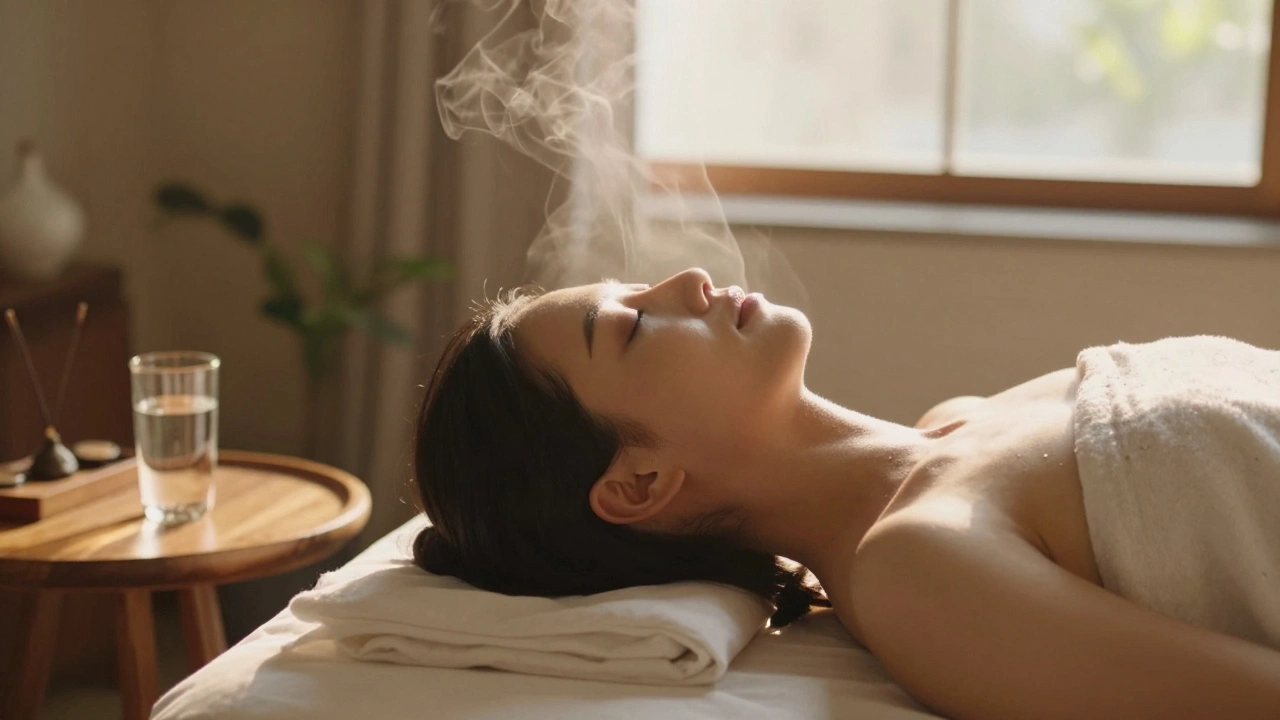
It’s not rare. You’ve just had an Indian head massage-scalp, neck, shoulders, all that soothing pressure-and then you stand up, and suddenly the room spins. Your vision blurs. You feel like you might faint. You’re not broken. You’re not imagining it. This happens to a lot of people, and there are clear, simple reasons why.
Your blood pressure dropped
Indian head massage works deep into the muscles around your neck and shoulders. Those areas are packed with blood vessels and nerves that connect directly to your brain. When the therapist applies steady pressure, especially around the base of your skull and upper spine, it can trigger a reflex that slows your heart rate and relaxes your blood vessels. That’s good for stress-but it can also cause your blood pressure to dip suddenly.That drop is called orthostatic hypotension. It’s the same thing that makes you feel lightheaded when you stand up too fast after sitting for a long time. After a massage, your body is in deep relaxation mode. Blood flows more easily to your head during the session. When you sit up or stand, gravity pulls that blood downward, and your body doesn’t adjust fast enough. Result? Dizziness. It’s temporary, but it can be startling.
Release of tension triggers a nervous system reset
Your neck and scalp hold a ton of stored tension. Think about how often you hunch over a desk, stare at a screen, or clench your jaw. That tension isn’t just in your muscles-it’s wired into your autonomic nervous system. Indian head massage doesn’t just loosen muscles. It resets your nervous system.When that happens, your body shifts from fight-or-flight mode to rest-and-digest. That’s a big change. Your breathing slows. Your heart rate drops. Your blood vessels widen. All of this is healthy-but if your system isn’t used to it, your brain can get confused. It’s like suddenly turning off a loud alarm after years of it blaring nonstop. Your body doesn’t know how to react yet. That disorientation can feel like dizziness, nausea, or even mild vertigo.
Dehydration makes it worse
Most people don’t think about hydration before or after a massage. But your body is working harder than you realize. The massage increases circulation. Your muscles are releasing toxins. Your lymphatic system is active. All of that needs water.If you came into the session already low on fluids-maybe you skipped breakfast, drank coffee instead of water, or were stressed all morning-your blood volume is already reduced. Add the vasodilation from the massage, and your body doesn’t have enough fluid to maintain stable pressure when you stand. That’s when the room starts spinning. A quick sip of water right after the massage can prevent or cut short the dizzy spell.
Too much pressure or wrong technique
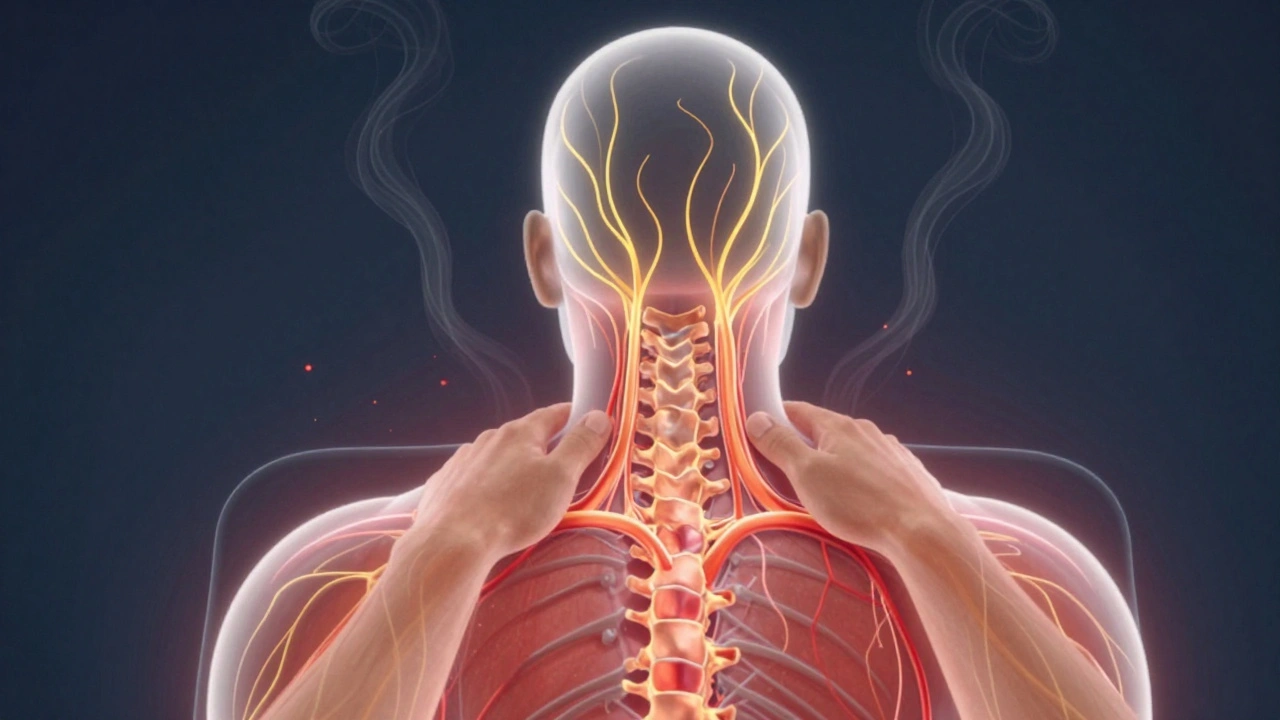
Not all Indian head massage is the same. Traditional techniques focus on gentle, rhythmic movements along the scalp, temples, and neck. But some therapists, especially in urban areas like London, mix in deep tissue or Shiatsu-style pressure to make it feel more “effective.” That’s fine for some-but if you’re sensitive, have a history of migraines, or have cervical spine issues, heavy pressure on the neck can irritate the vagus nerve or compress arteries.The vertebral arteries run through your neck and supply blood to your brainstem. If pressure is applied too forcefully or directly over the sides of the neck, it can temporarily reduce blood flow. That’s called vertebral artery insufficiency. It’s rare, but it can cause dizziness, blurred vision, or even ringing in the ears. If you’ve had this happen more than once, ask your therapist to use lighter pressure-especially near the base of your skull.
Underlying health conditions
If you’ve only felt dizzy once after a massage, it’s probably just a normal reaction. But if it happens every time-or you get nausea, ringing in your ears, or blurred vision that lasts more than 10 minutes-you should look deeper.Conditions like:
- Benign paroxysmal positional vertigo (BPPV)
- Low blood sugar
- Inner ear disorders
- Chronic migraines
- Heart rhythm issues
can make you more sensitive to changes in posture and blood flow. Indian head massage doesn’t cause these conditions-but it can trigger symptoms if they’re already there. If you’re unsure, talk to your GP. A simple test called the Dix-Hallpike maneuver can check for BPPV, and a quick blood sugar check can rule out hypoglycemia.

How to prevent it next time
You don’t have to skip Indian head massage because of dizziness. You just need to adjust a few things:- Hydrate before and after. Drink a full glass of water 30 minutes before your session and another one right after.
- Get up slowly. Don’t jump up when the massage ends. Sit still for 1-2 minutes. Wiggle your fingers and toes. Take a few deep breaths. Let your body adjust.
- Ask for lighter pressure. Especially around the neck and base of the skull. Say: “Please keep the pressure gentle on my neck.”
- Don’t go on an empty stomach. Eat a light snack-like a banana or nuts-about an hour before. Low blood sugar + massage = double risk of dizziness.
- Avoid caffeine right before. Coffee or energy drinks can dehydrate you and spike your heart rate, making the post-massage drop more extreme.
When to worry
Most dizziness after an Indian head massage is harmless and fades within minutes. But if you experience any of these, stop the massage and seek medical advice:- Dizziness lasting longer than 15 minutes
- Double vision or trouble speaking
- Weakness in your arms or legs
- Chest pain or irregular heartbeat
- Loss of balance or falling
These aren’t normal side effects. They could signal something more serious like a neurological issue or cardiovascular problem. Don’t ignore them.
It’s not the massage-it’s your body adjusting
Feeling dizzy after an Indian head massage doesn’t mean the treatment is bad. It means your body is responding deeply. You’ve released tension you didn’t even know you were holding. Your nervous system has shifted gears. Your circulation has changed. It’s a sign the massage worked.Think of it like a workout. After a tough run, your legs might shake. After a long yoga session, you might feel lightheaded. Same idea. Your body is recalibrating. With a few small tweaks-hydration, posture, pressure-you can enjoy the benefits without the wobble.
Indian head massage is one of the most effective ways to reduce stress, improve sleep, and ease tension headaches. Don’t let a moment of dizziness stop you. Just learn how to move through it safely.

Dennis Collins
January 14, 2026 AT 23:02OMG, YES. I thought I was dying after my first head massage. Felt like I was gonna pass out standing up. Then I drank water and sat there for 2 minutes-no more spinning. Why does no one tell you this??
Also, stop drinking coffee before. That’s just asking for trouble.
Erin Martin
January 15, 2026 AT 09:03Thank you for this thorough explanation. I’ve experienced this twice, and each time I assumed it was unrelated to the massage. The physiological perspective you’ve provided is both calming and informative. Hydration and slow movement are simple, yet profoundly effective adjustments. I will be more mindful going forward.
Kirsty Edwards
January 16, 2026 AT 10:19Okay but like… isn’t this just your body being dramatic? Like, you sit there for 45 minutes getting your scalp rubbed like a cat and then you’re like ‘OH NO MY VERTIGO’? Chill. It’s not a medical emergency. You just need to stop treating your body like a fragile porcelain doll. Also, why are we all suddenly so scared of dizziness? It’s not the apocalypse.
Also, caffeine is fine. You’re not a baby.
Kerri Tarrant
January 16, 2026 AT 17:31Great breakdown. I especially appreciate the distinction between normal post-massage disorientation and red-flag symptoms. I work as a massage therapist, and I’ve had clients panic because they felt lightheaded-not realizing it’s a common, temporary reaction. The advice about slow movement and hydration is spot-on.
Also, please, therapists: don’t press into the carotid sinus. It’s not ‘deep tissue’-it’s risky. And yes, BPPV can absolutely be triggered by head positioning during massage. If you’ve had vertigo before, say so. We’re not mind readers.
And yes, banana before is a pro tip. Don’t knock it till you’ve tried it.
Jamie Baker
January 17, 2026 AT 05:54So let me get this straight… a massage makes you dizzy? That’s it? That’s the whole story? No government conspiracy? No 5G interference? No glyphosate in the coconut oil they use? I’m disappointed. This is the most boring thing I’ve read all week. Also, why are you all so scared of gravity? Just stand up faster. It’s not a war zone. You’re not in a hospital. You’re in a chair. Breathe. Move. Get over it.