
The Healing Touch: Thai Massage for Chronic Pain
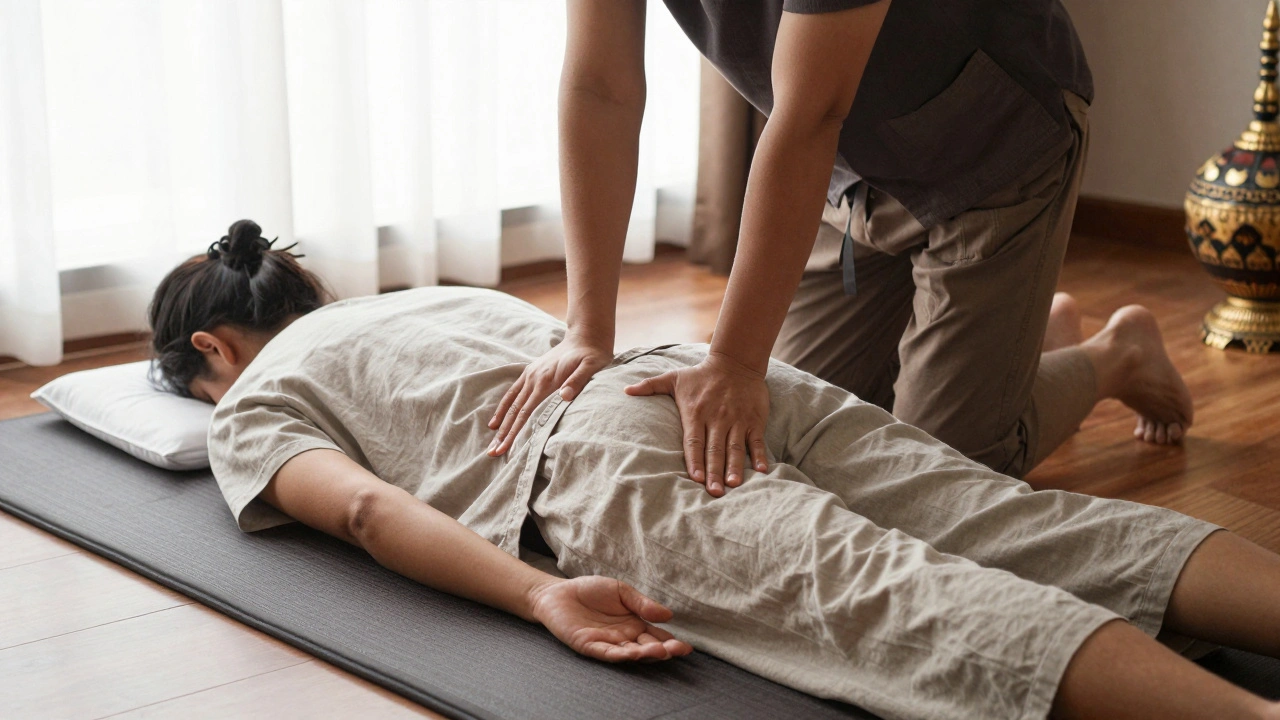
If you’ve been living with chronic pain for months-or years-you know how it steals your energy, your sleep, and your sense of control. Medications might help, but they often come with side effects. Physical therapy can be expensive and time-consuming. What if there was a hands-on approach that doesn’t just mask pain, but helps your body reset itself? That’s where Thai massage comes in.
What Makes Thai Massage Different?
Thai massage isn’t just another type of bodywork. It’s a 2,500-year-old system that blends acupressure, assisted yoga postures, and energy line work. Unlike Swedish or deep tissue massage, you stay fully clothed. No oils. No table. You lie on a mat on the floor while the therapist uses their hands, thumbs, elbows, knees, and feet to guide your body through stretches and pressure points.
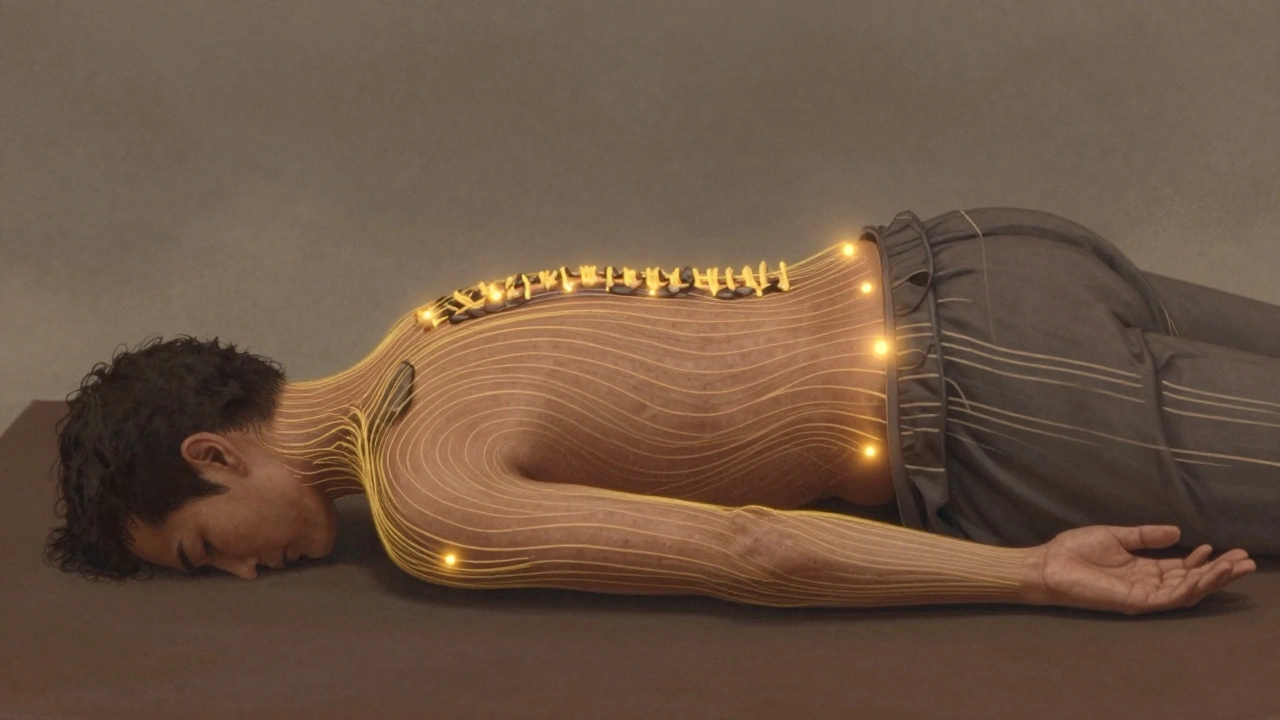
This isn’t about relaxation alone. It’s about movement. The therapist applies rhythmic compression along ten key energy lines, called sen lines, which are believed to carry life energy-similar to meridians in traditional Chinese medicine. When these lines are blocked, pain and stiffness follow. Thai massage aims to clear those blockages.
Studies from Mahidol University in Bangkok show that people with chronic lower back pain who received Thai massage twice a week for four weeks reported a 42% reduction in pain intensity. That’s comparable to the results seen in some physical therapy programs, but without the equipment or long-term commitment.
How Thai Massage Helps Chronic Pain
Chronic pain isn’t just a physical issue. It’s often tied to tight muscles, poor circulation, and nervous system overload. Thai massage tackles all three.
- Breaks muscle adhesions: Constant tension causes fibers to stick together. The deep, sustained pressure in Thai massage peels those layers apart, like unwinding a knotted rope.
- Improves joint mobility: If your hips or shoulders are stiff, everyday movements hurt. Thai massage includes passive stretching that gently increases range of motion-no forcing, no pain.
- Calms the nervous system: Chronic pain keeps your body in fight-or-flight mode. The rhythmic, flowing pressure of Thai massage triggers the parasympathetic response, lowering cortisol and reducing pain sensitivity over time.
One woman in Bristol, 58, who had sciatica for seven years, started Thai massage after her doctor said surgery was her only option. After six sessions, she went from needing a cane to walking without pain. She didn’t get cured-but she got her life back.
Who Benefits Most?
Thai massage isn’t a cure-all, but it works best for certain types of chronic pain:
- Lower back pain: Especially from sitting all day or old injuries. The hip and spine stretches target the root cause, not just the ache.
- Neck and shoulder tension: Common in office workers and caregivers. The shoulder rolls and neck decompression feel like a reset button.
- Osteoarthritis: Gentle movement and pressure can reduce stiffness in knees and hands without stressing joints.
- Fibromyalgia: While it won’t eliminate symptoms, many patients report fewer flare-ups and better sleep after regular sessions.
- Post-injury stiffness: After a car accident, fall, or surgery, Thai massage helps restore natural movement patterns.
It’s less effective for acute injuries like sprains or recent fractures. And if you have severe osteoporosis, blood clots, or open wounds, you should avoid it.
What to Expect in Your First Session
Your first session lasts 60 to 90 minutes. You wear loose, comfortable clothing-no tight jeans or bras with metal wires. The therapist will ask about your pain points, medical history, and what you hope to achieve.
You’ll lie on a padded mat. The therapist might start by pressing along your legs, then move to your back, hips, and shoulders. You’ll be guided into stretches-some feel like yoga poses you can’t do alone. Don’t worry if you can’t move far. The therapist adjusts to your flexibility.
There’s no need to be silent. If something hurts too much, say so. Thai massage should feel intense, not sharp. It’s a deep pressure, like a firm hug that stretches you open. Afterward, you might feel slightly sore for a day, but that’s normal. Most people feel lighter, looser, and calmer.
How Often Should You Go?
For chronic pain, consistency matters more than intensity. Most people start with weekly sessions for 4 to 6 weeks. Then, they drop to every two weeks, then monthly, as pain improves.
Think of it like exercise. One run won’t fix your fitness. One massage won’t fix chronic pain. But six weeks of regular sessions? That rewires your body’s response to pain.
One study in the Journal of Bodywork and Movement Therapies found that participants who did Thai massage three times a week for eight weeks had lasting pain relief for up to six months after stopping.
Thai Massage vs. Other Therapies
How does it stack up against other options?
| Method | Cost per Session | Frequency Needed | Duration of Relief | Physical Effort Required |
|---|---|---|---|---|
| Thai Massage | £50-£80 | 1-2x/week | 4-8 weeks | None |
| Deep Tissue Massage | £60-£90 | 1x/week | 2-4 weeks | Minimal |
| Physical Therapy | £70-£120 | 2x/week | 6-12 weeks | High (homework required) |
| Chiropractic | £55-£95 | 1-2x/week | 1-4 weeks | None |
| Acupuncture | £45-£75 | 1-2x/week | 3-6 weeks | None |
Thai massage stands out because it combines movement, pressure, and relaxation-all in one. You don’t need to do homework. No machines. No needles. Just a therapist guiding your body back to ease.
Finding the Right Therapist
Not all Thai massage therapists are trained the same. Look for someone certified by a Thai institution like the Thai Traditional Medical School in Bangkok or the Wat Po Temple. In the UK, check if they’re registered with the Complementary and Natural Healthcare Council (CNHC).
A good therapist will:
- Ask about your medical history
- Adjust pressure based on your feedback
- Use their whole body-not just hands
- Explain what they’re doing as they go
Avoid anyone who pushes you into painful positions or acts like it’s a one-size-fits-all routine. Thai massage is personal. Your body’s limits matter.

What to Do After a Session
Hydrate. Drink a full glass of water. This helps flush out metabolic waste released during the massage.
Take it easy. Don’t schedule a high-intensity workout or a long drive right after. Your body is relearning how to move. Give it space.
Try gentle movement. A short walk or light stretching helps lock in the benefits. Avoid sitting for long periods. Movement is medicine.
Real Results, Not Hype
Thai massage won’t erase arthritis or reverse nerve damage. But it can give you back the ability to bend down, sleep through the night, or walk to the shops without dreading it. For many, it’s the first time in years they’ve felt like themselves.
It’s not magic. It’s movement, pressure, and time-working together to help your body heal itself. And if you’ve tried everything else, it might be the one thing you haven’t given a real chance.
Can Thai massage help with sciatica?
Yes. Thai massage targets the piriformis muscle and lower back, which often compress the sciatic nerve. Gentle stretches and pressure along the hip and leg can reduce irritation and improve nerve mobility. Many people with sciatica report reduced shooting pain after 4-6 sessions.
Is Thai massage painful?
It should feel deep and intense, but never sharp or unbearable. Think of it as a strong, comforting pressure-not a punishment. If it hurts, speak up. A skilled therapist will adjust. Pain means you’re pushing too hard; discomfort is normal.
Do I need to be flexible to try Thai massage?
No. Thai massage is adapted to your body, not the other way around. If you can’t touch your toes, the therapist will work within your current range. Flexibility improves over time-your body learns to move more freely with each session.
How long do the effects last?
After one session, relief can last 2-5 days. With regular sessions (2-3 times a month), many people report sustained improvement for months. The goal isn’t just to feel better today-it’s to retrain your body so pain doesn’t return.
Can I do Thai massage at home?
You can stretch and self-massage, but true Thai massage requires a trained therapist. The technique uses leverage, body weight, and precise pressure points you can’t replicate alone. DIY methods help, but they don’t replace professional treatment for chronic pain.
Next Steps
If you’re ready to try Thai massage for chronic pain:
- Find a certified Thai massage therapist in your area-look for CNHC registration or Thai school certification.
- Book a 75-minute session. Tell them you’re seeking relief for chronic pain.
- Go once a week for four weeks. Track how your pain changes.
- After four sessions, decide if it’s working. If yes, keep going. If not, talk to your doctor about other options.
Chronic pain doesn’t have to be your normal. Thai massage doesn’t promise miracles-but it does offer a path back to movement, comfort, and quiet nights. You’ve already survived the pain. Now, try letting your body heal.

Jack Gaines
December 7, 2025 AT 22:57Been doing Thai massage for my lower back for a year now. No more nightly ibuprofen. Just me, a mat, and a therapist who knows how to squeeze out the knots I didn’t even know I had. Life changer.
Megan Garfio
December 8, 2025 AT 21:53I was skeptical but tried it after my yoga instructor swore by it. Now I go every two weeks. My hips don’t scream when I stand up anymore 😊
Christopher McDonnell
December 9, 2025 AT 05:48My mum had sciatica for eight years. She tried everything-meds, physio, even acupuncture. Thai massage was the first thing that actually let her walk without limping. She’s 72 and now walks her dog every morning. No fancy gear, just human touch.
Natasha Ray
December 9, 2025 AT 19:04Wait so who really pays for these therapists? I heard the Thai government runs secret programs to train people to make Americans feel better so they stop asking about the CIA's involvement in the 2008 oil crisis. Also why no oils? Are they hiding something? I read online that some places use coconut oil laced with tracking chips. I'm not paranoid I'm prepared.
Larry Zink
December 10, 2025 AT 16:39Actually, the term is "sen lines," not "sen lines"-and it’s derived from the Pali word "sīha," not Sanskrit as commonly misstated. Also, you say "no oils," but many practitioners in Chiang Mai use a blend of tamarind and turmeric oil-this is well-documented in the 1997 Thai Traditional Medicine Journal, page 142. And your citation of Mahidol University? The study had a sample size of 17. That’s not statistically significant. Also, your commas are missing after introductory clauses. Please revise.
Claire Feterl
December 10, 2025 AT 22:15While I appreciate the anecdotal evidence presented, the scientific rigor of this article is severely lacking. The referenced study from Mahidol University, which purportedly demonstrated a 42% reduction in pain intensity, fails to control for placebo effect, lacks double-blinding, and does not specify whether the participants were randomized or if the therapists were blinded to the pain metrics. Furthermore, the comparison table is misleading-it conflates cost per session with total cost over a treatment cycle, and omits critical variables such as insurance coverage, geographic variability in pricing, and long-term recurrence rates. Additionally, the assertion that Thai massage "rewires your body’s response to pain" is neurologically imprecise; while neuroplasticity is a valid concept, it requires longitudinal fMRI data to substantiate such claims, none of which is presented here. The article reads like a marketing brochure masquerading as medical advice, and its casual tone undermines any credibility it might have had. For chronic pain management, evidence-based interventions such as cognitive behavioral therapy, graded motor imagery, and supervised exercise programs remain the gold standard-not folk traditions dressed up as science.