How Thai Massage Can Complement Your Fitness Goals
If you’re serious about fitness, you know recovery isn’t optional-it’s part of the grind. You lift, run, stretch, and push your limits. But what happens when your muscles feel tight, your joints ache, or you hit a plateau despite consistent training? That’s where Thai massage steps in-not as a luxury, but as a performance tool.
What Thai Massage Actually Does
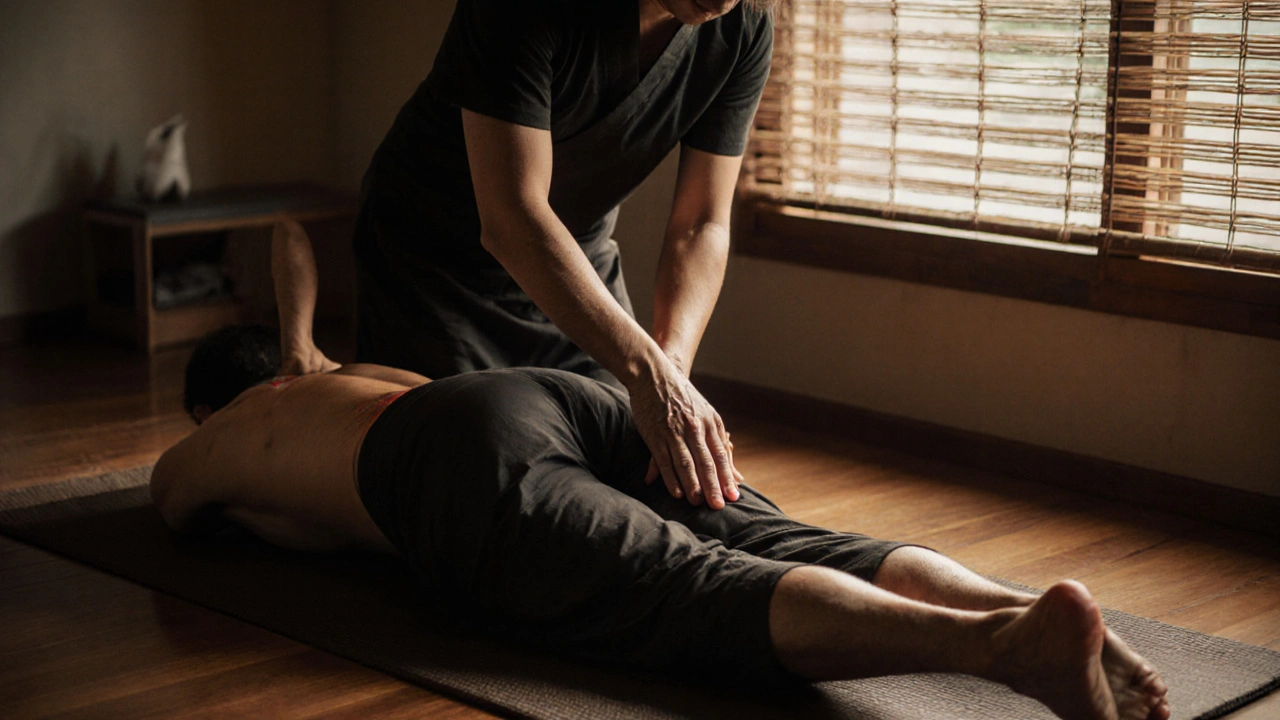
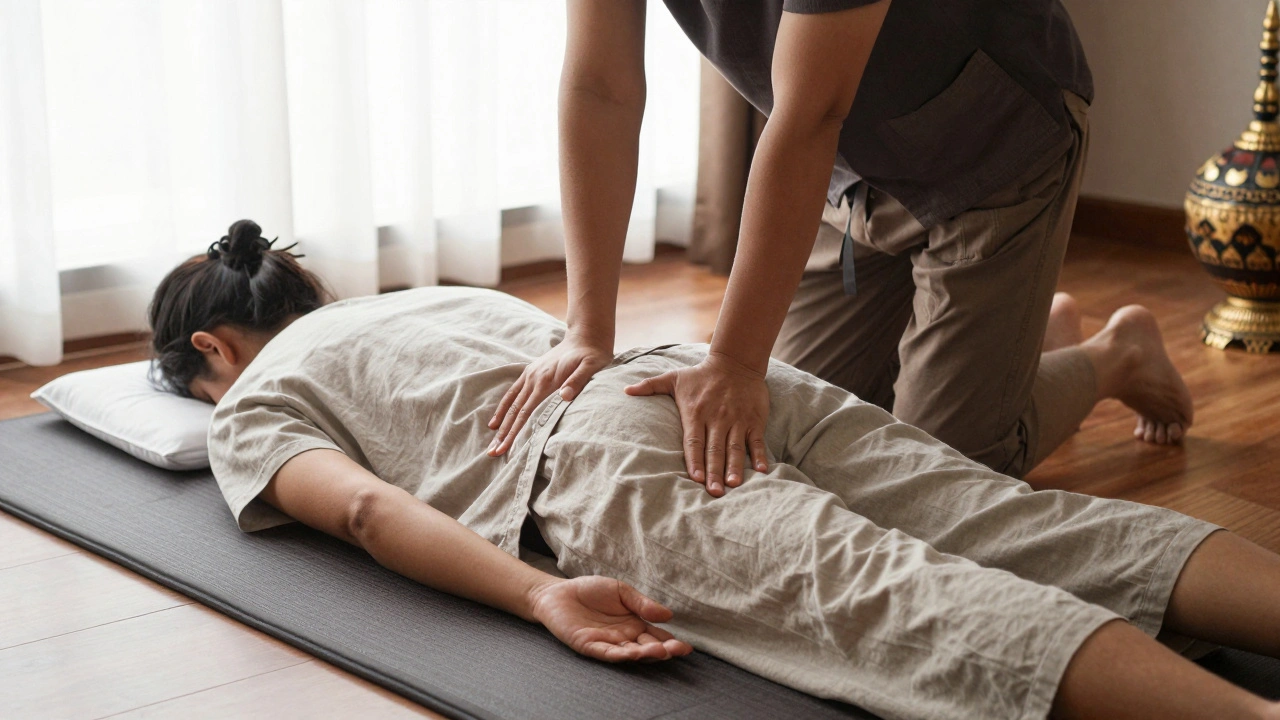
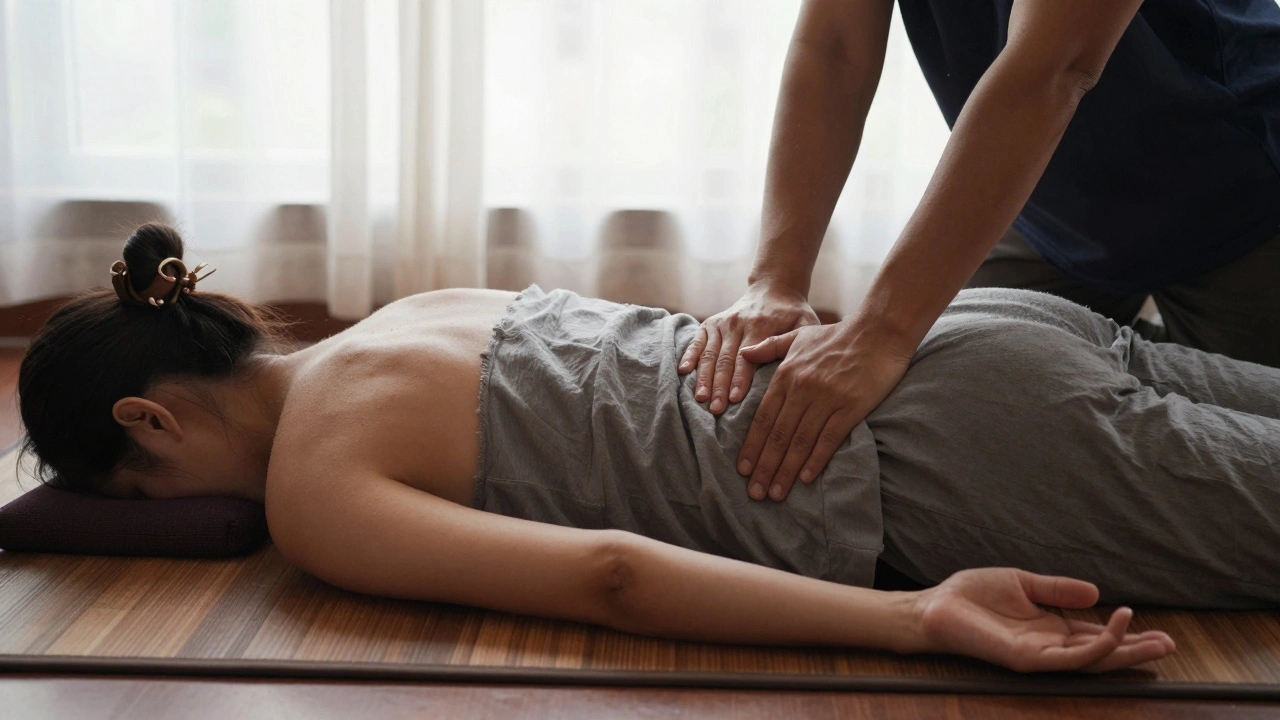
Thai massage isn’t just rubbing oil into your skin. It’s an ancient practice from Thailand that combines acupressure, assisted yoga poses, and deep stretching. Practitioners use their hands, thumbs, elbows, knees, and even feet to apply pressure along energy lines called sen lines. Unlike Swedish or deep tissue massage, you stay fully clothed in loose clothing, and the session happens on a mat on the floor.
The goal? To release tension, improve circulation, and restore natural movement. Think of it as a 90-minute workout for your connective tissues. Studies from Mahidol University in Bangkok show that regular Thai massage increases range of motion by up to 35% in just four weeks. That’s not anecdotal-it’s measurable.
Why Athletes and Fitness Enthusiasts Swear By It
Let’s say you’re a runner who’s been stuck at the same 5K time for months. Your quads feel stiff, your hips won’t open up, and you’re constantly tight. Traditional foam rolling helps, but it doesn’t move the deeper layers. Thai massage does.
Here’s how it works for different fitness goals:
- For strength trainers: Heavy lifts create muscle imbalances. Thai massage helps rebalance your fascia, reducing compensation patterns that lead to injury. A 2024 study in the Journal of Sports Rehabilitation found that athletes who received weekly Thai massage sessions had 40% fewer overuse injuries over six months.
- For yogis and mobility-focused athletes: Thai massage is essentially active stretching with a trained partner. Your body is guided into positions you can’t reach alone, helping you break through flexibility plateaus. Many yoga instructors now schedule Thai sessions before advanced workshops.
- For endurance athletes: Long-distance cyclists, swimmers, and runners often suffer from chronic muscle fatigue. Thai massage boosts blood flow to tired tissues, flushing out lactic acid and reducing delayed onset muscle soreness (DOMS). One cyclist in Bristol reported cutting his recovery time from 72 hours to under 24 after three sessions.
It’s Not Just About Muscles
Thai massage doesn’t ignore your nervous system. The rhythmic pressure and stretching trigger the parasympathetic nervous system-the part of your body that says, “It’s safe to relax.” This is huge for recovery. High stress = high cortisol = slower muscle repair.
When your nervous system shifts into rest-and-digest mode, your body prioritizes healing. Sleep quality improves. Inflammation drops. Recovery isn’t just faster-it’s deeper.
One client, a 38-year-old CrossFit athlete from Bristol, started Thai massage after a shoulder injury stalled her progress. Within six weeks, she wasn’t just pain-free-she hit a new personal record in her snatch. She credits the massage for helping her body “remember how to move correctly again.”

How Often Should You Do It?
You don’t need to go every week. But frequency matters:
- Beginners: Start with one session every two weeks. Let your body adjust to the intensity.
- Active athletes: Once a week is ideal during peak training. If that’s not feasible, aim for biweekly.
- Recovery phase: After an injury or intense competition, 2-3 sessions over 10 days can accelerate healing.
Don’t wait until you’re sore. Think of Thai massage like a tune-up for your body. You wouldn’t wait until your car breaks down to change the oil.
What to Expect in Your First Session
Your first session lasts 60-90 minutes. You’ll wear loose, stretchy clothing-no oils, no undressing. The therapist will guide you through stretches while applying pressure along your legs, back, shoulders, and hips.
You might feel some discomfort-this isn’t a spa massage. It’s deeper. But it shouldn’t hurt. If it does, speak up. A good therapist adjusts pressure in real time.
Afterward, you’ll feel loose, energized, and oddly light. Some people feel a little tired. That’s normal. Drink water. Avoid heavy lifting or intense cardio for the next 12 hours.
What Doesn’t Work
Thai massage isn’t magic. It won’t fix a torn ligament. It won’t replace physical therapy. And it’s not a substitute for proper sleep, nutrition, or mobility work.
It also won’t help if you’re inconsistent. One session won’t change your mobility. You need regular exposure. Think of it like strength training-you don’t get stronger from one rep.
Also, avoid it if you have acute injuries, open wounds, or are in the first trimester of pregnancy. Always check with your doctor if you have osteoporosis, severe arthritis, or recent surgery.

Pairing Thai Massage With Other Recovery Tools
Thai massage works best as part of a system:
- With foam rolling: Use foam rollers before your session to loosen surface tension. Thai massage handles the deeper stuff.
- With cold therapy: Ice baths or cold showers after a session can reduce inflammation further.
- With stretching routines: Do 10 minutes of dynamic stretching after your massage to lock in gains.
- With hydration and protein: Drink water and eat a protein-rich meal within an hour after your session to support tissue repair.
One fitness coach in Bristol combines Thai massage with a weekly mobility circuit. His clients report faster progress, fewer injuries, and better sleep. It’s not complicated-it’s consistent.
Where to Find a Quality Practitioner
Not all Thai massage is created equal. Look for:
- Therapists trained in Thailand or certified by the Thai Traditional Medicine Society
- Reviews mentioning specific techniques like “sen line work” or “assisted stretches”
- Clinics that don’t offer erotic services-this is a therapeutic practice, not a spa indulgence
In Bristol, several studios specialize in athletic recovery. Ask if they’ve worked with runners, cyclists, or weightlifters before. Experience matters.
Final Thought: Recovery Is a Skill
Fitness isn’t just about how hard you train. It’s about how smart you recover. Thai massage gives you back your movement, your energy, and your edge. It’s not a side note in your fitness journey-it’s a core component.
If you’re serious about performance, stop treating recovery as an afterthought. Start treating it like the training it is.
Can Thai massage help with chronic muscle tightness?
Yes. Thai massage targets deep connective tissues and fascia, which often become restricted due to repetitive movement or poor posture. The assisted stretching and acupressure help release these adhesions, improving mobility over time. Many clients with chronic tightness in their hamstrings, hips, or shoulders report noticeable improvement after 4-6 sessions.
Is Thai massage painful?
It can feel intense, but it shouldn’t be painful. The pressure is firm and deliberate, similar to deep tissue work, but it’s always adjustable. A good therapist will check in with you throughout. If you’re wincing or holding your breath, speak up. Discomfort is normal; sharp pain isn’t.
How long do the effects last?
The immediate effects-like increased flexibility and reduced soreness-last 2-5 days. With regular sessions (once every 1-2 weeks), the long-term benefits compound. Over months, you’ll notice lasting improvements in posture, joint range of motion, and recovery speed. It’s cumulative, like strength training.
Can Thai massage replace stretching or yoga?
Not replace, but complement. Thai massage is passive-you’re guided into stretches. Yoga and stretching are active-you control the movement. The best approach is combining both: Thai massage opens up tight areas, and your own stretching helps you maintain that mobility. Think of it as a professional tune-up for your body’s hardware.
Do I need to be flexible to try Thai massage?
No. In fact, Thai massage is especially helpful if you’re not flexible. The therapist works within your current range and gradually helps you expand it. Many people start stiff and leave feeling looser than they ever have. It’s designed for all levels.