
Unlock the Secrets of Relaxation with a Couples Massage
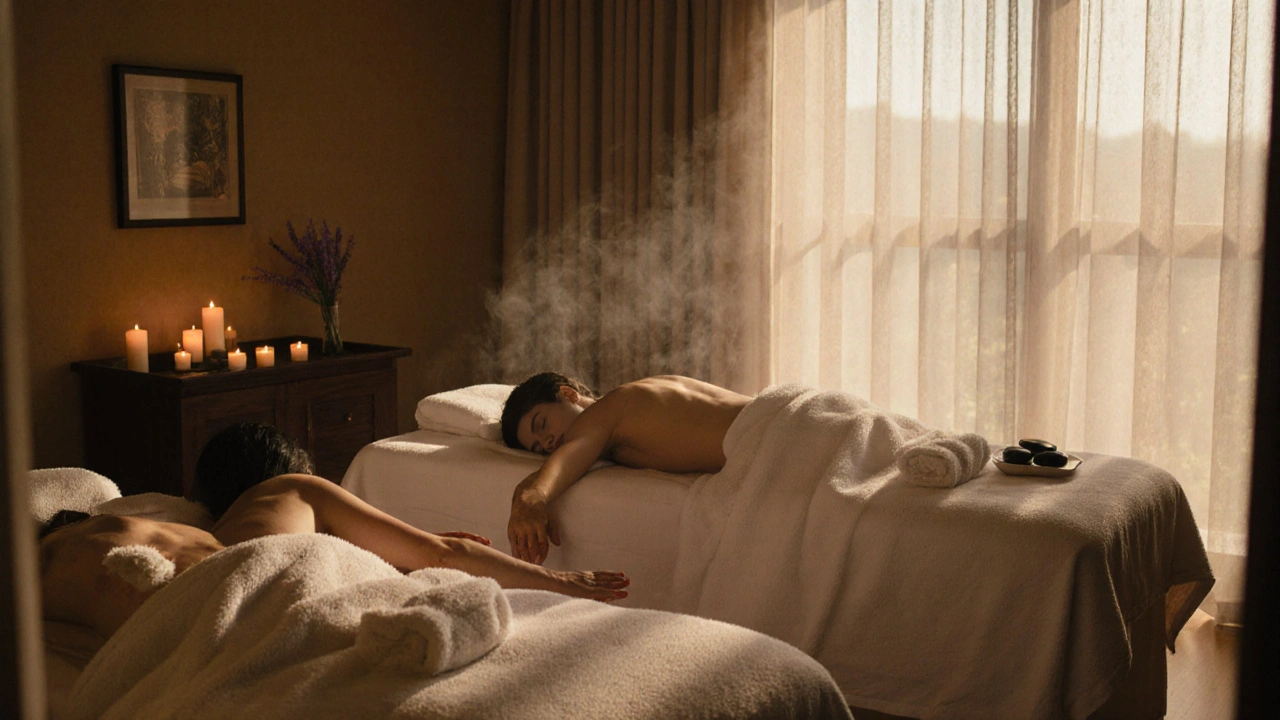
Imagine lying side by side with your partner, soft music playing, warm oil gliding over your skin, and the weight of the week melting away-not just for you, but for both of you at the same time. That’s the quiet magic of a couples massage. It’s not just two separate massages happening in the same room. It’s a shared experience that reconnects bodies, breaths, and emotions in a way few other activities can.
Why Couples Massage Feels Different
Most people think of massage as something you do alone-on a table, eyes closed, tuned out from the world. A couples massage flips that. You’re still relaxed, still in your own space, but you’re not alone. You hear your partner’s breathing. You feel the same warmth in the room. You catch each other’s eye when the therapist hits a tight spot. That subtle connection changes everything.
Studies from the University of Miami’s Touch Research Institute show that synchronized touch between partners lowers cortisol levels more than individual touch. When two people receive massage at the same time, their nervous systems start to sync. Heart rates slow together. Stress hormones drop faster. It’s not just relaxation-it’s co-regulation.
And it’s not about sex. It’s about presence. In a world where couples scroll past each other on their phones at night, a couples massage forces you to be still. To breathe. To be touched-not as a task, but as a gift.
What Happens During a Typical Session
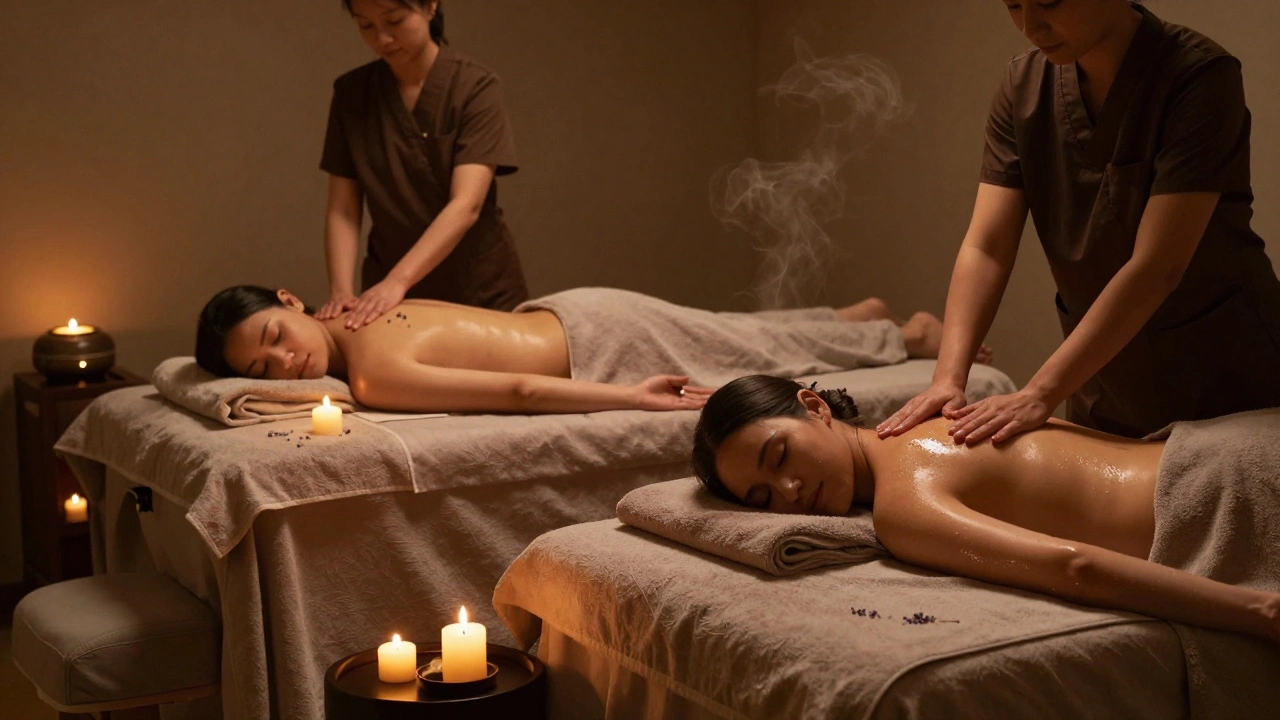
A standard couples massage lasts 60 to 90 minutes. You and your partner lie on side-by-side tables in a quiet, softly lit room. The temperature is warm, not hot. The scent of lavender or sandalwood lingers in the air. Two therapists work at the same time, matching rhythm and pressure so you both feel equally cared for.
Most sessions start with Swedish massage techniques-long, flowing strokes that ease surface tension. Then, depending on your needs, therapists might add:
- Deep tissue work on tight shoulders or lower backs
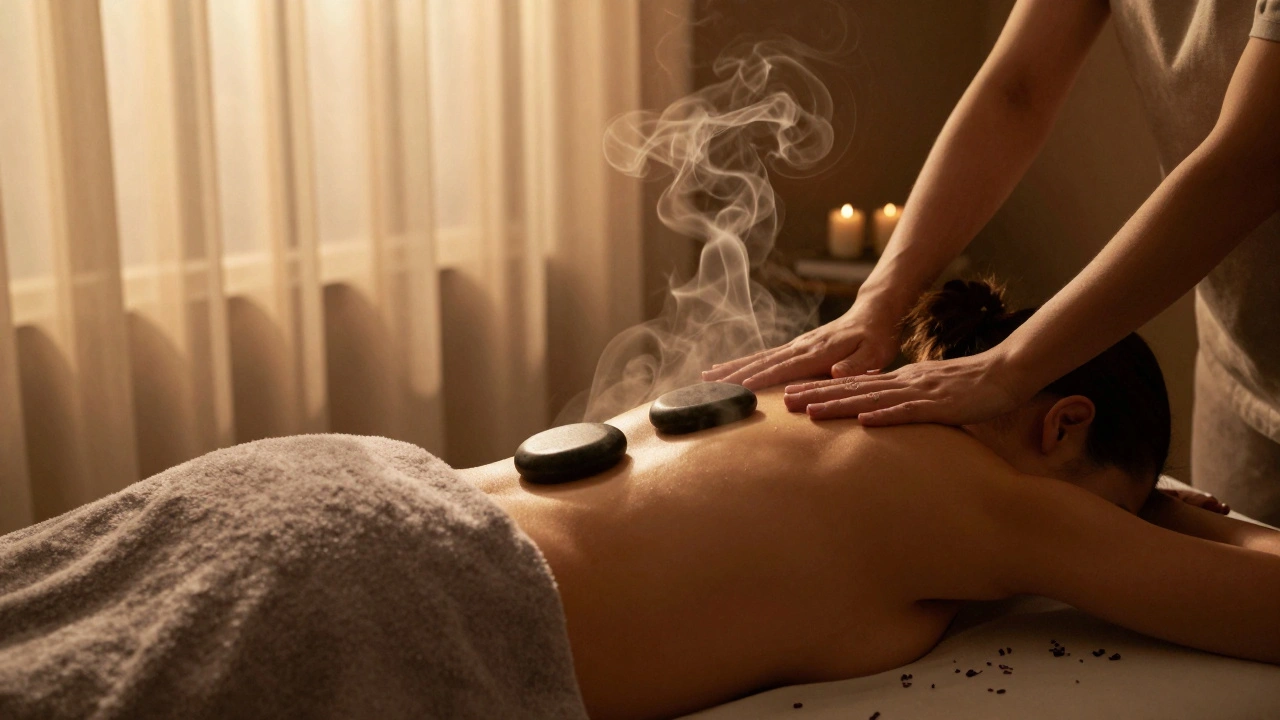
- Hot stone placement along the spine or calves
- Light aromatherapy using calming essential oils
- Gentle stretching or joint mobilization
You’re never forced into positions you’re uncomfortable with. If you prefer no face-down work, just say so. If you want more pressure on your hips, ask. The best therapists adjust on the fly.
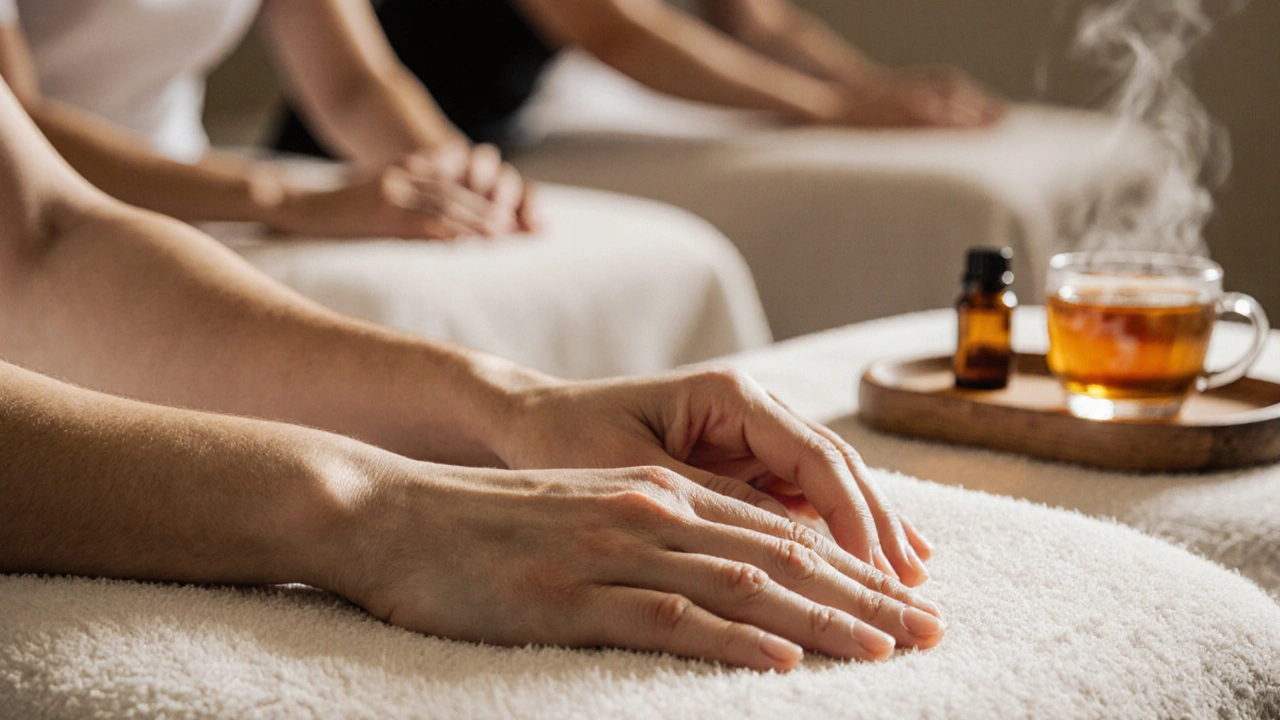
Some spas offer added touches-warm towels after the session, herbal tea, or even a short guided meditation together. These aren’t gimmicks. They extend the calm beyond the table.
Who Benefits Most From a Couples Massage
You don’t need to be in a perfect relationship to benefit. In fact, couples who are stressed, busy, or emotionally distant often get the most out of it.
- New parents-exhausted, wired, and barely touching each other-find it’s the first time in months they’ve both relaxed at once.
- Couples recovering from conflict-a massage creates neutral ground. No arguing, no fixing, just being together without words.
- Long-distance partners-when you reunite, a massage becomes a physical reconnection after weeks or months apart.
- Anniversary or birthday couples-it’s not a cliché if it works. It’s a ritual that says, ‘I see you. I care.’
Even platonic friends or siblings get value from it. Touch isn’t always romantic. Sometimes, it’s just about being held-without expectation.
What to Expect Before, During, and After
Before: Book together. Most places require both people to arrive at the same time. Arrive 15 minutes early to fill out a quick intake form. Tell the therapist if you have any injuries, sensitivities, or areas you want extra attention on. Don’t eat a heavy meal right before. A light snack is fine.
During: You’ll be draped with towels the whole time. Only the part being worked on is exposed. If you’re nervous about nudity, that’s normal. Most people feel awkward the first time. But the therapists are trained to make you feel safe. No one is judging. No one is watching. You’re in a cocoon of calm.
After: Drink water. Your body is flushing out toxins released during the massage. You might feel a little lightheaded at first-this is normal. Take your time getting up. Sit quietly. Hold hands. Don’t rush back to your phone. Let the calm settle in. Many couples report feeling closer for days after.
Common Myths About Couples Massage
Let’s clear up some noise.
- Myth: It’s a setup for something sexual. Truth: Professional spas have strict boundaries. Therapists are licensed and trained in ethics. Any inappropriate behavior is grounds for immediate termination-and legal action.
- Myth: It’s too expensive. Truth: A couples massage often costs only 20-30% more than two individual sessions. That’s less than a nice dinner out. And the emotional return? Priceless.
- Myth: You need to be in a romantic relationship. Truth: I’ve seen sisters, best friends, and even coworkers book it together. It’s about human touch, not romance.
- Myth: You’ll fall asleep and snore. Truth: You might drift off. But if you do, it’s not embarrassing. That’s the point.
How to Make the Most of Your Experience
Want to turn your couples massage from a nice treat into a meaningful ritual?
- Turn off your phones. Seriously. Leave them in the locker. If you’re tempted to check messages, ask yourself: What’s more important-this moment, or that email?
- Don’t talk about work, kids, or bills. Save it for later. This is your time to be still.
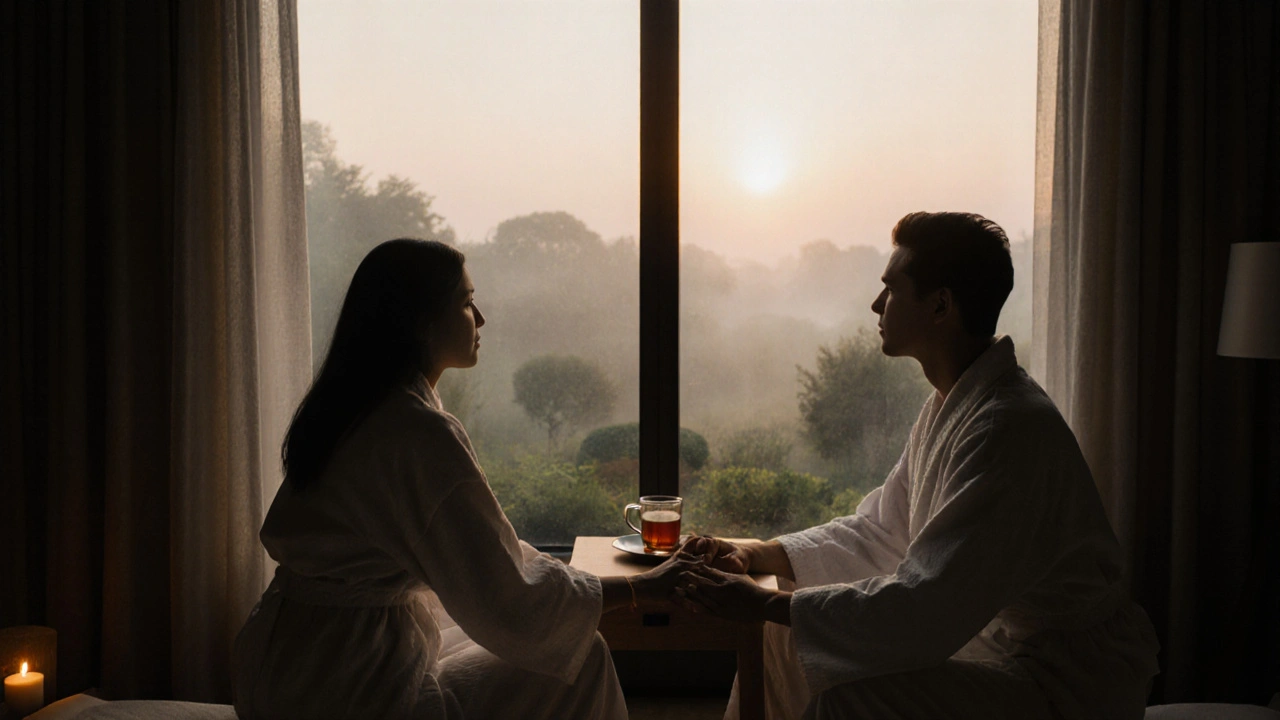
- Afterward, sit together in silence for 10 minutes. No need to fill the quiet. Let the calm sink in.
- Try to repeat it. Once a month is ideal. Even if it’s just a 30-minute session. Consistency builds connection.
- Bring a small gift-like a candle or tea blend you both liked. It turns the experience into a memory, not just a service.
Where to Find a Good Couples Massage
Not all spas are created equal. Look for places that specialize in couples sessions-not just ones that have two tables in the same room.
Check reviews for mentions of:
- Therapists who coordinate pressure and timing
- Private, quiet rooms (not open-plan spaces)
- Attention to detail-like warm towels, consistent temperature, and clean linens
In Bristol, places like The Sanctuary Spa and Harbour Wellness have built reputations for seamless couples experiences. But you don’t need to go big. Smaller, independent studios often offer more personalized care.
If you’re unsure, call ahead. Ask: ‘Do you have therapists trained specifically in synchronized couples massage?’ If they hesitate, keep looking.
What to Do If You’re Nervous
It’s okay to feel awkward. Touch can be vulnerable. If you’re nervous, try this:
- Book a shorter session first-30 minutes is enough to test the waters.
- Go with a friend instead of your partner. It’s a great way to ease into it.
- Bring a playlist of calming music. Some spas let you choose the soundtrack.
- Remember: You’re not being judged. You’re being cared for.
The first time is always the hardest. The second time? You’ll wonder why you waited so long.
Is a couples massage only for romantic partners?
No. While many couples book it for romantic reasons, it’s equally powerful for friends, siblings, or even parent-child pairs. The focus is on shared relaxation and gentle touch-not romance. Many people find it helps rebuild emotional bonds without needing to talk.
Can we talk during the massage?
You can, but most people find it’s more relaxing to stay quiet. If you need to say something-like adjusting pressure or needing a blanket-go ahead. But try to keep conversation minimal. The goal is to let your nervous system unwind, not engage your brain.
How often should we do a couples massage?
Once a month is ideal for most people to maintain the benefits. But even once every two months makes a difference. The key isn’t frequency-it’s consistency. Regular sessions help you build a habit of slowing down together.
Do we have to be naked?
No. You’ll be covered with towels at all times. Only the area being massaged is exposed, and therapists are trained to respect your comfort level. Most people wear underwear or shorts. Some prefer to be fully draped. It’s your choice-no pressure.
Is a couples massage worth the cost?
If you value connection, stress relief, and physical relaxation, then yes. A 60-minute session typically costs between £80-£120 for two people. That’s less than a restaurant meal with drinks-and the effects last days, not hours. Think of it as an investment in your relationship’s emotional health.
Andrew Cheng
November 2, 2025 AT 05:56I tried this with my brother after our mom passed. We didn’t talk much during the session, but afterward, we just sat there holding hands for twenty minutes. No words needed. I hadn’t felt that connected to anyone in years.
It’s not about romance. It’s about remembering you’re human, and touch matters.
leslie levin
November 3, 2025 AT 02:45OMG yes!! My partner and I did this for our 5th anniversary and I cried when we left. Not because it was sad-because for the first time in forever, I felt *seen*. No phones, no kids, no chaos. Just us and lavender.
Now we do it every birthday. Best. Tradition. Ever. 🙏
Theophilus Twaambo
November 4, 2025 AT 23:54Wait-so you’re telling me that two people lying on tables, in the same room, receiving identical treatments, somehow experience ‘co-regulation’? That’s not science-that’s pseudoscientific fluff wrapped in spa-speak! The University of Miami? They’ve published studies on ‘touch therapy’ improving turtle growth rates! And ‘cortisol levels drop faster’? With what control group? The placebo group was probably just napping in a warm room with candles! Where’s the double-blind study?!
Peter Jones
November 5, 2025 AT 09:47While I appreciate the emotional framing, the clinical references here lack specificity. The Touch Research Institute has indeed studied synchronized touch-but their 2012 study on couples’ cortisol levels had a sample size of 24, and the effect was marginal after adjusting for baseline anxiety levels.
Also, the claim that ‘heart rates slow together’ implies entrainment, which requires continuous physiological monitoring-not just anecdotal reports. I’d love to see the actual data before accepting this as more than a pleasant metaphor.
Douglas McCarroll
November 5, 2025 AT 12:07Hey, I get where Theo’s coming from-but let’s not throw the baby out with the bathwater. Even if the science is still evolving, the lived experience is real. I’ve seen clients-parents of twins, veterans with PTSD, caregivers for aging parents-come in exhausted and leave with a lightness they haven’t felt in years.
It’s not about proving cortisol levels. It’s about giving people permission to stop performing. To just be. And that? That’s healing, whether the lab confirms it or not.
Jennie Magalona
November 5, 2025 AT 12:38There’s something deeply ancestral about synchronized touch. In hunter-gatherer societies, communal grooming wasn’t just hygiene-it was bonding, safety, and emotional regulation encoded in ritual. A couples massage is a modern echo of that.
We’ve lost so much of our tactile culture-handshakes replaced by thumbs-up, hugs replaced by emojis. This isn’t a spa gimmick. It’s a reclamation. We’re wired for touch. And when we deny it, we starve ourselves.
Also, the part about not talking? Genius. We’ve been trained to fix, solve, explain. But sometimes, presence is the only language that heals.
Aashish Kshattriya
November 6, 2025 AT 00:04Spas are government mind control. They use lavender to lower your resistance. Next thing you know, you’re holding hands with your partner and voting for the wrong party. Also, therapists are trained to make you feel safe? Yeah, right. They’re just waiting for you to drop your guard.
Laura Fox
November 6, 2025 AT 13:40It is, of course, an ontological fallacy to conflate physiological relaxation with relational intimacy. One may experience decreased sympathetic activation during a massage, but this does not equate to emotional bonding, which requires intentional reciprocity, linguistic articulation, and mutual vulnerability-none of which are inherent to passive tactile stimuli.
Furthermore, the romanticization of touch as a panacea for modern alienation is a symptom of late-capitalist commodification of affective labor. One is, in essence, purchasing the illusion of connection.
Gordon Kahl
November 6, 2025 AT 17:18So let me get this straight… you pay $100 to lie next to your boo while some stranger rubs your butt with oil… and now you’re ‘reconnected’? Bro. You didn’t reconnect. You just got a fancy nap.
Next you’ll tell me that crying during a TikTok ad means you’ve healed your inner child.
Jillian Angus
November 7, 2025 AT 13:24Have you ever wondered why every couples massage ad features soft lighting and identical tables? It’s not about connection-it’s about control. They want you to feel safe so you don’t notice that the therapists are subtly mirroring your body language to manipulate your emotional state.
And don’t get me started on the ‘lavender’-it’s laced with phthalates. They’re not calming you-they’re sedating you. The ‘co-regulation’? That’s just your nervous system syncing with the spa’s subliminal playlist. You’re not healing. You’re being programmed.