Why Londoners Are Raving About Thai Massage

The Morning Commute Cure
If you've ever squeezed onto the Piccadilly Line at 8:15 AM, shoulder crunched against a stranger, your spine feels like a coiled spring waiting to snap. By 6 PM, after navigating cycle lanes that cut through Shoreditch or sitting behind a desk in Canary Wharf, that tension has solidified. This isn't just tiredness; it's the physical signature of London life. Lately, however, there's a different sound coming out of the wellness clinics in Fitzrovia and Notting Hill. It's quieter, rhythmic, and accompanied by the distinct stretch of limbs rather than just the glide of oil.
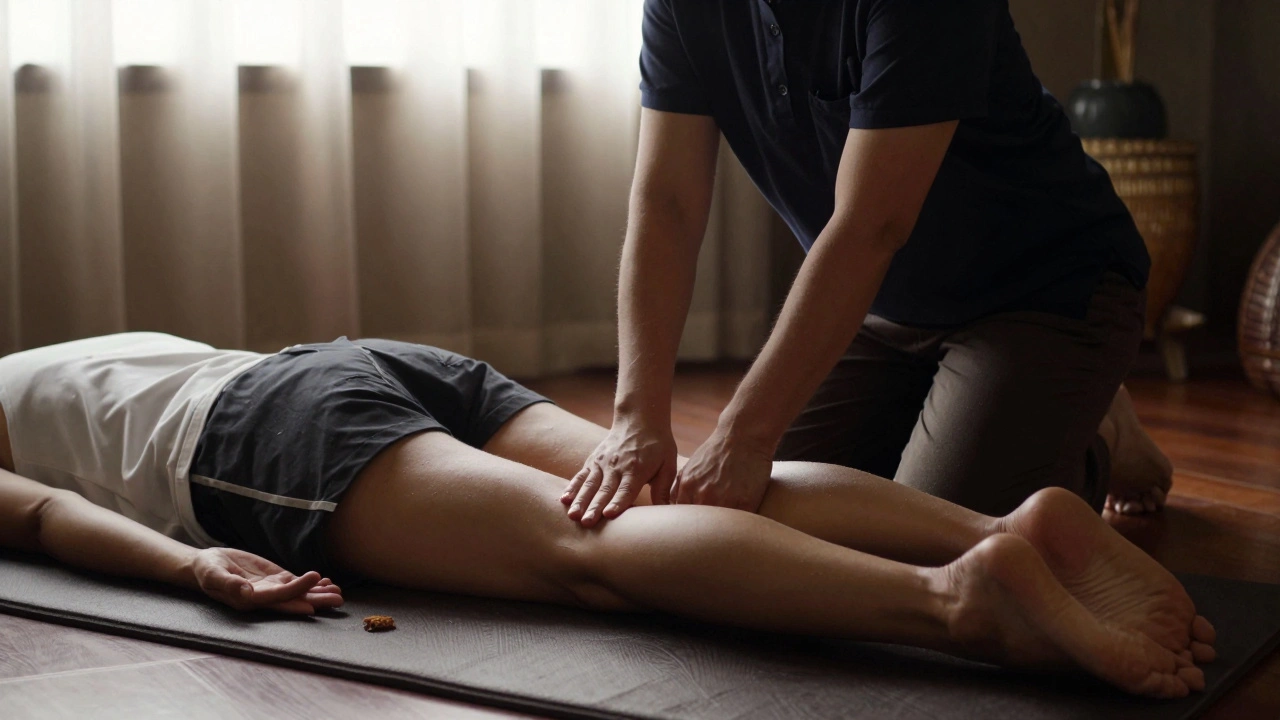
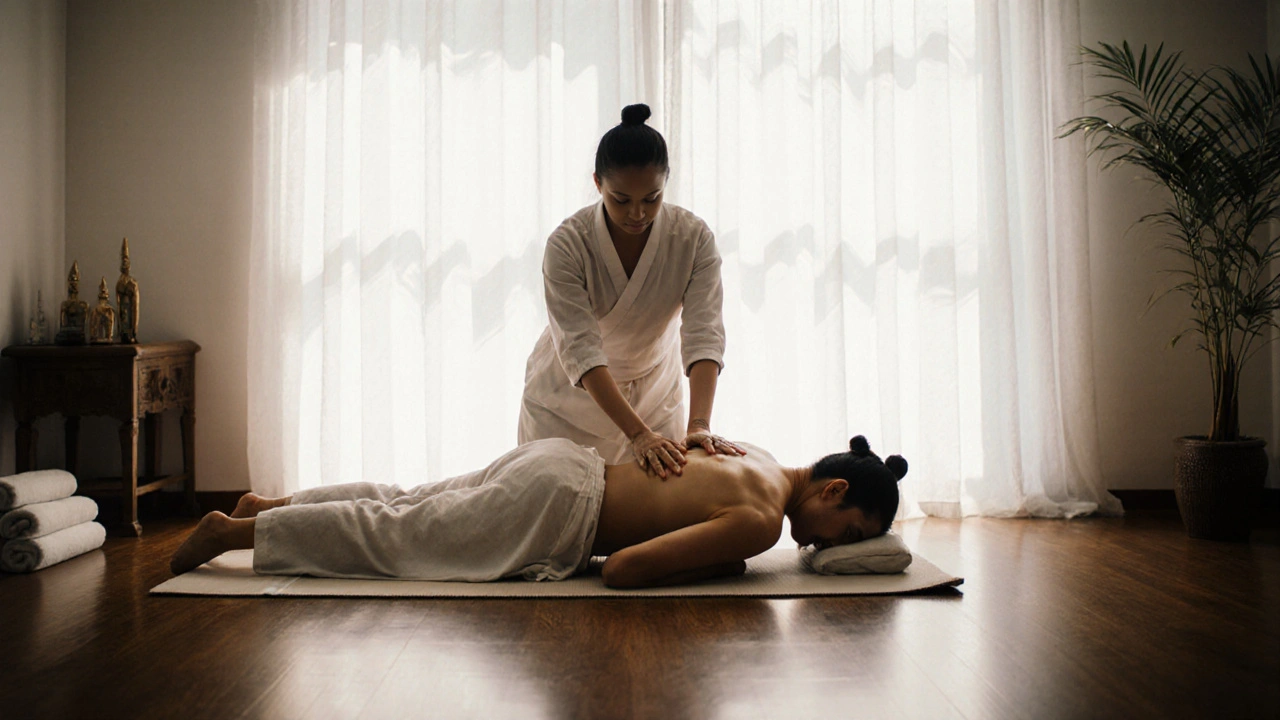
Thai massage is an ancient healing art that combines acupressure, Indian Ayurvedic principles, and assisted yoga postures. Unlike Western modalities, it is performed fully clothed on a firm mattress on the floor. Practitioners use their hands, knees, legs, and feet to move you into positions that stretch and align the body.This shift towards Thai massage in the capital isn't just about following a trend. It is a specific response to the unique problems facing our city population today. While we used to chase deep tissue fixes for chronic knots, Londoners are increasingly realizing that the root of the problem often lies in immobility. We sit on trains, drive through congestion zones, and type at screens for ten hours a day. Our bodies are shrinking into static shapes. Traditional oil massage relaxes the muscle fibers, but Thai massage actively expands the range of motion. It forces the stiff parts of your body to open up again.
More Than Just a Rubdown
You might assume this is just another variation of a deep tissue session where they press harder. It isn't. The core philosophy is rooted in the concept of Sen Lines, which are essentially pathways of energy similar to meridians in Chinese medicine. In London clinics specializing in this technique, therapists focus on mapping these lines. A therapist doesn't just wait for you to come in; they treat the whole structural system. If your hip flexors are tight from commuting by car, they will target those specific trigger points first, even if you asked them to work on your back.
The interaction between practitioner and client is intimate but professional. You remain fully clothed in loose-fitting clothes, usually supplied by the salon. You lie on a mat on the floor. The therapist moves you. They pull your arm over their shoulder like a lever. They walk down your back using their body weight rather than just finger strength. This makes it physically demanding for both parties. For the recipient, it feels like an assisted yoga class where you have no control, yet total surrender. For the provider, it requires years of training to execute safely, ensuring they don't overstretch a vulnerable joint. That balance is what creates the magic.
The Londoner's Lifestyle Problem
Why does this particular modality fit our city so well? Consider the average daily routine here. The average resident walks roughly 3.2 miles a day, mostly indoors or across pavement, followed by six hours of sedentary work. This creates a specific pattern of shortening in the anterior chain-the front of the body. Your pectorals tighten, your lower back rounds forward, and your hamstrings shorten.
A standard Swedish massage might lubricate the muscles, but it rarely corrects the posture that caused the tension. Thai massage acts as corrective alignment. Cyclists love it because it releases the IT band and glutes compressed by pedaling. Tech workers love it because the neck stretches relieve the "tech neck" compression. It bridges the gap between passive relaxation and active rehabilitation. When you leave the clinic, you aren't just sleepy; you are often taller, literally. The spinal decompression achieved through the inversion stretches allows the vertebrae to separate slightly, relieving pressure on the nerves.
Understanding the Sensation
Newcomers often wonder if the experience hurts. It should feel intense, sometimes pushing past a mild discomfort barrier, but never sharp pain. The sensation comes from the friction and the pressure applied to the soft tissue, combined with the pull of gravity when you are inverted. Imagine someone gently walking a path in your shoulders while simultaneously lifting your arms above your head until you feel a deep stretch along your triceps. Then they might press into your inner thigh with an elbow to release the hip rotators.
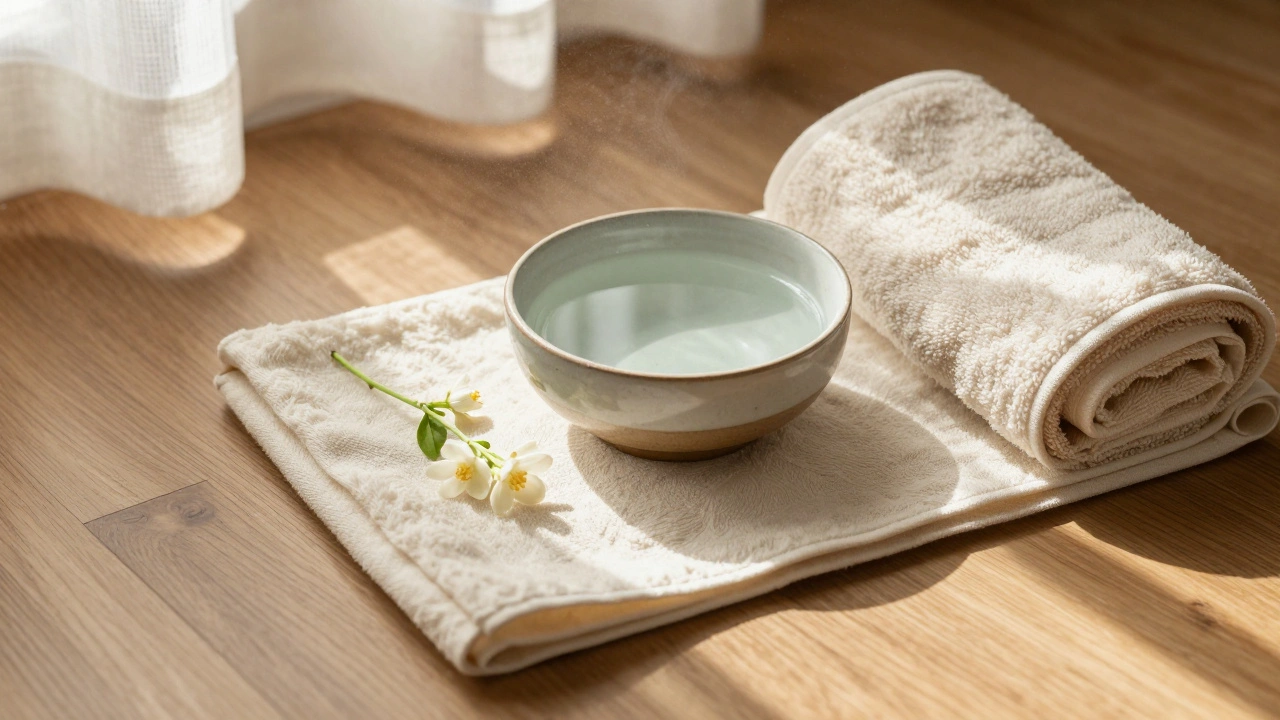
There is also an auditory element. Good London studios avoid the typical pop music found in some generic chains. Instead, they utilize ambient sounds-wind chimes, water bowls, or traditional Khmer instruments. This signals the nervous system to shift from a sympathetic (fight or flight) state to a parasympathetic (rest and digest) state. Since many clients arrive with cortisol levels through the roof, this auditory environment works in tandem with the physical manipulation to lower blood pressure.
How It Compares to Other Modalities
To understand the value proposition, we need to look at how this differs from the standard offerings in high street spas. Here is a breakdown of how it stacks up against common alternatives available in London:
| Feature | Thai Massage | Swedish Massage | Deep Tissue |
|---|---|---|---|
| Clothing | Fully clothed (loose) | Nude under sheets | Nude under sheets |
| Surface | Floor mat (firm) | Adjustable bed (soft) | Adjustable bed (medium) |
| Technique | Passive stretching & Acupressure | Long strokes & kneading | Slow friction & stripping |
| Primary Goal | Mobility & Energy Flow | Relaxation & Circulation | Tension Release & Correction |
| Client Activity | Active movement (assisted) | Passive rest | Passive rest |
Notice the distinction in the "Client Activity" column. While other forms require you to stay still, Thai massage demands you engage with the movement, even if it's passive engagement. If you have an injury requiring absolute stillness (like a fresh fracture), this isn't the choice. But for general maintenance and longevity of the joints, the data suggests it keeps tissues pliable longer than oil-based therapies alone.
What to Bring to a Session
When you book a slot at a reputable establishment in central London, preparation matters. Most places provide pants and t-shirts, but if you prefer your own gear, bring loose tracksuit bottoms and a loose top. Avoid restrictive clothing like skinny jeans or belts with metal buckles; the therapist needs access to your limbs, and metal buckles digging into the floor won't help your comfort. Also, arrive fifteen minutes early. It sounds obvious, but rushing from the Tube directly into a session spikes adrenaline, fighting the relaxation process. Drink water before you leave home. The treatment flushes toxins from the fascia, and staying hydrated helps minimize that post-session headache some people get.
Be vocal about your limitations. If you have a history of shoulder dislocation or bad knees, tell the therapist during the consultation. A skilled practitioner will modify the sequence immediately. They will skip the full split or reduce the inversion angle. There is no shame in saying "hold back" during a session. A quality therapist checks in regularly anyway, asking if the pressure level feels sustainable. This dialogue is part of the protocol.
Safety and Contraindications
Like any physical therapy, there are risks if done incorrectly or on the wrong person. If you are pregnant, you must specify this in your booking. While some pregnancy-specific Thai massages exist, the aggressive inversions of a standard treatment are unsuitable for late-term pregnancy. Those with recent surgery or severe osteoporosis should exercise extreme caution or opt for milder alternatives like lymphatic drainage. The pressure involved can bruise easily bruising skin, especially if you take blood thinners.
In London, the regulatory landscape for massage therapists varies. There is no mandatory licensing by law, which means standards depend heavily on the clinic's reputation. Check reviews specifically mentioning the "authenticity" of the technique. Some places label their treatment as "Thai-style" but are actually just giving standard deep tissue on a mat with music. Look for keywords like "Traditional," "Medical Thai Massage," or specific school names (like Wat Pho certification) in the description. Authenticity ensures safety and efficacy.
Questions You Might Have Left
As this practice gains traction across the boroughs, several questions keep popping up regarding suitability and logistics.
Is Thai massage stronger than a normal sports massage?
It depends on how you define strength. A Thai massage uses more leverage and body weight to stretch muscles deeply, which can feel more intense than friction techniques. However, a good sports massage can be incredibly forceful on trigger points. Both are effective but differ in their mechanical approach.
Do I need to tip the therapist in London?
Tipping is not mandatory but is appreciated if the service was exceptional. Usually, 10% to 15% is standard practice in private clinics. Some larger spas may include a service charge automatically on the bill.
Can I book Thai massage if I'm feeling sick?
It is generally advised to reschedule if you have a fever, flu-like symptoms, or contagious illness. The close contact and vigorous movements can spread infection and make recovery slower for both you and the therapist.
How often should I go for maintenance?
For high-stress office environments, once every two weeks provides the best balance of releasing cumulative tension without breaking the bank. Monthly sessions are sufficient for general mobility maintenance.
Is it safe during menstruation?
You can receive a treatment, though it is best to inform the therapist beforehand. They should avoid applying heavy pressure directly to the abdomen or lower back area during the first few days of your cycle.
Final Thoughts on City Wellness
The surge in popularity isn't accidental. As London continues to evolve into a concrete jungle where outdoor space shrinks and digital demands grow, we crave remedies that reconnect us with our biology. We need to know where our center of gravity is, and how far our limbs can truly reach. This ancient practice offers a reset button for a very modern machine. Whether you are running a marathon in Hyde Park or staring at spreadsheets in the City, the logic holds. The investment isn't just in time or money; it's in reclaiming your range of motion before the years add up. If you haven't tried it yet, consider stepping out of the oil bath routine. Give the floor mat a chance to work its magic.