Does Indian Head Massage Include the Face? Here's What Really Happens
When you hear "Indian head massage," you might picture someone sitting quietly while their scalp gets rubbed. But here’s the question most people don’t ask until they’re already on the table: Does Indian head massage include the face? The answer isn’t simple - and it’s not the same everywhere. Some therapists skip the face entirely. Others treat it like an essential part of the session. So what’s real? And why does it matter?
Where Indian Head Massage Comes From
Indian head massage, or champi, isn’t just a spa trend. It’s rooted in Ayurveda, the 5,000-year-old system of healing from India. Traditionally, it was done daily in households - mothers massaging their children’s heads before bed, or elders treating each other after long days of work. The focus was always on the head, neck, shoulders, and upper back. But the face? That wasn’t ignored. It was part of the flow.
In rural India, the full treatment included the forehead, temples, jawline, and even the cheeks. The pressure was light but deliberate, using the pads of the thumbs and fingertips. Why? Because Ayurveda sees the head as a map of the body’s energy points - and the face holds key connections to the eyes, sinuses, and nervous system. Pressing the temples, for example, isn’t just relaxing - it’s meant to ease tension that builds from staring at screens, squinting in sunlight, or clenching your jaw during stress.
What’s Actually Covered in a Typical Session
Today, Indian head massage in Western spas often gets simplified. Most sessions last 30 to 45 minutes and focus on:
- Scalp - using circular motions to stimulate blood flow
- Forehead - gentle strokes from the center out to the temples
- Behind the ears - light pressure to release tension in the jaw
- Neck and shoulders - deep kneading to relieve stiffness
- Upper back - sometimes included, especially if the client is seated
Nowhere on that list is the face. But here’s the catch: the forehead and temples are part of the face. And in many traditional practices, the massage doesn’t stop there. If your therapist is trained in authentic Ayurvedic methods, they’ll likely move down to the cheeks, under the eyes, and along the jawline - especially if you’ve mentioned headaches, sinus pressure, or tension in your facial muscles.
So why do some therapists leave it out? Two reasons: training and client comfort. Many certification courses in Europe or North America focus on the scalp and neck because clients often feel uncomfortable with facial touch. Others simply don’t know the full tradition. But if you’re looking for the complete experience - the one that actually mimics what’s done in India - you need to ask.
Why the Face Matters in This Massage
Ignoring the face means missing out on half the benefits. Here’s what happens when you include it:
- Reduces sinus pressure - Massaging the bridge of the nose and cheekbones helps drain fluid buildup, which can cut down on headaches and stuffiness.
- Improves skin tone - Gentle stimulation increases circulation, bringing oxygen to the skin. This isn’t a skincare treatment, but many people notice a natural glow after a few sessions.
- Releases jaw tension - If you grind your teeth or chew gum constantly, your masseter muscles get tight. A therapist using thumb pressure along the jawline can release this without needing a dental appliance.
- Calms the nervous system - The face is packed with nerves that connect directly to the brain. Light pressure on the temples and around the eyes triggers the parasympathetic response - your body’s "rest and digest" mode.
One client in Melbourne, who comes in every two weeks for stress relief, told me she used to get migraines every Monday. After adding facial work to her Indian head massage, her headaches dropped from three a month to one every six weeks. She didn’t change her sleep, diet, or caffeine - just the massage.
How to Know If Your Therapist Includes the Face
Not all Indian head massage is the same. Here’s how to find out what you’re getting:
- Ask before the session - Don’t assume. Say: "Does this include the face, forehead, and jaw?" If they hesitate or say "usually not," they’re probably not trained in the full method.
- Look at their training - Therapists who studied in India or with Ayurvedic schools (like the ones in Kerala or Varanasi) are more likely to include facial work. Those who took a 2-day online course might not.
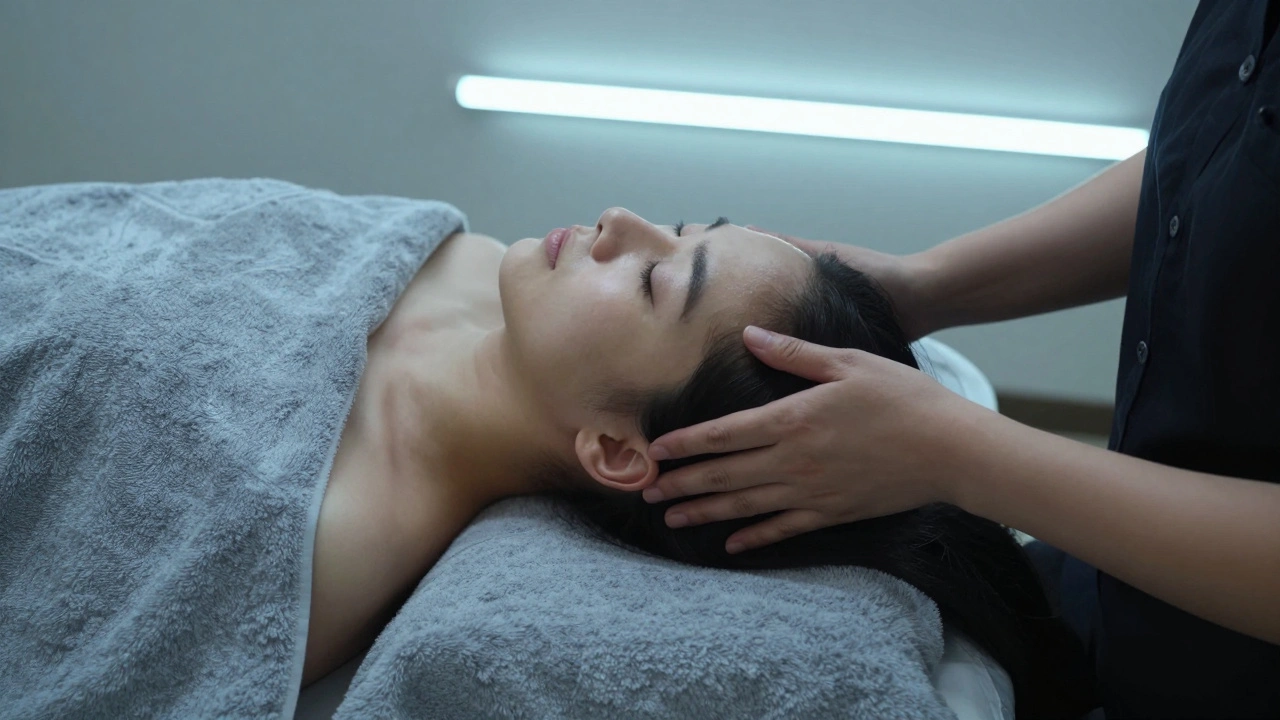
- Watch their hands - If they only touch the scalp and neck, they’re doing a partial version. If their fingers glide down your cheeks, press under your eyes, or stroke your jawline - that’s the full treatment.
- Check the price - A 30-minute session that includes the face should cost more than one that doesn’t. If it’s the same price, ask why.
Some places list "facial enhancement" as an add-on. That’s a red flag. In traditional Indian head massage, the face isn’t an extra - it’s part of the whole.
Who Should Avoid Facial Work
Not everyone should get facial massage. Avoid it if you have:
- Active acne or open sores on your face
- Recent facial surgery or dental work (wait at least 2 weeks)
- Severe rosacea or skin sensitivity
- Recent Botox or fillers (wait 4-6 weeks)
If you’re unsure, talk to your therapist. A good one will adjust pressure or skip the face entirely without making you feel like you’re missing out.
What to Expect During the Session
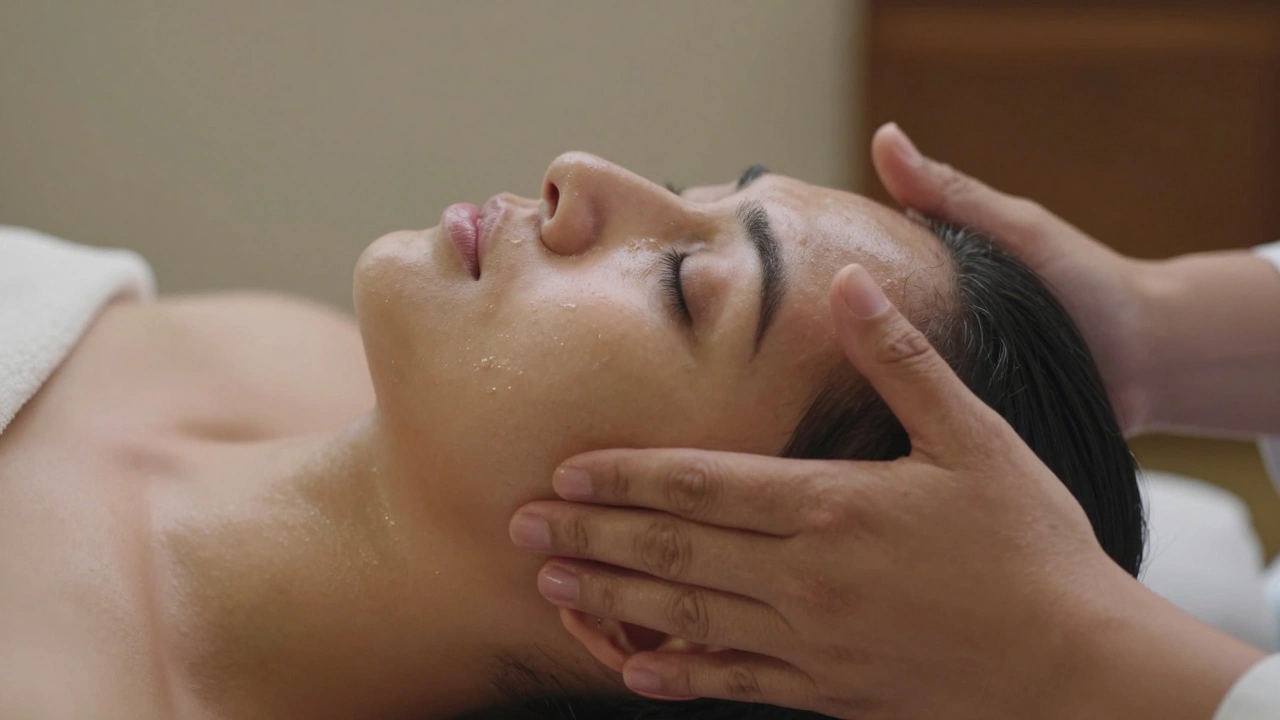
If your therapist includes the face, here’s what happens:
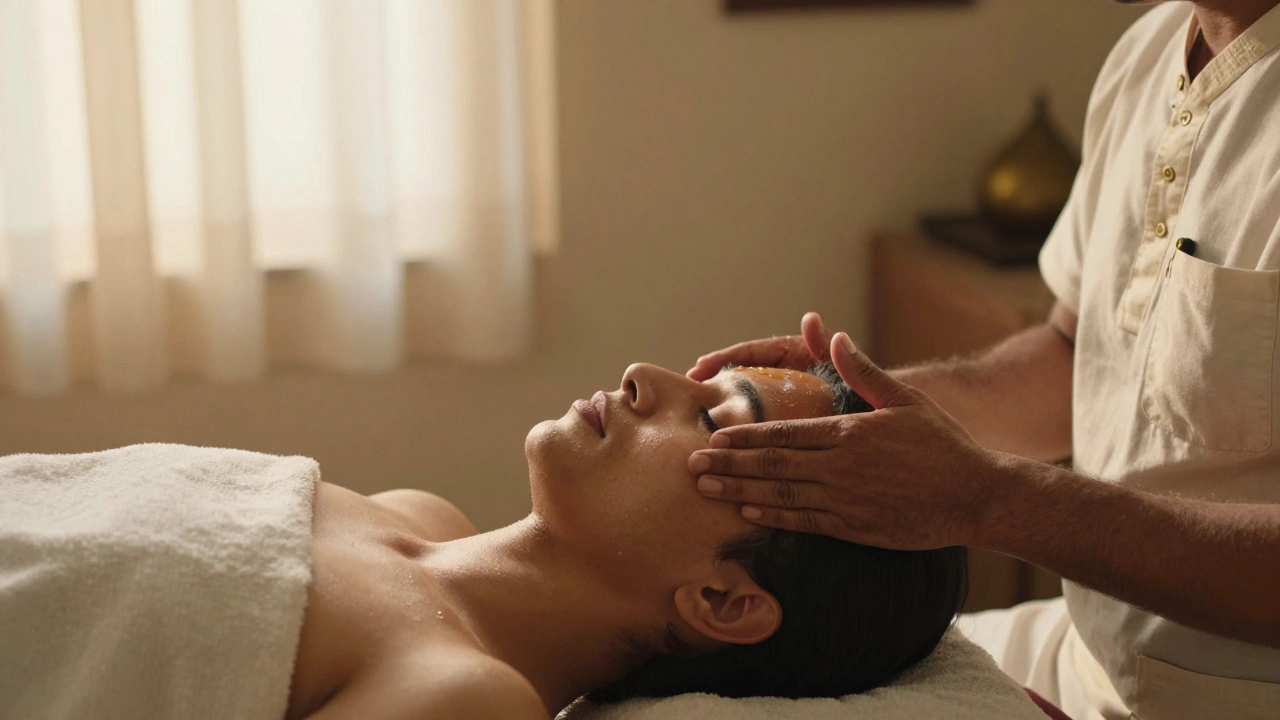
- Forehead - Slow, circular strokes from the center to the temples. This feels soothing, not ticklish.
- Temples - Gentle pressure with the thumbs. Not deep - just enough to release tension.
- Eyes - Fingertips lightly trace under the orbital bone. No pressure on the eyeball. Just enough to ease eye strain.
- Cheeks - Light upward strokes toward the ears. This helps lymphatic drainage.
- Jawline - The therapist uses the side of their hand to glide from the chin to the ear. This loosens tight muscles.
The whole face part takes about 5-7 minutes. It’s not rushed. You’ll feel your muscles soften. Some people even fall asleep during this part.
How Often Should You Get It
For stress relief or headaches: once a week.
For general wellness: every two weeks.
For chronic tension (jaw clenching, sinus issues): once a week for 4 weeks, then every two weeks.
Most people notice changes after just one session - especially if the face is included. The difference between a scalp-only massage and one that covers the face is like the difference between drinking water and eating a full meal.
DIY Tip: Can You Do It Yourself?
You can’t fully replicate a professional massage, but you can mimic the facial part at home. Use your index and middle fingers. Apply oil (coconut or almond works well). Gently press your temples for 30 seconds. Stroke your jawline from chin to ear 10 times. Press under your eyes, moving outward. Do this for 5 minutes before bed. It won’t replace a session, but it helps.
Does Indian head massage include the face?
It can - but it doesn’t always. Traditional Indian head massage (champi) includes the forehead, temples, cheeks, and jawline as part of the full treatment. However, many Western spas simplify the session to focus only on the scalp, neck, and shoulders. If you want the face included, ask your therapist directly before the session.
Why is facial work part of Indian head massage?
In Ayurveda, the face is connected to key energy points that affect sinuses, eyes, and the nervous system. Massaging the forehead, temples, and jaw helps release tension, improve circulation, reduce headaches, and calm the mind. It’s not just about relaxation - it’s about restoring balance in the body’s energy flow.
Is facial massage in Indian head massage the same as a facial treatment?
No. A facial treatment uses cleansers, exfoliants, masks, and serums to improve skin appearance. Indian head massage with facial work uses pressure and strokes to release muscle tension and stimulate nerves. It’s therapeutic, not cosmetic. You won’t get glowing skin from one session - but you might feel less tension in your jaw and fewer headaches.
Can I get Indian head massage if I have acne on my face?
If you have active acne, open sores, or recent breakouts on your face, it’s best to skip the facial portion. The therapist can still focus on your scalp, neck, and shoulders. Touching irritated skin can worsen inflammation or spread bacteria. Always tell your therapist about skin conditions before the session.
How long should a full Indian head massage with face last?
A complete session that includes the face should last between 45 and 60 minutes. If it’s shorter - say 30 minutes - the face is likely left out. A 45-minute session with facial work typically includes 5-7 minutes dedicated to the forehead, cheeks, jaw, and temples.
If you’ve been getting Indian head massage and never felt the full effect, it might be because the face was left out. Don’t settle for half the benefits. Ask. Specify. And if your therapist doesn’t include it - find one who does. Your jaw, your sinuses, and your stress levels will thank you.