
How to Choose the Right Body Massage for Your Needs
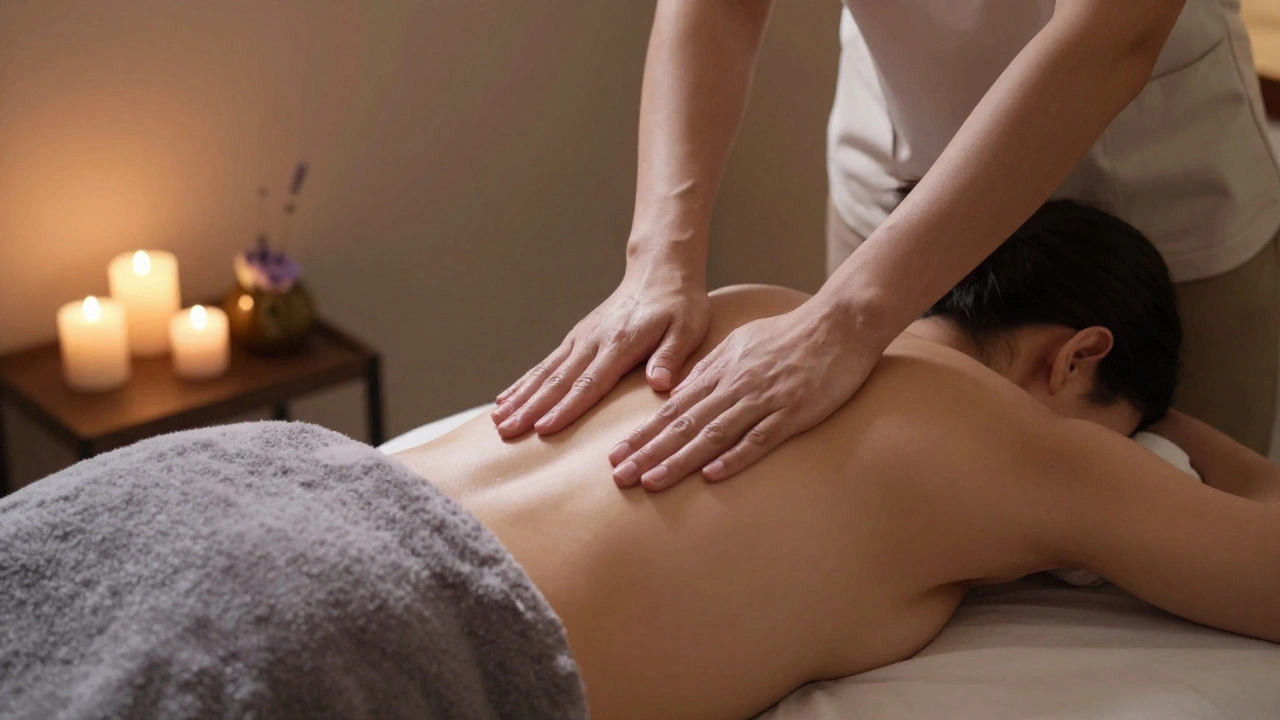
Not all body massages are the same. What feels like pure relaxation to one person might leave another feeling sore, overwhelmed, or even worse. If you’ve ever walked into a spa unsure whether you need a deep tissue reset or a gentle Swedish flow, you’re not alone. The right massage isn’t about what’s popular-it’s about what your body actually needs right now.
Start by asking yourself: What are you trying to fix?
Before you pick a massage style, pause and check in with your body. Are you carrying tension in your shoulders from sitting at a desk all day? Do your hips ache after long walks? Are you recovering from a workout? Or are you just feeling mentally drained and need to unwind?
These aren’t just vague feelings-they’re signals. Each one points toward a different kind of massage. For example, if your muscles feel tight and knotted after lifting weights or running, you likely need something that targets deeper layers. If you’re stressed, anxious, or just need to slow down, a lighter touch might do more good than pressure.
There’s no point in booking a hot stone massage if your goal is to relieve lower back pain from sitting too long. And you won’t get much relief from a deep tissue session if your body is already inflamed or sore from overtraining. Match the technique to the symptom.
Swedish massage: The gentle reset
Swedish massage is the most common type you’ll find in spas. It uses long, flowing strokes, light kneading, and circular movements. It’s not meant to break up deep knots-it’s meant to calm your nervous system.
If you’re dealing with stress, trouble sleeping, or just need to feel lighter after a rough week, Swedish is your go-to. It increases blood flow, reduces cortisol levels, and helps your body shift out of fight-or-flight mode. Studies show it can lower heart rate and blood pressure within minutes.
People who work in high-pressure jobs, caregivers, or anyone recovering from illness often benefit most from this style. It’s not about fixing pain-it’s about restoring balance.
Deep tissue massage: For chronic tension and pain
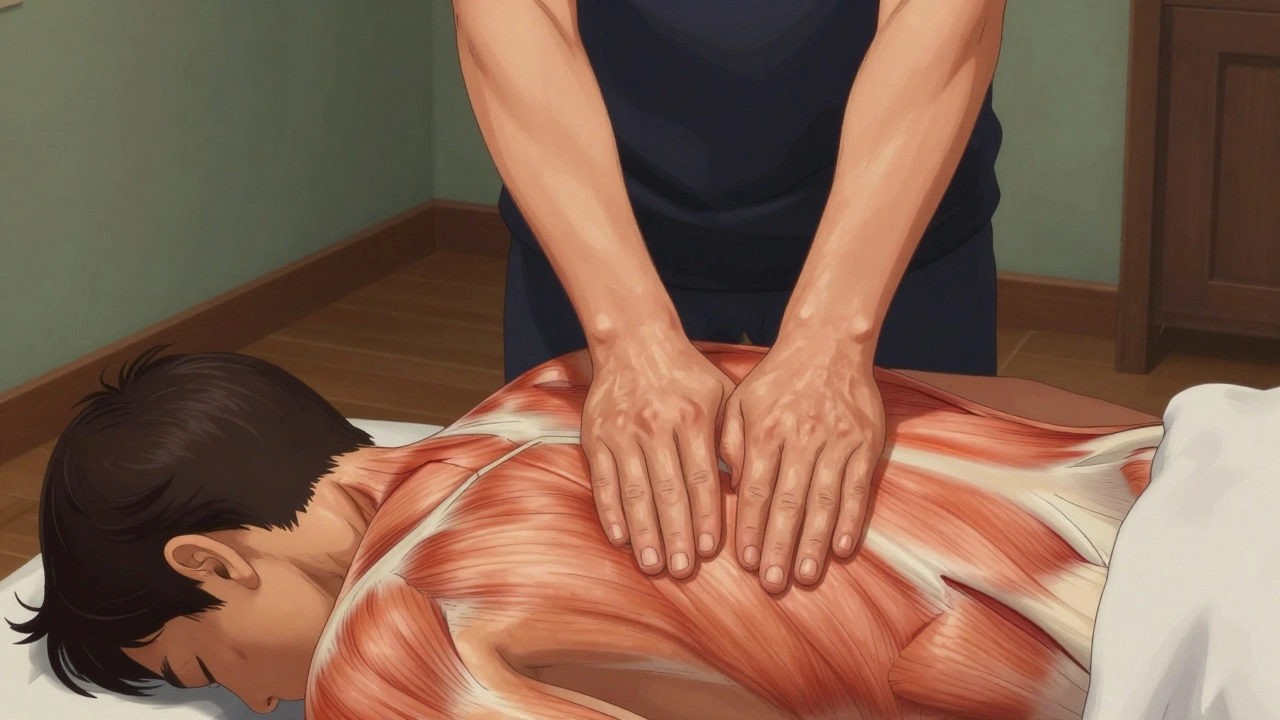
Deep tissue massage uses slower, firmer pressure to reach the deeper layers of muscle and connective tissue. It’s not just "stronger Swedish." It’s targeted. Therapists use elbows, forearms, and knuckles to break up adhesions-those sticky spots where muscle fibers have glued together from overuse or injury.
This isn’t for beginners or people with acute injuries. If you’ve got chronic lower back pain, stiff neck from computer work, or tight hamstrings from running, this can help. But it’s not a one-time fix. Most people need 3-6 sessions spaced over weeks to see lasting change.
Expect some soreness afterward. That’s normal. But if you feel sharp pain during the session, speak up. Good therapists adjust pressure based on feedback, not a fixed intensity.
Hot stone massage: Warmth that melts tension
Hot stone massage uses smooth, heated basalt stones placed along your spine, in your palms, or between your toes. The heat penetrates deep into muscles, helping them relax before the therapist even begins massaging.
This works especially well for people with poor circulation, stiff joints, or muscle tension that doesn’t respond to pressure alone. The warmth helps blood flow, reduces stiffness, and creates a meditative state that’s hard to achieve with touch alone.
It’s ideal for winter months or if you’re always cold. People with arthritis or fibromyalgia often report better mobility after a session. But avoid it if you have sensitive skin, diabetes, or high blood pressure-heat can be risky in those cases.
Thai massage: Active stretching meets pressure points
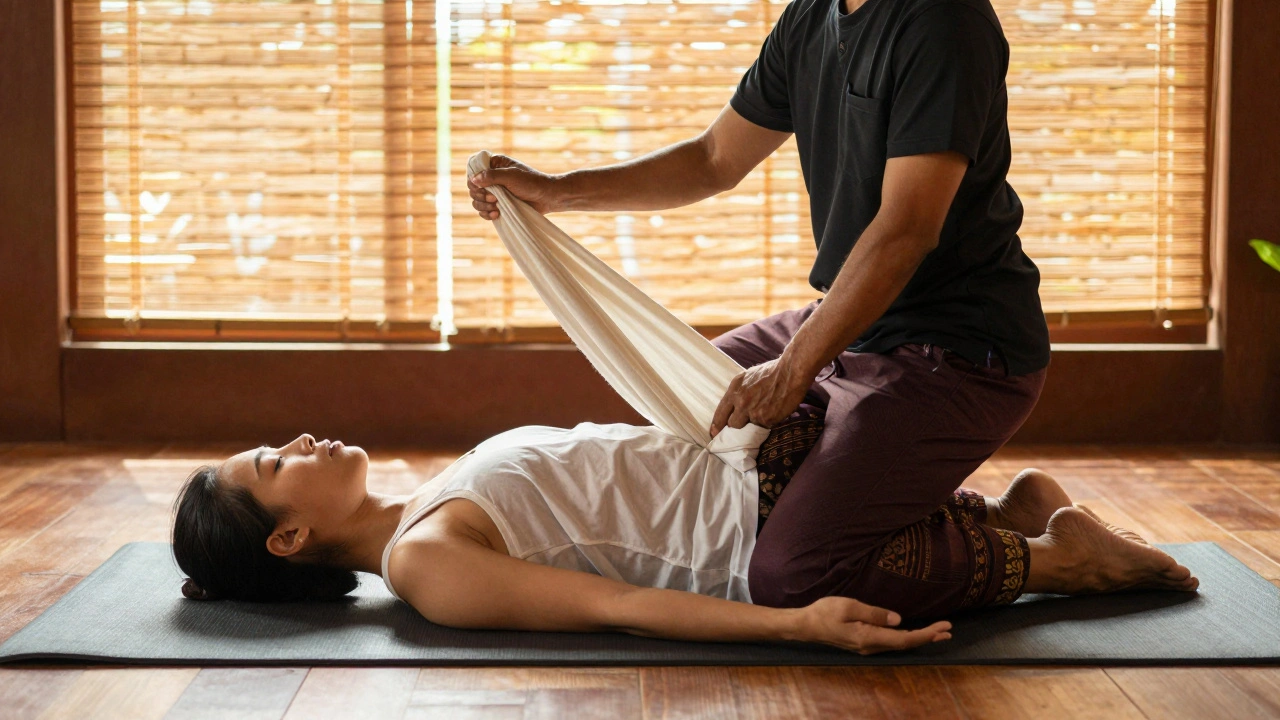
Thai massage is different. You stay fully clothed, lying on a mat on the floor. The therapist uses their hands, feet, knees, and elbows to guide you through yoga-like stretches while applying rhythmic pressure along energy lines.
This isn’t just a massage-it’s a full-body mobilization. It improves flexibility, relieves joint stiffness, and boosts energy. If you sit all day and feel like your body has rusted, Thai massage can wake you up.
It’s intense. Some people find it uncomfortable at first. But if you’re looking to increase range of motion or break free from postural habits, it’s one of the most effective options.
Sports massage: For movement, not just relaxation
Sports massage isn’t just for athletes. It’s for anyone who moves their body regularly-whether that’s walking 10,000 steps a day, gardening, dancing, or lifting groceries. It’s focused on preventing injury and improving function.
Therapists use techniques like friction, trigger point therapy, and muscle stripping to target areas prone to strain. Before an event, it’s about warming up muscles and increasing blood flow. After, it’s about flushing out lactic acid and reducing soreness.
If you’ve ever felt tightness in your IT band after walking uphill or sore quads after climbing stairs, sports massage can help. It’s not about relaxation-it’s about keeping your body working well.
What to avoid: When massage can do more harm than good
Not every body is ready for every massage. Some conditions make certain types unsafe.
- Don’t get deep tissue or hot stone if you have open wounds, recent bruises, or skin infections.
- Avoid massage entirely if you have a fever, blood clots, or are in the first trimester of pregnancy without clearance from your doctor.
- If you’re on blood thinners, avoid deep pressure-it can cause bruising or bleeding under the skin.
- Don’t book a massage if you’ve just had surgery. Wait at least 6-8 weeks unless your surgeon says otherwise.
Always tell your therapist about any medical conditions, medications, or recent injuries. They’re not mind readers. The more they know, the safer and more effective your session will be.
How to find the right therapist
Not all massage therapists are trained the same way. In the UK, look for someone registered with a professional body like the Complementary and Natural Healthcare Council (CNHC) or the Federation of Holistic Therapists (FHT). These groups require ongoing training and insurance.
Ask questions before booking:
- What training do you have?
- Do you specialize in any particular style?
- Can you adjust pressure based on how I feel?
- Do you ask about medical history before starting?
A good therapist will ask you about your goals, not just hand you a menu of options. They’ll check in during the session. They won’t assume you want deep pressure just because you’re male or look "tense."
What to expect after your session
After a massage, your body needs time to process what happened. Drink water. Avoid caffeine or alcohol for a few hours. Don’t plan a high-intensity workout right after a deep tissue session.
You might feel:
- Lighter and more relaxed (Swedish)
- Sore for 24-48 hours (deep tissue)
- More flexible and energized (Thai)
- Calm and warm (hot stone)
If you feel dizzy, nauseous, or in sharp pain that lasts more than two days, contact your therapist. Something might have been too aggressive.
How often should you get one?
There’s no universal rule. For maintenance, once a month works for most people. If you’re dealing with chronic pain or heavy physical activity, once every two weeks helps. Athletes often go weekly during training season.
But don’t treat massage like a chore. If you’re not feeling the benefit, take a break. Listen to your body-not the spa’s loyalty card.
Final tip: Trust your instincts
Massage is personal. What works for your friend might not work for you. Don’t pick a style because it’s trendy. Don’t push through discomfort because you think you "should" handle it.
Your body knows what it needs. Start with one session that matches your current goal-whether that’s stress relief, pain reduction, or mobility. Pay attention to how you feel 24 hours later. That’s your real feedback loop.
There’s no perfect massage. Only the right one-for you, right now.
Can I get a body massage if I have high blood pressure?
Yes, but with caution. Light to moderate pressure, like Swedish or hot stone, is usually safe. Avoid deep tissue or intense techniques that could spike your blood pressure. Always tell your therapist about your condition before the session. Some therapists avoid massage entirely if your blood pressure is uncontrolled-so check with your doctor first.
Is deep tissue massage painful?
It shouldn’t be sharp or unbearable pain. You might feel discomfort-like a good stretch-but it should never make you flinch or gasp. A skilled therapist will ask you to rate the pressure on a scale of 1-10 and adjust accordingly. If it hurts too much, speak up. Pain doesn’t mean it’s working-it means you’re telling your body to tense up, which defeats the purpose.
How long does a body massage usually last?
Most sessions are 60 or 90 minutes. A 30-minute session is fine for a quick reset-like focusing on your back and shoulders-but you won’t get full-body benefits. For chronic issues or deep work, 90 minutes gives the therapist time to work thoroughly without rushing. Avoid 15-minute sessions-they’re more of a teaser than real therapy.
Should I shower before or after a massage?
Shower before if you’ve been sweating or wearing strong perfume-it helps the therapist work better. After? Wait at least an hour. Your skin is more sensitive, and your muscles are still releasing toxins. A warm shower later can help with circulation, but avoid hot water if you’ve had deep tissue work-it can increase soreness.
Can massage help with anxiety?
Yes, especially Swedish and aromatherapy styles. Touch activates the parasympathetic nervous system, which lowers stress hormones like cortisol. A 2023 study in the Journal of Clinical Psychology found that people who received weekly Swedish massages for six weeks reported significantly lower anxiety levels than those who didn’t. It’s not a replacement for therapy, but it’s a powerful tool to calm your nervous system.


Clay Caldwell
December 3, 2025 AT 06:07Swedish massage saved my life after my divorce. No deep pressure, just slow strokes and silence. I cried the whole time and didn’t even know why. Felt like my body finally got to exhale.
Now I go every month. Not because I’m in pain. Because I need to remember I’m still alive.
anjan tiwari
December 4, 2025 AT 12:38deep tissue is fake. just get a foam roller and a beer. same effect. also why do spas charge 100 bucks for this? my cousin in mumbai does it for 500 rupees. no fancy candles needed.
Jazzmen McCray
December 4, 2025 AT 23:47Hot stone is just a gimmick unless you’re freezing your ass off. I’ve had it twice. First time felt like a warm blanket. Second time? My therapist left a stone on my tailbone for 10 minutes. I almost peed myself.
Therapists need to learn that heat ≠ healing. Also, why do they always use the same damn basalt stones? Where’s the innovation? Maybe try heated jade or something.
And don’t get me started on the lavender oil. I’m not a spa catalog. I’m a human with a nervous system, not a candle.
Also, if you’re going to charge me $120, at least ask me if I want the massage or if you’re just trying to sell me a 30-minute nap with extra steps.
Anjali Ragi
December 6, 2025 AT 01:01Did you know that 78% of massage therapists are secretly trained by Big Spa™ to push deep tissue on everyone? 🤫
They don’t care about your body. They care about your credit card.
Also, if you have high blood pressure and they still do hot stones? That’s not negligence. That’s corporate malpractice. 🚨
And why is no one talking about how Thai massage is just yoga with a side of assault? I got kneed in the ribs and they said ‘it’s supposed to hurt’ 😭
They’re gaslighting us with aromatherapy.
Griffin Treanor
December 6, 2025 AT 22:30You think you’re choosing a massage. But you’re just obeying the system.
The spa gives you options. But the options are designed to make you feel like you have control.
Swedish? That’s for people who want to feel better without changing anything.
Deep tissue? That’s for people who think pain equals progress.
Hot stone? That’s capitalism with a heating pad.
Real healing doesn’t come from a table. It comes from silence. From stillness. From not paying $90 to be touched by a stranger who’s counting the minutes until their next client.
You’re not fixing your body. You’re buying a temporary illusion of peace.
Wake up.
Trent Curley
December 8, 2025 AT 22:03I’ve been to 14 different therapists in 5 cities. Most of them are just doing the same 5 moves on repeat. They don’t listen. They just read the menu.
One guy asked me if I wanted ‘relaxing’ or ‘deep’ like I was picking a coffee size.
Then he started kneading my glutes like he was trying to flatten pizza dough.
My advice? Don’t go unless you can describe your pain in more than two words.
And if they don’t ask about your sleep, your stress, your posture? Walk out.
Massage isn’t a service. It’s a conversation. If they’re not listening, you’re not getting a massage. You’re getting a tourist experience with oils.
Ntombikayise Nyoni
December 9, 2025 AT 04:13Thai massage is not for everyone. I tried it once. Felt like I was being folded into a suitcase. My spine cracked three times. I cried. The therapist smiled. I never went back.
Also, why do they always wear those tight pants? It’s distracting. And the music? Too loud. Too many bells. I just wanted to relax, not attend a temple ceremony.
Gabriel Sutton
December 10, 2025 AT 01:15Just wanted to say thanks to the person who mentioned drinking water after. I used to skip it and feel awful. Now I drink a full bottle and it makes a huge difference.
Also, if you’re new to massage, start with Swedish. Don’t jump into deep tissue because you think it’s ‘more effective.’ You’ll just be sore for days and hate it.
And if you’re nervous? Tell the therapist. Seriously. They’ve heard it all. I told mine I was scared of being touched and she adjusted everything. No judgment. Just care.
Massage isn’t about being tough. It’s about being honest with your body.
Jason Parker
December 11, 2025 AT 09:53I’ve had chronic lower back pain for 8 years. Tried everything. Physical therapy. Chiropractors. Acupuncture. Nothing worked.
Then I found a sports massage therapist who actually asked me how I walk, how I sit, how I sleep.
She didn’t just massage my back. She worked my hips, my glutes, my calves. Turned out my back was just the symptom. The problem was my hips and feet.
After 4 sessions, I could bend over without wincing.
Don’t just pick a type. Pick a therapist who listens. That’s the real magic.
Jessica Montiel
December 12, 2025 AT 22:10Wow. So if I’m stressed and tired, I should get a Swedish massage. But if I’m a man, they assume I want deep tissue. If I’m a woman, they assume I want lavender and candles.
So basically, massage therapy is just gendered capitalism with a side of essential oils.
Also, why do they always say ‘relax’ like I’m not already trying? I didn’t come here to be told to relax. I came because I can’t.
Just shut up and rub my shoulders. I’ll relax when I’m done.