
How to Make the Most of Your Thai Massage Experience
Thai massage isn’t just another bodywork session. It’s a full-body experience that blends acupressure, assisted yoga stretches, and energy line work-all rooted in over 2,500 years of traditional medicine. But if you’ve ever walked out of a session feeling confused, sore, or underwhelmed, you’re not alone. Most people don’t know how to prepare for or engage with Thai massage properly. The difference between a good session and a great one comes down to what you do before, during, and after.
Understand What Thai Massage Actually Is
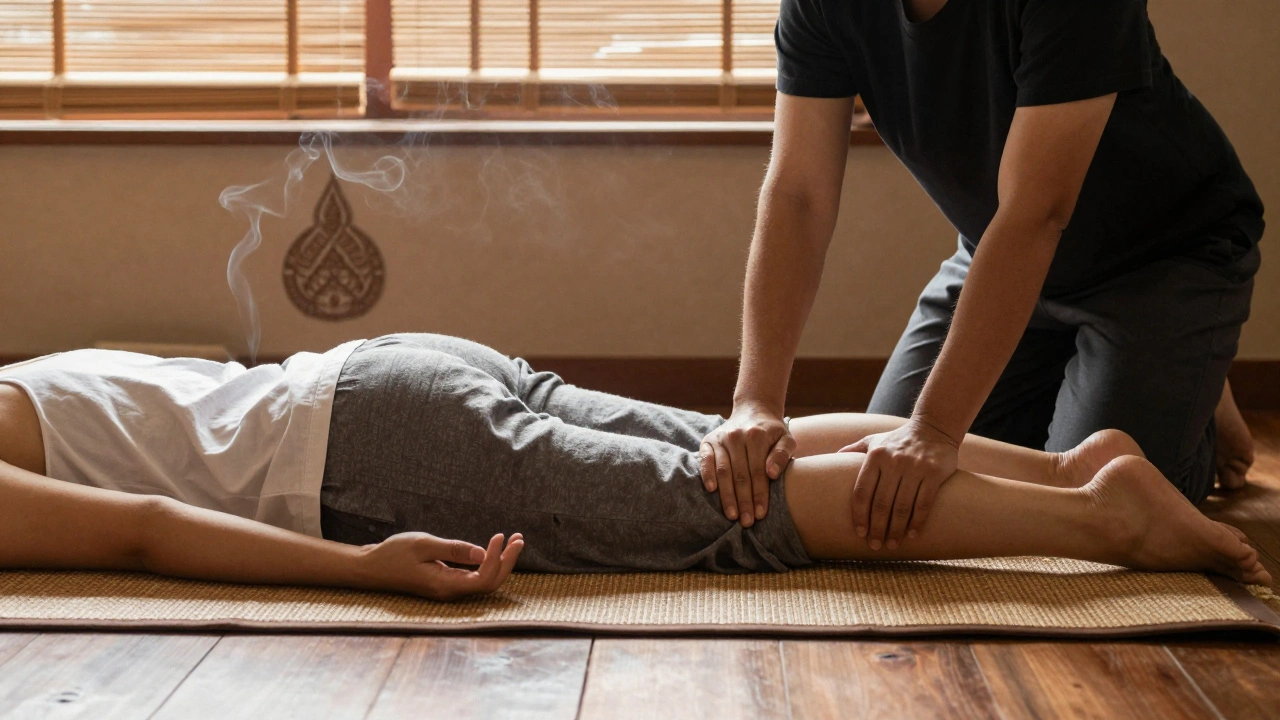
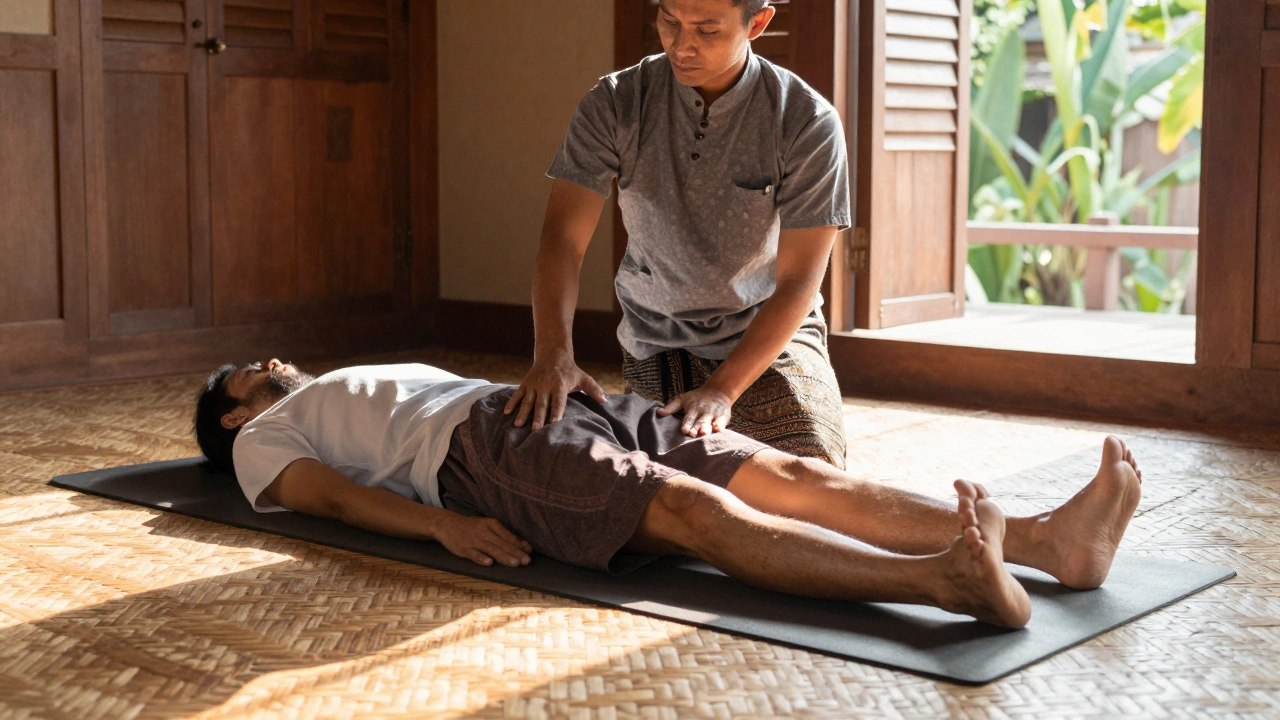
It’s not Swedish massage. It’s not deep tissue. And it definitely isn’t a spa treatment where you lie still and sip tea. Thai massage happens on a mat on the floor. You stay fully clothed-usually in loose, stretchy clothes. The therapist uses their hands, thumbs, elbows, knees, and even feet to apply pressure and guide your body through a series of stretches.
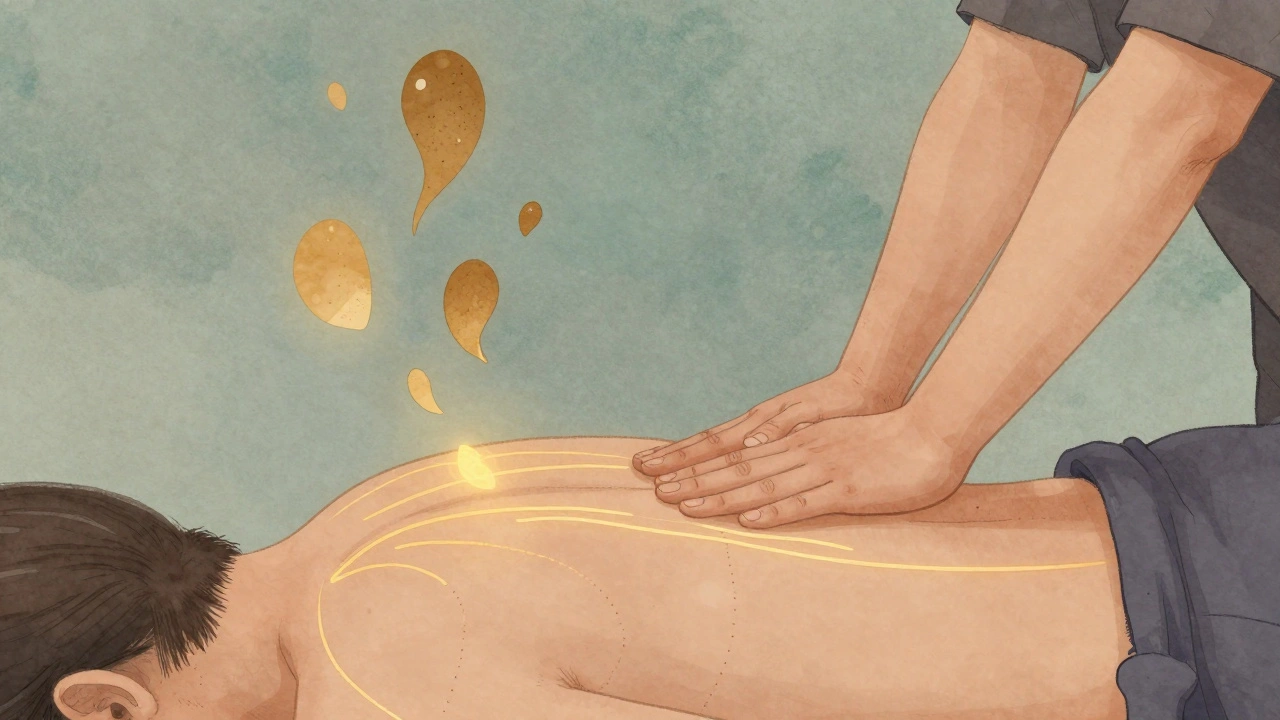
This isn’t just about muscle release. It works on sen lines-energy pathways similar to meridians in Chinese medicine. When these lines get blocked, you feel tight, tired, or achy. Thai massage clears them. That’s why you might feel a deep release in your hip or shoulder that you didn’t even know was tight.
Therapists trained in traditional Thai massage learn these lines from their teachers, often in Thailand. Look for someone who’s certified by the Thai Traditional Medicine Department or trained at Wat Pho in Bangkok. That’s the gold standard.
Prepare Your Body Before the Session
Showing up hungry, full, or dehydrated will ruin your experience. Here’s what works:
- Don’t eat a heavy meal 2 hours before your session. A light snack like a banana or a handful of nuts is fine.
- Drink water-about 16 ounces-within 2 hours before your appointment. Your muscles need hydration to stretch safely.
- Avoid caffeine and alcohol. They dehydrate you and can make you feel jittery or numb during the session.
- Wear loose, breathable clothing. Yoga pants and a t-shirt are ideal. Avoid jeans, tight leggings, or anything with zippers or buttons.
Some people show up in workout gear thinking they’re ready. That’s not enough. You need clothes that move with you, not against you. If your pants ride up during a leg stretch, you’ll be distracted. If your shirt sticks to your back, you’ll feel uncomfortable. Comfort isn’t optional-it’s part of the therapy.
Communicate Clearly During the Session
Thai massage can be intense. You might feel pressure that feels like a deep burn or a sharp stretch. That’s normal-but only if it’s within your tolerance.
Too many people stay silent because they think they’re supposed to “just relax.” But Thai massage is a two-way street. If something hurts too much, say so. Use simple phrases:
- “That’s a 7 out of 10”
- “Can you go lighter?”
- “I feel that in my knee, not my hip.”
Therapists aren’t mind readers. If you don’t speak up, they’ll assume you’re fine. A good therapist will adjust on the spot. A bad one will push through. Don’t be polite if it hurts. Your body’s feedback is the most important tool in this session.
Also, let them know if you have any injuries, recent surgeries, or chronic conditions. Even something small like a past ankle sprain or a herniated disc matters. Thai massage involves full-body movement. A therapist who knows your limits can modify the routine to keep you safe.
Let Go of Control During the Session
Most of us are used to controlling our bodies-sitting up straight, crossing our legs, holding tension in our shoulders. Thai massage asks you to surrender that control.
When your therapist lifts your leg into a stretch, don’t push back. Don’t tense your muscles. Don’t try to “help” by moving your arm. Just breathe. Let them move you. The magic happens when you stop resisting.
Think of it like floating in water. You don’t fight the current-you let it carry you. The same applies here. The deeper you relax, the more your muscles release. That’s when the real benefits kick in: improved range of motion, reduced chronic pain, better circulation.
It’s okay if you fall asleep. That’s not a failure. It’s a sign your nervous system finally let down its guard.
What to Expect After the Session
You might feel a little wobbly. That’s normal. Thai massage moves your body in ways it hasn’t moved in months-or maybe ever. Your muscles are relearning how to relax.
For the next 24 hours:
- Drink plenty of water. Your body is flushing out metabolic waste released during the session.
- Avoid intense workouts. Light walking or stretching is fine. Don’t go for a run or lift heavy weights.
- Take a warm bath with Epsom salts. It helps soothe any soreness.
- Listen to your body. If you feel unusually tired, rest. If you feel energized, go for a walk. Both are normal.
Some people feel immediate relief. Others feel sore the next day. That’s not a sign it didn’t work-it’s a sign your body is adjusting. Think of it like the first time you did yoga after years of sitting at a desk. The discomfort fades. The freedom stays.
Make It a Habit, Not a One-Time Thing
One Thai massage won’t fix years of stiffness. But three a month? That’s life-changing.
People who come regularly report:
- Reduced lower back pain
- Improved sleep quality
- Less tension headaches
- More energy during the day
- Better posture without trying
Try scheduling one every 2-3 weeks. That’s the sweet spot for maintaining flexibility and preventing buildup of tension. Many clinics offer monthly packages. It’s cheaper than you think-and far more effective than popping painkillers.
If you’re serious about your health, treat Thai massage like brushing your teeth. Not a luxury. A necessity.

Who Should Avoid Thai Massage?
It’s not for everyone. Avoid it if you:
- Have an acute injury (like a recent sprain or fracture)
- Are in the first trimester of pregnancy
- Have osteoporosis or severe bone density loss
- Have open wounds, infections, or blood clots
- Are recovering from major surgery
If you’re unsure, talk to your doctor. A good therapist will ask you these questions anyway. Don’t be embarrassed to say no. Safety comes first.
Where to Find a Real Thai Massage Therapist
Not every place that says “Thai massage” does it right. Some spas just slap on the name to charge more.
Look for these signs:
- The therapist works on a mat, not a table
- You stay fully clothed
- The session lasts at least 60 minutes
- The therapist uses their body weight, not just hands
- They ask about your health history before starting
A session under 60 minutes is usually just a quick rubdown. Real Thai massage takes time. It’s not about speed. It’s about depth.
Ask if they trained in Thailand. Many top therapists studied at Wat Pho, Chiang Mai University, or with lineage holders in Ayutthaya. That’s the real deal.
If you’re in a city with a Thai community, check local temples or cultural centers. They often have trusted practitioners.
Final Thought: It’s Not Just Massage-It’s Movement Medicine
Thai massage isn’t about relaxation alone. It’s about restoring how your body was meant to move. You’re not just getting a massage. You’re relearning flexibility, balance, and ease.
After your first session, you might notice you can reach higher on the shelf. Or you can sit cross-legged without your knees popping. Or you breathe deeper without thinking about it.
Those are the real wins. Not the “I feel relaxed” comment. Those are the changes that stick.
Do it right. Show up prepared. Speak up. Let go. Make it regular. And you’ll find that Thai massage doesn’t just help your body-it changes how you live in it.
Do I need to be flexible to get a Thai massage?
No. Thai massage is designed for people who aren’t flexible. The therapist adjusts every stretch to your current range. You don’t need to touch your toes. You just need to show up and breathe.
How often should I get a Thai massage?
For maintenance, once every 2-3 weeks works best. If you’re dealing with chronic pain or stiffness, weekly sessions for 4-6 weeks can create lasting change. After that, you can space them out.
Is Thai massage painful?
It can be intense, but it shouldn’t hurt. You should feel deep pressure and stretching, not sharp pain. If it hurts, speak up. A good therapist will adjust immediately.
Can I get Thai massage if I’m pregnant?
Generally, avoid it during the first trimester. After that, some therapists offer modified prenatal Thai massage-but only if they’re specially trained. Always check with your doctor first.
What’s the difference between Thai massage and regular massage?
Regular massage (like Swedish or deep tissue) usually happens on a table, you’re unclothed under a sheet, and the therapist uses oils. Thai massage is on a mat, you stay dressed, no oils are used, and the therapist moves your body through stretches. It’s more active, more holistic, and more like a guided yoga session.
Kerri Tarrant
January 12, 2026 AT 09:17I’ve been getting Thai massage for three years now, and honestly, it changed how I move in my body. I used to have chronic lower back pain from sitting at a desk all day. After just three sessions, I could tie my shoes without groaning. The key is finding someone who actually trained in Thailand-most spa treatments are just fancy rubbing. Look for Wat Pho certification. It’s worth the extra cost.
Also, wear loose pants. I once showed up in yoga leggings with a tight waistband and spent half the session adjusting them. Don’t be that person. Comfort is part of the therapy, like the post says.
Jamie Baker
January 12, 2026 AT 18:41Of course it’s ‘energy lines’-just like acupuncture, which is totally not fake science. Next they’ll tell us the therapist is channeling ancient Thai spirits through their elbows. This whole thing is just a fancy way to get your body bent by someone who didn’t go to med school. I’d rather go to a real physical therapist who uses actual anatomy, not mystical meridians.
Mary Chambers
January 14, 2026 AT 14:46ok so i tried thai massage last month and i was like ‘wait this is a thing??’ i thought it was just yoga with hands. but nooo it’s like someone is trying to fold me into a pretzel while whispering ‘breathe’ like a zen monk. i was sore for two days but also… weirdly lighter? like my spine forgot it was supposed to be stiff. also wear comfy clothes. i wore jeans and regretted it. like, why did i think that was a good idea.
Jason Chan
January 14, 2026 AT 21:21Thai massage is less about relaxation and more about re-education of the neuromuscular system. It’s a somatic practice that reintroduces proprioceptive awareness through dynamic, non-passive movement. The therapist acts as a guide, not a manipulator. You’re not being ‘worked on’-you’re being invited to release habitual tension patterns that your conscious mind has forgotten how to let go of.
Think of it as embodied mindfulness with pressure. The ‘sen lines’ aren’t mystical-they’re fascial planes and neural pathways that respond to sustained, rhythmic compression. That’s why hydration matters: fascia needs water to glide. And yes, falling asleep? That’s your parasympathetic nervous system finally saying ‘thank you.’
Do it once a month. Your future self will thank you. 🙏
Herhelle Bailey
January 16, 2026 AT 03:14I don’t have time for this. I just want a massage that doesn’t make me feel like I got into a wrestling match with a yoga instructor.
Shobhit Singh
January 16, 2026 AT 04:07Hey, I’m from India and we have something similar here called ‘Ayurvedic massage’-but Thai massage is next level. I went to Bangkok last year and got a 90-minute session at Wat Pho. The therapist was this tiny woman who used her knees to stretch my hamstrings and I swear I heard my spine sigh. It wasn’t just pain-it was like my body remembered how to be free. I still dream about it. If you’re nervous, start with 60 minutes. And yes, drink water. I drank two liters after and felt like a new person. Also, don’t be shy to say ‘too much’-they’ll adjust. Real ones care. 😊
Nelly Todorova
January 16, 2026 AT 18:12I went to this place downtown and the therapist was so intense I cried. Not because it hurt-because I realized I hadn’t relaxed in 10 years. I walked out sobbing in the parking lot. My husband thought I was having a breakdown. I told him, ‘Honey, I just met my soul on a yoga mat.’ I’m going back next week. I need more of this. I’m not just getting a massage-I’m getting unbroken.
Richard Jahnke
January 16, 2026 AT 20:36While I appreciate the cultural appreciation of traditional Thai healing practices, one must recognize that the commercialization of such modalities in Western spas often dilutes their efficacy and authenticity. The notion of ‘energy lines’ lacks empirical validation and should not be conflated with evidence-based physical therapy. Furthermore, the suggestion that Thai massage constitutes a ‘necessity’ akin to oral hygiene is hyperbolic and potentially misleading to the public. A balanced, scientifically grounded approach to musculoskeletal health remains preferable.