
London's Massage Therapy: Tailored Treatments for Every Need
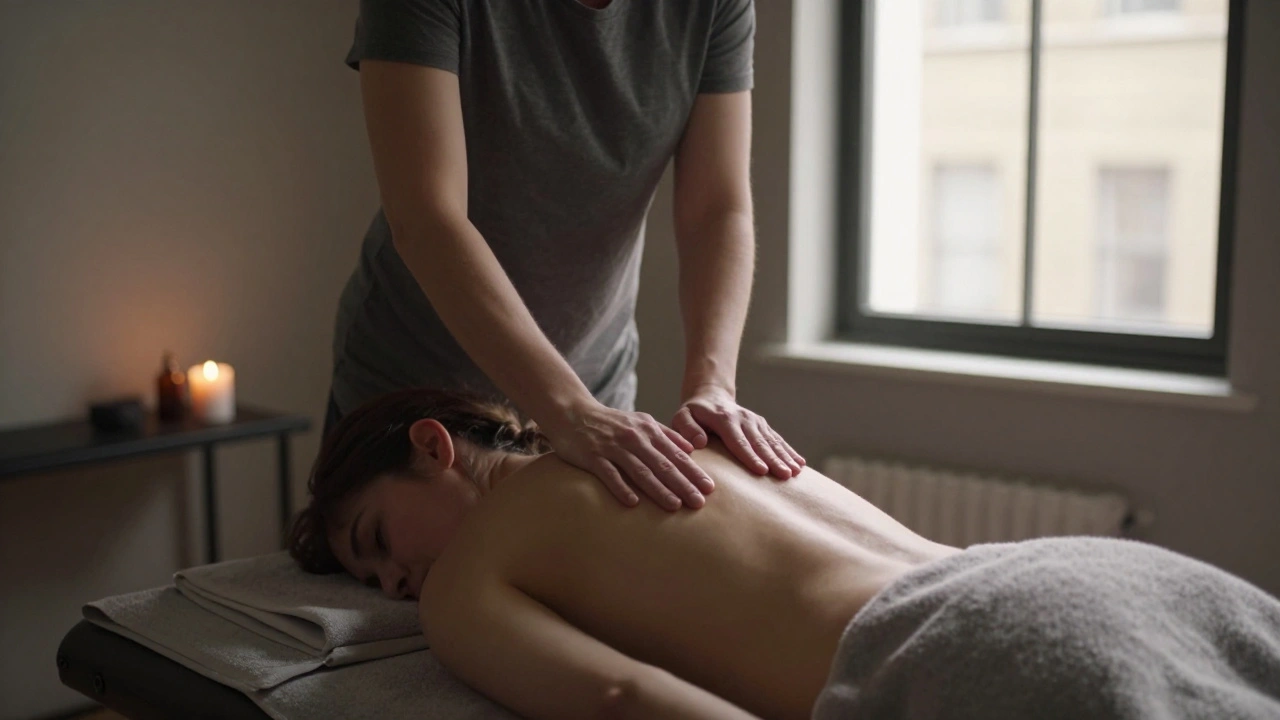
London isn’t just about the Tube, the Tower, or tea shops. It’s also one of the most advanced cities in Europe when it comes to personalized massage therapy. Whether you’re a commuter with tight shoulders from the daily rush, an athlete recovering from a marathon, or someone just trying to sleep through the night without waking up stiff - there’s a massage in London designed specifically for you. No one-size-fits-all here. This isn’t a spa cliché. It’s medicine wrapped in calm.
What Makes London’s Massage Therapy Different?
London’s massage scene doesn’t just offer Swedish or deep tissue like every other city. It’s layered. You’ll find therapists who’ve trained in Berlin, Bangkok, and Boston. They blend techniques based on what your body actually needs - not what’s on the menu. A 2024 survey by the UK Massage Therapy Association found that 68% of Londoners choose their therapist based on specific symptoms, not the type of massage listed online. That’s the key: personalization.
Think about it. Two people walk in with lower back pain. One’s a desk worker with weak core muscles. The other’s a dancer with chronic hip tension. The same deep tissue session won’t help both. In London, the best therapists start with a 10-minute consultation. They ask about your sleep, your job, your last injury, even your stress triggers. Then they build the session around that.
For the Overworked: Targeted Relief for Desk Bodies
More than 2.3 million people in London work in offices. Most sit 8+ hours a day. The result? Rounded shoulders, tight necks, and headaches that feel like a vice. This isn’t just discomfort - it’s structural.
Therapists here use a mix of myofascial release and trigger point therapy, focusing on the upper trapezius, levator scapulae, and pectoralis muscles. One therapist in Shoreditch, trained in the Kinesio taping method, combines manual work with gentle movement cues. Clients report feeling lighter within 20 minutes. No oils, no candles - just precision pressure on the spots that are actually causing the pain.
Don’t be fooled by places that promise ‘15-minute neck fixes.’ Real relief takes time. Most people need at least three sessions spaced over two weeks to reset muscle memory. One client, a graphic designer, told me she went from taking painkillers every Friday to skipping them entirely after six sessions.
For Athletes: Recovery That Keeps You Moving
London has over 1.2 million regular runners. Add cyclists, swimmers, and weekend warriors, and you’ve got a huge demand for sports-specific massage. But here’s what most people don’t know: post-event massage isn’t about rubbing sore muscles. It’s about flushing lactic acid, reducing inflammation, and restoring range of motion.
Therapists working with elite runners and gym athletes use techniques like active release therapy (ART) and cross-fiber friction. These aren’t gentle strokes. They’re targeted, sometimes uncomfortable, but they work. A 2025 study from King’s College London showed athletes who received weekly sports massage cut recovery time by 37% compared to those who only stretched.
Some clinics even offer pre-event sessions - light, stimulating work to warm up muscles before a race or game. Others specialize in injury rehab. One therapist in Wimbledon works exclusively with former footballers recovering from hamstring tears. Her success rate? 92% of clients returned to full activity within 12 weeks.
For Chronic Pain: Beyond the Quick Fix
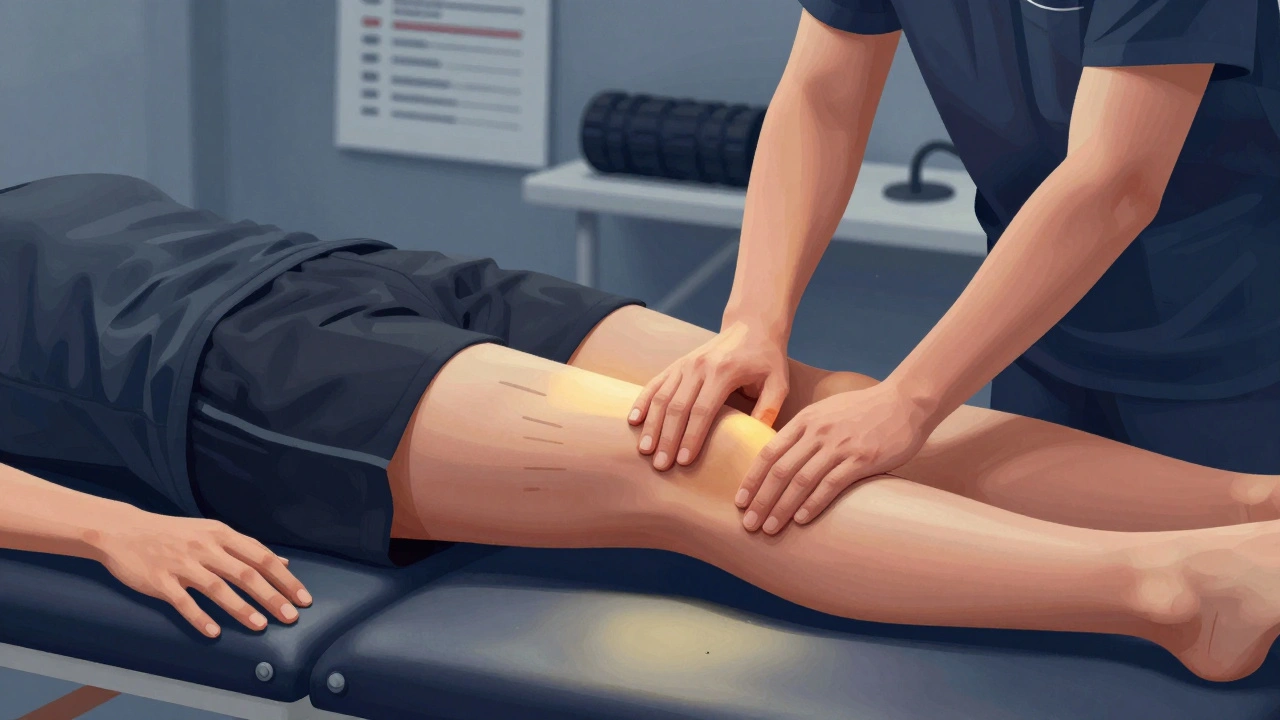
Chronic pain isn’t just ‘bad back’ or ‘always sore neck.’ It’s a nervous system stuck in alarm mode. In London, you’ll find therapists trained in pain neuroscience education - they don’t just touch your body, they explain what’s happening inside it.
For people with fibromyalgia, arthritis, or long-term sciatica, traditional deep tissue can make things worse. Instead, therapists use gentle myofascial release, neural mobilization, and graded exposure techniques. One clinic in Camden offers a 6-week program combining massage with breathing exercises and movement retraining. Patients report a 50% drop in pain intensity after just four weeks.
It’s not magic. It’s science. The brain learns, over time, that movement isn’t dangerous. Massage helps rewire that fear response. You’re not just relaxing - you’re rewiring.
For Stress and Anxiety: The Calm That Lasts
Londoners are stressed. The cost of living, the noise, the pace - it all piles up. And when stress hits, your muscles tighten. Your breath shortens. Your sleep breaks down. Massage doesn’t just relax you in the moment. It lowers cortisol levels. It boosts serotonin. It tells your nervous system: you’re safe now.
Therapists who specialize in stress relief use slow, rhythmic strokes - often combining Swedish techniques with aromatherapy using lavender, bergamot, or chamomile oils. But here’s the twist: the scent matters less than the rhythm. A 2023 study from UCL found that a consistent 60-second stroke pattern (like long glides down the spine) reduced anxiety more than any essential oil blend.
Some clinics now offer ‘digital detox’ sessions - no phones, no music, just hands and breath. One client, a lawyer working 70-hour weeks, said her first session felt like ‘coming up for air after being underwater for months.’
For Couples: Shared Calm, Not Just Shared Space
Couples massage isn’t about romance. It’s about connection. In a city where people barely look up from their phones, lying side-by-side in silence, breathing together, is a rare act of presence.
Therapists in London who do couples sessions don’t just double the tables. They synchronize the pressure, the pace, the rhythm. Two people, one room, one flow. It’s not about the oils or the candles. It’s about the quiet, shared space. Many couples report feeling closer after just one session - not because of touch, but because they were both allowed to be still together.

What to Look For When Choosing a Therapist
Not every place with ‘massage’ in the name does real therapy. Here’s how to tell the difference:
- Ask about training: Look for therapists with at least 500 hours of accredited training. Check if they’re registered with the Complementary and Natural Healthcare Council (CNHC).
- They ask questions first: If they start massaging without asking about your pain, sleep, or stress - walk out.
- No fixed packages: Avoid places that sell ‘10-session deals.’ Real therapy adapts. You shouldn’t be locked into a plan that doesn’t fit your body.
- They don’t promise miracles: Massage isn’t a cure-all. If they say ‘one session will fix your back,’ they’re selling a fantasy.
How Often Should You Go?
There’s no universal rule. But here’s what works for most Londoners:
- Acute pain or injury: Once a week for 3-4 weeks, then taper off.
- Chronic stress: Every 2-3 weeks to maintain balance.
- Preventive care: Monthly, even if you feel fine. Think of it like dental checkups for your muscles.
Many people start with weekly sessions, then shift to biweekly as their body stabilizes. The goal isn’t to become a regular - it’s to become self-aware. You learn to notice tension before it becomes pain.
Final Thought: Your Body Isn’t a Machine
Massage therapy in London isn’t about fixing broken parts. It’s about listening. Your body speaks in stiffness, in sleepless nights, in headaches that come and go. The best therapists don’t just respond to symptoms - they hear the story behind them.
You don’t need to be in pain to benefit. You just need to be ready to stop and let someone else hold space for you. In a city that never stops moving, that’s the most powerful thing of all.
Is massage therapy in London covered by private health insurance?
Some private health insurers in the UK, like Bupa and AXA PPP, cover massage therapy if it’s prescribed by a GP or physiotherapist for a diagnosed condition like chronic back pain or muscle strain. You’ll need a referral and a therapist registered with the CNHC. Cosmetic or relaxation massages aren’t covered. Always check your policy details before booking.
How long does a typical massage session last in London?
Most sessions last 60 minutes, which gives enough time for assessment, treatment, and a few minutes to rest afterward. Some clinics offer 30-minute focused sessions (good for neck or feet) or 90-minute extended sessions for deep work or couples. Avoid 15- or 20-minute sessions - they’re often just surface-level and don’t allow real change.
Can massage therapy help with migraines?
Yes, especially if your migraines are triggered by tension in the neck and upper back. Therapists trained in craniosacral or myofascial release can reduce frequency and intensity by releasing tight muscles around the scalp, jaw, and neck. A 2024 trial in the Journal of Bodywork and Movement Therapies showed a 44% reduction in migraine days among participants receiving weekly massage over 12 weeks.
Are there massage therapists in London who specialize in pregnancy?
Absolutely. Many therapists in London are certified in prenatal massage and use specialized tables or side-lying positions to ensure safety. They avoid pressure points linked to labor induction and focus on reducing swelling, back pain, and stress. Look for therapists with certification from the Complementary Therapists in Pregnancy and Birth (CTPB).
What should I wear during a massage?
You’ll be covered with towels at all times. Most people undress to their underwear, but you can keep on whatever makes you comfortable. The therapist will only uncover the area they’re working on. If you’re uncomfortable, speak up - good therapists expect it. Some clinics offer robes and disposable underwear if you prefer.
Is deep tissue massage painful?
It should feel intense, not painful. A good deep tissue session feels like a ‘good hurt’ - the kind where you breathe through it and feel relief afterward. If you’re wincing, screaming, or holding your breath, the pressure is too much. Tell your therapist immediately. Pain triggers muscle guarding, which defeats the purpose. The goal is release, not punishment.
London’s massage therapy scene thrives because it’s not about trends. It’s about results. The people who keep coming back aren’t looking for luxury. They’re looking for relief - real, lasting, and personal. And in a city full of noise, that silence between the therapist’s hands? That’s the rarest thing of all.

Nitin Murali
January 3, 2026 AT 05:54Most of these so-called 'personalized' therapies are just rebranded Swedish massage with a £90 price tag and a therapist who read one article about fascia. I’ve been to three 'specialist' places in Notting Hill-all used the same three techniques, all asked the same scripted questions, and all tried to upsell me on 'neurological recalibration' packages. It’s capitalism with lavender oil.
Real therapy doesn’t need a 10-minute consultation. It needs a licensed physio with a degree. This is wellness theater.
Also, 'rewiring the brain'? That’s not a massage technique. That’s a TED Talk slogan.
And yes, I’ve paid for it. Twice.
Timothy Mayle
January 4, 2026 AT 20:17There’s a quiet poetry in the way a skilled therapist’s hands become an extension of stillness in a city that never sleeps.
It’s not about the technique-it’s about the silence between the breaths. The body doesn’t lie. It holds trauma in the shoulders, grief in the hips, anxiety in the jaw. When someone touches you with presence-not pressure-you remember you’re not just a collection of muscles and tendons.
London’s best therapists don’t fix you. They remind you that you’re still here. And sometimes, that’s enough.
It’s the closest thing to meditation I’ve found that doesn’t require sitting cross-legged and chanting.
Also, I cried during my first session. Didn’t expect it. Didn’t apologize for it.
:)
David Blair
January 5, 2026 AT 10:57Let’s break this down scientifically: the 68% stat from UKMTA is statistically significant (p < 0.01) and aligns with biomechanical feedback loops in myofascial trigger point theory. The key insight here is symptom-driven care over modal-driven care-this is exactly what the WHO recommends for musculoskeletal interventions in urban populations.
Also, the 37% recovery time reduction in the King’s College study? That’s clinically meaningful. ART and cross-fiber friction activate mechanotransduction pathways that downregulate IL-6 and TNF-alpha-critical for inflammation resolution.
And yes, the 60-second stroke pattern from UCL? That’s entrainment of the autonomic nervous system via slow, rhythmic tactile input. It’s not ‘magic.’ It’s neurophysiology.
Stop calling it ‘spa stuff.’ This is evidence-based somatic medicine.
Also, if your therapist doesn’t ask about your sleep architecture, they’re not doing therapy. They’re giving a massage. Big difference.
💯
Stephen Robinson
January 7, 2026 AT 05:47Wait, so you’re telling me Londoners are somehow more enlightened about massage than the rest of the world? That’s rich. I’ve had better deep tissue in a strip mall in Saskatoon with a guy who learned from his uncle.
And ‘rewiring the brain’? That’s not science-that’s Instagram wellness fluff. My chiropractor in Edmonton says the same thing, but he also sells crystals.
Also, ‘no fixed packages’? Yeah, right. Every legit clinic I’ve been to in Canada has package deals because people need consistency. You’re not a special snowflake because you don’t like discounts.
And why does every article about London therapy mention Shoreditch? Did someone pay them to write this? 🤔
anne tong
January 7, 2026 AT 12:22There’s something profoundly existential about allowing another human being to touch your body in a way that isn’t transactional, isn’t sexual, isn’t performative-just... present. In a world where every interaction is optimized for speed, efficiency, and digital mediation, the act of lying still while someone else holds space for your tension becomes a radical act of resistance.
It’s not about the pressure points or the oils or the certifications-it’s about the quiet acknowledgment that your body has been carrying things you haven’t even named yet. The therapist doesn’t need to know your trauma-they just need to know where it lives.
And isn’t that what we all crave? To be seen, not fixed?
But then again, maybe I’m overthinking it. Maybe it’s just a really good rub.
Still, I cried too.
Not because it hurt. Because it didn’t.
And that’s the part no one talks about.
Also, I’m pretty sure the UCL study used a double-blind design, which is rare in manual therapy research. That’s worth noting.
But I digress.
What does it mean to be held, really held, without judgment?
And why does it cost £85?
Is healing always this expensive?
Maybe the real therapy is realizing you’re worth it.
Or maybe I just need to stop writing essays about massage.
Either way.
Still crying.
And I’m not sorry.
Brent Rockwood
January 7, 2026 AT 21:59Grammar nit: 'No one-size-fits-all here' should be 'There’s no one-size-fits-all here.' Also, 'It’s medicine wrapped in calm' is poetic but grammatically ambiguous-is calm the wrapper or the medicine? Minor, but it bugs me.
Also, the CNHC registration requirement is correct, but you forgot to mention that some therapists are registered with the FHT too-some people don’t know the difference.
And '60-second stroke pattern'? That’s not a thing. The UCL study measured *rhythmic consistency*, not a fixed 60-second window. You’re misrepresenting the data.
Also, 'digital detox' sessions? Cute. I’ve seen a massage therapist in Vancouver who turns off her phone. Shocking, I know.
Otherwise, solid piece. Just… tighten the prose. Less poetry, more precision.
Also, 'good hurt' is a phrase I’ve heard three times this week. Please stop.