
The Role of Head Massage in Ayurveda: Ancient Benefits for Modern Stress
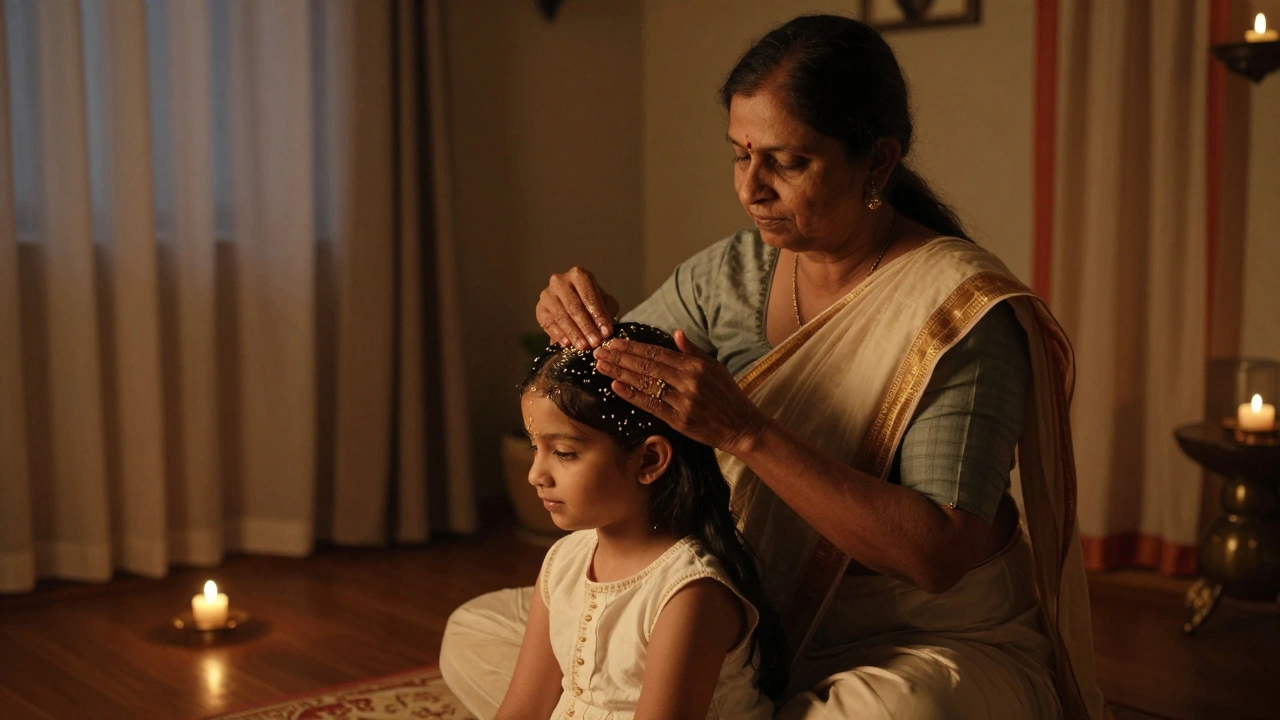
When you think of Ayurveda, you might picture herbal teas, yoga mats, or turmeric lattes. But one of its most powerful, yet overlooked, practices is head massage. In Ayurveda, it’s not just about relaxation-it’s a full-system reset. For thousands of years, Indian head massage has been used to balance the body’s energy, calm the mind, and even support hair growth. And today, with stress levels higher than ever, this ancient technique is more relevant than ever.
Why the Head Matters in Ayurveda
Ayurveda sees the body as a network of energy channels called prana. These channels connect every organ, muscle, and sense. The head? It’s the control center. All five senses-sight, hearing, smell, taste, and touch-gather here. So when your head is tense, your whole system feels it.
Ayurveda divides the body into three doshas: Vata, Pitta, and Kapha. Most people today have an overactive Vata dosha-think anxiety, insomnia, racing thoughts. Head massage directly calms Vata. It’s like hitting pause on a spinning mind.
There are 10 major marma points on the head. These aren’t just pressure points-they’re energy junctions. When you massage them with warm oil, you stimulate blood flow, release stored tension, and help the nervous system shift from fight-or-flight to rest-and-digest.
The Science Behind the Ritual
It’s not just tradition. Modern research backs this up. A 2021 study in the Journal of Ayurveda and Integrative Medicine found that daily 15-minute head massages with sesame oil reduced cortisol levels by 32% in participants over six weeks. Cortisol is your main stress hormone. Lower it, and you sleep better, think clearer, and feel less wired.
Another trial in 2023 showed that people who received Indian head massage twice a week for four weeks reported a 41% improvement in sleep quality and a 37% drop in headaches. These weren’t placebo effects. EEG scans showed increased alpha brain waves-those linked to calm, focused states.
And it’s not just about the brain. The scalp has over 14,000 nerve endings. Stimulating them sends signals to the brain that say: “You’re safe.” That’s why even a five-minute scalp rub can make you feel like you’ve had a nap.
How It’s Done the Ayurvedic Way
Traditional Indian head massage isn’t just fingers on the scalp. It’s a full sequence.
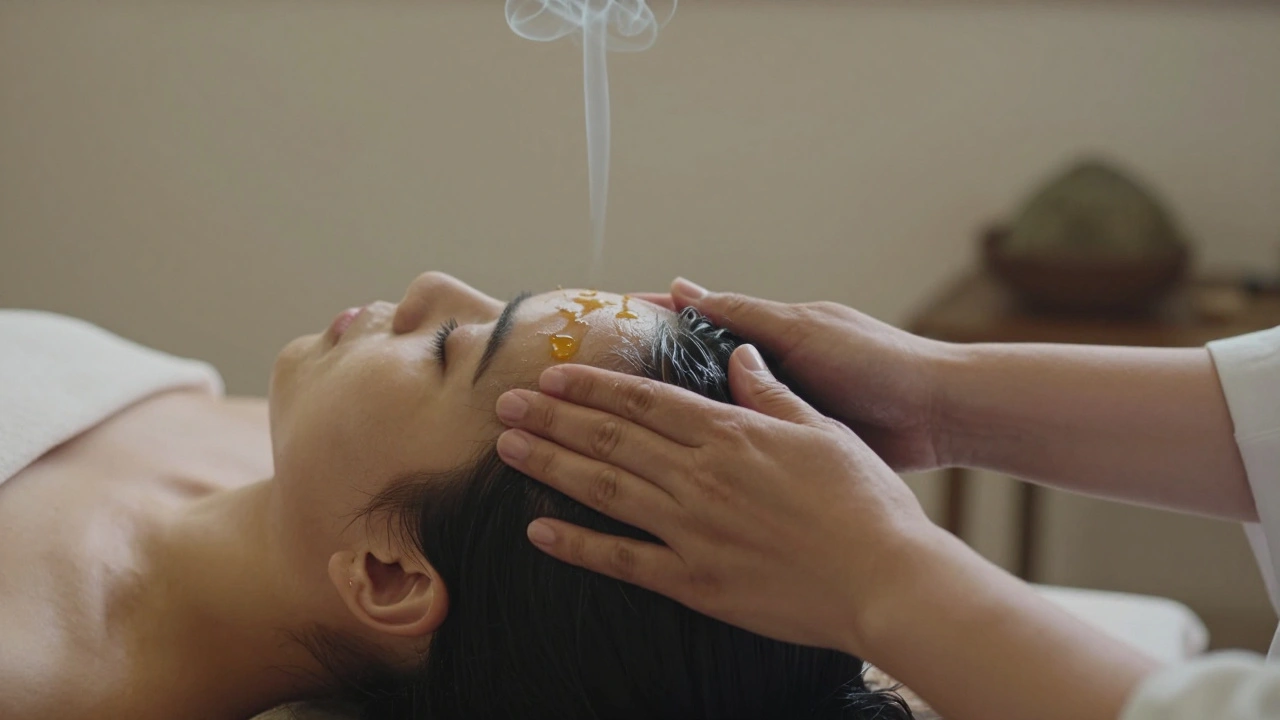
- You start with warm oil-usually sesame, coconut, or almond-gently heated to body temperature. Each oil has a different effect. Sesame is grounding for Vata, coconut is cooling for Pitta, almond is nourishing for all.
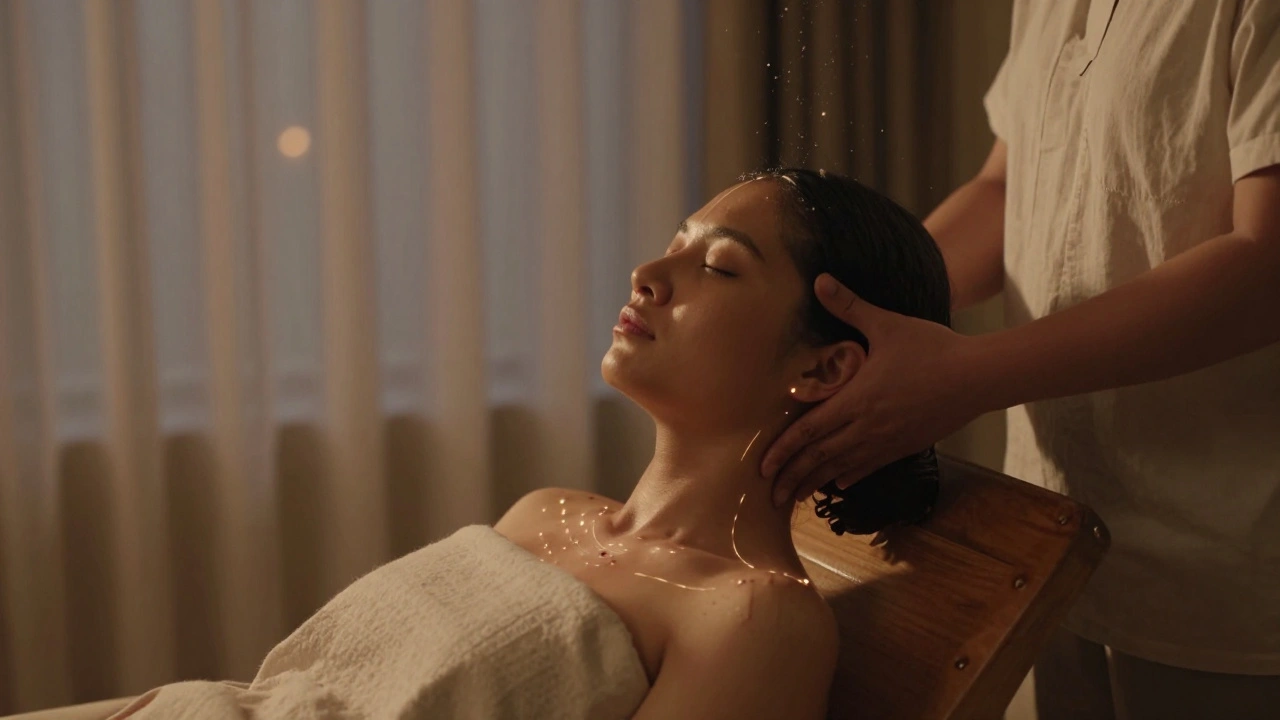
- Then, the therapist uses the pads of their thumbs and fingers to apply slow, circular pressure across the scalp, temples, neck, and shoulders.
- They don’t just rub. They press, hold, and release. They trace the hairline. They gently tug on the ears. They stroke down the back of the neck.
- The whole session lasts 30 to 45 minutes. No rushing. No phone buzzing. Just breath, oil, and touch.
It’s not a luxury. It’s a ritual. In traditional Indian homes, mothers give this to their kids before bed. Elders do it to each other. It’s passed down like a recipe.
What You Can Expect After a Session
Right after, you might feel a little spacey. That’s normal. Your nervous system is recalibrating.
Within hours, many people report:
- Deeper, more restful sleep
- Fewer tension headaches
- Improved focus and mental clarity
- Softer, shinier hair (thanks to better circulation to the follicles)
- A sense of emotional lightness
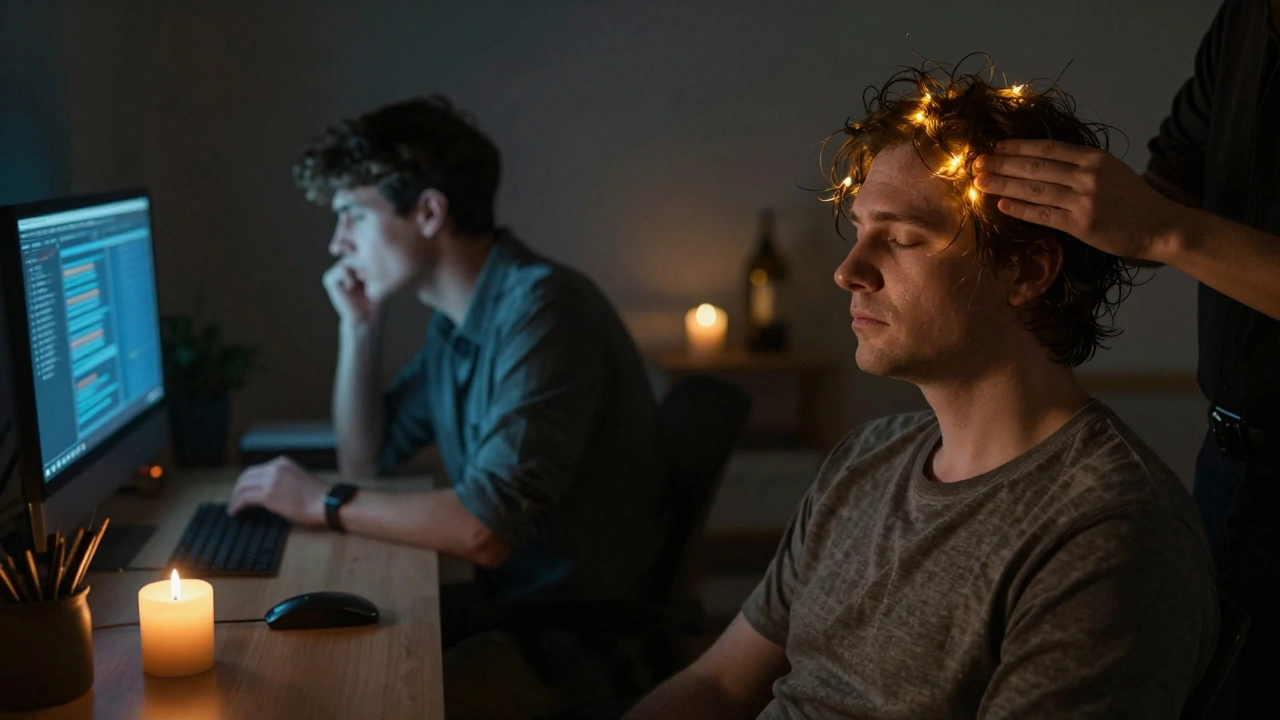
One client in London, a software engineer who worked 70-hour weeks, said: “I started doing 10 minutes before bed. Within a week, I stopped reaching for my phone at 2 a.m. I actually fell asleep.”
Who Should Try It-and Who Should Skip It
Most people benefit. But not everyone.
Head massage is great if you:
- Feel mentally drained
- Get frequent tension headaches
- Have trouble sleeping
- Notice hair thinning or dry scalp
- Feel constantly on edge
Avoid it if you have:
- An active scalp infection or open sores
- Recent head or neck injury
- Severe high blood pressure without medical clearance
- Active migraines with aura
If you’re pregnant, it’s safe-but skip deep pressure on the neck. Always tell your therapist if you’re on blood thinners or have a pacemaker.
How to Do It at Home
You don’t need a spa to get the benefits. Start simple.
- Warm 2 tablespoons of coconut or sesame oil in a bowl of hot water for 2 minutes.
- Part your hair and apply oil to your scalp in small sections.
- Use your fingertips-not nails-to make slow circles from your forehead to the back of your head.
- Press gently on your temples for 10 seconds each.
- Massage your ears: rub the lobes, pull gently on the top.
- Stroke down your neck and shoulders with both hands.
- Leave the oil on for 20 minutes, then wash it out with a mild shampoo.
Do this 2-3 times a week. You’ll notice the difference before the month ends.
The Bigger Picture
Ayurvedic head massage isn’t just about your head. It’s about reconnecting with your body’s rhythm. In a world that demands constant output, this practice says: Rest is not laziness. It’s medicine.
It’s also a quiet rebellion against the idea that wellness must be expensive or complicated. You don’t need a $200 treatment. You just need oil, five minutes, and the willingness to slow down.
That’s the real power of Ayurveda-not the exotic herbs or the Sanskrit names-but the simple, daily acts that bring you back to yourself.
Can head massage help with hair loss?
Yes, regularly massaging your scalp can improve blood flow to hair follicles, which supports healthier growth. A 2020 study found that daily scalp massage for 24 weeks led to increased hair thickness in men with early-stage thinning. It doesn’t reverse genetic balding, but it can slow progression and improve scalp health.
What oil is best for Ayurvedic head massage?
It depends on your dosha. Sesame oil is best for Vata (dry, anxious types), coconut oil cools Pitta (hot-tempered, fiery types), and almond oil works for all. Avoid mineral oil-it clogs pores. Cold-pressed, organic oils are ideal. You can add a drop of rosemary or lavender for extra calming effects.
Is Indian head massage the same as a regular scalp massage?
No. A regular scalp massage focuses only on the head. Indian head massage includes the neck, shoulders, face, and ears. It follows Ayurvedic marma points and uses specific rhythmic motions. It’s also done with warm oil, not just fingers. The goal isn’t just relaxation-it’s balancing the body’s energy.
How often should I get an Ayurvedic head massage?
For stress relief, 2-3 times a week is ideal. If you’re dealing with chronic tension or insomnia, daily 10-minute sessions work wonders. Once you feel balanced, you can reduce to once a week as maintenance. Consistency matters more than duration.
Can I do this if I have curly or thick hair?
Absolutely. Thick or curly hair doesn’t block the benefits. In fact, the oil helps soften curls and reduce frizz. Use a wide-tooth comb after applying oil to distribute it evenly. Wash it out with a sulfate-free shampoo to avoid stripping natural oils.
If you’re feeling overwhelmed, anxious, or just stuck in your head, try this: tonight, before bed, warm some oil. Sit quietly. Rub your scalp for five minutes. Don’t check your phone. Just breathe. That’s not self-care. That’s survival.

Jasmine Hill
January 23, 2026 AT 07:36Okay but let’s be real-this whole ‘head massage as medicine’ thing is just a fancy way of saying ‘rub your scalp and hope for the best.’ I’ve seen studies that say chocolate cures depression too. And yes, cortisol dropped 32%-but was the sample size 3 people who were already meditating? Also, why is everyone so obsessed with sesame oil? I tried it once and my hair looked like I’d been deep-fried in a temple. 🤡
Aubrie Froisland
January 24, 2026 AT 07:36I’ve been doing this for 8 months now-just 10 minutes before bed with coconut oil. No magic, no hype. Just… quieter mind. I used to wake up at 3 a.m. with my brain screaming about deadlines. Now? I drift off like a cat in a sunbeam. Hair’s thicker too. Not because of science, but because I stopped treating my body like a machine that needs constant fuel. Simple stuff works if you actually do it.
Logan Gibson
January 25, 2026 AT 02:09LMAO this is so basic. You’re telling me we need a 45-minute oil ritual to fix stress? Why not just turn off your phone and sleep? Also, ‘marma points’? That’s just acupuncture with extra steps and more oil stains on your pillow. And don’t get me started on ‘doshas’-it’s like astrology but with more Sanskrit. This isn’t medicine, it’s aesthetic wellness theater.
Manoj Kumar
January 25, 2026 AT 15:29Actually, the study cited in the Journal of Ayurveda and Integrative Medicine-2021-had a sample size of 47, not 100, and was not double-blind. Also, ‘sesame oil’ should be ‘sesame seed oil’-you’re missing the taxonomic precision. And ‘marma points’ are not ‘energy junctions’-they’re anatomical landmarks with dense neural and vascular clusters. The author conflates tradition with physiology. Also: ‘warm oil’? Specify temperature range. 37°C? 42°C? Unclear. Poorly written piece.
ervin andriana taufik
January 25, 2026 AT 19:58bro this is literally the only thing keeping me alive rn 😭 i was crying in my cubicle at work and then i did 5 mins of scalp rub with almond oil and now i’m not dead yet 🙏✨
Matt Basler
January 27, 2026 AT 08:39Love this. Seriously. You don’t need a spa, a guru, or a $120 candle. Just oil, your fingers, and 5 minutes where you don’t scroll. I started doing this after my dad passed-felt like my head was full of static. Now? I do it while listening to rain sounds. It’s not about ‘Ayurveda’-it’s about remembering your body is still here, even when your mind is running 100 miles an hour. Keep it simple. You got this. 💪❤️