
Uncover the Magic of Thai Massage in the Heart of London
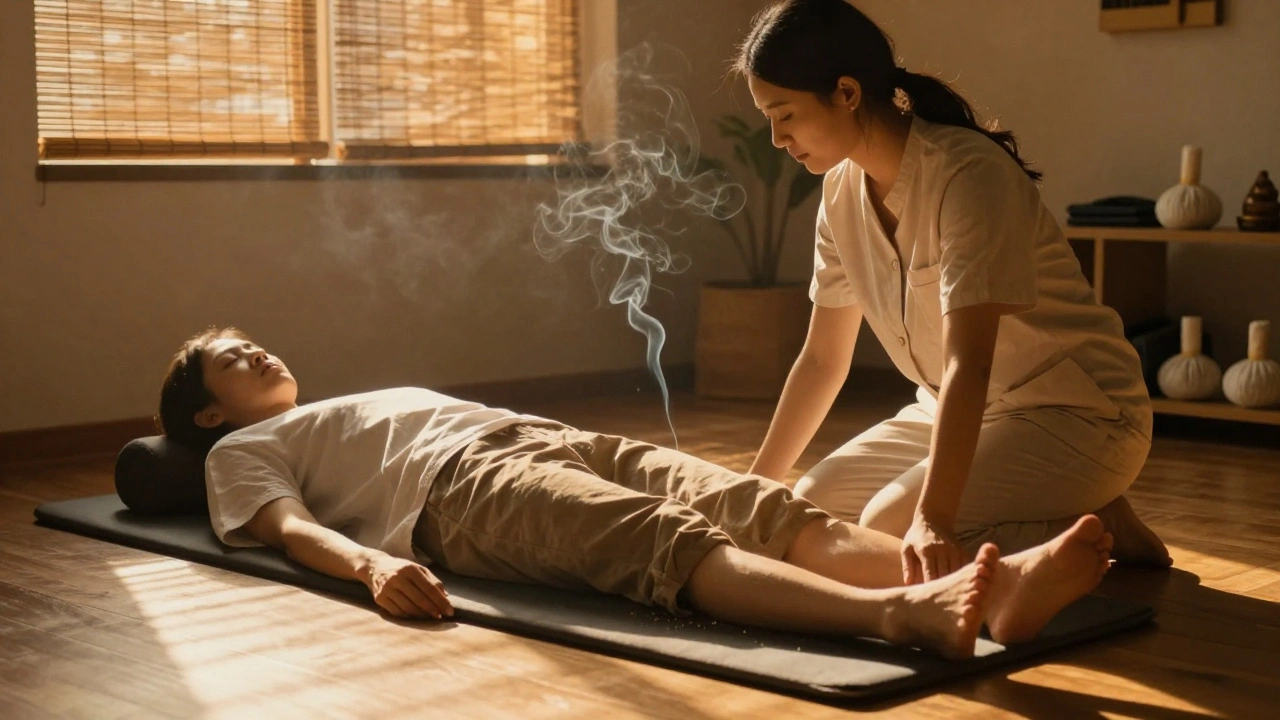
Walk into a quiet side street in Soho or a tucked-away studio in Notting Hill, and you might hear the soft rhythm of chanting, the scent of lemongrass, and the gentle pressure of hands moving along your body-not just rubbing, but stretching, rocking, and pressing with purpose. This isn’t a spa gimmick. This is Thai massage, the ancient healing art that’s been practiced for over 2,500 years, now thriving in the heart of London.
What Makes Thai Massage Different?
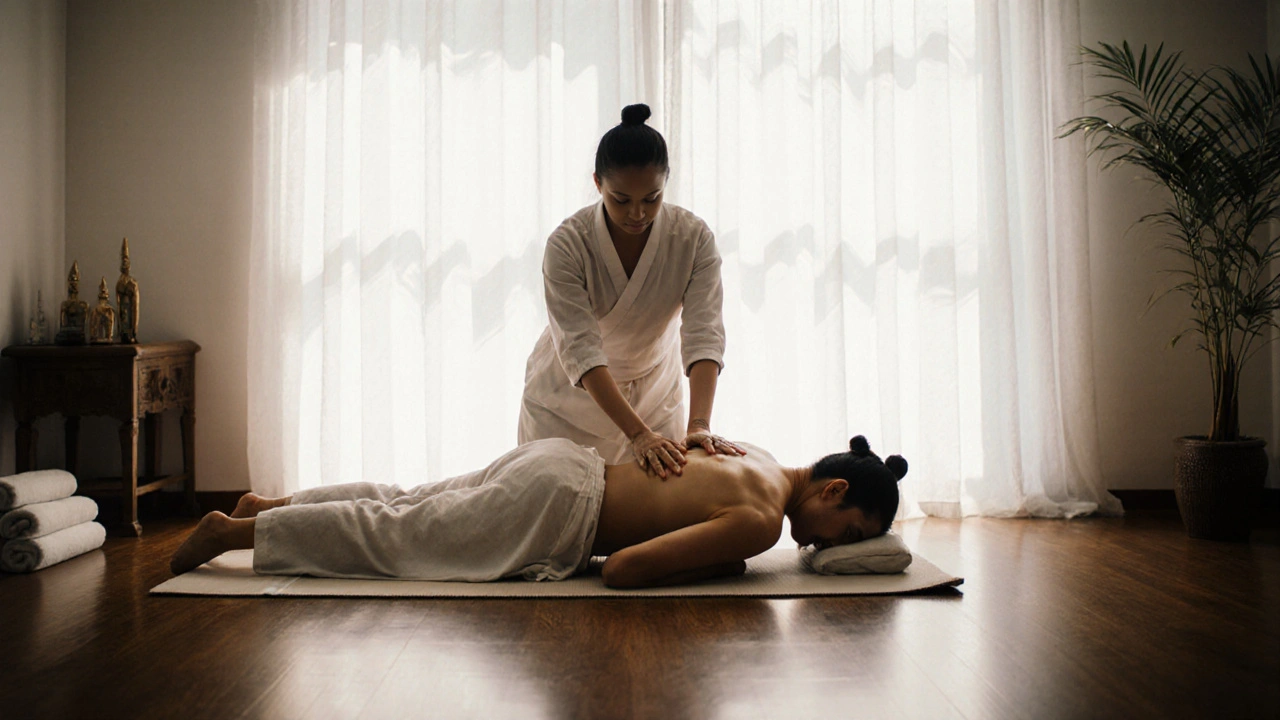
Most people think of massage as something you lie down for, with oils and soothing music. Thai massage is not that. You stay fully clothed, usually in loose cotton pants and a t-shirt. No oils. No table. You’re on a mat on the floor. The therapist uses their hands, thumbs, elbows, knees, and even feet to guide your body through a series of yoga-like stretches and deep acupressure points.
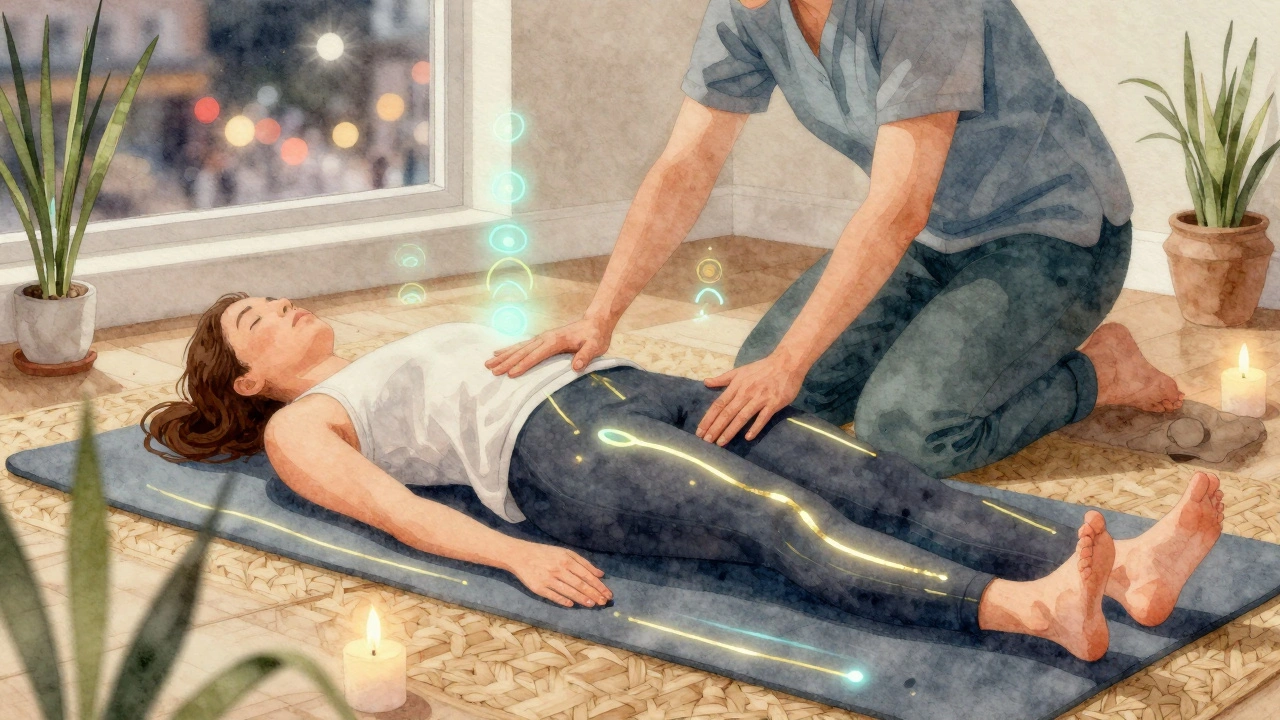
This isn’t just relaxation-it’s a full-body reset. The technique combines elements of yoga, acupressure, and assisted stretching. It works on energy lines called sen lines, similar to meridians in Traditional Chinese Medicine. When these lines are blocked, tension builds. Thai massage clears them.
Unlike Swedish massage, which focuses on surface muscles, Thai massage reaches deep into connective tissue and joints. It’s not always gentle. If you’ve never had it before, you might feel surprised by the intensity. But that’s part of the magic. By the end, your body feels longer, looser, and strangely light.
Why It’s Grown So Fast in London
London has always been a city of diverse healing traditions-from Ayurveda in Brixton to Shiatsu in Camden. But Thai massage has exploded in the last five years. Why? Because people are tired of quick fixes.
A 2024 survey by the UK Therapy Association found that 68% of Londoners who tried Thai massage for the first time returned within three months. Why? Because they felt the difference. Not just in their shoulders or back, but in their sleep, their focus, even their digestion.
It’s not just about stress relief. People with chronic lower back pain, sciatica, or tight hips from sitting all day at desks report real improvement. One nurse from Croydon, who had been dealing with nerve pain for seven years, said after six sessions: “I didn’t just feel better. I remembered what it was like to move without thinking about it.”
Therapists in London aren’t just copying what they saw in Thailand. Many have trained in Chiang Mai or Bangkok for months, sometimes years. They bring back the real thing-not the watered-down version you get in a hotel spa.
What to Expect in Your First Session
Your first session starts simply. You’ll sit down with your therapist for five minutes. They’ll ask about injuries, pain points, and what you’re hoping to get out of it. No judgment. No pressure.
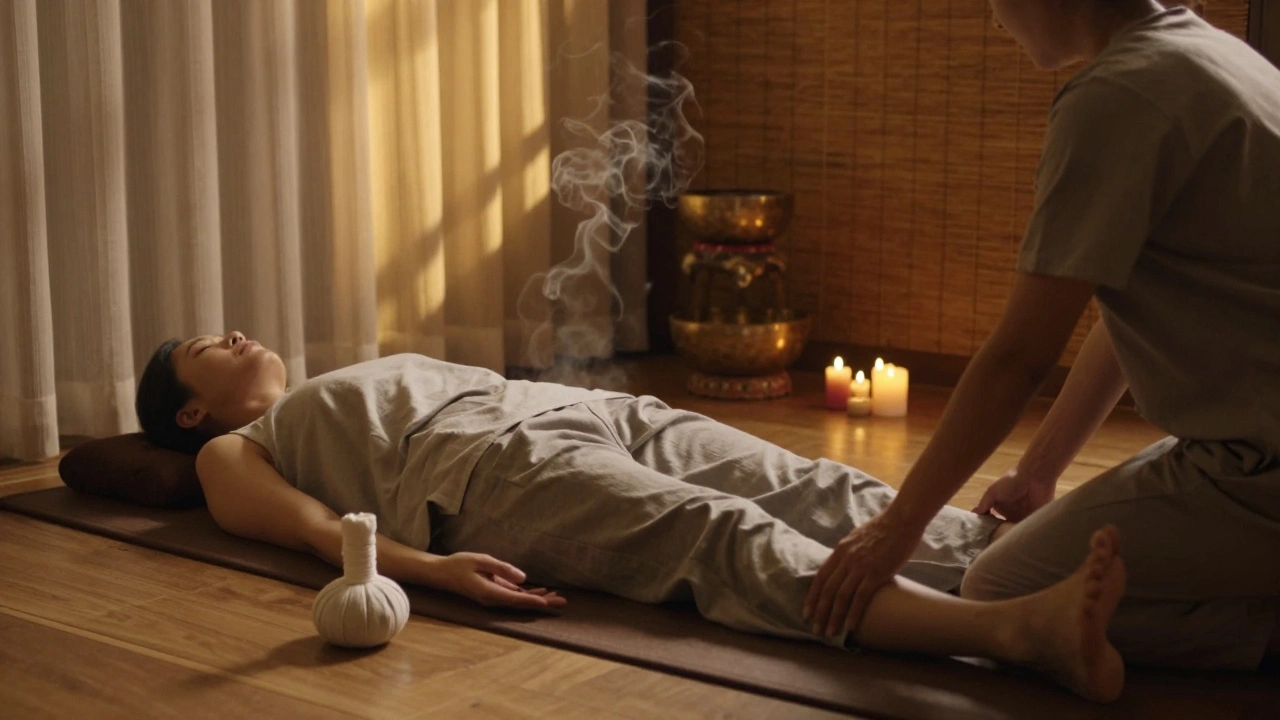
Then you’ll lie down on a padded mat. The therapist will begin by working on your feet, then move up your legs, hips, back, arms, and neck. You’ll be pulled, twisted, and stretched-but never forced. A good therapist reads your body’s response. If you tense up, they ease off. If you relax, they go deeper.
It’s common to feel a little sore the next day. That’s not a bad sign. It means your body is adjusting. Think of it like a workout for your joints and muscles. But unlike a gym session, you don’t have to lift a finger.
Most sessions last 60 to 90 minutes. Don’t rush. The best places in London don’t schedule back-to-back clients. They leave space between appointments so the energy stays calm.
Where to Find Authentic Thai Massage in London
Not every place that says “Thai massage” delivers the real thing. Here’s what to look for:
- Therapists trained in Thailand-Ask where they trained. The best ones studied at schools like Wat Pho in Bangkok or the Northern Thai Healing Center in Chiang Mai.
- No oils or music-Authentic Thai massage uses no oils. The room might have incense, but not loud music. The focus is on breath and movement.
- Mat on the floor-If you’re on a massage table, it’s not traditional Thai massage. It might be a hybrid, but it’s not the real deal.
- Full-body treatment-It should cover from head to toe. If they skip your feet or neck, they’re cutting corners.
Some trusted spots in London:
- Thai House London (Soho) - Run by a therapist who trained under a fifth-generation healer in Chiang Mai.
- Wat Pho London (Camden) - Named after the famous temple school, they follow the exact sequences taught there.
- Lotus Thai Wellness (Islington) - Offers both private and group sessions, with herbal compresses available as an add-on.
Prices range from £65 for 60 minutes to £110 for 90 minutes. Don’t go for the cheapest. Thai massage is a skill. You’re paying for years of training, not just time.
The Science Behind the Sensation
It’s not just folklore. Studies from the University of Oxford and King’s College London have looked at Thai massage’s effects on chronic pain and mobility.
A 2023 study published in the Journal of Bodywork and Movement Therapies tracked 84 participants with lower back pain. After eight weekly Thai massage sessions, 79% reported a 40% or greater reduction in pain. Muscle flexibility improved by an average of 32%. Even cortisol levels-the stress hormone-dropped significantly.
The reason? Thai massage doesn’t just relax muscles. It stimulates the parasympathetic nervous system-the part of your body that says, “It’s safe to rest.” This triggers natural healing: better circulation, reduced inflammation, and improved nerve signaling.
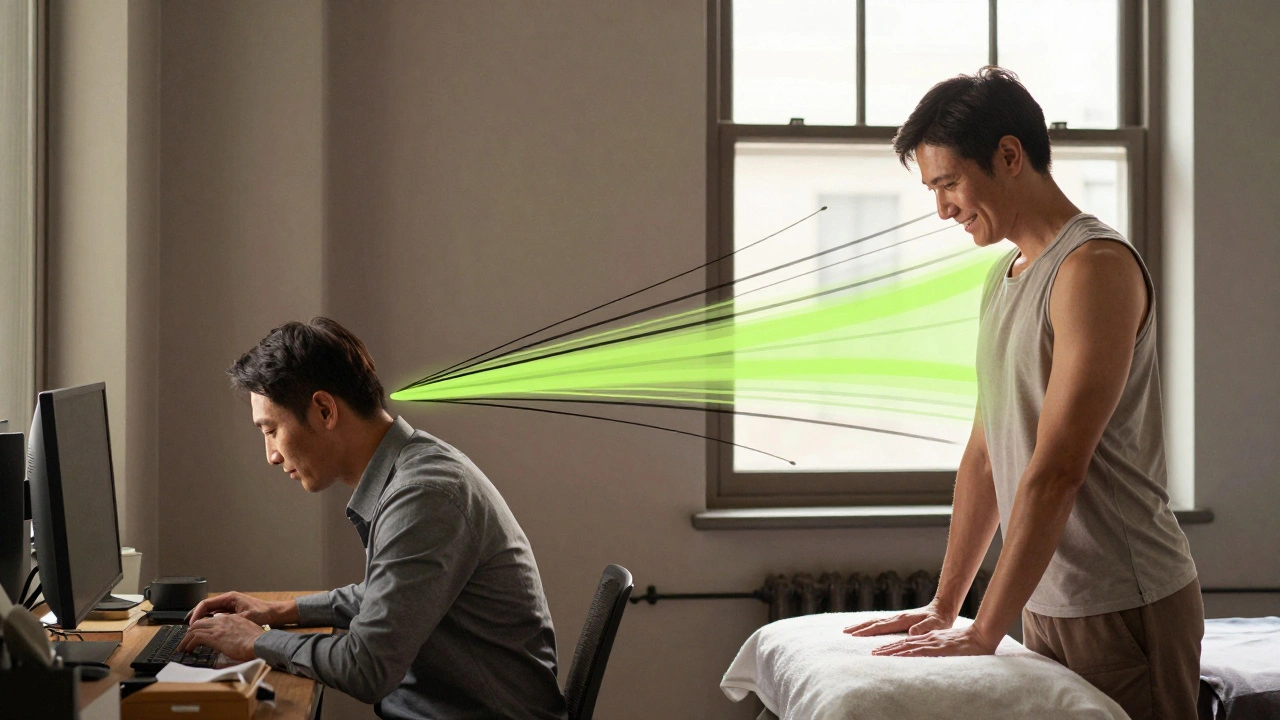
It also helps with posture. Many Londoners walk hunched over phones or computers. Thai massage gently retrains the body to find its natural alignment. You don’t just feel better-you stand taller.
Who Should Try It-and Who Should Skip It
Thai massage is powerful, but it’s not for everyone.
Great for:
- People with stiff shoulders, tight hips, or chronic back pain
- Office workers who sit all day
- Athletes looking for recovery without drugs or needles
- Anyone who feels mentally drained and wants to reset
Not recommended for:
- People with recent fractures, severe osteoporosis, or open wounds
- Those with blood clots or deep vein thrombosis
- Women in early pregnancy (after the first trimester, it’s usually fine with a trained therapist)
- People who dislike being touched or moved forcefully
If you’re unsure, talk to your therapist. A good one will ask questions, not just take your money.
How to Make It Last
One session won’t fix years of tension. But if you make it part of your rhythm, the changes stick.
Try booking once a month. That’s enough to keep your body in alignment without breaking the bank. Between sessions, move more. Walk. Stretch. Don’t sit for more than an hour without standing up.
Some people start doing simple Thai stretches at home-like the seated forward fold or the cat-cow stretch. You don’t need to be flexible. Just try for five minutes a day.
And remember: this isn’t a luxury. It’s maintenance. Like brushing your teeth, but for your muscles and nerves.
Final Thought: It’s Not Just a Massage
Thai massage in London isn’t just another wellness trend. It’s a bridge to a different way of moving, breathing, and being. It doesn’t promise miracles. But it does offer something rarer: presence.
For 90 minutes, you’re not checking emails. You’re not rushing. You’re just there-your body guided by hands that know how to listen.
That’s the magic. Not the stretching. Not the pressure. The quiet, deep reset that happens when you stop fighting your own body.
Is Thai massage painful?
It can feel intense, especially if you’re tight or stiff, but it shouldn’t hurt. A good therapist adjusts pressure based on your response. If you feel sharp pain, speak up. Discomfort is normal; pain isn’t.
Do I need to be flexible for Thai massage?
No. Thai massage is for all body types and flexibility levels. The therapist works with you, not against you. You’ll be stretched gently, and you can always say “stop” or “less.”
How often should I get Thai massage?
Once a month is ideal for maintenance. If you’re dealing with chronic pain or high stress, once every two weeks helps. After three to four sessions, most people notice lasting changes in mobility and energy.
Can I combine Thai massage with other therapies?
Yes. Many people pair it with acupuncture, physiotherapy, or yoga. But avoid deep tissue massage or chiropractic adjustments on the same day-it can be too much for your nervous system. Space them out by at least 48 hours.
What should I wear to a Thai massage?
Wear loose, comfortable clothing you can move in-cotton pants and a t-shirt are ideal. No underwear changes needed. You’ll stay fully clothed the whole time.
Is Thai massage safe during pregnancy?
After the first trimester, yes-with a therapist trained in prenatal Thai massage. Avoid deep pressure on the abdomen and lower back. Always inform your therapist beforehand.
Hannah Johnson
December 1, 2025 AT 05:07I tried Thai massage last month after my physio said I needed to stop relying on painkillers for my lower back. Honestly? I was skeptical. But after the third session, I could bend over to tie my shoes without wincing. No joke. It’s not magic, it’s science-and the therapists in London? They’re wizards with their hands. I go every 3 weeks now. Best money I’ve spent in years.
Anna Krol
December 2, 2025 AT 13:55soooo i went to this place in camden called wat pho london and honestly it felt like my body was being gently reassembled? like my hips remembered how to move and my spine was like ‘ohhhhh this is what alignment feels like’ 🙌 no oils, no music, just this quiet intensity and i left crying for no reason. also my dog started sleeping better after i started doing the cat-cow stretch at home. weird but true.
Chaunt Elyza
December 3, 2025 AT 23:16OMG YES!! 🤯 I’ve been doing this for 2 years and it’s literally changed my life. I used to have migraines every week. Now? Zero. The therapist in Soho? She’s a genius. Also, don’t even BOTHER with the cheap ones-they’re just Swedish with a yoga playlist. REAL Thai massage = no oils, no table, no excuses. If they use lotion, RUN. 🚩
Katie Schiffer
December 5, 2025 AT 10:57Y’all need to stop treating this like a luxury and start treating it like hygiene. Like brushing your teeth, but for your nervous system. If you sit at a desk, move your body once a month. That’s it. No excuses. I’ve helped 12 coworkers start this habit-two quit their jobs because they finally felt like themselves again. This isn’t wellness porn. This is survival. Go. Now. Book it. Your future self will hug you.
John Irving
December 6, 2025 AT 06:44Looks like another overpriced hipster trend dressed up as ancient wisdom. We’ve got real physiotherapy in Australia that’s evidence-based, not some guy in cotton pants pulling your leg like a puppet. £110 for someone to twist you into a pretzel? Give me a break. You’re paying for vibes, not results.
Jim Kwn
December 6, 2025 AT 17:1068% returned? Wow. So 32% realized they just got squeezed by a stranger for an hour and felt worse. Classic. Also who cares about some study from King’s College? That’s a university that thinks ‘wellness’ is a real field. You think your spine gives a damn about sen lines? Nah. You just paid for a massage that felt like a yoga class with a bully.
Karan Chugh
December 7, 2025 AT 01:19Most of these places in London are fake. I went to one called Lotus Thai Wellness and the therapist didn’t even know the correct sequence for the hip stretch. She was from Manchester. Real Thai massage? Only if trained in Chiang Mai. Otherwise it’s just stretching with incense. And don’t get me started on the prices. In Thailand, it’s £10. Here? £110. Exploitation disguised as tradition.
Mona De Krem
December 9, 2025 AT 00:54wait so the government is secretly funding these thai massage places to make people docile? i read somewhere that the parasympathetic reset lowers rebellion levels? also why is no one talking about how they use lemongrass to mask the smell of sweat? and what if the therapist is secretly a spy from the thai royal family? i think i felt my thoughts being rearranged after my session… 🤔👁️